As an affiliate, we may earn a commission from qualifying purchases. We get commissions for purchases made through links on this website from Amazon and other third parties.
Reverse osmosis (RO) usually removes the widest range of contaminants among common home water filters. It can reduce many dissolved minerals, metals, salts, and some other chemicals while also physically removing parasites, bacteria, and viruses. But no single water filter removes every possible contaminant. What works best depends on what is actually in the water.
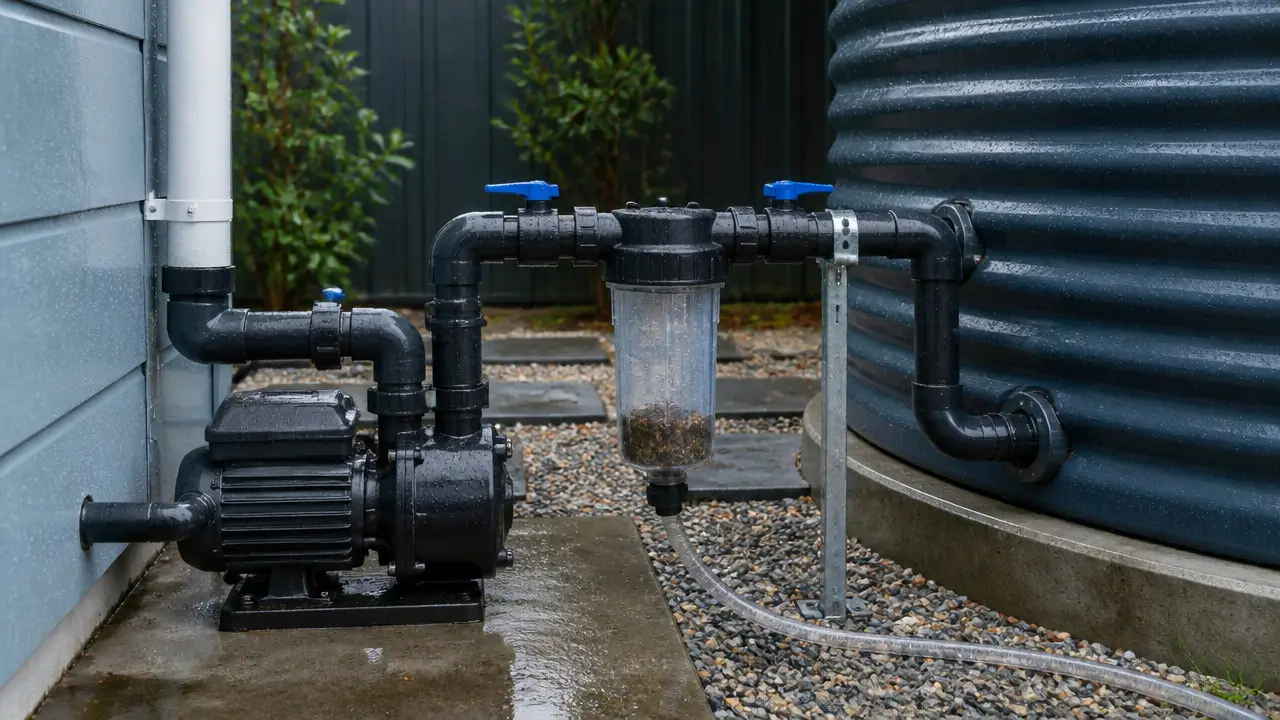
This matters even more with collected rainwater. Roof runoff can pick up dirt, bird droppings, metals, chemicals, and microbes before reaching the tank. A system meant to produce drinking water normally needs several treatment stages rather than one “best” filter.
Which Type of Water Filter Removes the Most Contaminants?
For broad contaminant reduction, reverse osmosis is usually the strongest household filtration option.
An RO system pushes water through a very fine membrane. The CDC describes a typical RO membrane as having a pore size around 0.0001 micron. A micron is one-millionth of a meter. This very fine barrier allows RO to deal with contaminants that pass through ordinary sediment filters.
Depending on the specific system and its certified claims, RO may reduce contaminants including:
- Lead
- Copper
- Chromium
- Sodium
- Chloride
- Arsenic
- Fluoride
- Nitrate
- Sulfate
- Radium
- Calcium and magnesium
- Parasites
- Bacteria
- Viruses
The important phrase is depending on the system. An RO membrane should not be assumed to remove every substance on this list simply because it uses reverse osmosis. Certification and the manufacturer's contaminant-reduction claims still matter.
How the Main Water Treatment Types Compare
| Treatment type | What it is good at | Important limitation |
|---|---|---|
| Reverse osmosis | Broad range of dissolved substances, some chemicals, salts, metals, and microbes | Not every RO system is certified for every contaminant |
| Activated carbon | Many taste, odor, chlorine, and certain organic chemical problems | Usually does not remove dissolved salts or all microbes |
| Sediment filtration | Dirt, rust, grit, and suspended particles | Does little for dissolved chemicals or very small microbes |
| Ultrafiltration | Many particles, parasites, and bacteria | Usually does not remove dissolved salts and many chemicals |
| Nanofiltration | Very small particles, microbes, and some dissolved material | Performance depends heavily on the membrane |
| UV treatment | Inactivating microbes when properly designed and operated | Does not remove chemicals |
| Distillation | Very broad removal of microbes, minerals, and many chemicals | Slow, energy intensive, and some volatile chemicals can carry over |
No row in this table means “removes everything.” The treatment has to match the contaminant.
Reverse Osmosis Removes More Than a Basic Carbon Filter
Activated carbon is useful, but it works differently from RO.
Carbon attracts and holds certain substances on its surface. It is often used to improve taste and odor and can reduce specific chemicals when the filter is designed and certified for them.
A basic carbon filter is not a substitute for RO when the problem is something such as dissolved salts. Carbon filters also should not automatically be treated as microbiological protection.
RO handles many dissolved contaminants that ordinary carbon cannot. For that reason, many RO systems use carbon as one stage rather than choosing between carbon and RO.
A typical treatment path might look like:
sediment filter → carbon filter → RO membrane → final treatment as needed
Each stage has a different job.
What About Distillation?
If the question includes treatment methods that are not technically filters, distillation is also one of the broadest household water-treatment methods.
A distiller boils water and collects the condensed water vapor. Many contaminants remain behind. According to CDC guidance, distillation can remove parasites, bacteria, viruses, minerals, metals, nitrate, and many organic chemicals.
However, distillation has limitations. Some volatile organic compounds, volatile solvents, and certain pesticides may not be removed simply by boiling and condensing the water. Distillers also take time and use energy.
So distillation is broad treatment, but it is not automatically complete treatment.
Does RO Remove Germs?
RO membranes can remove parasites, bacteria, and viruses.
That does not mean every rainwater system should rely on an RO membrane alone for microbial safety.
Water can be contaminated after filtration. Filters can be installed incorrectly, membranes can become damaged, seals can leak, and poorly maintained equipment can allow microbial growth.
For rainwater intended for drinking, microbial control should be considered across the whole system, including:
- The roof and gutters
- First-flush diversion
- Tank cleanliness
- Screening and prefiltration
- Treatment equipment
- Plumbing after treatment
- Maintenance
- Laboratory testing
UV disinfection may be one treatment stage when microbial control is needed. UV uses ultraviolet light to inactivate microorganisms rather than physically filtering chemicals from the water. CDC guidance notes that UV works better when the water is filtered first.
Why a Sediment Filter Still Matters
A sediment filter removes larger material such as sand, rust, dirt, and suspended debris.
It may seem unnecessary if an RO membrane comes later, but sending dirty water directly into an RO system can shorten membrane life and reduce performance.
This is especially important with rainwater. Roof runoff can carry fine dirt, pollen, plant material, and other particles into a tank.
The micron rating describes roughly how small a particle a filter is designed to capture. A lower micron number means finer filtration. However, micron rating alone does not tell you whether a filter removes lead, nitrate, viruses, pesticides, or other dissolved contaminants.
For microbial filtration, it also matters whether the rating is absolute or nominal. An absolute rating gives a stronger indication of the largest opening in the filter than a nominal or average rating.
Why RO Systems Often Include Several Filters
An RO system is usually more than one membrane.
Prefilters protect the membrane and may address contaminants that the membrane is less suited to handle. A common arrangement includes a sediment stage followed by activated carbon before the RO membrane.
This is useful because each stage solves a different problem.
Sediment stage
Removes larger particles that could clog later equipment.
Activated carbon stage
Can reduce chlorine and specific organic chemicals and improve taste or odor, depending on the filter.
RO membrane
Understanding selecting among is better, UV or reverse osmosis water filter helps assess a treatment train sized for the actual domestic demand.
Handles many very small particles and dissolved substances.
Additional treatment
May be needed for specific contaminants or microbiological control.
The correct order depends on the source water and the equipment.
Check the Certification, Not Just the Filter Type
Two RO systems can have very different verified capabilities.
NSF/ANSI 58 is the standard associated with reverse osmosis drinking-water treatment systems. The standard includes required testing for total dissolved solids, or TDS, reduction and allows certification for additional contaminant-reduction claims such as lead, arsenic, nitrate/nitrite, fluoride, chromium, copper, cysts, and others.
TDS is the combined amount of dissolved material in water, such as salts and minerals. A lower TDS reading does not prove that water is safe to drink. A TDS meter also cannot identify which chemicals or microbes are present.
When choosing treatment, look for certification covering the contaminant you actually need to reduce rather than relying on a general statement such as “NSF certified.”
The Best Filter Depends on the Water Test
The best treatment system starts with knowing what is in the water.
For public tap water, the water utility's quality report can help identify concerns. For private wells and rainwater, laboratory testing becomes more important.
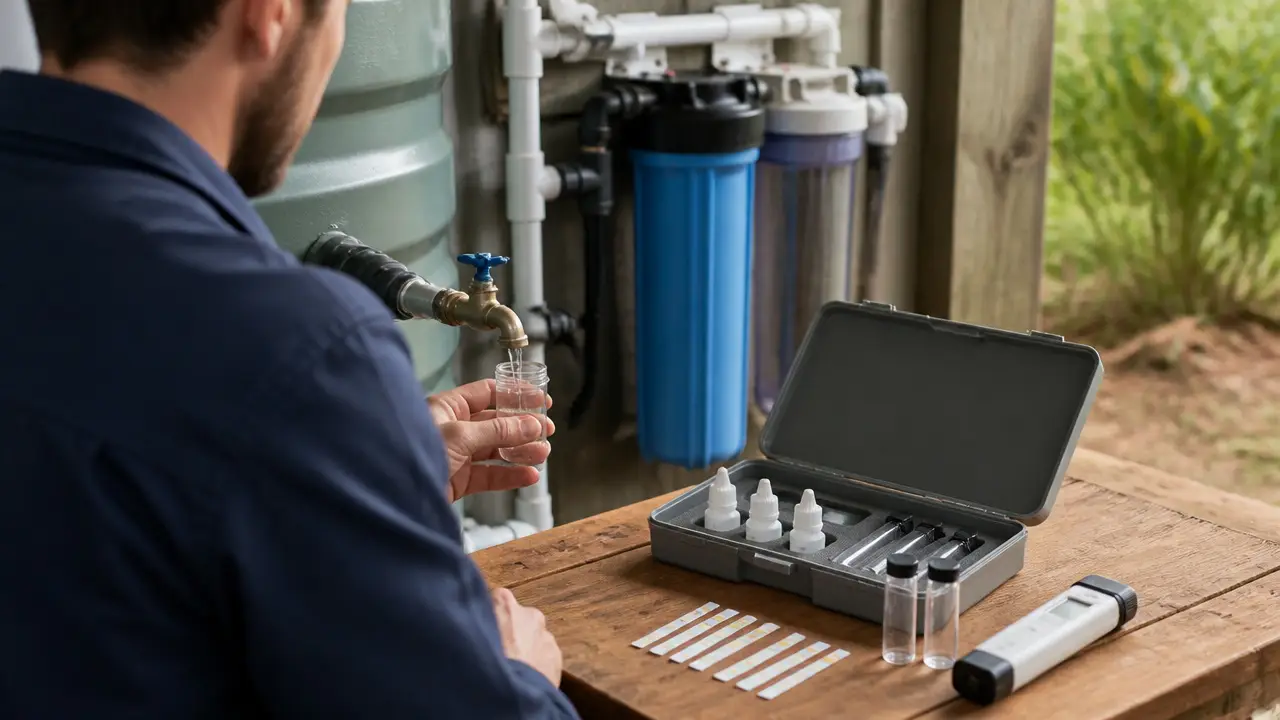
CDC guidance recommends testing rainwater used for drinking for harmful germs and chemicals at least yearly and considering additional testing if the water changes in color, taste, or smell. Local health authorities can advise which contaminants are relevant and how to find an appropriate certified laboratory.
Testing first prevents a common mistake: installing an excellent filter that treats the wrong problem.
For example:
- Sediment in water calls for particle filtration.
- A confirmed dissolved-metal problem may call for RO or another specifically certified treatment.
- Microbial contamination needs suitable microbial treatment.
- Some organic chemicals may respond well to activated carbon.
- Several problems may require several stages.
For Rainwater, Think in Treatment Stages
Collected rainwater should not be considered safe to drink simply because it looks clear.
Rain can collect contaminants from the air. After it reaches the roof, it may pick up dust, roofing materials, animal droppings, leaves, metals, and other contaminants. CDC recommends treating rainwater according to how it will be used and regularly testing water used for drinking, cooking, or bathing.
A well-planned rainwater system begins before the fine filter.
A typical approach may include:
- Roof and gutter maintenance to reduce contamination entering the system.
- Leaf screens to keep larger debris out.
- First-flush diversion to send away the first runoff from the roof, which tends to carry more contamination.
- Covered storage protected from insects, animals, debris, and sunlight.
- Sediment prefiltration to protect finer treatment equipment.
- Treatment matched to water-test results, which might include carbon, RO, or other processes.
- Suitable disinfection when microbiological control is required.
- Regular maintenance and laboratory testing to confirm that the complete system continues to perform as intended.
A first-flush diverter is a device that sends the first portion of roof runoff away from the tank. It can improve incoming rainwater quality, but it is not a drinking-water treatment device.
For drinking-water use, collection design, treatment, maintenance, current laboratory testing, and applicable local requirements all matter.
So Which Filter Should You Choose?
If you need one household filtration technology that covers the widest variety of contaminant types, reverse osmosis is usually the strongest starting point.
Choose it because your water test and certified contaminant claims support it, not simply because RO has a reputation for fine filtration.
For relatively clean municipal water where the concern is mainly taste or odor, activated carbon may be all that is needed.
For dirty rainwater going into a tank, a sediment filter may be necessary before any fine treatment.
For microbial concerns, filtration may need to be paired with a suitable disinfection stage.
And for rainwater intended for drinking, do not depend on any single filter to declare the water potable. Potable means suitable for drinking. That decision should be based on the whole collection and treatment system, proper maintenance, current laboratory testing, and local health requirements.
Frequently Asked Questions
Does reverse osmosis remove 100% of contaminants?
No. Reverse osmosis removes or reduces a very broad range of contaminants, but no RO system should be assumed to remove every chemical or microorganism under every condition. Check its certified contaminant-reduction claims and match them to your water-test results.
Is reverse osmosis better than activated carbon?
RO removes a broader range of dissolved contaminants. Activated carbon is especially useful for certain chemicals, chlorine, taste, and odor. Many systems use both because the two treatment methods do different jobs.
Does reverse osmosis remove bacteria and viruses?
RO membranes can remove bacteria, viruses, and parasites. However, safe drinking-water treatment also depends on correct installation, maintenance, protection against contamination after treatment, and appropriate testing.
Does UV remove more contaminants than RO?
No. UV has a much narrower job. It uses ultraviolet light to control microorganisms but does not remove dissolved chemicals. RO reduces many chemicals as well as microbes. UV and RO may be complementary rather than competing treatment methods.
Does a lower micron filter remove more contaminants?
Not necessarily. A lower micron rating means the filter can capture smaller particles, but dissolved chemicals may pass through many mechanical filters regardless of pore size. The filter material and treatment process matter as much as the micron rating.
Is RO enough to make rainwater safe to drink?
RO alone should not be treated as proof that roof-collected rainwater is safe to drink. Rainwater drinking systems require suitable collection, prefiltration, treatment for identified contaminants, maintenance, laboratory testing, and compliance with applicable local requirements.
How do I know which contaminants my filter removes?
Check the filter's independent certification and its specific contaminant-reduction claims. Do not assume that every product meeting the same general standard has identical performance. Start with a water test so you know which claims actually matter for your water.