As an affiliate, we may earn a commission from qualifying purchases. We get commissions for purchases made through links on this website from Amazon and other third parties.
Sediment in rainwater usually comes from dust, roof grit, leaves, pollen, insects, and other debris washed into the collection system. The best way to remove it is to stop larger material before it reaches the tank, allow smaller particles to settle, and filter the water before the point of use when needed.
A good sediment-control setup often follows this path:
Roof → gutters → debris screen → first-flush diverter → storage tank → raised or floating intake → sediment filter → intended use
You may not need every stage. Garden watering can often tolerate more sediment than drip irrigation, pumps, appliances, or household water systems.
Where Sediment in Rainwater Comes From
Rain itself may carry some airborne dust, but much of the visible sediment in stored rainwater comes from the collection surface.
Common sources include:
- Dust and soil blown onto the roof
- Pollen
- Leaves and small plant pieces
- Bird and animal droppings
- Insects
- Roofing grit or weathered roofing material
- Dirt inside gutters and downspouts
- Algae or organic material growing inside the system
The first runoff after a dry spell can contain especially high amounts of dirt and other contamination because it washes accumulated material from the roof. The CDC recommends using measures such as first-flush diversion to help keep this initial runoff out of rainwater storage.
Removing sediment is easier when you deal with it before it enters the tank instead of trying to filter everything afterward.
Start by Keeping the Roof and Gutters Clean
The roof is the first part of the rainwater system.
Leaves, dirt, and organic debris left on the collection surface eventually wash toward the tank. Keeping the roof, gutters, and downspouts reasonably clean reduces the amount of material every later treatment stage must handle.
Inspect the collection path periodically and remove debris where it can be reached safely.
Do not take unnecessary risks on a roof. If cleaning requires working from a steep, high, wet, or difficult-to-access roof, use a qualified person with suitable access equipment.
Cleaning the catchment does not make collected rainwater safe to drink. Roofing materials, animal waste, airborne contaminants, and other sources can affect water quality even when the roof looks clean.
Use a Screen Before Water Enters the Tank
A screen is one of the simplest ways to reduce sediment.
Screens can catch larger debris such as:
- Leaves
- Twigs
- Seeds
- Insects
- Pieces of roofing debris
The screen can be installed at the gutter outlet, downspout, tank inlet, or another accessible point before storage.
Choose a screen that does not restrict the expected storm flow too much. A very fine screen may catch smaller material, but it can also clog faster. If a blocked screen causes water to overflow away from the tank, making it finer may reduce your usable collection rather than improve it.
Check screens after storms and during seasons when leaves, pollen, or insects are common.
Add a First-Flush Diverter
A first-flush diverter sends the first part of roof runoff away from the storage tank.
That early water tends to pick up material that collected on the roof between storms. Once the first flush has been diverted, later runoff is generally cleaner.
First-flush systems can reduce the amount of dirt entering a tank, but they do not remove every contaminant. They also need maintenance. A diverter that stays full, clogs, or cannot drain correctly may stop working as intended.
The amount that should be diverted depends partly on the collection area and system design. There is no single first-flush volume that is correct for every roof. CDC guidance notes that the needed amount depends on the size of the roof feeding the collection system.
Let Fine Sediment Settle in the Tank
Even with good screening, very small particles will usually enter a rainwater tank.
Many of the heavier particles eventually settle to the bottom. Over time, they form a layer of sludge or sediment.
This natural settling is useful because the cleaner water is normally above that layer.
Try not to keep stirring the bottom of the tank. High-velocity inlet water, a pump intake sitting directly on the floor, or aggressive cleaning can suspend settled material again.
A tank inlet designed to reduce turbulence can help keep settled material on the bottom. In larger systems, this may be done with a calming inlet that directs incoming water gently rather than blasting it across the tank floor.
Draw Water Above the Bottom of the Tank
Avoid pulling water directly from the sediment layer.
If the outlet or pump intake is positioned at the very bottom, it may pick up grit and sludge every time water is used.
Depending on the tank design, water can instead be taken from:
- An outlet slightly above the tank floor
- A pump intake raised above the bottom
- A floating intake that draws from below the water surface
A floating intake follows the water level while staying away from settled sludge. It can be useful in larger cistern systems where water quality at the pump intake matters.
The intake still needs to stay below the surface. Water right at the surface can contain floating material, insects, or other debris.
Add a Sediment Filter Where It Helps
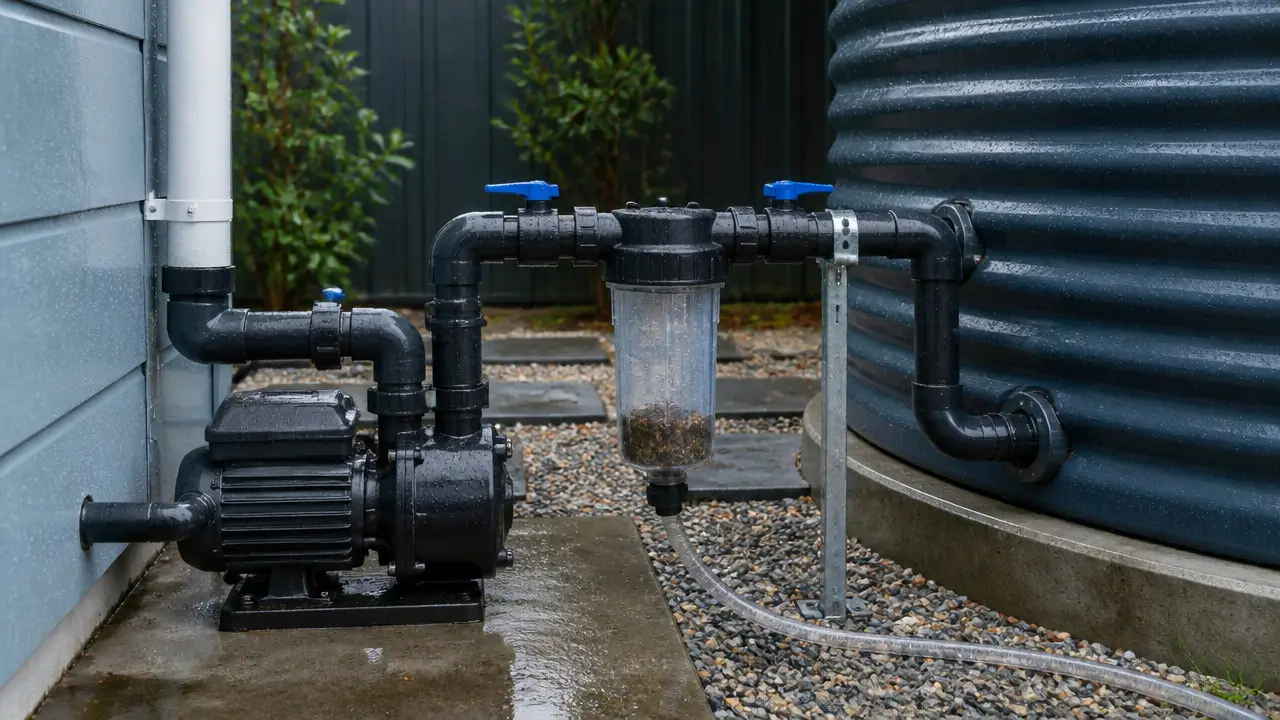
A sediment filter can remove particles that remain suspended in the water.
These filters are especially useful when rainwater feeds equipment that can clog, including:
- Pumps
- Small irrigation valves
- Drip irrigation
- Sprayers
- Appliances designed to use rainwater
- Additional water-treatment equipment
A filter's micron rating describes the approximate size of particles it is designed to catch. One micron is one-thousandth of a millimeter.
A lower micron number means finer filtration. It also normally means the filter can clog more quickly if a lot of dirt reaches it.
For that reason, it is usually better to remove large debris first and use finer filtration later.
For example, a system might use:
- A coarse screen before the tank
- Settling inside the tank
- A sediment filter after the tank
- Any additional treatment required by the intended water use
Do not automatically install the finest filter you can find. The correct filter depends on water quality, required flow, pump capacity, downstream equipment, and how often you are willing to service the filter.
Put Filters in the Right Part of the System
Filter placement matters.
Before the tank
Pre-tank filtration is mainly useful for keeping leaves and larger debris out of storage.
Its advantages include:
- Less sludge accumulation
- Cleaner tank water
- Less debris around pumps and outlets
- Easier tank maintenance
Pre-tank filters must still pass enough water during heavy rain. A filter that clogs during a storm may cause collection water to bypass the tank.
After the tank
Post-tank sediment filters catch smaller particles before the water reaches the intended use.
They are often useful before drip irrigation, household plumbing equipment, or later treatment stages.
If a pump supplies the system, the filter must be suitable for the flow and pressure involved. Watch for increasing pressure loss as the filter loads with sediment.
Do Not Let a Dirty Filter Restrict the Pump
Sediment filters eventually clog.
As the filter becomes dirty, resistance to water flow increases. Symptoms may include:
- Lower flow at faucets or hoses
- Reduced irrigation performance
- Pump pressure problems
- A pump running longer than normal
- Frequent cycling in some pressure systems
Inspect and clean or replace filter elements according to their design rather than waiting until water barely flows.
Explore practical steps for removing sludge from the rainwater tank to verify cleaning access that supports sediment and odor management.
If the filter clogs very quickly, the filter itself may not be the main problem. Check for excessive tank sludge, a low pump intake, dirty gutters, a failed first-flush system, or an inlet that keeps stirring the tank bottom.
Remove Accumulated Sediment From the Tank
Some sediment will collect even in a well-designed system.
Inspect the tank periodically. How quickly sludge builds depends on the roof, local dust, vegetation, rainfall pattern, prefiltration, and tank design.
A small amount of settled material does not always mean the entire tank needs immediate cleaning. Cleaning too often can waste stored water and may disturb a system that is otherwise working well.
When sediment becomes excessive, remove it using a method suited to the tank. This may involve draining the tank or removing sludge through an accessible cleaning opening.
Never climb into a cistern or enclosed tank unless the work is being handled under proper confined-space safety procedures. Tanks can present serious hazards even when they appear empty.
For tanks used as part of a drinking-water system, cleaning and disinfection require additional care. CDC guidance provides specific procedures for cistern cleaning after contamination events such as flooding or heavy rain.
What to Do if the Water Suddenly Becomes Muddy
If normally clear rainwater becomes cloudy or full of sediment, find the cause before simply installing a finer filter.
Check the tank water level
A nearly empty tank may allow a pump or outlet to draw from the bottom sediment layer.
Check the pump intake
Make sure the intake has not fallen onto the tank floor.
Check for recent tank disturbance
Cleaning, moving a tank, filling it rapidly, or changing plumbing can stir up old sediment.
Inspect the inlet
A strong inflow directed at the tank bottom can continually resuspend sludge.
Inspect the roof and gutters
A storm after a long dry period may wash unusually large amounts of dirt into the system.
Check the first-flush diverter
Make sure it is draining, resetting, and directing the intended first runoff away from storage.
Inspect sediment filters
A damaged, incorrectly fitted, bypassed, or missing filter element may allow particles through.
If the water remains cloudy even after it has had time to settle, very fine suspended material may be present. Filtration may be needed, but water appearance alone cannot tell you whether the water is safe for a particular use.
Sediment Removal for Garden Irrigation
Simple garden watering usually does not require perfectly clear water.
A basic system may only need:
- Clean gutters
- A debris screen
- A first-flush system
- A tank outlet located above the bottom
The requirements become stricter when the irrigation system contains small openings.
Drip emitters, fine sprayers, and small valves can clog with particles that would pass through a normal garden hose. Use filtration appropriate for the irrigation equipment and expected flow.
Check the irrigation equipment manufacturer's filtration requirements where available rather than choosing a filter only by guesswork.
Sediment Removal for Pumps
Sediment can be hard on pumping systems.
Grit may clog strainers and valves, interfere with small passages, and add wear to some pump components.
Keep the pump intake away from the tank floor and prevent large debris from reaching it.
Do not assume that placing an extremely fine filter on the pump suction side is a good solution. Excessive suction restriction can reduce pump performance and may contribute to pump problems.
Follow the pump manufacturer's requirements for suction piping, strainers, allowable restrictions, and required flow.
Sediment Removal Does Not Make Rainwater Potable
Clear water is not the same as safe drinking water.
A sediment filter mainly deals with particles. It does not automatically remove viruses, bacteria, dissolved metals, pesticides, roofing chemicals, or other contaminants.
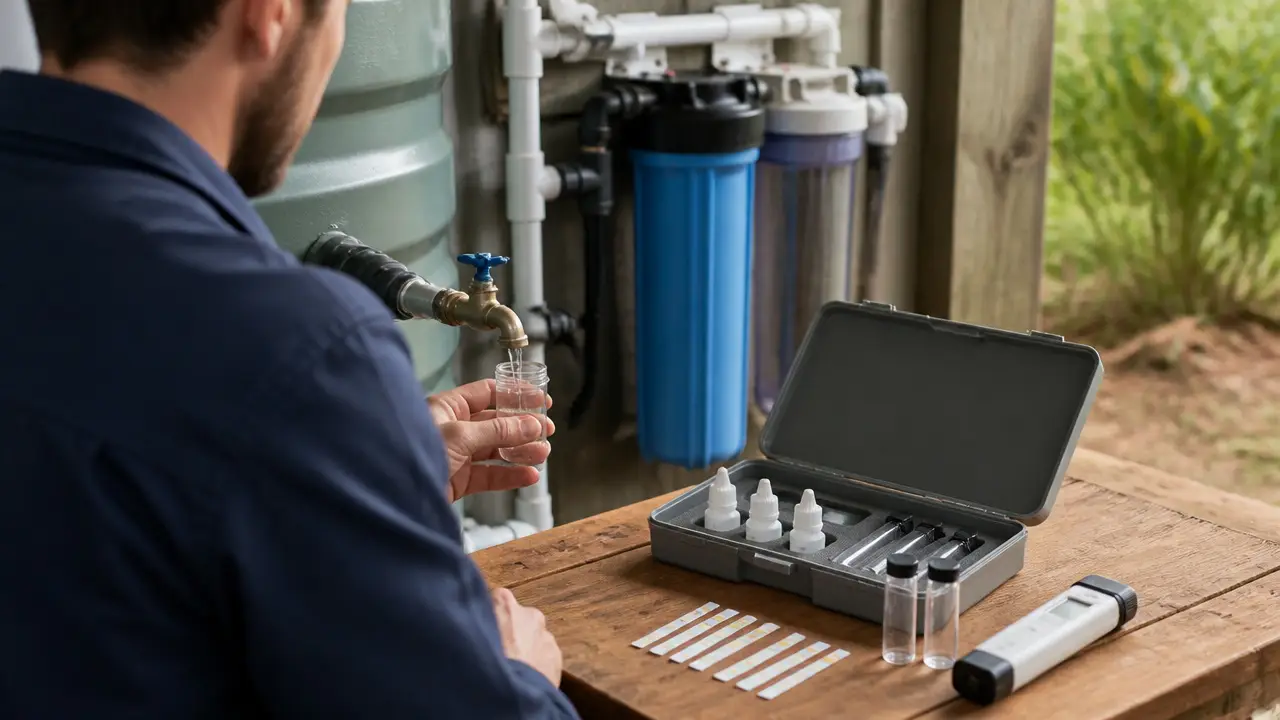
The CDC states that rainwater can contain germs and chemicals even when it looks clean. For rainwater used for drinking, cooking, or bathing, CDC guidance recommends regular testing and treatment suited to the contaminants present.
Different treatment methods remove different contaminants. A filter should therefore be selected for what needs to be removed rather than simply because it produces clearer-looking water.
If collected rainwater is intended for drinking, treat it as a whole-system project. Suitable collection materials, prefiltration, treatment, disinfection where required, maintenance, current laboratory testing, and applicable local requirements all matter. Contact your local health authority or a qualified water-treatment professional when designing or maintaining a potable system.
A Practical Sediment-Control Setup
For many home rainwater systems, sediment control works best when several simple measures share the job.
A practical order is:
- Keep the roof and gutters reasonably clean.
- Screen leaves and large debris before storage.
- Divert the first dirty runoff from each rain event.
- Let fine sediment settle inside the tank.
- Keep the outlet or pump intake above the tank bottom.
- Add finer filtration only where the intended use requires it.
- Service screens and filters before they become badly clogged.
- Inspect the tank and remove excessive sludge when necessary.
This approach normally works better than expecting one small filter to handle everything washed off the roof.
Frequently Asked Questions
Can you let sediment settle out of rainwater naturally?
Yes. Many heavier particles will settle to the bottom of a rainwater tank if the water is left undisturbed. Keep the outlet or pump intake above this sediment layer so it is not pulled back into the system.
What is the best filter for sediment in rainwater?
There is no single best micron rating for every system. Use coarse screening for large debris first, then choose finer filtration based on the intended use, required flow, pump setup, and downstream equipment.
Why does my rainwater look dirty after the tank gets low?
The outlet or pump may be getting close to the sediment layer at the bottom. A low water level can also make incoming water more likely to disturb settled sludge.
Will a first-flush diverter remove all sediment?
No. It can reduce the dirty runoff entering the tank at the beginning of a storm, but some fine particles will still reach storage. Screening, settling, and sometimes additional filtration are still useful.
How do I keep sediment from clogging drip irrigation?
Keep debris out of the tank, draw water above the bottom, and install filtration suitable for the drip equipment. Check the irrigation manufacturer's filtration requirement because very small emitters can clog easily.
How often should I clean sediment from a rainwater tank?
There is no fixed schedule that fits every system. Inspect the tank periodically and clean it when sediment buildup becomes excessive or starts affecting water quality or equipment. Better roof, gutter, first-flush, and inlet filtration can reduce how quickly sludge accumulates.
Does removing sediment make rainwater safe to drink?
No. Sediment removal only addresses particles. Rainwater may still contain harmful germs or chemicals. Drinking-water use requires suitable collection, treatment, maintenance, and regular water-quality testing.