As an affiliate, we may earn a commission from qualifying purchases. We get commissions for purchases made through links on this website from Amazon and other third parties.
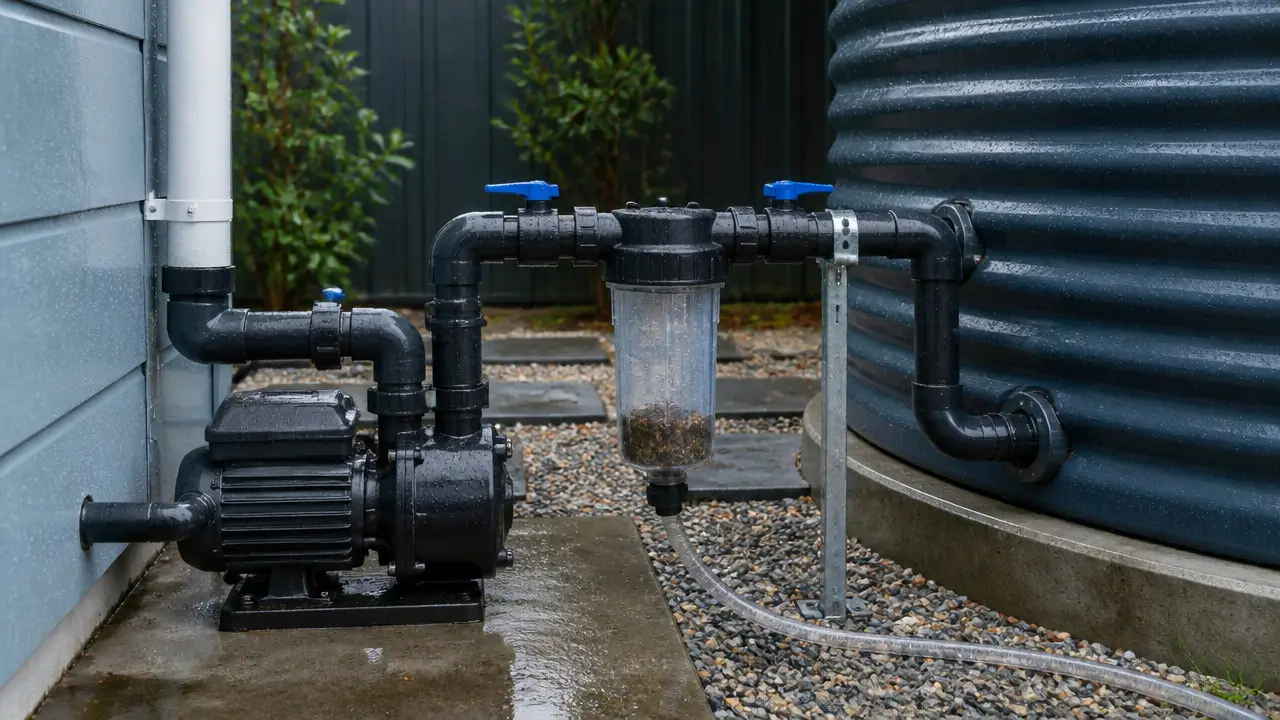
Yes. You can use a water filtration and treatment system to supply a house with collected rainwater. The right setup depends on what you want the water to do.
For toilets, laundry, cleaning, and some outdoor uses, the system may only need good screening, storage, pumping, and filtration. If you want to drink the water, cook with it, brush your teeth with it, or use it for other uses where you may swallow it, you need a much more complete treatment system.
Rainwater should not be assumed safe just because it looks clear. Roof runoff can pick up bird droppings, dirt, insects, roofing chemicals, metals, and other contaminants. CDC recommends regular testing for germs and chemicals when rainwater is used for drinking, cooking, or bathing.
What a Whole-House Rainwater System Looks Like
A typical system follows this path:
Roof → gutters → debris screen → first flush diverter → storage tank → pump → filters → treatment → house
Each part has a different job.
1. Keep Large Debris Out
Start before the water reaches the tank.
Gutter guards, leaf screens, and inlet screens can keep out leaves, twigs, insects, and other large debris. Keeping this material out of the tank reduces sludge and makes later filtration easier.
The roof and gutters also need regular cleaning. A good filter cannot make up for a badly contaminated collection surface.
2. Use a First Flush Diverter
A first flush diverter sends the first portion of rain from a storm away from your storage tank.
That first runoff can carry a higher amount of dirt, bird waste, pollen, dust, and other material that built up on the roof between storms. CDC recommends considering a first flush device as one way to improve collected rainwater quality.
The correct amount to divert depends partly on the roof area and the collection system. There is no single first-flush volume that is right for every house.
3. Store the Water in a Suitable Tank
The tank should be closed against insects, animals, dirt, and sunlight.
Screens should protect openings such as vents and overflows. Blocking light also helps limit algae growth.
The tank needs a safe overflow route so heavy rainfall cannot flood the foundation or damage the tank.
Tank materials and fittings also matter if the water may eventually be used as drinking water. Chemicals can enter rainwater from roofing, gutters, pipes, tanks, and other surfaces.
What Filters Do You Need After the Tank?
There is no single "rainwater filter" that handles every problem.
A house system normally uses treatment in stages.
Sediment Filtration
A sediment filter removes small suspended particles such as dirt, rust, and fine debris.
Filters are often described by their micron rating. A micron is a very small unit of measurement. A smaller micron rating means the filter can catch smaller particles.
Instead of putting an extremely fine filter first, systems often use progressively finer filtration. This can reduce clogging and pressure loss.
For example, the system might have:
- A coarse filter for larger particles.
- A finer sediment filter.
- Additional treatment based on the intended water use and test results.
The exact filter sizes should match the water quality, pump flow, and treatment equipment that follows.
Activated Carbon
Activated carbon can be useful for improving taste and odor and reducing certain chemicals.
However, carbon does not make untreated rainwater safe to drink by itself.
What a carbon filter removes depends on its design and certification. CDC advises choosing treatment based on the actual contaminants found in the water rather than assuming one type of filter removes everything.
Carbon filters also need regular replacement. An old filter can become a maintenance problem rather than a solution.
Disinfection for Household Rainwater
If water will be used for drinking or other potable purposes, filtration is normally only part of the treatment process.
Potable means water intended to be safe for drinking and other uses where people may swallow it.
A system may use UV, chlorine, another suitable disinfection method, or a professionally designed combination.
UV Treatment
Ultraviolet treatment exposes water to UV light to inactivate microorganisms.
A common layout is:
Tank → pump → sediment filtration → additional treatment as needed → UV → house
UV usually belongs near the end of the treatment train because dirty or cloudy water can interfere with UV performance.
UV also has important limits.
It does not remove dirt from the water. It does not remove dissolved chemicals or metals. It does not provide a disinfectant residual throughout the plumbing after the water leaves the UV chamber.
The UV unit also needs electrical power, proper flow, routine cleaning, and lamp or component replacement according to its specifications.
Chlorine Disinfection
Chlorine is another possible disinfection method.
Unlike UV, properly managed chlorination can leave some disinfectant in the water after treatment. That can help control microbial growth farther into a plumbing system.
However, chlorine treatment requires correct equipment, dose control, contact time, water-quality management, and maintenance. It should not be treated as a matter of pouring an estimated amount of bleach into a household tank.
For potable systems, use an established treatment design and follow applicable health and plumbing requirements.
Do You Need Reverse Osmosis?
Not necessarily.
Reverse osmosis, or RO, forces water through a membrane that can remove many dissolved contaminants.
RO can be useful when water testing shows a contaminant that the chosen RO system is designed to reduce. It is often used as a point-of-use treatment at a drinking-water tap rather than as the first treatment stage for an entire rainwater supply.
Review health risks from drinking raw rainwater to assess the service interval indicated by reliable monitoring data.
Putting dirty roof runoff directly into an RO system would quickly cause problems. Water needs suitable pretreatment first.
RO also produces a waste stream and reduces available flow. Whole-house RO therefore requires more planning than a small kitchen drinking-water system.
For many rainwater systems, RO is an optional treatment stage rather than an automatic requirement.
A Practical Non-Potable Whole-House Setup
If the rainwater will only serve things such as toilet flushing, irrigation, or another approved non-potable use, a system might look like:
Roof collection → leaf screen → first flush → tank → pump → sediment filtration → approved non-potable plumbing
Treatment requirements vary with the use and local rules. Some indoor non-potable systems may also require disinfection.
Non-potable means the water is not intended for drinking.
One of the most important plumbing rules is keeping untreated rainwater from contaminating the potable water supply. CDC specifically advises keeping rainwater separate from pipes carrying treated drinking water.
A plumber familiar with rainwater systems and local cross-connection requirements is a good choice when rainwater piping enters a house.
A Practical Potable Rainwater Setup
A system intended to provide drinking water may be more like:
Suitable roof → screened gutters → first flush → protected tank → pump → sediment filtration → contaminant-specific treatment → disinfection → potable plumbing
That diagram is only a starting point.
The actual treatment stages should be chosen after considering:
- The roof and collection materials
- Local air pollution and nearby contamination sources
- Tank construction
- Initial water quality
- Bacteria and other microbial risks
- Chemical test results
- Household water demand
- Required pump flow and pressure
- Local health and plumbing requirements
WHO's current drinking-water guidance uses a whole-system approach that manages risks from the water source through treatment and delivery to the user. Its 2026 guidance for rainwater collection also emphasizes inspection, maintenance, monitoring, and corrective action rather than relying on one treatment device.
Test the Water Before Choosing the Final Treatment
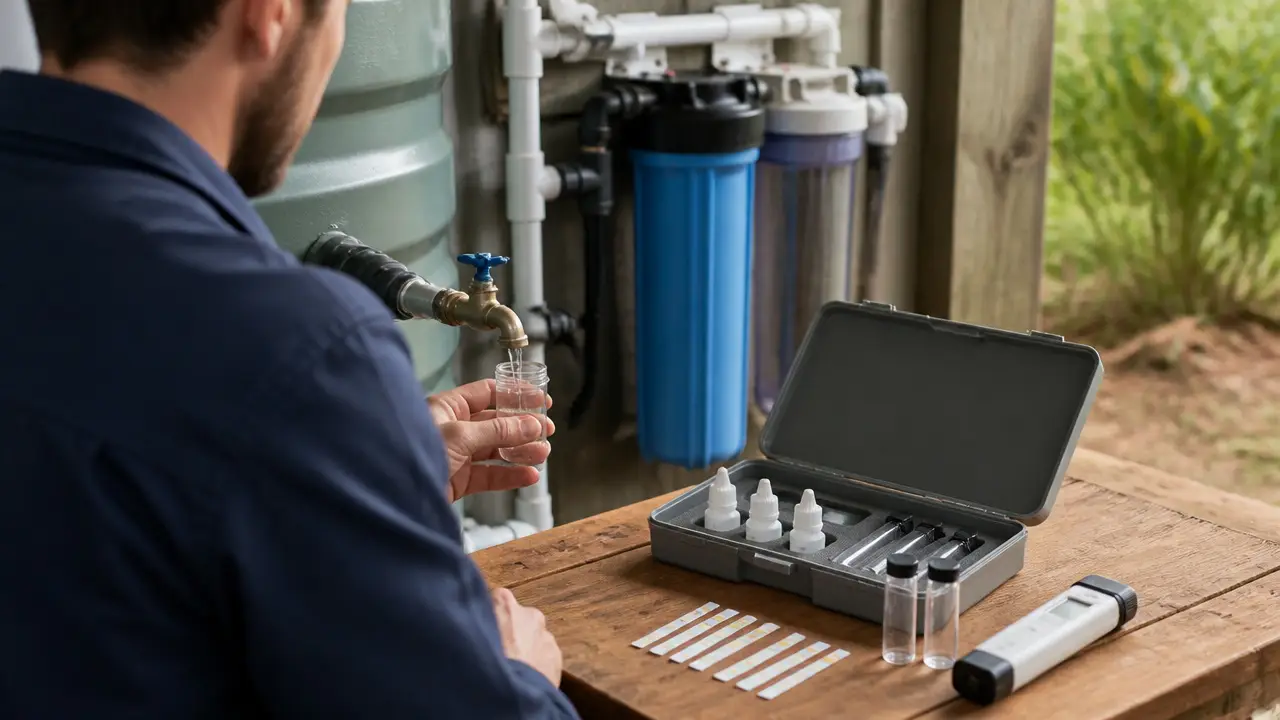
Testing is especially important if you plan to drink the water.
A water test tells you what treatment problem you actually have.
For example, a sediment filter designed to remove particles is not automatically a solution for:
- Bacteria
- Viruses
- Dissolved metals
- Roofing chemicals
- Other dissolved contaminants
Likewise, a UV unit may control certain microorganisms under suitable operating conditions but does not remove chemical contamination.
CDC recommends testing rainwater used as a drinking-water source at least annually for harmful germs and chemicals, with additional testing based on local conditions and changes in the water. Your local health department or a qualified laboratory can help determine the appropriate tests.
Do not rely on clear appearance, good taste, a TDS meter, or a simple home test strip as proof that rainwater is safe to drink.
Total dissolved solids, or TDS, is a measure related to dissolved substances in water. It does not tell you whether dangerous bacteria, viruses, or specific chemicals are present.
Make Sure the Pump and Filters Work Together
Whole-house rainwater systems also have to move enough water.
A pump must provide enough flow rate and pressure for the house after accounting for pressure losses through filters and treatment equipment.
Flow rate is how much water moves through the system over a certain time, such as gallons per minute.
A very fine filter can cause a large pressure drop, especially as it becomes dirty. A UV chamber, carbon filter, softener, or other treatment device can add more resistance.
The pump must also overcome head height. Head height is the vertical lift and resistance the pump works against while moving water.
This is why choosing a pump, filters, and treatment equipment separately without checking compatibility can lead to weak showers, cycling pumps, clogged cartridges, or treatment equipment operating outside its intended flow range.
Plan for Maintenance
A rainwater filtration system is not maintenance-free.
Expect to periodically:
- Clean gutters and roof collection areas where safe to do so.
- Clean inlet and debris screens.
- Service the first flush system.
- Inspect the tank for sediment and contamination.
- Replace or clean sediment filters.
- Replace carbon media when required.
- Maintain pumps and pressure equipment.
- Service UV or other disinfection equipment.
- Check vents, overflow screens, and insect barriers.
- Test potable rainwater regularly.
- Retest after contamination events or major system changes.
Filters that are not maintained can clog, reduce pressure, or become places where microorganisms grow. CDC notes that treatment equipment itself can create problems when it is not properly maintained.
Check Local Requirements Before Connecting Rainwater to Your House
Rules for rainwater use vary by location.
Requirements can differ for outdoor irrigation, toilets, laundry, bathing, and drinking water. Indoor systems may also have rules covering pipe identification, backflow protection, cross-connections, permits, treatment, and testing.
Before connecting a rainwater system to household plumbing, check with the local building department, plumbing authority, environmental agency, or health department.
This is especially important when the house also has municipal water. The two systems should not be connected in a way that allows rainwater to flow back into the treated public supply.
Frequently Asked Questions
Can rainwater supply an entire house?
Yes, a properly sized rainwater collection and treatment system can supply many or all household water uses. Whether it can supply the house reliably depends on roof collection area, local rainfall patterns, storage capacity, household demand, treatment capacity, and backup water availability.
Can you drink rainwater after filtering it?
Not necessarily. A filter may remove particles or certain contaminants without removing all harmful germs and chemicals. Drinking-water treatment should be based on water testing and usually involves several barriers, including suitable collection, filtration, disinfection, maintenance, and regular laboratory testing.
Is UV enough to make rainwater safe to drink?
UV can be an important disinfection stage, but it is not a complete rainwater treatment system. Water generally needs suitable pretreatment before UV, and UV does not remove sediment, dissolved metals, or many chemical contaminants.
Do I need reverse osmosis for rainwater?
Not always. Reverse osmosis may be useful when testing identifies dissolved contaminants that an appropriate RO system can reduce. Many systems use sediment filtration and other treatment before deciding whether RO is needed.
Can I use rainwater for toilets without treating it for drinking?
Often, rainwater used only for approved non-potable purposes can use a simpler treatment system. Screening and filtration may be enough for some applications, while some local rules require additional treatment or disinfection for indoor use. Check your local requirements.
How often should rainwater be tested if I drink it?
CDC recommends testing rainwater used as a drinking-water source at least once each year for harmful germs and chemicals. Testing may need to be more frequent after contamination, system repairs, unusual changes in taste or appearance, or other events that could affect water quality.
Can rainwater and city water use the same plumbing?
They should not be connected in a way that allows untreated rainwater to contaminate the treated water supply. A system using both sources needs proper separation and cross-connection protection that meets local plumbing requirements. A qualified plumber can design the connection correctly.