As an affiliate, we may earn a commission from qualifying purchases. We get commissions for purchases made through links on this website from Amazon and other third parties.
A Brita filter can physically filter rainwater, but you should not use a Brita pitcher as the main treatment for collected rainwater. Brita says its pitcher filters should be used only with potable drinking water, not water that is microbiologically unsafe or of unknown quality.
That matters because roof-collected rainwater can contain dirt, bird droppings, bacteria, other germs, metals, and chemicals picked up from the air, roof, gutters, pipes, and storage tank. Water can look clear and still contain contaminants that could make you sick.
If rainwater will be used only for a garden or another suitable non-drinking use, a Brita filter is usually unnecessary. If you want to drink the water, think of the Brita as a possible final polishing filter after the water has already been properly collected, treated, and shown to be suitable for drinking—not as the treatment system itself.
What a Brita Filter Does
Brita filters are mainly designed to improve already-treated tap water.
The common Brita Original filter uses activated carbon and ion-exchange resin. It is designed to reduce chlorine taste and odor and certain contaminants such as copper, cadmium, and mercury. Brita Elite filters are certified for a wider range of contaminants, including lead and some fine particles.
These claims do not mean a Brita filter can turn untreated roof runoff into safe drinking water.
Brita specifically states that its filters are not intended to purify water that is microbiologically unsafe or of unknown quality unless adequate disinfection is provided before or after the system.
That is the key difference.
A Brita filter is a point-of-use drinking-water filter. A potable rainwater system is a whole treatment process.
Potable simply means water that is suitable for drinking.
Why Roof Rainwater Needs More Than a Pitcher Filter
Rain starts relatively clean, but the water you collect is not simply rain falling directly from the sky into a clean glass.
It usually travels across a roof.
The roof may contain:
- Dust and pollen
- Leaves and organic material
- Bird and animal droppings
- Insects
- Soot and airborne particles
- Metals or chemicals from roofing materials
- Dirt from gutters and downspouts
The water then enters a barrel, IBC tote, or cistern, where additional contamination can occur if the tank is dirty, poorly screened, or not maintained.
The CDC warns that rainwater can contain both germs and chemicals even when it looks clean. It recommends regular testing when collected rainwater is used for drinking, cooking, or bathing.
A pitcher filter is not designed to address every one of these risks.
A Brita Filter Does Not Replace Disinfection
One of the biggest limits is microbial safety.
Roof runoff can become contaminated with disease-causing organisms from animal waste and other sources. Depending on the organism and treatment method, safe drinking-water treatment may require filtration, disinfection, or several treatment stages.
Different treatment methods remove different things. For example, the CDC notes that filtration systems vary greatly in their ability to remove parasites, bacteria, viruses, and chemicals. Some microbes are small enough to pass through many ordinary filters.
This is why an activated-carbon pitcher should not be treated as a substitute for a properly designed microbial treatment system.
Boiling or another form of disinfection may control certain germs, but even that does not automatically solve chemical contamination. A complete drinking-water setup must address the actual contaminants in the collected water.
What a Rainwater Treatment System May Include
There is no single treatment setup that is right for every rainwater system. The correct approach depends on the roof, local environment, storage system, intended use, and water-test results.
A drinking-water system may involve several stages.
Roof and gutter management
Start by keeping the collection surface and gutters reasonably clean. Contamination that never reaches the tank is easier to manage than contamination that must be removed later.
Roofing materials also matter because some materials, coatings, flashing, and fittings can contribute metals or chemicals to runoff.
Leaf and debris screening
Screens can keep leaves, insects, and larger debris from entering the tank.
This is only coarse filtration. It does not make the water drinkable.
First-flush diversion
A first-flush diverter sends away some of the first runoff produced when a storm begins.
That early runoff often carries a heavier load of dust, droppings, and other material that collected on the roof during dry weather. The CDC recommends considering first-flush diversion as one way to improve collected rainwater quality.
A first flush improves the source water, but it is not a substitute for drinking-water treatment.
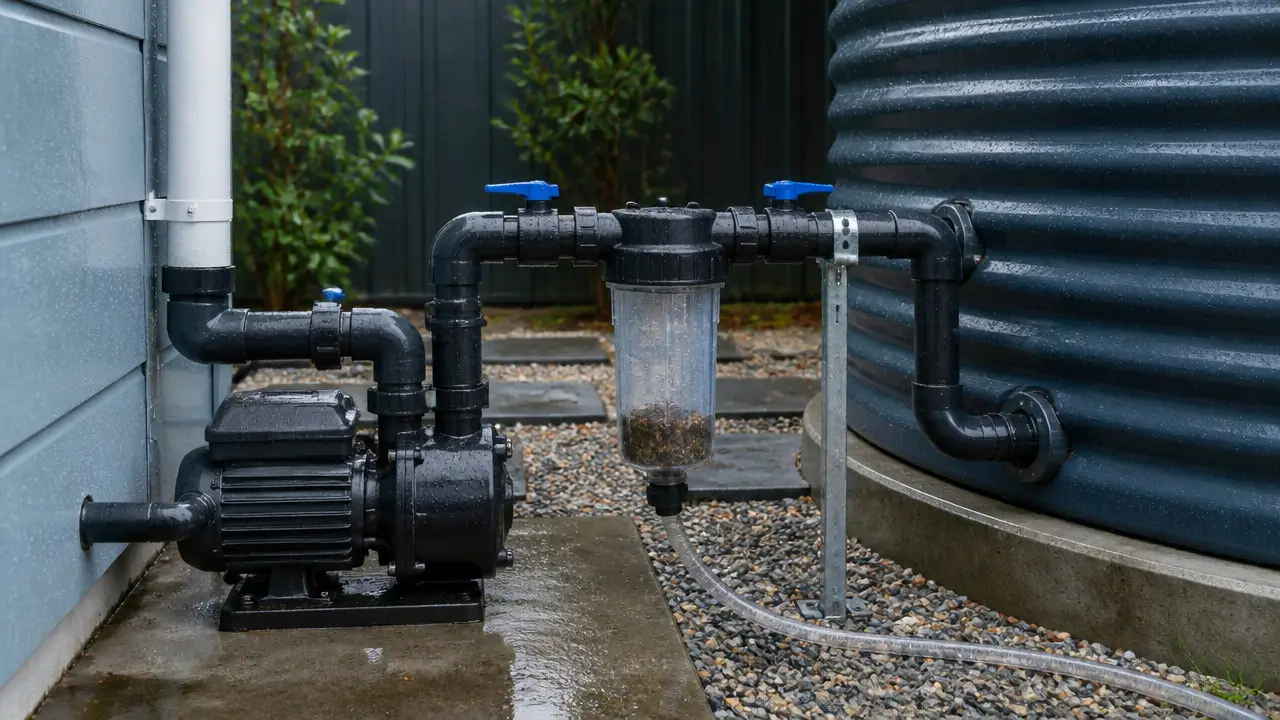
Sediment filtration
Stored rainwater may contain suspended particles or sediment.
A sediment filter can remove these particles before the water reaches finer treatment stages. This can also help protect downstream filters and treatment equipment from rapid clogging.
A filter's micron rating describes the approximate size of particles it is designed to capture. A smaller micron number generally means finer filtration, but micron size alone does not tell you whether a filter makes water microbiologically safe.
Treatment for known chemicals
Activated carbon, reverse osmosis, ion exchange, or another treatment may be needed depending on what testing finds.
Each treatment technology has limits. A device should be selected for the specific contaminant you need to reduce rather than simply because it is described as a "water filter."
Microbial treatment or disinfection
Alongside contaminants in untreated rainwater, assess likely upkeep demands over the system’s service life.
A potable system also needs a reliable way to manage harmful microorganisms when they are a risk.
Depending on the system and water quality, this might involve correctly selected filtration plus UV, chemical disinfection, reverse osmosis, or another suitable treatment process.
The treatment must be matched to the water. The CDC recommends testing first and choosing treatment that addresses the germs and chemicals actually present.
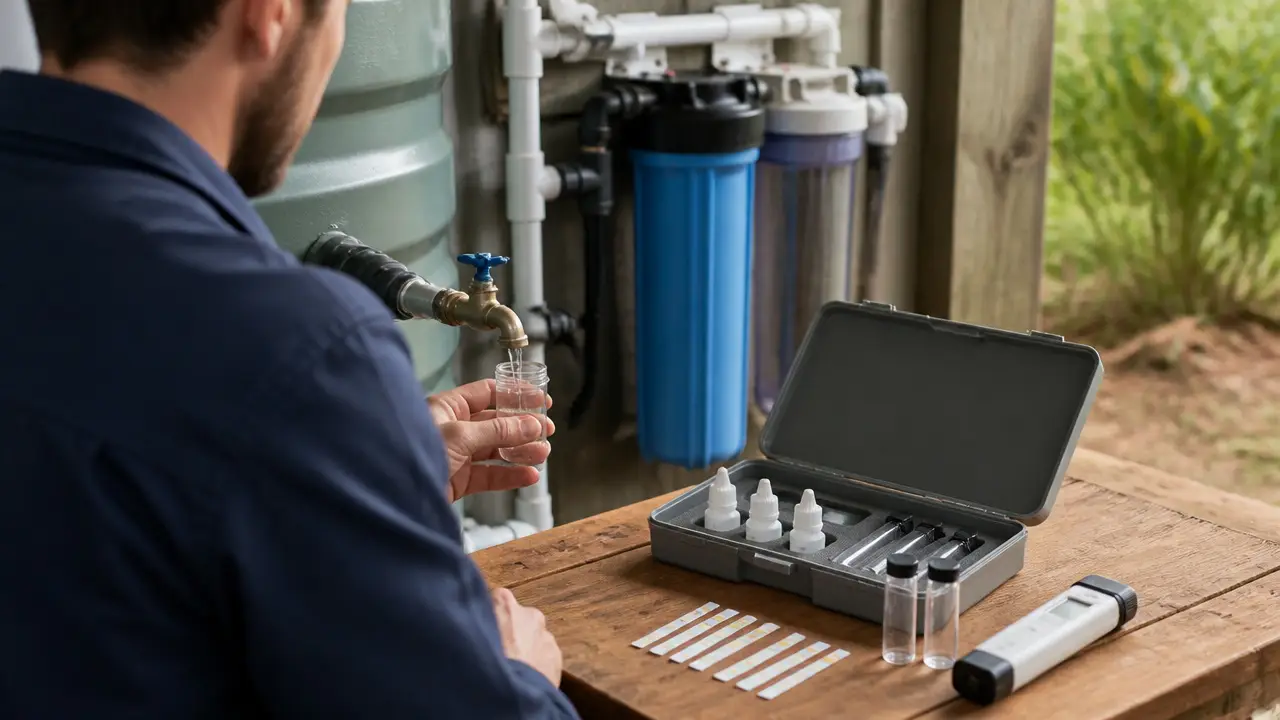
Laboratory testing
Testing is especially important if you plan to drink rainwater.
The CDC recommends testing private rainwater supplies at least annually for harmful germs and chemicals and seeking local health-department guidance on what should be tested. Additional testing may be appropriate when water quality changes or after system problems.
A home test strip, TDS meter, or clear appearance cannot provide a complete drinking-water safety assessment.
Can You Use a Brita After Treating Rainwater?
Possibly.
If your rainwater has already gone through a suitable treatment system and has been shown to be potable, a Brita may be used afterward much like it is used with normal drinking water.
For example, someone might use one as a final point-of-use filter to improve taste or reduce contaminants covered by that particular Brita model's certification.
That is much different from taking water directly from a rain barrel and pouring it through a pitcher.
Think of the sequence this way:
Collected rainwater → appropriate treatment → verified drinking water → optional Brita polishing
Not:
Rain barrel → Brita → automatically safe drinking water
That distinction is especially important because the manufacturer itself specifies potable water as the intended input for Brita pitcher filters.
What About Rainwater Used for Plants?
If the water is being used for suitable landscape irrigation rather than drinking, putting it through a Brita pitcher usually adds little value.
It also creates unnecessary work and can use up the filter quickly if the rainwater contains sediment.
A garden rainwater system is usually better served by keeping leaves and debris out of the tank and using an appropriate screen or sediment filter when needed to protect irrigation tubing, valves, or emitters.
Water used on edible plants may require more care because people can be exposed to contaminants on produce. The CDC recommends using treated tap or bottled water when possible for watering plants you plan to eat.
What About Rainwater Collected Directly From the Sky?
Water caught directly in a clean container avoids some roof contamination, but that does not guarantee it is drinking water.
Rain can pick up particles and chemicals from the atmosphere. The container itself can also introduce contamination.
A Brita still should not be used as proof that this water is safe to drink.
If the intended use is drinking, treat it as an unknown private water source until suitable treatment and testing establish otherwise.
The Bottom Line
A Brita filter is not a rainwater purification system.
It is designed mainly for filtering potable water and reducing specific contaminants covered by the particular filter's certification. Collected rainwater may contain germs, sediment, metals, and chemicals that require other treatment stages.
For garden or other appropriate non-potable uses, you generally do not need a Brita.
For drinking, build the system around safe collection, debris control, suitable prefiltration, treatment for identified contaminants, microbial treatment, good maintenance, and current laboratory testing. Check local requirements as well. A Brita can be an optional final filter only after the water is already suitable for that use.
Frequently Asked Questions
Can I pour rain-barrel water through a Brita and drink it?
No. A Brita pitcher should not be relied on to turn untreated rain-barrel water into drinking water. Roof runoff can contain germs and chemicals, and Brita specifies potable drinking water as the intended input for its pitcher filters.
Does a Brita filter remove bacteria from rainwater?
Do not rely on a Brita pitcher for microbial treatment of rainwater. Brita states that its filters should not be used with microbiologically unsafe or unknown-quality water without adequate disinfection.
Will a Brita remove dirt from rainwater?
It may capture some particles, depending on the filter, but sediment-heavy rainwater can also clog or shorten the useful life of a small point-of-use filter. A rainwater system normally handles debris and sediment before the drinking-water treatment stages.
Can I use a Brita after boiling rainwater?
Boiling can control many disease-causing germs when done correctly, but it does not remove every possible chemical contaminant. A Brita also does not cover every chemical that could be present. If rainwater will be regularly consumed, use a treatment plan based on water testing rather than assuming boiling plus a pitcher filter is complete treatment.
Is clear rainwater safe to drink?
Not necessarily. Harmful germs and chemicals may not change the color, smell, or taste of water. Drinking-water safety cannot be judged by appearance alone.
Do I need to filter rainwater for my garden?
Not with a Brita pitcher in most cases. Screens and appropriate sediment filtration are more useful when you need to keep leaves, dirt, or particles out of irrigation equipment. Whether collected rainwater is suitable for a particular crop or irrigation method depends on its source and water quality.
What is the safest way to make collected rainwater potable?
There is no single filter that works for every system. Start with suitable collection materials, keep debris out, consider first-flush diversion, maintain the storage tank, test the water for relevant germs and chemicals, and use treatment specifically designed for the contaminants found. Follow local health and plumbing requirements and get qualified professional help when designing a household drinking-water system.