As an affiliate, we may earn a commission from qualifying purchases. We get commissions for purchases made through links on this website from Amazon and other third parties.
Poor water quality does not always look dirty. Some problems cause clear warning signs, such as cloudy water, strange smells, unusual colors, sediment, or slime. Other problems, including some germs, metals, and chemicals, may cause no visible change at all.
This is especially important with collected rainwater. Rainwater can pick up dust, animal droppings, roofing materials, chemicals, and germs as it moves from the roof into gutters and storage. Even clear rainwater can contain contaminants that you cannot see, taste, or smell.
The signs below can help you spot a problem, but they cannot prove whether water is safe to drink.
Common Signs of Poor Water Quality
Cloudy or Murky Water
Water that suddenly becomes cloudy deserves attention.
Possible causes include:
- Fine dirt or dust from the roof
- Silt or sediment inside a tank
- Rust from metal parts
- Organic material from leaves or animals
- Air bubbles
- A damaged or overloaded filter
Cloudiness is also called turbidity. Turbidity simply means particles are suspended in the water.
With a rainwater system, cloudy water after a storm may mean that debris from the roof or gutters entered the tank. This can happen when screens are damaged, gutters are dirty, or a first-flush system is not working well.
A first-flush diverter sends the first portion of roof runoff away from the storage tank. That early runoff often carries more dust, dirt, droppings, and other material that collected on the roof between storms.
Do not assume that filtering cloudy water automatically makes it safe for drinking. The filter may remove particles while leaving dissolved chemicals or microorganisms behind.
Unusual Water Color
A noticeable color change can signal a water-quality or system problem.
You might see:
| What you notice | Possible causes |
|---|---|
| Brown or reddish water | Rust, iron, sediment, or roof debris |
| Greenish water | Algae or some forms of corrosion |
| Yellow or tea-colored water | Organic matter, leaves, or tannins |
| Black particles | Tank sediment, degrading materials, or plumbing deposits |
| White or milky appearance | Fine particles or trapped air |
Color alone cannot tell you exactly what is in the water.
For example, reddish staining can be associated with iron, while green or blue-green staining around plumbing may point toward corrosion involving copper. EPA guidance also lists stained fixtures, cloudy water, and colored water as reasons to investigate water quality.
A sudden change matters more than a water color that has remained stable and has already been properly evaluated.
Strange Smells
Water should not develop a strong new odor without a reason.
Watch for smells that seem:
- Musty
- Earthy
- Swampy
- Rotten-egg-like
- Metallic
- Chemical
- Fuel-like
Musty or earthy odors in stored rainwater may develop from organic material, microbial growth, algae, or stagnant conditions.
A rotten-egg smell is commonly associated with sulfur compounds such as hydrogen sulfide, although smell alone cannot confirm the cause.
Fuel or chemical odors require more caution. Do not drink water with an unexplained chemical, gasoline, or solvent-like smell. A suitable laboratory test may be needed to identify the contaminant.
It is also important to understand the opposite problem: odor-free water is not necessarily safe water. EPA notes that taste and odor can provide clues about water quality, but water can contain contaminants without producing either.
A New or Unpleasant Taste
Unexpected changes in taste can also indicate a problem.
People may describe poor-quality water as:
- Metallic
- Salty
- Bitter
- Earthy
- Chemical
- Soapy
Dissolved minerals, metals, corrosion, roofing materials, plumbing materials, or other contaminants can affect taste.
But tasting water is not a safe way to test it. If water has already developed an unusual appearance or odor, do not deliberately drink it to find out whether it tastes different.
Some serious drinking-water contaminants have no detectable taste. Lead is one example. EPA states that dissolved lead cannot reliably be seen, tasted, or smelled, so testing is needed to determine whether it is present.
The troubleshooting discussion “Why Is It Not Advisable to Drink Rain Water?” helps separate a water-quality reading from an actual health risk.
Sediment at the Bottom of a Tank or Container
Some sediment is common in untreated rainwater storage systems because small particles can pass through roof screens and settle over time.
A growing sediment layer, however, can be a sign that the system needs attention.
It may mean:
- Gutters need cleaning.
- Inlet screens are damaged or too coarse.
- The first-flush system is missing or not functioning properly.
- Heavy debris is entering the tank.
- The tank has gone too long without inspection or cleaning.
Sediment can also create places where organic material collects.
Do not enter a cistern or large storage tank to clean it. Tanks can present confined-space hazards. Use cleaning methods that can be performed safely from outside, or hire a qualified service when internal access is required.
Slime, Biofilm, or Algae
A slippery coating inside a barrel, tank fitting, hose, or filter housing is usually a sign that microorganisms are growing on the surface.
This layer is often called biofilm.
Green growth is more likely when sunlight reaches stored water. A translucent tank or open barrel can allow enough light for algae to grow.
The practical response is not simply to add more filtration. Find out why the growth is occurring.
Check for:
- Light entering the tank
- Open or damaged tank covers
- Organic debris
- Long storage periods
- Poor cleaning
- Dead sections of plumbing where water sits
- Filters that are overdue for service
Keep tanks covered and use opaque storage when possible.
Filters Clogging Faster Than Normal
A filter that suddenly needs cleaning or replacement much more often than before can be an early warning sign.
The water reaching it may contain more:
- Sediment
- Roof debris
- Algae
- Organic matter
- Rust
Start looking upstream rather than simply replacing filters more often.
For a rainwater system, inspect the path in this order:
- Roof
- Gutters and downspouts
- Leaf or debris screens
- First-flush system
- Tank inlet
- Storage tank
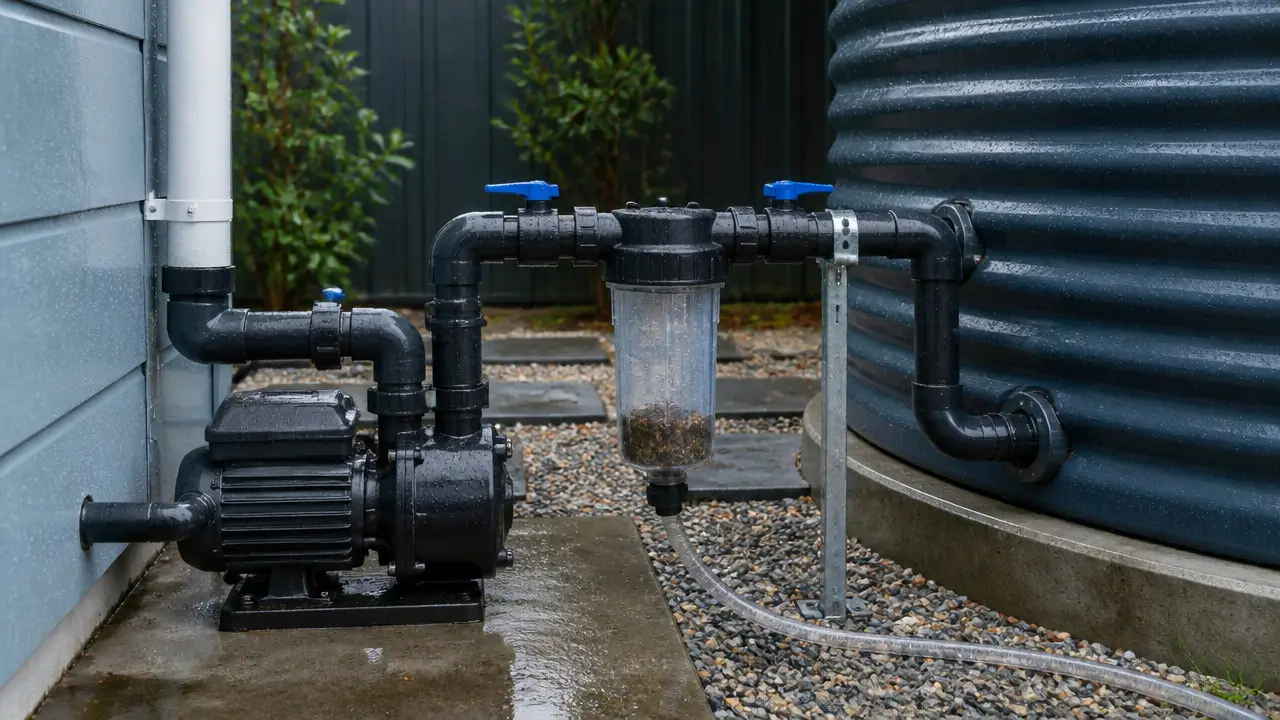
- Pump and plumbing
- Filters and other treatment equipment
This helps you find the source instead of treating the symptom.
Stains, Scale, or Corrosion
Water can also reveal quality problems through what it leaves behind.
White or crusty deposits usually indicate mineral scale. Hard water is a common cause in groundwater systems, although roof-collected rainwater is often much lower in hardness.
Red or brown staining can be related to iron.
Blue-green stains can indicate copper corrosion.
Corroded fittings, pinhole leaks, or rapid deterioration of metal parts can point toward water chemistry that is aggressive toward the plumbing.
A pH measurement may help investigate corrosion, but pH alone does not tell you whether the water is safe.
Study warning signs that the water tank needs cleaning to understand vessel construction compatible with the expected water use.
The explanation of limits in “Should I Be Worried About Cloudy Water?” shows why intended use matters when choosing treatment.
People Become Sick After Using the Water
Recurring stomach illness should be taken seriously, especially when several people using the same water develop similar symptoms.
Water contaminated with harmful microorganisms can cause gastrointestinal illness. EPA lists recurring gastrointestinal illness as a reason for private water users to consider testing for microbial contamination.
However, symptoms alone cannot prove that water caused the illness.
If drinking or household water is suspected:
- Stop drinking it until the problem is evaluated.
- Use a known safe water source for drinking and food preparation.
- Contact a health professional when illness requires medical attention.
- Contact your local health department for guidance about appropriate water testing.
Do not rely on boiling if chemical contamination may be involved. Boiling can kill many disease-causing microorganisms, but it does not remove every chemical contaminant.
Clear Water Can Still Have Poor Water Quality
One of the most important things to know about water quality is that appearance is only part of the picture.
Clear, odorless water can still contain:
- Bacteria
- Viruses
- Parasites
- Lead
- Nitrate
- Other metals
- Dissolved chemicals
CDC specifically warns that harmful germs and chemicals often do not change the appearance, taste, or smell of water.
This matters with rainwater because contamination can occur anywhere between the sky and the tap.
Rain can pick up particles from the air. After landing, it can wash contaminants from roofing, gutters, pipes, storage materials, dust, insects, and animal droppings into the collection system.
A tank full of clear water therefore should not automatically be considered potable.
Potable means suitable for drinking. Non-potable means water that is not intended or established as safe for drinking.
Check for Changes in the Rainwater System
Water-quality problems often become easier to understand when you look at what changed before the problem appeared.
Ask:
- Was there a long dry period before the last rain?
- Has the roof collected leaves, dust, or animal droppings?
- Is a gutter or downspout dirty?
- Did a screen tear or come loose?
- Is the first-flush diverter blocked?
- Has sunlight started reaching the tank?
- Was the tank recently opened?
- Has sediment built up?
- Was plumbing repaired or replaced?
- Is a filter overdue for service?
- Did flooding or another unusual event affect the system?
Rain after a long dry period can wash a larger amount of accumulated material from a roof. This is one reason proper roof maintenance, screening, and first-flush diversion can matter.
What to Do When Water Quality Changes
Start by deciding how the water is being used.
Water for ornamental plants does not require the same quality as water that someone will drink. Water used for cooking, brushing teeth, bathing, or other uses involving human contact needs more careful evaluation.
If collected rainwater is used for drinking, cooking, or bathing, CDC recommends regular testing for germs and chemicals.
Inspect the Whole System
Look for an obvious source of contamination without creating additional safety risks.
Check accessible parts of:
- Roof surfaces
- Gutters
- Downspouts
- Screens
- First-flush equipment
- Tank covers and vents
- Overflow screens
- Visible tank water
- Pipes and fittings
- Filters
Do not climb onto an unsafe roof or enter a storage tank.
Test for the Problem You Need to Find
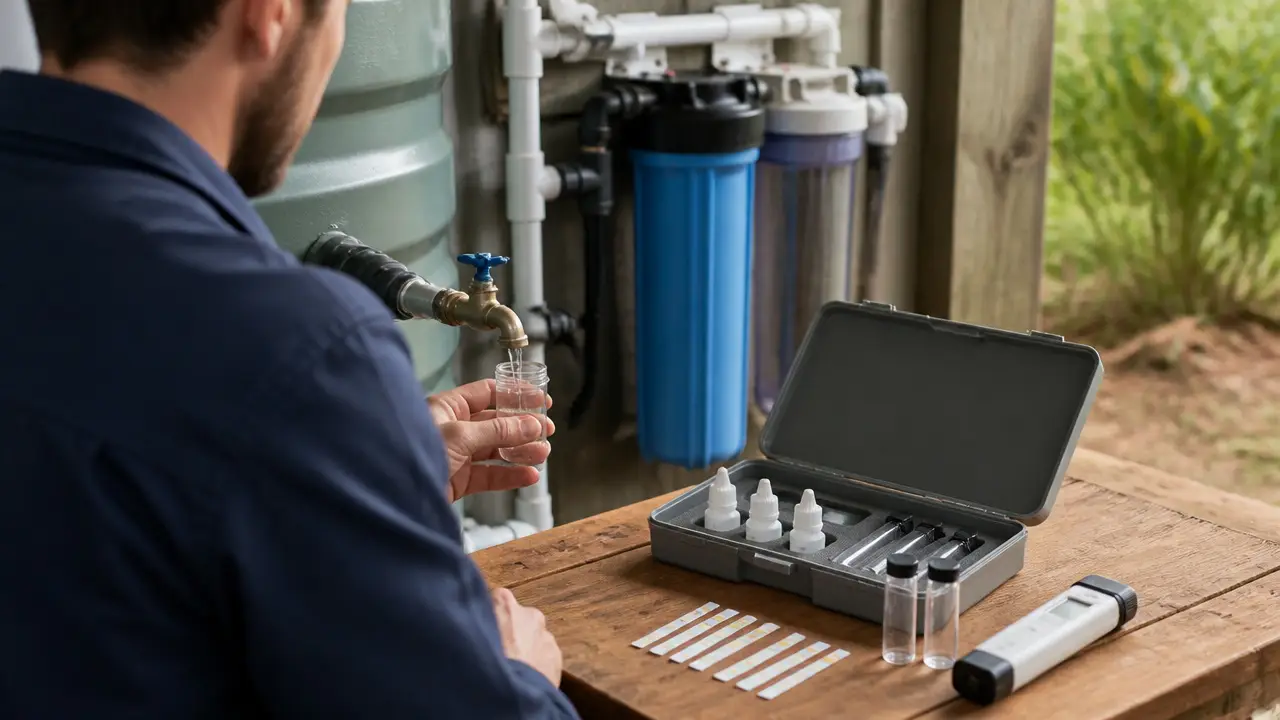
Home meters and test strips can be useful for limited measurements, but no single meter proves that water is safe to drink.
For example, a total dissolved solids, or TDS, meter estimates the amount of dissolved material in water through its electrical conductivity. It does not identify individual contaminants and cannot tell you whether bacteria, lead, pesticides, or other specific hazards are present.
The technical overview “How Unhealthy Is Rain Water?” connects the measurement to a practical water-safety decision.
For drinking-water decisions, laboratory testing should be matched to the possible contamination sources and local conditions.
In the United States, CDC recommends contacting the local health department for advice about appropriate tests, and EPA recommends using certified laboratories for drinking-water testing.
Do Not Choose Treatment Until You Know the Problem
Different treatment stages do different jobs.
A sediment filter may remove particles but not dissolved chemicals.
A carbon filter may reduce certain chemicals, tastes, or odors but does not automatically make microbiologically contaminated water safe.
UV treatment can inactivate certain microorganisms when the system is properly designed and maintained, but UV does not remove sediment, metals, or most dissolved chemicals.
For drinking rainwater, treatment should be treated as a complete system. Collection materials, roof cleanliness, prefiltration, storage, treatment, maintenance, and current water testing all matter.
Signs Are Warnings, Not Water Tests
Changes in color, clarity, smell, taste, sediment, staining, or biological growth can tell you that something may be wrong.
They cannot tell you that something is definitely safe.
The practical rule is simple: investigate noticeable changes, but do not wait for visible warning signs before testing water that will be used for drinking.
With harvested rainwater in particular, good water quality starts before the tank. Keeping roof runoff cleaner, maintaining screens and first-flush equipment, keeping storage covered, servicing treatment equipment, and testing water for its intended use are all parts of the same system.
Frequently Asked Questions
Can poor-quality water still look completely clear?
Yes. Some microorganisms, metals, and dissolved chemicals do not noticeably change water's color, taste, or smell. Clear water should not automatically be considered safe to drink.
Does cloudy rainwater mean it is contaminated?
Cloudiness means particles or sometimes air are suspended in the water. It may come from dust, sediment, rust, or organic debris. It does not identify the exact contaminant, so further inspection or testing may be needed.
Is bad-smelling water always unsafe?
No. Some substances can produce an unpleasant odor without creating a major health risk. At the same time, dangerous contaminants may have no smell at all. A significant new odor should still be investigated.
What does green water in a rain barrel mean?
Green water often points toward algae growth, especially when sunlight reaches stored water. Check whether the barrel or tank is allowing light in and whether organic material has accumulated.
Can a water filter fix poor water quality?
Only if the filter is designed for the specific problem. Different filters remove different contaminants. No single filter should be assumed to make contaminated rainwater safe for drinking.
How can I tell whether stored rainwater is safe to drink?
Appearance, smell, taste, and a basic home meter cannot establish drinking-water safety. Drinking rainwater requires a suitable collection and treatment system, proper maintenance, and current testing for relevant germs and chemicals. Local health authorities can help determine appropriate tests.
Should I test rainwater when its color or smell changes?
Yes, especially if the water is used for drinking, cooking, bathing, or another use where people may swallow or closely contact it. CDC also recommends regular testing of rainwater used for these purposes, even when no obvious problem is visible.