As an affiliate, we may earn a commission from qualifying purchases. We get commissions for purchases made through links on this website from Amazon and other third parties.
High-turbidity water looks cloudy, muddy, or full of tiny floating particles. Drinking it does not always make you sick by itself. The bigger concern is what may be mixed with those particles.
High turbidity can be a warning sign that water contains dirt, organic matter, microbes, or other contamination. It can also make disinfection less effective because particles can shield germs from chlorine, UV light, and other treatment steps. EPA notes that higher turbidity is often linked with higher levels of disease-causing viruses, parasites, and bacteria.
For collected rainwater, well water, or another private supply, noticeably cloudy water should not be assumed safe for drinking.
What Does High Turbidity Mean?
Turbidity is a measure of how cloudy water is because of suspended particles.
These particles may include:
- Soil and clay
- Dust
- Plant material
- Algae
- Rust or mineral particles
- Roof debris
- Sediment from a tank
- Microorganisms
- Organic matter from animal waste
Turbidity is commonly measured in NTU, or nephelometric turbidity units. A higher NTU generally means more suspended material is interfering with light passing through the water.
An NTU reading does not tell you exactly what the particles are. It also does not tell you whether the water contains harmful bacteria, viruses, parasites, or chemicals.
WHO does not set a single health-based turbidity value that by itself separates "safe" water from "unsafe" water. Instead, turbidity is important as an indicator of water quality and treatment performance.
What Can Happen If You Drink Turbid Water?
If the turbidity comes from harmless mineral particles, drinking a small amount may cause no noticeable health effect.
If the cloudy water contains disease-causing microorganisms, however, you could develop a waterborne illness.
Possible symptoms include:
- Diarrhea
- Nausea
- Vomiting
- Stomach cramps
- Headache
The exact illness depends on the contaminant. Turbid water can contain bacteria, viruses, or parasites, so you cannot predict the risk just by looking at the water. EPA specifically notes that disease-causing organisms associated with higher turbidity can cause nausea, cramps, diarrhea, and related headaches.
Children, older adults, pregnant people, and people with weakened immune systems may face greater risks from some waterborne infections.
Turbidity Is Often a Warning Sign, Not the Contaminant Itself
It helps to separate two ideas.
Turbidity describes the cloudiness of water. It is not the name of a disease or toxin.
The problem is that the particles causing turbidity can travel with contaminants or interfere with treatment.
For example, muddy rainwater could contain soil that is mostly harmless. But that same runoff may also contain bird or animal waste, microorganisms, roof contaminants, or chemicals picked up along the collection path.
Clear water is not proof of safety either. CDC warns that harmful germs and chemicals often do not change the appearance, taste, or smell of water.
Why High Turbidity Makes Water Harder to Disinfect
Turbidity becomes especially important when water is being treated for drinking.
Particles can surround or hide microorganisms. This can reduce contact between the microorganisms and a disinfectant.
That matters with treatment methods such as:
- Chlorination
- Ultraviolet treatment
- Some other disinfection systems
WHO notes that high turbidity can protect microorganisms from disinfection and can increase the amount of disinfectant needed.
This is one reason drinking-water treatment normally uses several stages instead of sending dirty source water directly to a disinfectant.
A typical treatment path may include:
- Removing large debris.
- Removing suspended sediment.
- Using finer filtration where required.
- Applying an appropriate disinfection or treatment process.
- Verifying the finished water quality.
The exact system depends on the water source and the contaminants present.
What High Turbidity Means for Rainwater
Turbidity is common in untreated roof runoff.
Rain can wash material from a roof into a barrel, IBC tote, or cistern, including:
- Dust
- Pollen
- Leaves
- Roofing particles
- Insect material
- Bird and animal droppings
- Soot and airborne pollution
The first part of a storm can contain especially high levels of material that collected on the roof during dry weather.
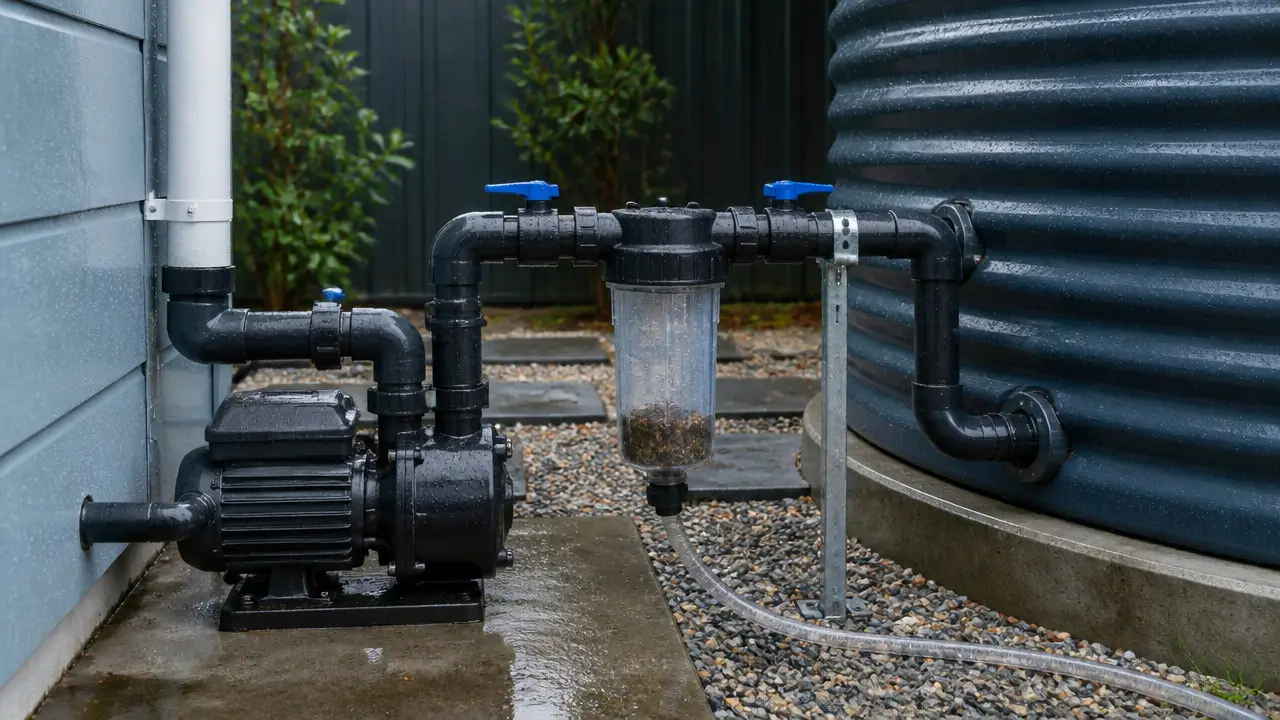
A first-flush diverter sends some of this early runoff away from the storage tank. It can improve incoming water quality, but it does not make rainwater safe to drink.
CDC states that collected rainwater is not necessarily safe to drink and can contain both germs and chemicals. If rainwater is used for drinking, cooking, or bathing, CDC recommends regular testing for relevant germs and chemicals.
Cloudy Tank Water Can Also Point to a System Problem
If stored rainwater was normally clear and suddenly becomes cloudy, look for what changed.
Possible causes include:
- Sediment being stirred from the tank bottom
- A missing or damaged inlet screen
- Heavy roof debris
- Poor first-flush operation
- Algae or biological growth
- Tank contamination
- An uncovered opening
- Recent maintenance that disturbed sediment
- Contaminated runoff entering during a storm
Fixing the cause is usually more useful than simply installing an increasingly fine filter.
For example, a sediment filter will clog quickly if a tank continually sends heavy sediment into the plumbing.
Is It Safe to Drink Water After the Sediment Settles?
Not necessarily.
Allowing turbid water to sit can make heavier particles settle to the bottom. The water above them may look much clearer.
That does not prove the water is safe.
Very small particles, microorganisms, and dissolved chemicals may remain. Settling is therefore best viewed as a pretreatment step, not proof that water is potable.
Evaluate health risks from water turbidity to assess how to interpret the readings without assuming complete safety.
Potable means suitable for drinking.
For a rainwater system intended to provide potable water, safety needs to be considered across the whole system: collection surfaces, debris control, storage, filtration, treatment, maintenance, and current water testing.
Does a Sediment Filter Make High-Turbidity Water Safe?
No.
A sediment filter can remove particles within the filter's designed size range. It can be an important first treatment stage, especially before UV equipment or finer filters.
A filter's micron rating describes the approximate size of particles it is designed to capture. A micron is one-millionth of a meter.
Removing visible sediment does not mean the filter removes:
- All bacteria
- Viruses
- All parasites
- Dissolved metals
- Pesticides
- Other dissolved chemicals
Different contaminants require different treatment methods.
CDC recommends testing water first and choosing treatment that addresses the actual germs or chemicals present.
What Should You Do If Your Drinking Water Suddenly Becomes Turbid?
The safest response depends on the source.
If You Use Public Tap Water
Do not assume a sudden change is normal.
Check for notices from your water utility or local health authority. Follow any boil-water, do-not-drink, or do-not-use advisory exactly.
Different advisories require different actions. Boiling can kill many germs, but it cannot make water containing toxic chemicals safe to drink.
Contact your utility if the water remains unusually cloudy and no explanation has been provided.
If You Use Rainwater or a Private Well
Avoid using unexplained turbid water for drinking until you understand the cause.
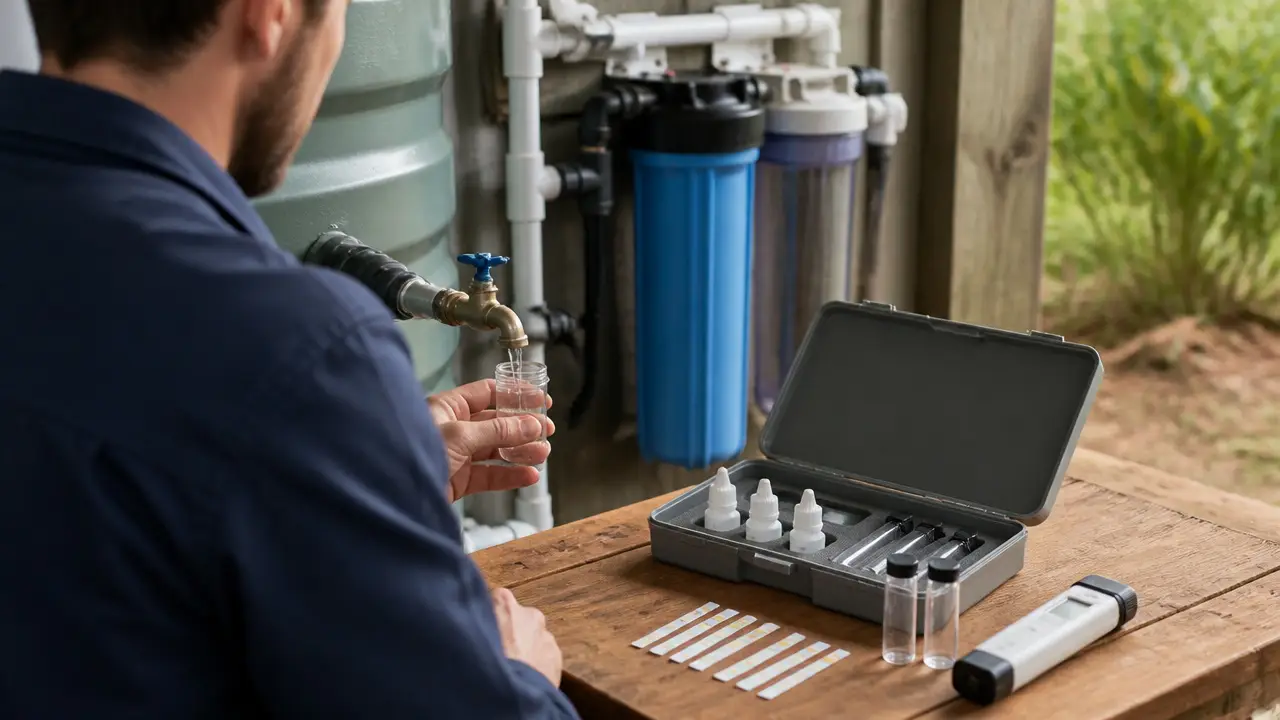
Check the collection or well system for problems and have the water tested when appropriate. CDC recommends testing private well and rainwater supplies at least yearly for harmful germs and chemicals, with additional testing when there is a noticeable change in color, taste, or smell.
Use a certified drinking-water laboratory when laboratory testing is needed. EPA maintains information for finding certified laboratories.
Can You Boil Turbid Water?
Boiling can kill many disease-causing germs, but it does not solve every turbidity problem.
During an emergency when officials recommend boiling water, CDC says cloudy water should first be allowed to settle or be filtered through a clean cloth, paper towel, or coffee filter. The clearer water can then be boiled according to current emergency guidance.
That advice is for microbial emergencies. Boiling does not remove many chemical contaminants. Some contaminants may even become more concentrated as water evaporates.
If chemical contamination is known or suspected, use another safe water source and follow public-health guidance rather than relying on boiling.
How to Reduce Turbidity in a Rainwater System
The best approach is to prevent as much debris as practical from entering storage and then remove remaining particles before sensitive treatment equipment.
Depending on the system, useful measures may include:
- Keeping gutters and roof drainage paths clean
- Screening larger debris before storage
- Using a properly designed first-flush system
- Preventing insects and animals from entering the tank
- Keeping storage tanks covered and protected from light
- Preventing tank-bottom sediment from being drawn directly into the outlet
- Cleaning accumulated sediment when needed
- Installing appropriate sediment filtration
- Maintaining filters on schedule
- Testing water when it is intended for drinking
These steps can improve water quality, but none by itself proves the water is safe to drink.
For drinking-water use, treatment should be designed around the actual source water and confirmed contaminants rather than around appearance alone.
Frequently Asked Questions
Is high turbidity water poisonous?
Not necessarily. Turbidity simply means the water contains suspended particles. Some particles may be harmless, while others may occur along with disease-causing germs or harmful chemicals. Turbidity alone cannot identify the contaminant.
Can high turbidity cause diarrhea?
Turbidity itself is not normally the direct cause. However, highly turbid water can contain bacteria, viruses, or parasites that cause diarrhea and other stomach illnesses.
Does clear water mean it is safe to drink?
No. Many harmful microorganisms and dissolved chemicals cannot be seen. Water can look perfectly clear and still be unsafe.
Does boiling remove turbidity?
Boiling does not remove the particles causing turbidity. If cloudy water must be boiled during an emergency, CDC recommends first settling or filtering out as much suspended material as practical. Boiling also does not remove many chemical contaminants.
The effects of drinking cloudy water reinforce whether lower turbidity is preferable for treatment and disinfection.
Will a sediment filter remove turbidity?
A suitable sediment filter can reduce turbidity by catching suspended particles. How well it works depends on the type and size of the particles, filter design, flow rate, and filter condition. Removing turbidity does not establish that the water is safe to drink.
Why does my rainwater tank become cloudy after heavy rain?
Heavy rain can carry roof dust, organic material, pollen, animal waste, and other debris into the tank. Fast incoming water can also stir sediment that was already sitting on the tank bottom.
Should rainwater be tested if it looks clear?
Yes, if you intend to drink it. CDC recommends regular testing of rainwater used for drinking, cooking, or bathing because harmful germs and chemicals may be present even when the water looks clear.