As an affiliate, we may earn a commission from qualifying purchases. We get commissions for purchases made through links on this website from Amazon and other third parties.
Rainwater can water a vegetable garden, but there is an important difference between rain falling directly on your garden and rainwater collected from a roof and stored in a barrel or tank.
Natural rainfall is part of normal garden growing. Roof-collected rainwater is different. As water runs across a roof, gutter, and downspout, it can pick up bird droppings, dirt, bacteria, metals, and chemicals from building materials. Stored water can also become contaminated inside a poorly maintained barrel or tank.
For that reason, the CDC recommends using treated tap water or another suitable water source for plants you plan to eat when possible. If you do use harvested rainwater on vegetables, the safest approach is to reduce contact between the collected water and the edible parts of the plants.
Why Roof-Collected Rainwater Needs More Care
Rain itself is not the main concern. The collection path is.
A typical rainwater system may include:
- A roof
- Gutters and downspouts
- Screens or leaf guards
- A first-flush diverter
- A rain barrel or storage tank
- Hoses or irrigation lines
Each part can affect water quality.
Bird and animal droppings can leave germs on the roof. Dust and airborne pollution can settle between storms. Roof materials, flashing, gutters, and older coatings may add metals or other chemicals.
The CDC notes that collected rainwater can contain both germs and chemicals even when the water looks clear.
This is why rain barrel water is considered non-potable. Non-potable simply means the water has not been shown to meet drinking-water standards.
The Lowest-Risk Choice for a Vegetable Garden
For vegetables and herbs that will be eaten, treated municipal water or another water source known to be suitable for food-crop irrigation is the simplest choice.
University of Minnesota Extension takes a conservative approach and generally recommends using rain barrel water on non-edible plants. It notes that roof runoff should not touch edible parts of vegetables, fruits, herbs, greens, or edible flowers.
That does not mean every vegetable watered with collected rainwater will become contaminated. It means the water quality is uncertain, and contamination cannot be judged by its appearance or smell.
If you have enough treated water available, using the rain barrel for flowers, shrubs, trees, lawns, and other non-food plants avoids most of this concern.
If You Use Rainwater on Vegetables, Water the Soil
If local guidance allows rainwater irrigation of edible plants and you choose to use it, apply the water near the roots instead of spraying the whole plant.
Good options include:
- Hand watering at the base of the plant
- Low drip emitters
- Drip tubing
- A suitable soaker system
Avoid overhead sprinklers that wet leaves, fruit, or other parts you plan to eat.
Drip irrigation can reduce direct contact between irrigation water and the crop. It also reduces splashing from the soil. However, it does not turn contaminated water into safe water.
Rain barrel systems may also need filtration before being connected to drip irrigation. Small emitters can clog with sediment, algae, and debris.
Some Vegetables Have More Contact Risk Than Others
How a vegetable grows matters.
A tomato hanging well above the soil is easier to keep away from irrigation water than lettuce growing close to wet soil.
If harvested rainwater is being used, crops where the edible portion can be kept completely away from the water generally present less direct-contact risk. Examples may include trellised tomatoes or other crops with fruit held above the soil. University of Minnesota Extension specifically notes that rain barrel water may sometimes be applied where it can be kept from touching the edible portion of tall or trellised plants.
Use more caution with foods such as:
- Lettuce and other leafy greens
- Fresh herbs
- Strawberries and other low-growing fruit
- Root vegetables
- Vegetables commonly eaten raw
- Any crop that will be splashed during watering
This does not create a simple list of "safe" and "unsafe" vegetables. The condition of the water and the amount of contact with the edible portion still matter.
Check What the Rainwater Runs Across
Before using roof runoff anywhere near food crops, look at the entire collection surface.
Be especially cautious about water collected from roofs or gutters containing materials that may release unwanted chemicals.
Older or unusual roofing systems deserve particular attention. Penn State Extension advises avoiding roof runoff for edible plants when catchment surfaces include materials such as old tar-and-gravel roofing, asbestos shingles, treated wood shingles, copper roofing, zinc anti-moss strips, or gutters with possible lead-based coatings.
If you do not know what your roof, flashing, gutters, or coatings contain, using the harvested water on ornamental plants is the more conservative option.
Also avoid collecting irrigation water from surfaces where chemicals, fuel, pesticides, animal waste, or other contaminants may wash into the tank.
A First-Flush Diverter Can Help, but It Does Not Make the Water Safe
The first water running from a roof after a dry period often carries a large amount of accumulated dirt and debris.
A first-flush diverter sends some of this early runoff away from the storage tank before cleaner-looking runoff enters it.
The CDC recommends considering first-flush diversion as one way to improve collected rainwater quality.
However, a first-flush diverter is only a prefiltration step. It does not reliably remove all:
- Bacteria
- Viruses
- Parasites
- Dissolved metals
- Roofing chemicals
- Other contaminants
Do not treat a first-flush system as proof that rainwater is safe for food crops or drinking.
Keep the Storage Tank Clean
A clean roof will not help much if the storage tank is full of sediment and decaying debris.
A vegetable-garden rainwater system should at least have a way to keep leaves, insects, and large debris out of storage. Maintain screens, gutters, tank openings, and outlets so they remain functional.
Periodically inspect the tank for:
- Sediment buildup
- Algae
- Unusual odors
- Animal access
- Damaged screens
- Mosquito access
- Sludge near the outlet
Study using collected rainwater for garden irrigation to assess irrigation requirements against expected collection volume.
Keep the tank covered and protected from pests.
Cleaning frequency depends on the system, climate, roof conditions, and how much debris enters the tank. There is no single cleaning schedule that guarantees safe irrigation water.
Do Not Use Rain Barrel Water to Wash Vegetables
Watering and washing are not the same thing.
Do not use untreated roof-collected rainwater to rinse lettuce, tomatoes, herbs, or other produce before eating them.
The CDC recommends using treated tap water or another appropriate safe water source for rinsing fruits and vegetables rather than collected rainwater.
This remains important even if the vegetables were grown using rainwater.
What About Filtering the Rainwater?
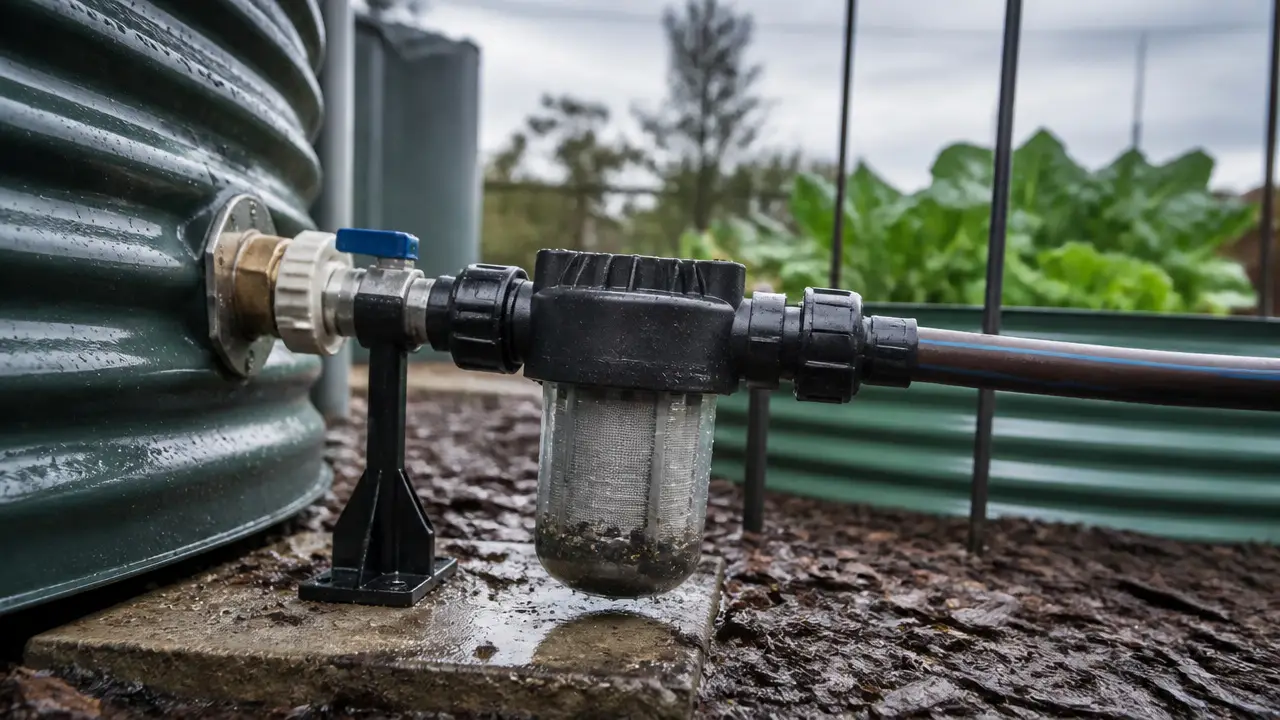
A basic sediment filter can make irrigation equipment work better. It may catch dirt, leaves, insects, and other particles.
It does not automatically make roof runoff suitable for edible crops.
Different contaminants require different treatment methods. A cartridge that removes visible sediment may do little for dissolved metals or microorganisms. A UV unit may target microorganisms under suitable operating conditions but does not remove dissolved chemicals.
The whole collection and treatment system matters.
For routine garden irrigation, building a drinking-water treatment system simply to water vegetables may not be practical. Using a known suitable water source for food crops and saving harvested rainwater for ornamental landscaping is often simpler.
Should You Test Rainwater Before Using It?
Testing can provide useful information, especially for a larger cistern or a system used regularly around a home.
The problem is that rainwater quality can change.
One sample may not represent what enters the tank after the next storm. Roof contamination, wildlife activity, weather, storage time, and maintenance can all change the results.
If water quality is important because the water will contact food or people, ask a local health department or qualified laboratory which contaminants are appropriate to test. Do not assume that a basic home strip, TDS meter, or single bacterial test provides a complete safety assessment.
A TDS meter measures total dissolved solids. It can show changes in the amount of dissolved material in water, but it cannot tell you whether disease-causing germs or specific harmful chemicals are present.
A Practical Setup for Garden Rainwater
If you want to make useful use of a rain barrel while keeping food-contact risk low, consider dividing your garden irrigation.
Use harvested rainwater for:
- Flowers
- Shrubs
- Shade trees
- Non-edible container plants
- Other landscape plants
Use a known suitable water source for leafy greens, herbs, root crops, and other food plants where keeping irrigation water away from the edible portion is difficult.
Where local guidance permits roof-collected water on edible crops, keep the collection system clean and apply the water directly to the soil without wetting the harvest.
This approach still lets you reduce demand on your main water supply without assuming untreated roof runoff is clean enough for every garden use.
Check Local Rainwater Rules
Rainwater harvesting rules vary by location. Requirements can cover how much water you may store, where it can be used, plumbing connections, tank installation, or mosquito control.
Rules can also change.
Before installing a large cistern, connecting harvested water to permanent irrigation plumbing, or using it for purposes beyond simple outdoor watering, check current guidance from your state or local water, environmental, building, or health authority.
Never connect a rainwater system in a way that could allow untreated rainwater to flow backward into drinking-water plumbing.
Frequently Asked Questions
Is rainwater good for vegetable plants?
Rain falling directly on a vegetable garden is normal. Stored roof runoff is different because it can collect germs, dirt, metals, and chemicals as it moves across the roof and through the collection system. When possible, use a known suitable water source for vegetables you plan to eat.
Can I water tomatoes with rain barrel water?
If local guidance allows it, tomatoes are easier than many vegetables to water without wetting the edible portion. Apply the water directly to the soil around the roots and keep it off the fruit. This reduces contact risk but does not guarantee that untreated roof runoff is free of contaminants.
Can I use rainwater on lettuce?
Lettuce and other leafy greens are difficult to irrigate without possible contact or splashing onto the edible leaves. Using treated water or another known suitable water source is the more conservative choice.
Is a first-flush diverter enough for vegetable-garden water?
No. A first-flush diverter removes some of the early roof runoff that may contain concentrated dirt and contaminants. It can improve water quality, but it does not disinfect the water or reliably remove dissolved chemicals.
Do I need to filter rainwater before using drip irrigation?
Often, yes. Sediment and algae in stored rainwater can clog small drip emitters. A suitable irrigation filter can protect the equipment, but filtration for clog prevention does not necessarily make the water safe for contact with food.
Should I wash vegetables after using rainwater for irrigation?
Yes. Wash harvested produce using water suitable for washing food. Do not use untreated rain barrel water to rinse vegetables before eating them.
Can I use rainwater collected from any type of roof?
No. Some roof, flashing, gutter, coating, and anti-moss materials may add unwanted metals or chemicals to runoff. If you are unsure about the catchment materials, use the collected water for non-edible landscaping or seek guidance before using it on food crops.