As an affiliate, we may earn a commission from qualifying purchases. We get commissions for purchases made through links on this website from Amazon and other third parties.
The best sealant for a leaking water tank depends on what the tank is made from, where the leak is, and how the water will be used.
For a small leak in a rigid tank, a waterproof epoxy or sealant made for that tank material may work. But many leaks around fittings are better fixed with a new gasket or fitting rather than more sealant. Cracks in polyethylene plastic tanks often need plastic welding or another mechanical repair because many common sealants do not bond well to polyethylene.
If the tank stores water for drinking, cooking, or other potable use, use only repair materials specifically approved for contact with drinking water. NSF/ANSI/CAN 61 covers the health effects of many materials that contact drinking water, including coatings, adhesives, gaskets, and sealants.
Match the Sealant to the Tank Material
There is no single sealant that works well on every water tank.
| Tank material | Usually best approach |
|---|---|
| Polyethylene plastic | Plastic welding, compatible repair system, or mechanical fitting repair |
| Fiberglass | Fiberglass resin and reinforcement made for the tank material |
| Concrete | Compatible epoxy, hydraulic repair material, or tank coating |
| Steel | Corrosion repair followed by a compatible tank coating or epoxy |
| Fitting or outlet leak | Replace or reseat the gasket, bulkhead fitting, or threaded connection |
A bulkhead fitting is a fitting that passes through the tank wall. A rubber gasket seals the fitting against the tank.
Before buying sealant, find out exactly where the water is escaping.
Best Sealant for a Plastic Water Tank
Many rainwater tanks, cisterns, and IBC totes are made from polyethylene.
Polyethylene is tough and flexible, which makes it good for water storage. It also makes it difficult to glue.
Common silicone, construction adhesive, and general-purpose epoxy may stick at first but later separate as the tank flexes or changes temperature.
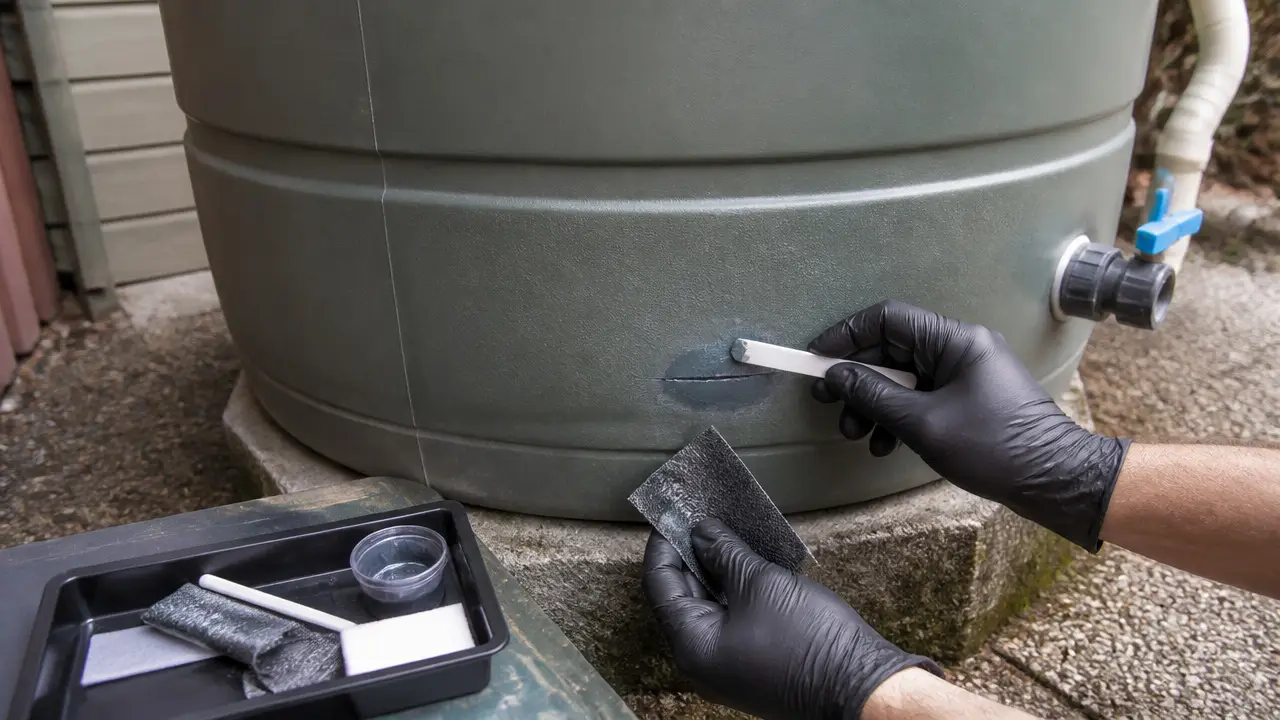
For a small polyethylene crack
Plastic welding is often a better repair than simply covering the crack with sealant. The repair material needs to be compatible with the tank plastic.
A crack can also be a sign that the tank wall is under stress. Check for:
- Poor support beneath the tank
- A tank sitting on an uneven base
- A fitting that has been tightened too much
- Pipe weight pulling on an outlet
- Freeze damage
- UV damage or brittle plastic
Repairing the crack without fixing the cause can allow it to open again.
Large cracks, cracks near the bottom, and cracks around heavily loaded fittings deserve extra caution. A full tank creates considerable water pressure against the lower walls.
For a leaking plastic tank fitting
Do not automatically cover the fitting with silicone.
Drain the tank below the fitting and inspect the gasket. A damaged, hardened, folded, or poorly positioned gasket is a common problem.
The better repair may be to:
- Remove the fitting.
- Clean the tank surface.
- Inspect the hole for cracks or distortion.
- Replace the gasket if needed.
- Reinstall the fitting according to its instructions.
- Support connected pipes so they do not pull on the tank wall.
The gasket should normally create the seal. Sealant should not have to compensate for a damaged fitting or badly cut hole.
Best Sealant for a Fiberglass Water Tank
Fiberglass tanks are different from polyethylene tanks.
Small fiberglass damage can often be repaired using a compatible resin system, sometimes with fiberglass cloth or mat. This creates a structural patch rather than simply covering the surface.
A thin bead of general-purpose sealant is not a good substitute for repairing damaged fiberglass.
Look carefully for:
- Cracks extending beyond the visible leak
- Delamination
- Soft areas
- Damage around fittings
- Previous repairs separating from the tank
Large fiberglass cracks are better handled by someone familiar with fiberglass tank repair.
Best Sealant for a Concrete Water Tank
Concrete tanks can leak through cracks, joints, pipe penetrations, or damaged coatings.
Small, stable cracks may be repairable with a suitable cement-based waterproof repair material or epoxy system. The right choice depends on whether the crack is dry, damp, moving, or under water pressure.
Movement matters. A rigid epoxy repair may fail if the crack continues opening and closing.
Before sealing a concrete tank, check whether water is coming from:
- A structural crack
- A construction joint
- A pipe penetration
- A damaged waterproof coating
- A gap around a fitting
Do not treat a large or growing structural crack as a simple sealing job. Have the tank inspected before filling it again.
Best Sealant for a Metal Water Tank
A metal tank needs more than a waterproof coating if corrosion has caused the leak.
First determine how much sound metal remains.
Rust can create very thin areas around a visible pinhole. Covering the hole may simply cause another nearby section to fail.
Depending on the tank, repair may involve:
- Removing corrosion
- Repairing damaged metal
- Applying a compatible epoxy or tank lining
- Replacing severely weakened panels or the entire tank
If the tank stores drinking water, any coating or repair material that contacts the water needs to be suitable for that use.
Is Epoxy Good for a Leaking Water Tank?
Epoxy can be an excellent tank repair material when it is designed for the surface and conditions involved.
It works particularly well on some concrete, metal, fiberglass, and rigid surfaces.
But "epoxy" covers many different products. One epoxy may be designed for dry construction repairs, while another may be intended for constant water immersion.
Check the manufacturer's instructions for:
- Tank material
- Continuous water immersion
- Required surface preparation
- Minimum and maximum application temperature
- Cure time
- Maximum crack size
- Drinking-water contact, if applicable
Do not assume that a product described as waterproof is also suitable for storing drinking water.
Is Silicone Good for a Leaking Water Tank?
Silicone can be useful for certain joints and surfaces, but it is not the best universal tank repair.
It can work around some glass, ceramic, metal, and compatible rigid surfaces. It is much less reliable when used as a patch over a structural crack.
Silicone is especially easy to misuse on plastic tanks. Polyethylene and similar plastics can be difficult surfaces for sealants to grip.
Silicone also will not correct:
- A cracked tank wall
- A damaged gasket
- A loose bulkhead fitting
- A warped fitting hole
- Corroded metal
- Structural movement
Use it only when the manufacturer says it is compatible with the materials involved.
Can You Seal a Water Tank While It Is Still Wet?
Use a suitable sealant to use for a water leak to understand a workable connection between unlike components.
Some repair compounds are made to cure on damp surfaces or even underwater. Others require a completely dry surface.
Do not assume a sealant will work underwater just because its label says "waterproof."
Waterproof usually describes the material after it has cured. It does not necessarily mean it can be applied successfully to a wet tank.
Whenever possible, lower the water level below the leak. This makes it easier to:
- Find the actual damage
- Clean the surface
- Prepare the repair area
- Install gaskets correctly
- Allow the repair to cure
Follow the stated cure time before putting the repair back under water pressure.
How to Find the Actual Source of the Leak
Water can travel along the tank wall before dripping, so the wettest point is not always the source.
Clean and dry the outside of the tank as much as practical. Then inspect the area carefully.
Leak around a threaded pipe
The problem may be the threaded connection rather than the tank.
Thread sealant is used on compatible threaded pipe connections. It is different from coating the outside of the fitting with silicone.
Leak between the tank wall and fitting
Inspect the bulkhead gasket and the tank surface.
A gasket should sit flat against a clean surface. Tightening the fitting harder is not always the answer. Excess force can distort a plastic tank or damage the gasket.
Crack beside a fitting
This is more serious.
Pipe weight, vibration, overtightening, or a poorly placed hole may have stressed the tank wall. Repair the crack and remove the source of that stress.
Leak through the tank wall
Choose a repair method specifically compatible with the tank material.
Do not rely on a general waterproof adhesive simply because it sticks to many household surfaces.
Prepare the Surface Before Applying Sealant
Even the correct repair material can fail on a dirty surface.
Preparation requirements vary, so follow the repair manufacturer's instructions. The process commonly includes removing:
- Dirt
- Algae
- Loose coating
- Old adhesive
- Oil
- Scale
- Loose rust
Some materials also require sanding or another form of surface preparation.
Do not use aggressive solvents on plastic tanks unless the tank or repair manufacturer specifically approves them. Some chemicals can damage plastics.
Let the Repair Cure Fully
A sealant that feels dry on the surface may not be fully cured.
Tank water places continuous pressure on a repair, especially near the bottom of a large tank. Filling too soon can weaken the bond.
Follow the stated curing requirements for temperature, humidity, and water exposure.
After curing, refill the tank gradually and inspect the repair.
When Sealant Is Not the Right Repair
Sealant should not be used to hide serious tank damage.
Consider professional repair or tank replacement when you find:
- A long or growing crack
- Several cracks in the same area
- A bulging or badly distorted tank
- Extensive corrosion
- A cracked tank base
- Major fiberglass separation
- Structural concrete movement
- Repeated failure of earlier repairs
A leaking tank should also have a stable, level base. Repairing the wall will not solve a problem caused by poor support.
What About Tanks Used for Drinking Water?
Be more careful with any material that will contact potable water. Potable means water intended to be safe for drinking.
NSF explains that NSF/ANSI/CAN 61 addresses potential health effects from products and materials used in drinking-water systems, including joining materials, sealants, coatings, adhesives, and gaskets. Certification can also include limits on how much of a material may be exposed to the water, so a general certification claim should still be checked against the exact product and intended use.
Repairing a tank with an approved sealant does not make collected rainwater safe to drink. Roof runoff can contain germs and chemicals from the air, roof, gutters, pipes, storage materials, and animal waste. CDC recommends appropriate collection, maintenance, treatment, and regular testing when rainwater is used for drinking, cooking, or bathing.
Drinking-water use should be treated as a whole system. That includes suitable collection surfaces, debris control, treatment, maintenance, current laboratory testing, and applicable local requirements.
Frequently Asked Questions
What is the best waterproof sealant for a water tank?
There is no single best sealant for every tank. Epoxy can work well on some concrete, steel, fiberglass, and rigid surfaces. Polyethylene plastic tanks often need plastic welding or another compatible repair rather than ordinary sealant.
Can I use silicone to stop a water tank leak?
Sometimes, but only on surfaces for which the silicone is designed. Silicone is not a reliable structural repair for cracks and may bond poorly to polyethylene tanks. A leaking fitting may need a new gasket instead.
Will epoxy stop a leaking water tank?
A compatible waterproof epoxy can stop some small leaks. The surface must be prepared correctly, and the epoxy must be suitable for the tank material and continuous water exposure. Moving cracks or badly damaged tanks may require a different repair.
How do I fix a leaking water tank outlet?
Drain the water below the outlet and inspect the bulkhead fitting, gasket, and tank wall. Replace damaged gaskets and make sure the fitting sits flat. Also support connected piping so its weight does not pull on the tank.
Can I apply tank sealant underwater?
Only use a repair compound underwater if its manufacturer specifically allows underwater application. Many waterproof products need a dry or only slightly damp surface during application and curing.
Can a cracked polyethylene tank be glued?
Polyethylene is difficult for many adhesives to bond to. Plastic welding or a repair method specifically designed for polyethylene is usually more dependable than general-purpose glue or silicone.
Is a repaired rainwater tank safe for drinking water?
A repaired tank is not automatically safe for drinking. Any repair material in contact with potable water must be suitable for that use, and the complete rainwater system still needs appropriate collection, treatment, maintenance, and water-quality testing.