As an affiliate, we may earn a commission from qualifying purchases. We get commissions for purchases made through links on this website from Amazon and other third parties.
Unused faucet or spigot holes can usually be covered with a threaded plug, bulkhead fitting with a cap, rubber expansion plug, or purpose-made hole cover. The best choice depends on the hole size, wall thickness, and whether the cover needs to hold back stored water.
For a rain barrel, IBC tote, or cistern, a watertight mechanical fitting is usually better than simply gluing a flat patch over the opening.
Good Ways to Cover an Unused Faucet Hole
Threaded Plug
A threaded plug is one of the simplest choices when the existing hole already has a threaded fitting.
The plug screws into the fitting where the faucet or spigot was installed.
This works well for:
- Rain barrels
- Water tanks
- Irrigation manifolds
- Plumbing fittings
- IBC tote adapters
Match the plug to the exact thread size and thread type. Two fittings that look similar may use different threads.
Use a sealing method that is suitable for the fitting material and intended water use. Do not force a plug that does not thread smoothly.
A threaded plug is especially useful when you may want to reinstall the faucet later.
Bulkhead Fitting With a Threaded Cap or Plug
For a hole directly through the wall of a barrel or tank, a bulkhead fitting is often the most dependable solution.
A bulkhead fitting passes through the tank wall and seals against it with a gasket. It creates a threaded connection on one or both sides.
You can install the bulkhead and then close it with:
- A threaded plug
- A threaded cap
- A short adapter and cap
This approach provides a mechanical seal rather than depending mainly on adhesive.
It is a good option when an old faucet hole is still round and the surrounding tank wall is in good condition.
Rubber Expansion Plug
A rubber expansion plug can close some smooth, round holes.
The plug is inserted into the opening and tightened. Tightening compresses the rubber so it expands against the sides of the hole.
These plugs can be useful when:
- No threads remain
- You want a removable cover
- The hole is reasonably smooth and round
- Water pressure is low
They are better suited to low-pressure applications than pressurized plumbing.
For a rain barrel, remember that even a gravity-fed outlet near the bottom has water pushing against it whenever the barrel is full. Check the plug regularly for movement, cracking, or seepage.
Purpose-Made Hole Cover
Some containers can use a flat hole cover or blanking plate with a gasket.
These usually sandwich the tank wall between two pieces and tighten together with a bolt or threaded fitting.
A gasket makes this much more reliable than simply placing a plastic disk over the opening.
This can be useful for unusually large holes where a normal plumbing plug will not fit.
Tank or Pipe Cap
Sometimes the old faucet is attached through an adapter or nipple that is still firmly installed.
Instead of removing the entire fitting, you may be able to cap the exposed connection.
For example:
existing bulkhead → threaded adapter → cap
Leaving a sound existing fitting in place can avoid enlarging or damaging the hole during removal.
Inspect the old fitting and gasket first. A cap will not fix a leak between the fitting and the tank wall.
Which Cover Is Best?
For most rainwater storage containers, use this order of preference:
| Situation | Practical choice |
|---|---|
| Existing fitting has usable threads | Threaded plug or cap |
| Bare round hole through tank wall | Bulkhead fitting plus plug |
| Temporary low-pressure closure | Rubber expansion plug |
| Large or unusual opening | Gasketed blanking plate |
| Existing adapter is firmly installed | Cap the adapter |
The condition of the hole matters as much as its diameter.
A cracked, stretched, or badly distorted opening may need repair before any fitting can seal reliably.
Measure the Hole Before Buying Anything
Do not choose a plug by guessing from the old faucet size.
Measure:
- Hole diameter
- Tank wall thickness
- Existing fitting size
- Inside clearance
- Outside clearance
- Thread diameter and type, if threads remain
A faucet described by its pipe size does not necessarily require a hole of that same diameter.
Bulkhead fittings also require specific mounting-hole sizes. Check the fitting manufacturer's dimensions before changing the opening.
Avoid enlarging a hole until you know exactly which fitting will replace it. Once material has been removed, it is much harder to go back.
Use a Gasket Where Possible
For plastic rain barrels and tanks, gasketed fittings are generally preferable to trying to create a seal with large amounts of caulk or adhesive.
A gasket creates the seal by being compressed between the fitting and tank wall.
Account for practical steps for stoping a barrel from leaking to assess safe ventilation and overflow routing for stored water.
The area around the hole should be:
- Clean
- Smooth
- Free of old sealant
- Free of deep scratches
- Not cracked
- Flat enough for the gasket to seat
Do not overtighten plastic fittings. Excessive tightening can distort the gasket, crack the fitting, or deform a thin barrel wall.
Be Careful With Sealants and Adhesives
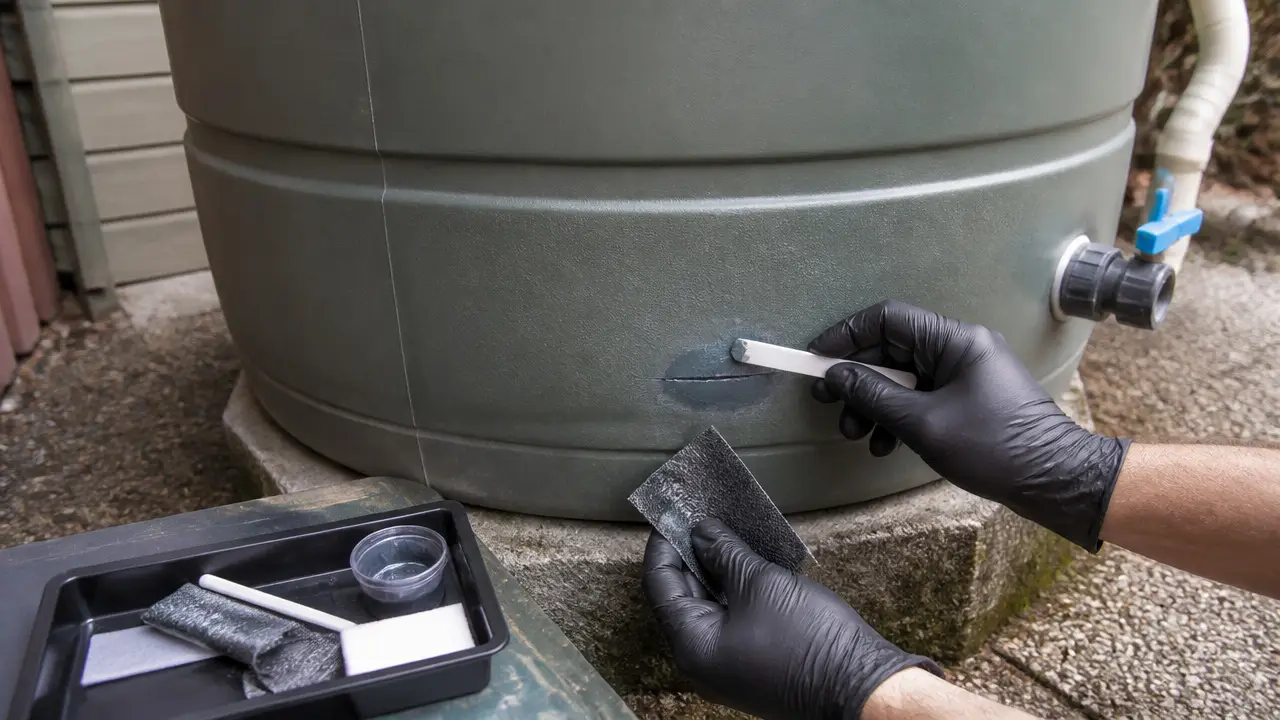
Sealant can sometimes help with a repair, but it should not automatically be treated as the main thing holding a tank opening closed.
Some sealants do not bond well to common tank plastics such as polyethylene. Others may not be appropriate for water that could later be used for drinking-water applications.
If water is intended for drinking, use materials suitable for that use and treat the entire collection and treatment system as a potable-water system. Potable means suitable for drinking.
Covering one opening does not make stored rainwater safe to drink. Roof runoff can contain microorganisms, animal waste, dust, metals, roofing contaminants, and other pollutants.
What About a Simple Sink Hole Cover?
A sink faucet hole cover can work well for an unused hole in a sink or countertop because its main job is usually appearance and splash protection.
That is different from plugging a hole near the bottom of a water tank.
A typical decorative sink-hole cover may not be designed to hold back a full barrel of water continuously.
For a rainwater tank, choose a fitting designed to make a watertight connection through a container wall.
Avoid Makeshift Corks and Loose Rubber Stoppers
A cork, wooden plug, loose rubber stopper, or object pushed into the hole may appear to work when the barrel is partly full.
That does not mean it will remain secure.
Water pressure increases with water depth. A fitting close to the bottom of a tall tank experiences more pressure than one near the top.
A loose plug can also shrink, harden, work free, or become damaged by sunlight and weather.
Use a mechanically retained fitting when an unexpected leak could cause damage.
Check the Tank Wall Around the Hole
Removing an old faucet sometimes reveals a bigger problem.
Look for:
- Hairline cracks
- Stress whitening in plastic
- Elongated holes
- Warped tank walls
- Damaged threads
- Brittle plastic
- Old sealant preventing the gasket from lying flat
A new plug cannot reliably compensate for a badly damaged mounting area.
Small rain barrels may be practical DIY repairs. Large cisterns and tanks deserve more caution because a fitting failure can release a large amount of water quickly.
Test the Repair Gradually
After installing the cover, do not assume it is watertight because it looks secure.
Add some water and inspect the fitting.
Then increase the water level gradually while checking for:
- Slow drips
- Moisture around the gasket
- Movement of the plug
- Wall distortion
- Cracks spreading from the opening
A tiny seep near the bottom of a tank can become a larger leak as the water level rises.
Check the fitting again after the tank has been through several fill-and-empty cycles.
Consider Future Access
Before permanently covering a faucet hole, think about whether it could still be useful.
A low tank opening can later serve as a:
- Drain
- Garden hose connection
- Pump supply
- Cleaning outlet
- Tank-to-tank connection
Installing a bulkhead fitting and plugging it keeps that option available.
A permanent patch may remove that flexibility.
Frequently Asked Questions
Can I use a rubber stopper to cover a rain barrel faucet hole?
A properly sized expansion plug may work for some low-pressure rain barrels. A loose rubber stopper is less dependable because it is not mechanically secured. A bulkhead fitting with a threaded plug is usually a better long-term solution.
Can I use silicone to seal an old faucet hole?
Silicone may help in certain installations, but it should not automatically replace a proper fitting and gasket. Some tank plastics are difficult for sealants to bond to reliably. Use materials compatible with the container and intended water use.
What is the best permanent cover for a rain barrel spigot hole?
A correctly sized bulkhead fitting closed with a threaded plug is a practical permanent solution when the tank wall around the hole is sound.
Do I need to remove the old faucet fitting?
Not always. If the existing fitting is secure, undamaged, and watertight where it passes through the tank, you may be able to remove the faucet and install a matching plug or cap.
Can I use a sink faucet hole cover on a water tank?
Usually not as the first choice. Sink hole covers are generally meant to cover openings above the water line. A tank outlet should use a fitting capable of continuously holding back stored water.
Why does my plug leak even though it is tight?
Possible causes include the wrong thread type, damaged threads, a damaged gasket, a distorted tank wall, debris under the gasket, or overtightening. Tightening harder may make some of these problems worse.
Can I permanently glue a plastic patch over the hole?
It may be possible with some materials, but many rain barrels and tanks are made from plastics that are difficult to bond reliably. A gasketed mechanical fitting is generally easier to inspect, replace, and maintain.