As an affiliate, we may earn a commission from qualifying purchases. We get commissions for purchases made through links on this website from Amazon and other third parties.
Wrapping a towel around an outdoor faucet can slow heat loss, but a towel alone is not a reliable way to keep the faucet from freezing. It may help during a short, mild freeze if the towel stays dry and the pipe behind the faucet remains warm. During longer or colder weather, the faucet and connected pipe can still freeze.
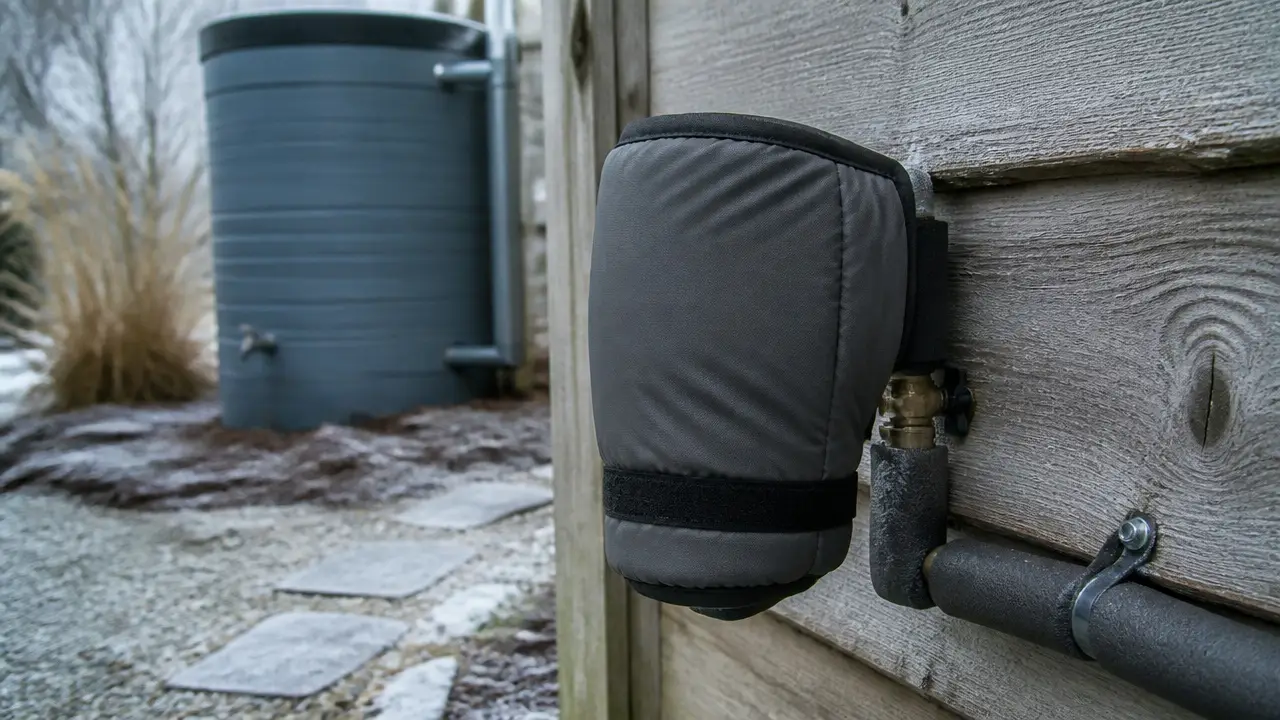
A purpose-made insulated faucet cover, combined with shutting off and draining the water line when possible, gives much better protection.
Why a Towel Only Helps a Little
A towel works as insulation because it traps small pockets of air. That can slow the movement of heat away from the faucet.
The problem is that insulation does not create heat. If freezing temperatures last long enough, the faucet will eventually cool toward the outdoor temperature.
A towel also has another weakness: it absorbs water. Rain, melting snow, condensation, or a dripping faucet can soak the fabric. Wet insulation works much less effectively. If the towel itself freezes, it can become a block of ice around the faucet.
Wind can also push cold air through loose fabric.
For these reasons, a towel is better viewed as temporary extra insulation rather than dependable freeze protection.
When a Towel May Be Enough
A dry towel may provide some protection when:
- Temperatures only dip slightly below freezing.
- The freeze lasts for a few hours rather than several days.
- The faucet is attached to a heated building.
- Warmth can reach the pipe from inside the wall.
- The faucet is sheltered from wind.
- The towel remains completely dry.
Even under these conditions, there is no guarantee that the faucet will not freeze.
The pipe behind the faucet matters as much as the faucet itself. A well-wrapped handle and spout will not prevent freezing if several inches of pipe inside an unheated wall are exposed to cold air.
Why an Outdoor Faucet Cover Works Better
An insulated outdoor faucet cover is usually a better choice than wrapping the faucet with cloth.
These covers fit over the whole faucet and press against the exterior wall. That helps trap warmth coming through the wall while reducing exposure to cold wind.
Most also use materials that do not absorb water as easily as a towel.
The cover still does not provide heat. Its effectiveness depends on conditions such as:
- Outdoor temperature
- Length of the freeze
- Wind exposure
- Wall insulation
- Indoor temperature
- Faucet and pipe design
- Air leaks around the pipe opening
A faucet cover should therefore be part of the freeze-protection plan rather than the only protection in very cold climates.
The Best Way to Protect an Outdoor Faucet
If your plumbing system has an indoor shutoff valve for the outdoor faucet, shutting off and draining that section of pipe is usually more dependable than insulation alone.
1. Disconnect the Garden Hose
Remove hoses, splitters, irrigation timers, spray nozzles, and other attachments before freezing weather.
This is especially important with frost-free faucets. A hose left attached can trap water inside the faucet and prevent it from draining properly.
2. Close the Indoor Shutoff Valve
Some homes have a valve inside the building that controls the outdoor faucet.
Close this valve if your plumbing is designed for seasonal shutdown.
Do not force a valve that is stuck or badly corroded. A damaged shutoff valve can create a leak inside the house.
3. Drain the Outdoor Section
After closing the indoor valve, open the outside faucet to release water remaining in the line.
Some systems also have a small drain or bleeder valve near the indoor shutoff.
The goal is to reduce the amount of water trapped in the section exposed to freezing temperatures.
4. Install an Insulated Faucet Cover
Once the faucet has drained, place a weather-resistant insulated cover over it.
The cover should sit firmly against the wall without crushing or damaging the faucet.
5. Check the Pipe Around the Faucet
Look where the pipe passes through the exterior wall.
Large gaps can allow freezing air to reach the plumbing inside the wall. Appropriate exterior sealing around the penetration can reduce drafts, provided it does not interfere with drainage or the faucet's operation.
Can You Put a Plastic Bag Over the Towel?
A waterproof outer layer can help keep temporary towel insulation dry.
For example, during an unexpected overnight freeze, a homeowner might wrap a dry towel around the faucet and place a waterproof covering over it.
The covering should not trap water that is leaking from the faucet, and it should be secured so wind cannot easily remove it.
Use the temperature threshold for wrapping outdoor pipes to assess insulation thickness and active heat for the installation.
This setup is still temporary. It should not be treated as a substitute for draining vulnerable plumbing or using a proper insulated cover.
What About Frost-Free Outdoor Faucets?
A frost-free faucet is designed differently from a standard hose bib. Its shutoff point sits farther inside the building, where temperatures should remain warmer.
When the faucet is installed correctly and turned off, water drains from the exposed section.
These faucets can still freeze if:
- A garden hose remains attached.
- The faucet does not slope correctly toward the outside.
- Water cannot drain.
- The indoor portion passes through an unusually cold space.
- Outdoor temperatures remain severe for a long period.
- The faucet was installed incorrectly.
Wrapping a towel around a frost-free faucet does not fix any of these problems.
Disconnecting the hose is especially important.
Do You Need to Let the Outdoor Faucet Drip?
Allowing water to drip is sometimes used to reduce freezing risk in certain plumbing situations, but it should not be the first choice for an outdoor hose faucet that can be properly shut off and drained.
A dripping exterior faucet can create ice on walkways, walls, or the ground. It also wastes water and may not protect every part of the pipe.
If your plumbing cannot be isolated and you face severe freezing conditions, the safest approach depends on the layout of the plumbing. A plumber can determine which lines are vulnerable and whether additional protection is needed.
What If the Faucet Has Already Frozen?
Do not force the handle open or closed.
A frozen faucet may mean that water has also frozen inside the pipe behind it. Frozen water expands, which can split a pipe or fitting.
A damaged pipe may not leak while it remains frozen. The leak can appear after the ice melts.
If you suspect a frozen pipe:
- Know where your main water shutoff is located.
- Check nearby indoor walls and ceilings for signs of leakage.
- Avoid open flames or other high-temperature heating methods.
- Have a plumber inspect the system if you cannot safely reach the frozen section or suspect a pipe has split.
Electrical heating equipment around water also requires care. Any heat cable or similar equipment should be specifically listed for its intended plumbing use and installed according to its instructions.
How Much Cold Can a Wrapped Faucet Handle?
There is no dependable temperature at which a towel can be guaranteed to protect an outdoor faucet.
Freezing risk depends on more than the number shown on the thermometer.
A faucet on a sheltered south-facing wall may cool differently from one exposed to strong wind on the north side of a house. A faucet connected directly to a warm basement may also have more available heat than one connected through an unheated crawlspace.
Duration matters too. A brief drop below 32°F (0°C) is different from many hours or days of freezing weather.
That is why plumbing protection should not depend on a towel meeting a specific temperature rating.
A Practical Freeze-Protection Plan
For occasional freezing weather, a simple plan is usually enough:
- Disconnect hoses and accessories.
- Shut off the outdoor water line indoors if your plumbing has a suitable valve.
- Drain the exposed section.
- Install a dry insulated faucet cover.
- Check nearby pipe penetrations for cold drafts.
In places with frequent or prolonged freezing, the plumbing itself should be designed for the climate. That may include properly installed frost-free faucets, protected pipe locations, insulation, accessible shutoff valves, and other measures suited to the building.
Insulation around the faucet is useful, but protecting the water inside the pipe is the main goal.
Frequently Asked Questions
Will two towels protect a faucet better than one?
Extra dry insulation may slow heat loss more than a thin single layer, but adding towels does not make the faucet freeze-proof. Water can still freeze during long or severe cold periods.
Should I wrap an outdoor faucet with a towel and duct tape?
Tape can hold temporary insulation in place, but avoid attaching strong adhesive directly to parts that could be damaged. A reusable insulated faucet cover is generally easier to install and more weather-resistant.
Can a wet towel make freezing worse?
A wet towel loses much of its value as insulation. It may also freeze around the faucet. Outdoor insulation should stay dry whenever possible.
Should I cover a frost-free faucet?
A cover can provide extra protection, especially during unusually cold weather. However, the more important steps are proper installation and removing the garden hose so the faucet can drain.
Does leaving a garden hose connected make freezing more likely?
Yes. A connected hose can trap water inside some outdoor faucets. This is particularly important with frost-free designs, which rely on water draining from the outer part of the faucet.
At what temperature should I cover outdoor faucets?
Prepare outdoor plumbing whenever freezing temperatures are forecast. Do not wait for a particular temperature below 32°F (0°C), because wind, freeze duration, pipe location, and building conditions all affect the risk.
Is an insulated faucet cover enough for very cold weather?
Not always. During severe or prolonged freezing conditions, shutting off and draining vulnerable plumbing is more dependable when the system is designed to allow it. Homes in cold climates may need additional permanent freeze protection.