As an affiliate, we may earn a commission from qualifying purchases. We get commissions for purchases made through links on this website from Amazon and other third parties.
You can store rainwater for days, weeks, or even months, but there is no single safe storage limit for every system. The useful storage time depends on how the water was collected, how well the tank is sealed, the temperature, how much debris enters, and what you plan to do with the water.
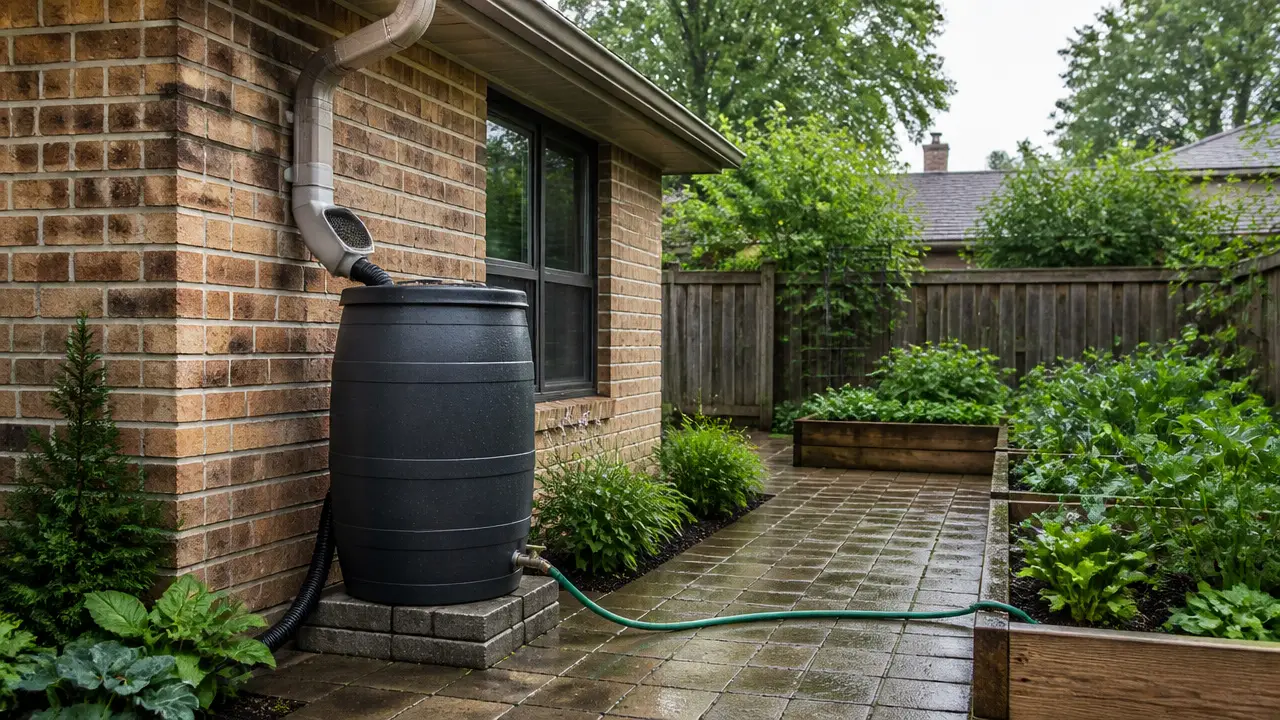
For ordinary outdoor uses such as watering ornamental plants, a covered and well-maintained cistern can hold rainwater much longer than an open rain barrel. Small rain barrels are usually better when the water is used regularly rather than left sitting for long periods.
Storage time alone does not tell you whether rainwater is safe to drink. Roof runoff can contain germs, animal waste, metals, chemicals, and other contaminants even when the water is fresh and looks clear. The CDC recommends regular testing for germs and chemicals when collected rainwater is used for drinking, cooking, or bathing.
How Long Rainwater Can Stay in Different Storage Systems
A practical way to think about storage time is to separate small rain barrels from larger, properly enclosed tanks.
| Storage setup | Practical approach |
|---|---|
| Open bucket or uncovered container | Do not use for long-term storage |
| Basic rain barrel | Use the water regularly, preferably between rain events |
| Tightly covered rain barrel | Can hold water longer if screened, clean, and maintained |
| Enclosed above-ground cistern | Often suitable for longer seasonal storage with proper maintenance |
| Enclosed underground cistern | Can support long-term storage if designed and maintained correctly |
| Rainwater intended for drinking | Storage age alone cannot establish safety |
EPA guidance encourages regular use and emptying of rain barrels rather than leaving the same water stagnant for long periods.
Large cisterns are different. They may be designed specifically to keep water for extended periods. Their effectiveness depends less on a fixed number of days and more on keeping contamination, sunlight, insects, sediment, and animals out.
Why Rainwater Does Not Have a Simple Expiration Date
Water itself does not suddenly spoil on a certain day.
What changes during storage is the environment around it.
A tank may receive:
- Leaves and pollen
- Roof dust
- Bird or animal droppings
- Insects
- Organic matter
- Sediment
- Chemicals washed from collection surfaces
Microorganisms can also enter during collection or later through an uncovered opening.
That means two tanks holding rainwater for the same amount of time can have very different water quality.
A clean, opaque, tightly covered cistern receiving screened roof runoff is very different from an uncovered barrel containing leaves and warm standing water.
For Rain Barrels, Use the Water Regularly
A typical rain barrel is best treated as short-term storage.
Using the water regularly has several benefits. It reduces stagnation, leaves room for the next storm, and makes insect and algae problems easier to control.
EPA guidance recommends regular emptying and warns against leaving rainwater sitting in barrels for long periods.
If your barrel repeatedly remains full for weeks, consider whether you need:
- More irrigation demand
- A controlled outlet
- A second barrel
- A larger cistern
- Better overflow management
A larger tank does not automatically solve water-quality problems, but a properly designed cistern is generally better suited to longer storage than a simple barrel.
Mosquitoes Can Set the Practical Limit for an Unprotected Barrel
Mosquito control is one reason not to leave exposed rainwater sitting.
Some mosquitoes can develop from egg to adult in roughly 7 to 10 days. CDC guidance recommends tightly covering water-storage containers such as rain barrels and cisterns. It also recommends using mesh small enough to keep adult mosquitoes out when a tight lid is not possible.
For rainwater collection specifically, the CDC advises either screening the inlet or emptying a rain barrel at least every 10 days to help prevent mosquitoes from laying eggs.
A properly sealed cistern can hold water much longer because mosquitoes should not be able to reach the stored water.
Check:
- Inlet screens
- Tank lids
- Overflow screens
- Vents
- Gaps around pipes
- Damaged mesh
Mosquitoes only need a small opening to reach standing water.
Sunlight Makes Long-Term Storage Harder
Keep rainwater tanks shaded or use an opaque tank that blocks light.
Sunlight encourages algae growth when enough nutrients are present. Clear or translucent containers are therefore poor choices for long-term rainwater storage unless they are protected from light.
A dark tank also tends to keep the stored water cooler than a container sitting in direct sun.
This does not make the water sterile or safe to drink. It simply creates better storage conditions.
Cooler Water Usually Stores Better
Warm water generally creates more favorable conditions for biological growth.
For that reason, rainwater stored in a shaded cistern usually has better storage conditions than water sitting in a small sun-heated barrel.
Underground cisterns can provide relatively stable temperatures, but they bring other design issues. Excavation, tank loading, groundwater conditions, access, pumps, and structural requirements may require professional planning.
Do not enter a cistern or other enclosed tank. Confined spaces can present serious hazards.
Keep Organic Debris Out Before It Reaches the Tank
Long-term storage becomes much easier when leaves, twigs, roof grit, and other debris are removed before entering the tank.
A basic collection system may include:
- Gutters and downspouts
- Leaf screens or gutter guards
- An inlet screen
- A first flush diverter
- The storage tank
A first flush diverter sends the first part of runoff from a storm away from the tank. This first runoff can carry a larger load of dust, droppings, and other material from the roof.
The CDC notes that first flush devices can improve collected rainwater quality, although the correct diverted volume depends partly on the roof area feeding the system.
Prefiltration will not make roof runoff potable. Its job is mainly to reduce the amount of contamination and debris entering storage.
Sediment Still Builds Up Over Time
Even a screened system will usually collect some fine sediment.
Material settles at the bottom of the tank. If it accumulates heavily, it can contribute to odor, clogging, discoloration, and maintenance problems.
Inspect your system periodically rather than waiting for a noticeable problem.
Maintenance may include:
- Cleaning roof gutters
- Cleaning inlet screens
- Cleaning first flush components
- Checking the tank lid
- Checking mosquito screens
- Inspecting overflow piping
- Looking for sediment buildup
- Checking pipes and fittings for leaks
Regarding drinking-water storage life, verify the difference between a screening result and a safety finding.
EPA maintenance guidance specifically includes cleaning collection components and inspecting tank lids, vents, screens, overflows, and sediment.
The correct cleaning schedule depends on your roof, surrounding trees, rainfall pattern, tank design, and intended water use.
Can Stored Rainwater Go Bad?
Stored rainwater can become unsuitable for its intended use.
Warning signs can include:
- Strong or unusual odors
- Visible algae
- Heavy floating debris
- Dead insects or animals
- Excessive sediment
- Mosquito larvae
- A damaged or contaminated tank
- Water that entered after roofing work or chemical exposure
Do not rely on appearance or smell to judge drinking-water safety. Harmful germs and chemicals may be present in water that looks perfectly clear.
For garden or landscape use, poor-smelling or heavily contaminated water may also indicate that the tank needs cleaning or that the collection system is allowing too much organic material inside.
How Long Can You Store Rainwater for Garden Use?
For garden irrigation, there is usually no need to discard properly stored rainwater simply because it has reached a certain age.
A covered, opaque cistern can hold irrigation water for an extended period if the system stays clean and sealed.
A small rain barrel should usually be managed differently. Use the water between storms when possible rather than treating the barrel as months-long storage.
Regular turnover helps:
- Reduce stagnation
- Limit mosquito problems
- Create room for new rainfall
- Prevent excessive sediment buildup
- Make maintenance easier
Be more cautious about using untreated roof runoff directly on edible parts of fruits and vegetables because roof runoff can carry contaminants. The safest irrigation method and water-quality requirements depend on the crop and how the food will be eaten.
How Long Can You Store Rainwater for Drinking?
There is no reliable rule such as "30 days," "six months," or "one year" that makes untreated rainwater safe or unsafe to drink.
Potable means suitable for drinking.
Making harvested rainwater potable is a whole-system issue, not a storage-time issue.
The collection and treatment system may need appropriate:
- Roof and gutter materials
- Debris exclusion
- First flush management
- Enclosed storage
- Sediment filtration
- Additional treatment for microorganisms
- Treatment for relevant chemical contaminants
- Regular maintenance
- Laboratory water testing
The treatment needed depends on what is actually present in the water. A sediment filter, carbon filter, UV unit, purifier, test strip, or handheld meter by itself cannot establish that roof-collected rainwater is safe to drink.
The CDC recommends regularly testing rainwater for germs and chemicals if it is used for drinking, cooking, or bathing and getting local health-department guidance on appropriate testing and treatment.
Do not apply the CDC's six-month replacement guideline for home-filled emergency drinking-water containers to untreated roof runoff. That recommendation concerns properly prepared drinking-water storage, not raw collected rainwater.
What About Rainwater Stored Over Winter?
Freezing climates create a different problem.
Water expands when it freezes. A full above-ground barrel, filter housing, valve, hose, or exposed pipe can be damaged if trapped water freezes.
Some simple rain-barrel systems are drained and disconnected before freezing weather. Larger cistern systems may use buried components or other freeze-protection designs.
Do not assume that wrapping a tank or pipe will prevent freezing under every condition. Freeze protection depends on local temperatures, exposure time, pipe depth, tank location, water movement, and system design.
A Better Rule Than Counting Storage Days
Instead of asking only how old the water is, check whether the storage system protects it.
For longer storage, aim for a system that is:
- Covered
- Opaque
- Screened against insects
- Protected from animals
- Protected from direct sunlight
- Supplied through debris screens
- Maintained regularly
- Equipped with a safe overflow
- Cleaned when sediment or contamination requires it
Then match the water quality to the intended use.
Rainwater for landscape irrigation does not require the same quality as rainwater intended for bathing, cooking, or drinking.
That intended use should guide how carefully the water is collected, stored, treated, tested, and maintained.
Frequently Asked Questions
Does rainwater expire in a tank?
Not on a fixed date. Water quality depends on how the rainwater was collected and stored. A sealed, opaque cistern can maintain usable irrigation water much longer than an open barrel containing debris.
Is rainwater still good after a month?
It may still be useful for non-potable purposes such as landscape irrigation if it has been stored in a clean, covered system. Age alone cannot show whether it is suitable for drinking or other higher-quality uses.
How often should I empty a rain barrel?
Use the water regularly and preferably between rain events. If mosquitoes can reach the water, CDC guidance advises screening the inlet or emptying the barrel at least every 10 days.
Can rainwater be stored for a year?
A properly designed and maintained cistern may hold water for long periods, including seasonal storage. However, a year of storage does not prove that the water is safe to drink. Intended use, contamination control, maintenance, treatment, and testing matter more than age alone.
Does rainwater grow algae while stored?
It can. Light and nutrients encourage algae growth. Using an opaque tank and limiting debris entering the system can help reduce the conditions that support algae.
Should a rainwater tank be completely sealed?
It should be covered and protected against insects, debris, and animals, but the system may still require properly designed vents and overflow openings. These openings should be screened so pests cannot enter.
Can I drink rainwater if it looks and smells clean?
Appearance and smell are not reliable safety tests. Clear rainwater can still contain harmful germs or chemicals. Drinking-water use requires suitable collection, treatment, ongoing maintenance, and appropriate laboratory testing.
Should I replace old stored rainwater with fresh rainwater?
For a garden barrel, regular turnover is usually useful because it reduces stagnation and leaves storage room for the next storm. Large cisterns may be designed for longer storage, so completely replacing the water on a fixed schedule is not always necessary.