
As an affiliate, we may earn a commission from qualifying purchases. We get commissions for purchases made through links on this website from Amazon and other third parties.
Best Overall
Best Thick Rubber Sleeve
Best 7/8-Inch ID Sleeve
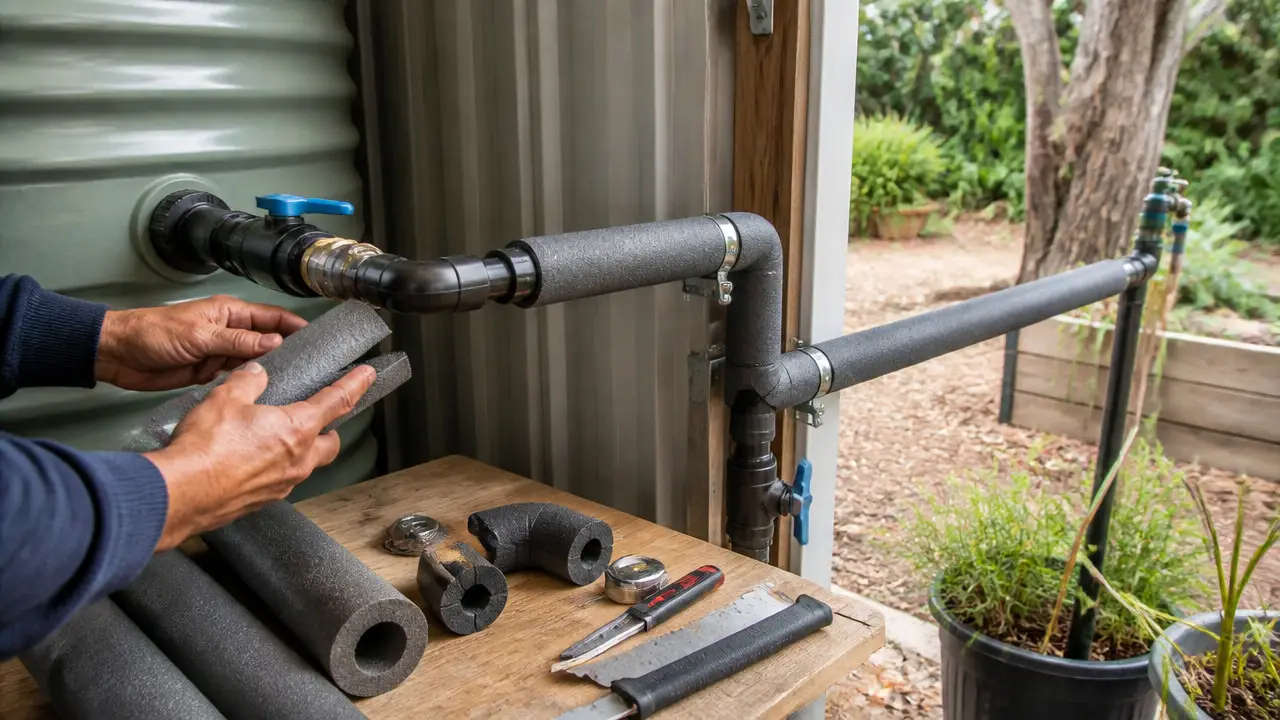
Pipe insulation slows heat loss from rainwater plumbing. It can make an exposed or unheated pipe less vulnerable to short cold periods, reduce condensation on cold lines, and help a properly installed heat cable retain warmth. What it cannot do is create heat or guarantee that a water-filled pipe will survive a prolonged freeze.
That distinction matters in rainwater systems because many components sit in sheds, crawlspaces, garages, exterior walls, or other places with little conditioned heat. A foam sleeve that helps an indoor pipe may still be a poor choice for direct outdoor sun or weather exposure unless the manufacturer specifically supports that use.
Fit is the first buying decision. Pipe insulation is sized around the pipe it has to wrap, not around the nominal plumbing label alone. Measure the actual outside diameter, check the insulation’s inside diameter, and leave enough room around valves, unions, elbows, pump connections, and other service points.
Pipe Insulation at a Glance
| Product | Best For | Key Strength | Main Tradeoff |
|---|---|---|---|
| Duck Brand Foam Pipe Covers | Small indoor rainwater lines | Pre-slit self-sealing pieces for 1/2- to 3/4-inch pipes; R-3.6 claim | Short one-foot sections create more seams on long runs |
| K-FLEX 1-3/8-Inch Rubber Pipe Insulation | Larger pipe with thicker insulation | Six-foot rubber sleeve with a stated one-inch wall | Larger size is unnecessary for small plumbing and needs exact fit verification |
| Armacell APT07812 | Exact 7/8-inch ID applications | Six-foot sleeve with 7/8-inch ID and 1/2-inch nominal wall | Limited performance history; exact fit matters most |
| K-FLEX INSULTAPE | Elbows, fittings, and irregular shapes | Flexible 2-inch-wide insulation tape can conform where tubes cannot | Sparse performance data; not a substitute for a correctly sized full pipe sleeve |
Best Overall: Duck Brand Foam Pipe Covers
1 / 4
Duck Brand Foam Pipe Covers

Pipe Fit Claim
1/2 to 3/4 in
R-Value Claim
3.6
Package
6 one-foot pieces
Duck Brand Foam Pipe Covers are the easiest general-purpose choice here for small indoor rainwater plumbing. The product is sold as six one-foot foam sections, for six feet total, with pre-slit openings and self-sealing adhesive edges. Duck states that the covers fit 1/2- to 3/4-inch pipes and carry an R-value claim of 3.6.
The short sections are particularly useful around crowded plumbing. Rainwater pump rooms and under-floor installations often contain tees, unions, shutoff valves, and pressure components that make a single long sleeve awkward to slide into place. One-foot pieces can be cut and fitted around those obstacles without removing as much plumbing.
The tradeoff is seam count. Six feet of pipe covered with one-foot pieces creates several joints, and every joint is a place for cold air to reach the pipe. Butt the pieces together cleanly and seal the joints with an appropriate compatible tape when needed.
The adhesive performs unevenly. Some self-sealing edges hold firmly, while others are difficult to peel or need tape or ties to stay closed. Treat the adhesive as installation help rather than the only thing holding a freeze-protection system together.
Why It Works
- The stated 1/2- to 3/4-inch fit covers common small water-line sizes.
- Pre-slit foam is easy to install around existing pipe.
- One-foot pieces are manageable in tight or congested spaces.
- The R-3.6 claim gives a documented thermal-performance reference for this product.
What To Keep In Mind
- The product is positioned for indoor hot- and cold-water pipes; do not assume exposed outdoor UV/weather durability without current manufacturer support.
- Short pieces create more seams than a continuous six-foot sleeve.
- Adhesive performance can vary, so inspect every seam after installation.
- Insulation reduces heat loss but does not actively heat a frozen pipe.
Best Thick Rubber Sleeve: K-FLEX 1-3/8-Inch Rubber Pipe Insulation
2 / 4
K-FLEX 1-3/8-Inch Rubber Pipe Insulation
Size Claim
1-3/8 in
Length
6 ft
Wall Claim
1 in
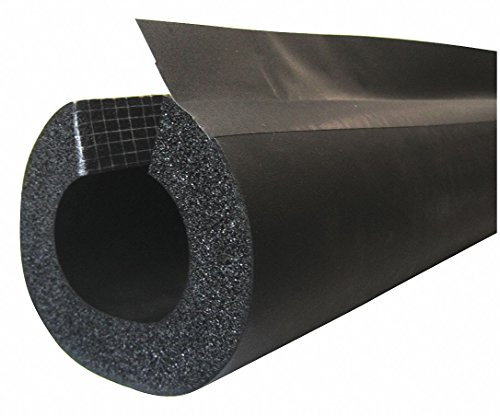
This K-FLEX sleeve is the strongest fit when the pipe is larger and you specifically want a thick rubber insulation layer. The product title identifies a 1-3/8-inch size, six-foot length, and one-inch wall. Those dimensions give it a very different role from the smaller Duck foam pieces.
A thicker wall can slow heat transfer more effectively than a thin sleeve of the same material, but thickness only helps when the insulation actually fits the pipe and the seams are closed. An oversized tube with air gaps or loose joints can perform poorly despite looking substantial.
The rubber sleeve is intended for thermal and moisture protection. Its performance history is limited, so this recommendation rests on its form and sizing rather than a claim of superior durability.
Measure the exact pipe outside diameter for fit. A 1-3/8-inch labeled sleeve should not be selected simply because the plumbing is called “one inch” or “1-1/4 inch” nominally; actual outside diameters vary by pipe material and standard.
Why It Works
- The six-foot length reduces seams on a straight run.
- The one-inch wall claim gives this product the thickest documented sleeve role in the group.
- Rubber insulation is positioned for both thermal and moisture protection.
- The larger size suits plumbing that will not fit the small Duck sleeves.
What To Keep In Mind
- Measure the actual pipe outside diameter before ordering.
- Use the stated sleeve size and wall specification; other published dimension fields conflict.
- Outdoor exposure suitability should be confirmed from current manufacturer instructions.
- A thick sleeve still cannot protect indefinitely during a hard freeze without a heat source or warmer surrounding space.
Best Exact-Fit 7/8-Inch ID Sleeve: Armacell APT07812
3 / 4
Armacell APT07812 Pipe Insulation
Inside Diameter
7/8 in
Nominal Wall
1/2 in
Length
6 ft
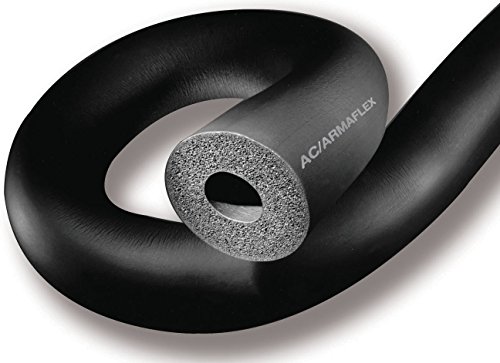
The Armacell APT07812 earns a place for one reason: its product title gives a clear fit target. It is a six-foot pipe-insulation sleeve with a 7/8-inch inside diameter and a 1/2-inch nominal wall.
That makes it useful when your measured pipe outside diameter matches the 7/8-inch opening and you want a continuous sleeve instead of several short pieces. It can reduce seams across a straight run and provides a moderate wall thickness without the bulk of the one-inch-wall K-FLEX sleeve above.
One published material field says “Aluminum,” but that conflicts with the sleeve’s identity and is not reliable enough to use as a material claim. Its performance history is also limited. Choose this model for exact sizing—not from an unsupported assumption that it is tougher, more weather resistant, or better at a particular temperature than the other options.
Why It Works
- The 7/8-inch inside diameter gives a clear measurement to match against the pipe.
- A six-foot length reduces the number of joints on straight plumbing.
- The stated 1/2-inch wall offers meaningful insulation thickness without an especially bulky profile.
- It can suit rainwater lines where the exact pipe OD matches this sleeve.
What To Keep In Mind
- Do not rely on the conflicting “Aluminum” material field.
- Measure pipe outside diameter rather than guessing from nominal pipe size.
- Protect the sleeve from abrasion or weather when the installation requires it and the manufacturer supports the protection method.
- Seal joints and cuts so cold air does not bypass the insulation.
Best for Fittings and Irregular Shapes: K-FLEX INSULTAPE
4 / 4
K-FLEX INSULTAPE

Width
2 in
Thickness
1/8 in
Length
30 ft
K-FLEX INSULTAPE is the most specialized option here. Instead of a tubular sleeve, it is a two-inch-wide, 1/8-inch-thick, 30-foot insulation tape. That wrap format can be useful around elbows, tees, unions, short valves, and other shapes where a straight foam tube leaves gaps.
The performance history is sparse, but the pressure-sensitive tape can form easily and adhere well to copper lines. Use it as a conformable insulation accessory rather than expecting it to serve the same role as a one-piece pipe sleeve.
No reliable R-value, temperature range, outdoor rating, or freeze-protection threshold is available. Use the tape to close or insulate irregular areas only within the current K-FLEX instructions.
For long straight rainwater plumbing, a correctly sized tubular sleeve is generally simpler and gives more uniform thickness. INSULTAPE makes the most sense as the detail material that finishes places the sleeve cannot cover cleanly.
Why It Works
- The wrap format conforms to fittings and irregular shapes.
- Thirty feet gives enough material for multiple small details or joints.
- Pressure-sensitive backing can simplify attachment to compatible surfaces.
- It can complement tubular insulation instead of forcing sleeves around awkward geometry.
What To Keep In Mind
- It is not the best primary insulation for a long straight pipe run.
- No R-value, outdoor rating, or freeze-temperature claim is available for sizing.
- Overlap and compression change insulation thickness, so follow the manufacturer’s application method.
- Do not wrap over an active leak or a fitting that needs immediate service access.
How to Choose Pipe Insulation for a Rainwater System
Measure the Pipe, Not Just the Plumbing Label
Nominal pipe size is not always the same as outside diameter. Copper, PEX, PVC, CPVC, and other pipe types use different dimensional standards. Measure the actual outside diameter and choose insulation with an inside diameter designed to close around it without stretching or leaving a large gap.
A snug sleeve should meet at the seam without crushing the pipe or requiring force to close.
Compare Wall Thickness
Thicker insulation generally slows heat transfer more than a thinner layer of the same material and condition. But wall thickness is only one part of performance. Gaps, wet insulation, compressed areas, wind exposure, and open seams can undermine a thick sleeve.
Use the R-value or thermal data supplied for the exact product when available. In this group, Duck is the only product with a prepared R-value claim that is safe to repeat.
Decide Between Tubes and Tape
Tubular insulation is the default for straight pipe. It provides consistent coverage and is faster to install over long runs.
Tape or wrap insulation is better around shapes that cannot be covered cleanly with a tube. A rainwater line often needs both: sleeves on the straight runs and wrap material around fittings or transitions.
Check the Installation Environment
Indoor insulation is not automatically suitable for direct outdoor exposure. Sunlight, rain, wind, animals, abrasion, and standing moisture can damage insulation or its adhesive.
If the pipe is outdoors, use insulation rated for UV and weather exposure, plus an approved protective jacket or covering when required.
Pipe Insulation vs Heat Cable
Insulation and heat cable solve different problems. Insulation slows heat loss. Heat cable adds heat to the pipe.
In marginal freezing conditions, insulation alone may be enough to delay freezing until temperatures rise. During long or severe cold, a water-filled exposed line can eventually reach freezing temperature even inside a thick sleeve.
When insulation is installed over heat cable, use only the insulation material and thickness approved by the heat-cable manufacturer. Do not assume a foam sleeve is safe over every heating cable.
Where to Insulate a Rainwater System
Focus first on the most exposed water-filled sections: pipe leaving the tank, pump discharge lines, plumbing through unheated walls or floors, exterior risers, and lines near vents or drafts.
Valves, filter housings, pump bodies, pressure gauges, and faucets may need separate freeze protection. Tubular pipe insulation does not automatically protect bulky components nearby.
For a seasonal rainwater system, draining and isolating vulnerable plumbing is often more reliable than trying to insulate every component through winter.
Installation Tips
Start With Dry, Leak-Free Pipe
Do not trap an active leak under insulation. Repair the plumbing first, dry the pipe, and then install the sleeve or tape.
Close Every Seam
Cold air can move through open longitudinal seams and butt joints. Close self-sealing edges fully and use compatible joint tape where the product instructions call for it.
Avoid Crushing the Insulation
Over-tight zip ties, wire, or tape can compress the insulation and reduce thickness. Use fastening methods that hold the material closed without flattening it unnecessarily.
Keep Service Points Accessible
Do not bury unions, shutoff handles, drains, or filter service points under permanent wrapping. Insulate around them in a way that can be removed for maintenance.
Common Insulation Problems
Choosing the Wrong Inside Diameter
An oversized sleeve leaves air gaps and an undersized sleeve may split or never close. Measure first.
Leaving Elbows and Tees Bare
The straight pipe may be covered perfectly while fittings remain exposed. Use compatible formed pieces or insulation tape to close those gaps.
Assuming Insulation Prevents Every Freeze
Insulation delays heat loss. It does not make a stagnant outdoor water line immune to prolonged subfreezing weather.
Letting Insulation Stay Wet
Damaged or waterlogged insulation can lose effectiveness and hide corrosion or leaks. Repair the source of moisture and replace compromised material as needed.
Final Recommendations
The Duck Brand Foam Pipe Covers are the best overall choice for common small indoor rainwater lines because they provide a documented 1/2- to 3/4-inch fit, R-3.6 claim, pre-slit construction, and short sections that are easy to work around congested plumbing.
Choose the K-FLEX 1-3/8-inch rubber sleeve for a larger pipe that matches its stated size and benefits from a thick one-inch wall. The Armacell APT07812 is the clearer exact-fit choice for a 7/8-inch outside-diameter application, while K-FLEX INSULTAPE is best reserved for elbows, fittings, and irregular areas that tubular insulation cannot cover neatly.
Whatever material you choose, treat insulation as one part of winterization. Correct sizing, dry sealed joints, weather protection, drainage where possible, and approved heat cable where necessary provide a more reliable freeze-protection plan than insulation thickness alone.
Frequently Asked Questions
What size pipe insulation do I need?
Measure the pipe’s actual outside diameter and match it to the insulation’s stated inside diameter or fit range. Do not rely on nominal pipe size alone.
Is thicker pipe insulation always better?
Not automatically. More thickness can reduce heat loss, but correct fit, closed seams, dry material, and environmental protection are equally important.
Can pipe insulation stop rainwater pipes from freezing?
It can delay freezing and reduce heat loss, but it does not generate heat. Long or severe cold can still freeze a water-filled pipe. Drain vulnerable plumbing or add an approved active freeze-protection method when necessary.
Can I use indoor foam insulation outside?
Only when the manufacturer supports that exposure or the insulation is protected with an approved weather/UV jacket. The Duck product in this guide is positioned for indoor water and HVAC pipe use, so direct outdoor durability should not be assumed.
Can I put insulation over heat cable?
Only if the heat-cable instructions approve the insulation material, thickness, and installation method. Using the wrong covering can create unsafe temperatures or reduce performance.
Should I insulate valves and faucets too?
They may need protection, but tubular pipe sleeves often do not fit them correctly. Use a component-specific freeze-protection method or removable insulation that does not block operation or service.
Is rubber better than foam for rainwater plumbing?
Material alone does not decide the best choice. Fit, wall thickness, moisture exposure, service access, and manufacturer-approved environment matter more than simply choosing “rubber” or “foam.”