As an affiliate, we may earn a commission from qualifying purchases. We get commissions for purchases made through links on this website from Amazon and other third parties.
Preppers usually store water in layers rather than relying on one large tank. They keep some water ready to drink, more water in larger food-grade containers, and a way to collect or safely treat additional water if the stored supply runs low.
For most homes, the safest starting point is simple: store known safe drinking water in clean, food-grade containers, keep it cool and dark, label it, and rotate home-filled water on a schedule.
Current CDC guidance recommends storing at least 1 gallon of water per person per day for at least 3 days, with a 2-week supply if possible. More may be needed for hot weather, illness, pregnancy, pets, and other household needs.
How Much Water Should You Store?
A useful starting formula is:
Number of people × number of days × 1 gallon = minimum stored water
For example:
| Household | 3-Day Supply | 14-Day Supply |
|---|---|---|
| 1 person | 3 gallons | 14 gallons |
| 2 people | 6 gallons | 28 gallons |
| 4 people | 12 gallons | 56 gallons |
| 6 people | 18 gallons | 84 gallons |
The 1-gallon figure covers basic drinking and some cooking and hygiene. It is not a generous amount of water for normal household use.
You may want additional water for:
- Pets
- Hot climates
- Medical needs
- Washing dishes
- Basic cleaning
- Toilet flushing
- Garden or livestock needs
There is no reason all of this water has to meet the same standard. Drinking water should receive the most careful storage and handling. Water intended only for flushing toilets or watering plants can often be stored separately.
Use Several Sizes of Water Containers
A practical preparedness setup usually includes several container sizes.
Bottles and Small Jugs
Commercially bottled water is one of the easiest ways to keep a small drinking-water reserve. CDC describes unopened commercially bottled water as the safest and most reliable emergency water source. Follow the expiration or best-use information on the packaging.
Small containers are useful because they are easy to:
- Carry
- Pour
- Give to another person
- Put in a vehicle
- Move during an evacuation
- Use without opening the rest of your water supply
The downside is that dozens of small bottles take up a lot of space.
Medium Water Containers
Containers holding several gallons are a good middle ground.
They hold more water without becoming completely unmanageable. They can also be stored in different parts of the house instead of putting the whole supply in one location.
Remember that water is heavy. One gallon weighs about 8.3 pounds before the container itself is counted.
A 5-gallon container therefore holds more than 40 pounds of water.
Make sure you can safely move a filled container before choosing its size.
30- to 55-Gallon Drums
Large food-grade drums work well when you want a larger stationary supply.
A 55-gallon drum contains roughly 460 pounds of water, so you generally fill it where it will stay.
The drum should sit on a firm, level surface capable of supporting the load. Think about how you will get the water out as well. A drum that holds plenty of water but cannot be conveniently pumped or drained is not very useful.
IBC Totes and Large Cisterns
Some households use IBC totes, large tanks, or cisterns for bulk water storage.
These can hold hundreds of gallons, but capacity creates new problems.
A 275-gallon tote contains roughly 2,300 pounds of water. Large tanks need suitable foundations, overflow planning, secure connections, and protection against damage or freezing.
Do not assume that a used IBC tote is suitable for drinking water just because someone describes it as "food grade." For drinking-water storage, use a container with a known history that is specifically suitable for potable water. Potable simply means water intended to be safe for drinking.
Containers that previously held pesticides, fuels, cleaners, or other toxic chemicals should never be repurposed for drinking-water storage. CDC specifically warns against using containers that previously held toxic chemicals.
A Layered Water Storage Plan Works Best
Instead of putting 100% of your water into one large tank, divide it into several layers.
A household might keep:
- Commercially bottled water for immediate drinking
- Several portable containers for cooking and carrying
- One or more larger stationary containers
- Separate non-potable water for cleaning or toilet flushing
- A backup water source such as rainwater collection
This solves several problems.
If one container leaks or becomes contaminated, you do not lose the entire supply. Small containers remain movable. Large containers provide capacity without filling the whole storage area with bottles.
It also makes rotation easier because you can replace part of the supply at a time.
Start With Safe Water
For drinking-water storage, start with water that is already safe to drink.
Water from a properly operating public drinking-water supply is normally the simplest option for filling home storage containers.
Well water requires more care because the homeowner is responsible for its condition. If you depend on a private well for drinking water, appropriate testing and maintenance matter.
Rainwater should not automatically be treated as drinking water.
Roof runoff can pick up animal waste, dirt, roofing material residues, microorganisms, and other contaminants. A screen, first-flush diverter, sediment filter, or single drinking-water filter does not by itself prove that collected rainwater is potable.
For drinking-water use, rainwater requires a suitable collection system, treatment designed for the actual water quality, maintenance, current laboratory testing, and compliance with applicable local requirements.
Clean Storage Containers Before Filling Them
New-looking does not necessarily mean clean.
Before filling a reusable drinking-water container, wash and sanitize it according to the container manufacturer's instructions and current public-health guidance.
CDC currently recommends washing the container with soap, rinsing it completely, and then sanitizing it. For suitable containers, its emergency-storage guidance uses a sanitizing solution made from 1 teaspoon of unscented household chlorine bleach containing 5% to 9% sodium hypochlorite in 1 quart of water. The solution should contact the inside surfaces for at least 30 seconds before being emptied, after which the container can air-dry.
Do not confuse sanitizing an empty container with disinfecting questionable drinking water. They are different procedures and use different concentrations.
Close and Label Every Container
Once filled, close the container tightly.
Label it with at least:
- "Drinking Water"
- The date it was filled
If you keep non-potable water nearby, label those containers clearly as well.
Avoid relying on memory. Six months later, identical containers can be difficult to tell apart.
Store Water Somewhere Cool and Dark
Heat and sunlight are poor storage conditions.
CDC recommends keeping home-filled emergency water in a cool area, ideally around 50°F to 70°F, away from direct sunlight. It should also be kept away from gasoline, pesticides, and other toxic substances.
Suitable locations may include a climate-moderated basement, pantry, utility area, or other protected space.
A garage or shed can be less suitable where temperatures become extremely hot or freezing cold.
Watch the Weight
Large water supplies can create substantial floor loads.
With water-storage life in a tank, you can evaluate stored volume against consumption and seasonal refill patterns.
For perspective:
- 20 gallons weighs about 167 pounds
- 55 gallons weighs about 460 pounds
- 275 gallons weighs about 2,300 pounds
- 500 gallons weighs more than 4,000 pounds
Do not place large tanks on elevated floors, decks, shelving, or questionable structures without confirming that the structure can safely carry the load.
Keep Water From Freezing
Freezing climates require another layer of planning.
Water expands when it freezes. Frozen containers, valves, hoses, filters, and pumps can crack.
Outdoor bulk storage may therefore need appropriate placement, drainage, insulation, heating, or seasonal shutdown depending on the system and climate.
Do not assume that wrapping a tank in insulation alone prevents freezing. Insulation slows heat loss but does not create heat.
Portable drinking-water containers kept inside conditioned space are often much easier to manage during winter.
Rotate Home-Filled Water
CDC recommends replacing water that you fill into your own storage containers every six months.
A simple method is to write the replacement month directly on each container.
You do not necessarily need to waste the old water. If it remains suitable, it can often be put to another use such as cleaning, toilet flushing, or irrigation rather than being poured down a drain.
For commercially bottled water, follow the manufacturer's date information rather than automatically applying the six-month schedule.
Avoid Contaminating Water When You Use It
Good storage can be undone when someone opens the container.
If possible, choose a container with a narrow opening, spigot, valve, or pump that lets you remove water without putting hands or cups inside.
CDC recommends using a clean utensil whenever water must be removed from a container and avoiding contact between hands and the stored water or the container's inside surfaces.
This is another reason several smaller containers can be useful. Opening one 5-gallon container does not expose the other 50 gallons.
Keep Drinking Water and Utility Water Separate
Not every gallon in a preparedness system has to be drinking water.
You might maintain one clearly protected supply for:
- Drinking
- Cooking
- Brushing teeth
A separate supply can serve:
- Toilet flushing
- Cleaning
- Irrigation
- Other non-potable uses
Non-potable means water that is not intended for drinking.
This approach can greatly extend your drinking-water reserve during a temporary interruption.
Where Rainwater Fits Into a Prepper Water Plan
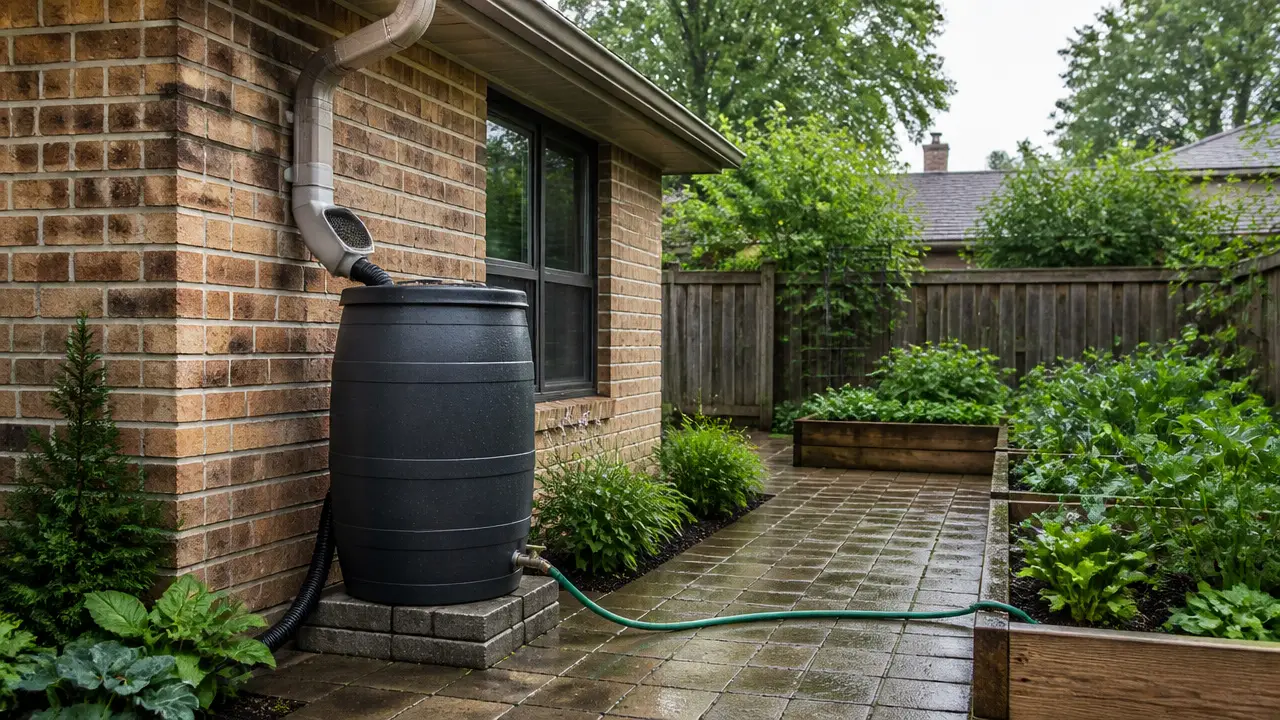
Rainwater harvesting can provide useful backup capacity, especially for non-potable needs.
A basic rainwater system may include:
- A suitable roof catchment
- Gutters
- Leaf and debris screening
- A first-flush or similar pretreatment stage where appropriate
- A covered storage tank
- An overflow route
- A way to move the water to its intended use
A first-flush diverter sends some of the earliest roof runoff away from storage. That early runoff often carries a heavier load of dust and debris from the roof.
Stored rainwater can be useful for garden irrigation and other allowed non-potable purposes, depending on local requirements.
Drinking it is a different matter. Even clear-looking rainwater can contain contaminants that you cannot see, smell, or taste.
Do not plan on making rainwater potable simply by keeping a camping filter beside the tank.
Storage and Treatment Are Two Different Problems
A water storage container protects water you already have.
A treatment system attempts to improve water quality.
Those are not interchangeable jobs.
For example, a filter may remove particles while leaving some microorganisms or dissolved chemicals behind. UV treatment can inactivate susceptible microorganisms when the water and equipment meet the required operating conditions, but UV does not remove chemicals or sediment.
Boiling and emergency chemical disinfection also have limits. EPA notes that boiling or disinfection can address many disease-causing microorganisms but will not remove contaminants such as heavy metals, salts, and most chemicals.
That is why a preparedness plan should not assume that any unknown water source can be made safe with one treatment method.
A Practical Example for a Four-Person Household
Suppose four people want a two-week emergency reserve.
Using the CDC starting figure:
4 people × 14 days × 1 gallon = 56 gallons
Instead of buying one 55-gallon drum and considering the job finished, the household could divide the supply between portable drinking-water containers and larger stationary storage.
They might also maintain separate rainwater storage for garden watering or toilet flushing.
The exact arrangement is less important than having:
- Enough capacity
- Suitable containers
- Safe starting water
- Clear drinking versus non-drinking labels
- A workable rotation schedule
- A way to dispense the water
- Protection from heat, sunlight, freezing, and contamination
- More than one source or container
That is the main idea behind good preparedness water storage: redundancy rather than one enormous reserve.
Common Water Storage Mistakes
Avoid these common problems:
- Filling containers that are not intended for water storage
- Reusing containers that held toxic chemicals
- Putting the entire supply in one vessel
- Forgetting how heavy a filled tank becomes
- Storing water beside gasoline, pesticides, or chemicals
- Leaving clear containers in direct sunlight
- Forgetting to label home-filled water with the fill date
- Dipping dirty cups or hands into stored drinking water
- Assuming rainwater is automatically drinkable
- Buying a treatment device without knowing what contaminants it can actually address
- Installing a large tank without planning the foundation, overflow, drainage, freezing protection, or water connections
A modest system that is clean, accessible, and maintained is more useful than a huge system that cannot be safely managed.
Frequently Asked Questions
How long can preppers store water?
CDC recommends replacing water that you fill into your own storage containers every six months. Commercially bottled water should be stored according to the manufacturer's date information and kept in suitable conditions.
How much water should I store per person?
A good minimum starting point is 1 gallon per person per day for at least three days. CDC recommends trying to store enough for two weeks when possible. Store additional water for pets, hot climates, illness, and other special needs.
Are 55-gallon drums good for water storage?
They can be, provided the drum is suitable for drinking-water storage, has a known history, can be kept clean and covered, and sits on a surface capable of supporting its weight. A full 55-gallon drum contains about 460 pounds of water.
Can I store drinking water in an IBC tote?
Only use a tote that is specifically suitable for potable water and has a known, appropriate history. Avoid unknown used totes. Never use a container that previously held pesticides, fuels, cleaners, or other toxic substances.
Can stored rainwater be my emergency drinking water?
Do not assume stored rainwater is safe to drink. Roof runoff can contain germs, chemicals, and other contaminants. Drinking-water use requires suitable collection, treatment, maintenance, current testing, and compliance with applicable local requirements.
Does stored water need to be filtered before drinking?
Water that was safe when placed into a clean, sanitized, properly closed container does not automatically require filtration simply because it was stored. If contamination is suspected, however, do not rely on appearance or a basic filter to prove safety. Follow current health-authority guidance for the situation.
Where is the best place to store emergency water?
Choose a cool, protected location away from sunlight, gasoline, pesticides, and other chemicals. Make sure floors or supports can handle the weight. In freezing climates, protect containers and plumbing from freezing.