As an affiliate, we may earn a commission from qualifying purchases. We get commissions for purchases made through links on this website from Amazon and other third parties.
An activated carbon filter should be replaced when it reaches the service life or water-volume limit set by its manufacturer. There is no single replacement interval that works for every carbon filter.
Some filters measure life in months. Others use gallons or liters. Some systems have a change indicator. Water quality, sediment, flow rate, and how much water you use can also shorten filter life.
For drinking-water filters, do not keep using the cartridge simply because the water still tastes normal. Activated carbon can lose its ability to capture some contaminants without an obvious change in taste, smell, or flow. NSF and the CDC recommend replacing water filters according to the manufacturer's specified service cycle.
Why Activated Carbon Filters Need Replacement
Activated carbon has a very large porous surface. Certain chemicals stick to that surface as water passes through. This process is called adsorption.
Over time, the available surface becomes filled. Once that happens, the carbon cannot keep capturing contaminants at the same rate.
Carbon filters can also collect sediment and biological material. A dirty filter may restrict water flow, and poorly maintained filters can support microbial growth. The CDC recommends regular filter replacement because germs can live and multiply in water filters that are not maintained correctly.
You cannot restore a disposable activated carbon cartridge simply by rinsing it. Once its rated service life is reached, replace the cartridge.
Follow Capacity Before the Calendar
The most useful replacement number is usually the manufacturer's rated capacity.
A cartridge may have instructions such as:
- Replace after a certain number of gallons or liters.
- Replace after a certain number of months.
- Replace when the system's indicator tells you to.
- Replace at whichever limit comes first.
The water-volume limit matters because two households can use very different amounts of water during the same number of months.
NSF notes that certified filters may have a stated capacity showing how much water they can treat before replacement is required. Following that capacity helps maintain the contaminant-reduction performance for which the filter was tested.
If you do not have the manual, identify the exact filter or cartridge model and find its official replacement instructions. Do not assume that another carbon cartridge of the same physical size has the same capacity.
Replace the Filter Sooner When Conditions Are Hard on It
A filter may reach the end of its useful life earlier than expected.
Consider early replacement when you notice:
| Condition | What it may mean |
|---|---|
| Flow becomes much slower | Sediment or other material may be clogging the cartridge |
| Pressure drops across the filter | The cartridge may be becoming restricted |
| Taste or odor returns | The carbon may no longer be controlling the substance that caused it |
| Water use has increased | The cartridge may reach its gallon capacity sooner |
| Water contains more sediment than usual | The filter may clog faster |
| The system has been poorly maintained | The cartridge and housing may need service |
These signs can help with troubleshooting, but they should not replace the manufacturer's capacity limit.
A carbon filter can become exhausted without a noticeable pressure change. Do not wait for bad taste or slow water before changing a cartridge that has already reached its rated service life.
Sediment Can Shorten Carbon Filter Life
Activated carbon works best when it is not being asked to handle large amounts of dirt, rust, grit, or roof debris.
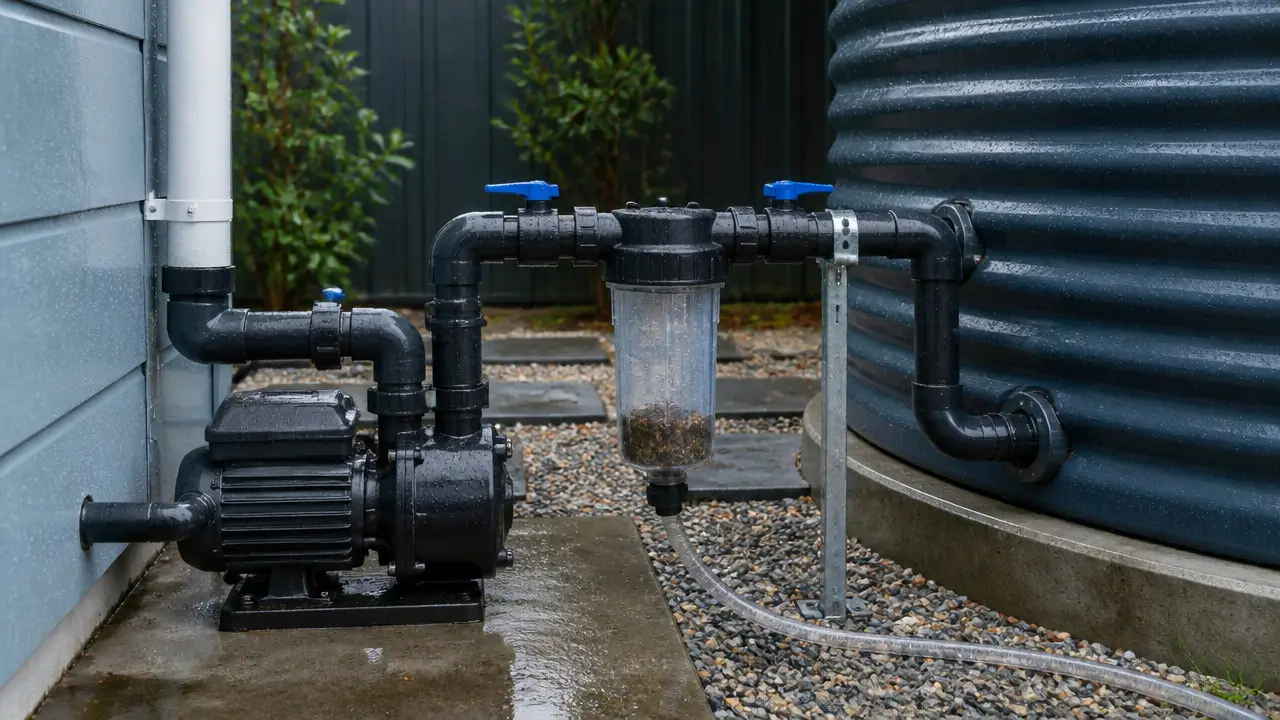
In a multi-stage system, a sediment filter is often placed before the carbon stage. The sediment filter catches larger particles so the carbon has more usable surface available for the substances it is meant to adsorb.
This is especially important in rainwater systems. Roof runoff may carry dust, leaves, pollen, roofing debris, and other particles.
A typical treatment path might include:
roof collection → debris control → storage → sediment filtration → activated carbon → additional treatment needed for the intended use
The exact setup depends on your water and how you plan to use it.
If a carbon cartridge repeatedly plugs much sooner than expected, look upstream. The real problem may be poor sediment control rather than the carbon filter itself.
Do Not Use Taste as Your Replacement Meter
Taste and odor are useful clues, but they are poor ways to judge filter safety.
Activated carbon can reduce certain tastes, odors, chlorine, and some organic chemicals when the filter is designed and tested for those purposes. Different cartridges have different capabilities.
A filter may still produce good-tasting water after its certified contaminant-reduction capacity has been reached.
The reverse is also possible. A strange taste may come from plumbing, storage, microbial growth, or another problem rather than exhausted carbon.
For drinking water, use the manufacturer's service limit rather than your senses to decide when replacement is due.
Carbon Filters Are Not All the Same
"Activated carbon filter" describes the filter media, not its complete performance.
Carbon cartridges can differ in:
- Carbon type and amount
- Cartridge size
- Flow rate
- Rated water capacity
- Contaminants they are designed to reduce
- Required water conditions
- Certification
- Connection and housing size
Examine flow and service limits of carbon filters to understand treatment decisions suited to how the water will be used.
A replacement cartridge must also fit the housing correctly. A cartridge that almost fits can allow water to bypass the filter media.
NSF warns that replacement cartridges are not necessarily interchangeable even when they appear similar. Using the specified cartridge helps prevent water from passing around the filter rather than through it.
Activated Carbon in Rainwater Systems
Carbon can be useful in a rainwater treatment system, but its replacement schedule depends heavily on what reaches it.
Rainwater collected from a roof can contain sediment, organic matter, animal waste, microorganisms, and contaminants from roofing materials or nearby pollution.
Sending untreated roof runoff directly through a small carbon cartridge can shorten its life quickly.
Good upstream maintenance can help. That may include keeping gutters clean, controlling debris, using suitable prefiltration, maintaining the tank, and replacing sediment filters when needed.
Carbon is usually better treated as one stage of the system rather than the entire treatment system.
Activated Carbon Does Not Make Rainwater Safe to Drink by Itself
An activated carbon filter should not be treated as a complete drinking-water purifier.
Carbon does not reliably remove every contaminant, and a standard carbon filter is not a substitute for disinfection. Current guidance for certified activated-carbon systems warns against using them with microbiologically unsafe water or water of unknown quality unless adequate treatment for microorganisms is also provided.
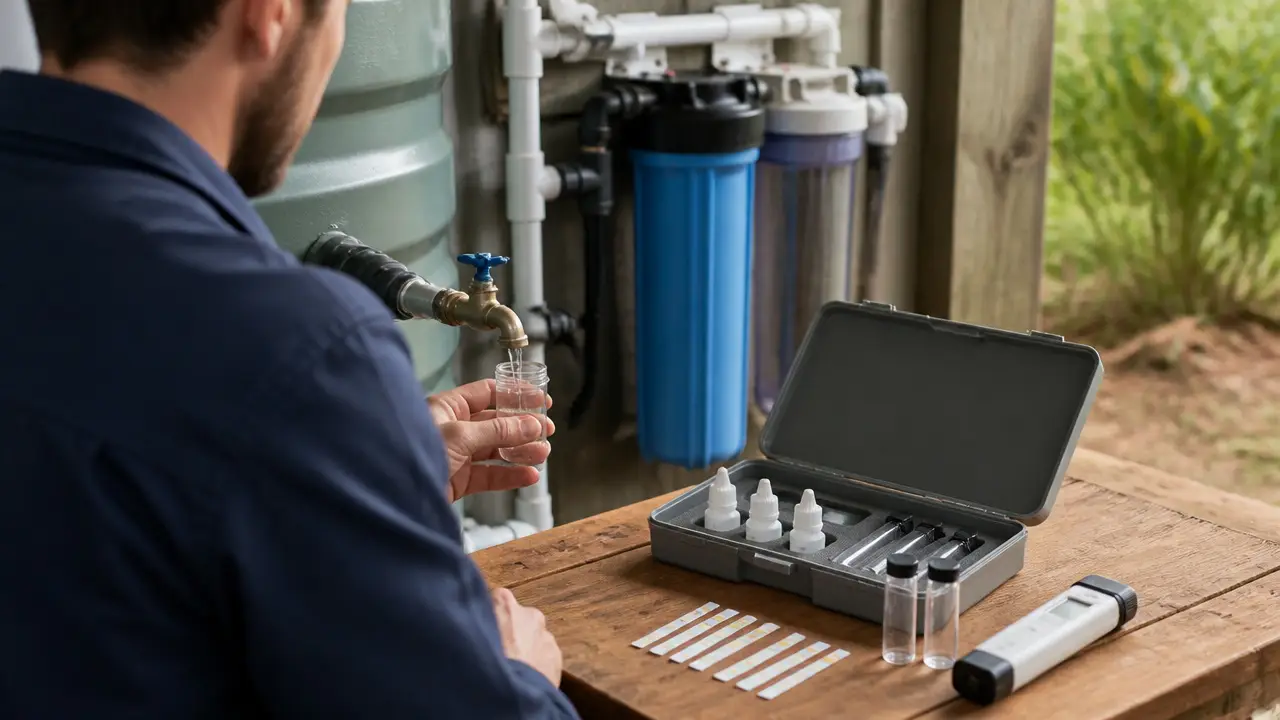
If collected rainwater will be used for drinking or cooking, treatment should be planned as a complete system. That can involve suitable collection practices, sediment removal, treatment chosen for the contaminants present, disinfection where needed, current laboratory testing, and regular maintenance.
A carbon cartridge alone cannot establish that roof-collected rainwater is potable.
Keep a Simple Replacement Record
It is easy to forget when a filter was installed.
Write the installation date on the cartridge housing or keep it in a maintenance log. If the filter has a gallon capacity, estimate or measure how much water passes through it.
Record:
- Installation date
- Cartridge model
- Rated capacity
- Recommended maximum time in service
- Replacement date
- Any unusual changes in flow, taste, odor, or sediment
If your system has several filters, label each stage separately. Sediment and carbon cartridges often have different replacement schedules.
What to Do When Installing a New Carbon Filter
Use the cartridge specified for your system and follow the manufacturer's startup instructions.
Many activated carbon cartridges need flushing before normal use. Fine carbon particles can leave a new cartridge during the first flush and make the water look gray or dark for a short time. EPA guidance notes that some filters require this initial flushing or priming step.
Also inspect the filter housing, seals, and O-rings when changing the cartridge. A damaged or misplaced seal can allow leaking or bypass around the filter.
For pressurized systems, shut down and depressurize the equipment according to its instructions before opening a housing.
Frequently Asked Questions
How many months does an activated carbon filter last?
There is no universal number of months. Use the service interval and gallon or liter capacity specified for your exact cartridge. Water use and water quality can make one household reach that limit much sooner than another.
What happens if you do not replace an activated carbon filter?
The carbon can become saturated and lose its ability to reduce the contaminants it was designed to capture. The filter can also clog, reduce flow, and collect biological material. For drinking-water systems, replace filters according to the manufacturer's schedule rather than extending their use indefinitely.
Can I clean and reuse an activated carbon cartridge?
Most disposable household carbon cartridges are meant to be replaced, not regenerated at home. Washing the cartridge does not restore the adsorption capacity of exhausted activated carbon.
Does slow water mean the carbon filter needs replacing?
It can. Slow flow may mean sediment or other material has clogged the filter. However, carbon can also lose adsorption capacity without slowing the water, so flow rate should not be your only replacement guide.
Should a sediment filter be installed before an activated carbon filter?
Often, yes, when the source water contains particles. A sediment stage can keep dirt and debris from clogging the carbon cartridge and may help the carbon stage operate closer to its intended service life.
Can an activated carbon filter remove bacteria from rainwater?
A standard activated carbon cartridge should not be relied on to disinfect rainwater. Drinking-water treatment requires a system designed for the actual contaminants present, including suitable microbial treatment when needed.
Should I replace a carbon filter if it has not been used for a long time?
Check the manufacturer's instructions. Long periods of stagnation can create maintenance concerns, especially in warm conditions. Depending on the system and length of storage, cartridge replacement and cleaning or sanitizing the housing may be appropriate before the system returns to service.