As an affiliate, we may earn a commission from qualifying purchases. We get commissions for purchases made through links on this website from Amazon and other third parties.
A rain chain does not have to touch the ground, but it should extend close enough to the drainage point to control where the water goes. In most setups, the bottom of the chain ends a few inches above a basin, gravel bed, drain, or other splash-control area.
The goal is not simply to make the chain reach the ground. The goal is to move roof runoff away from the building without causing erosion, splashing, or water problems near the foundation.
How Low Should a Rain Chain Hang?
A rain chain normally hangs from the gutter opening and runs almost the full distance to its drainage point.
The bottom can end:
- A few inches above a rain-chain basin
- Just above a gravel-filled drainage area
- Over a drain connected to an underground pipe
- Above a properly positioned rain barrel or collection inlet
It does not need to lie on the ground.
In fact, letting extra chain pile up on the ground can make drainage less predictable and may leave the chain sitting in mud, leaves, or standing water.
The exact height matters less than making sure water leaving the chain lands where you want it.
Why Rain Chains Usually End Near the Ground
Rain chains guide water downward, but they do not contain water the way a closed downspout does.
Water travels along the cups, links, or surfaces of the chain. Wind and heavy rainfall can cause some of that water to splash away from it.
A long drop between the bottom of the chain and the drainage area makes that splashing worse.
Keeping the chain close to its basin or drain helps:
- Reduce splashing
- Limit soil erosion
- Keep water away from siding
- Direct runoff into the intended drainage area
- Keep the chain steadier in windy weather
A small gap is usually useful because it allows the chain to hang freely.
Do Not Let the Chain Decide Where the Water Goes
The drainage arrangement below the rain chain is more important than whether the last link touches the ground.
Remember that a rain chain may be handling runoff from a large section of roof. Even moderate rain can send a substantial amount of water through one gutter outlet.
The bottom of the chain should therefore lead to a drainage system that can handle that water.
Common options include the following.
Rain-Chain Basin
A basin catches water from the chain and reduces splashing. It may also provide some weight or an attachment point for keeping the chain from moving excessively.
The basin still needs a way to overflow safely.
A decorative bowl with no drainage can fill quickly during rain. Once full, water may spill toward the house.
Gravel Bed
A gravel or stone area can reduce erosion where water lands.
However, gravel alone does not guarantee good drainage. If the soil below drains slowly, water can still collect next to the foundation.
The site should direct excess water away from the building.
Surface Drain
A rain chain can terminate above a drain that carries water away through piping.
Keep the opening clear of leaves and other debris so runoff does not simply overflow around it.
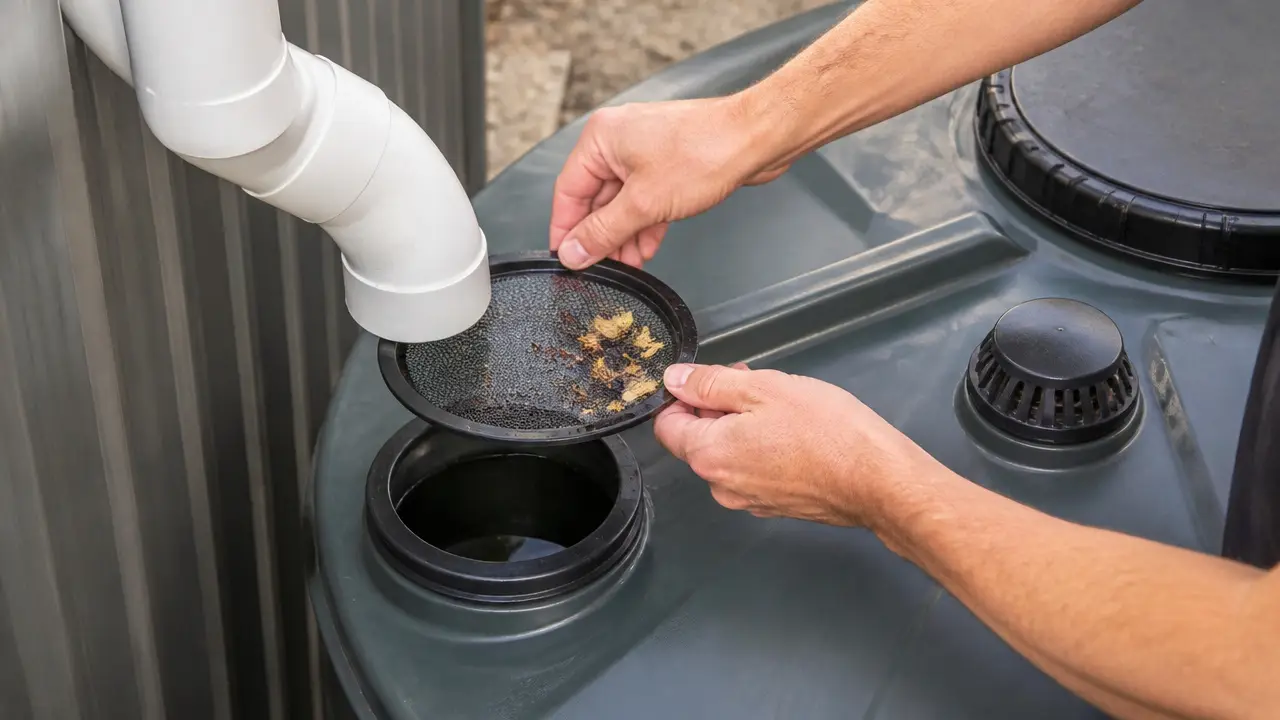
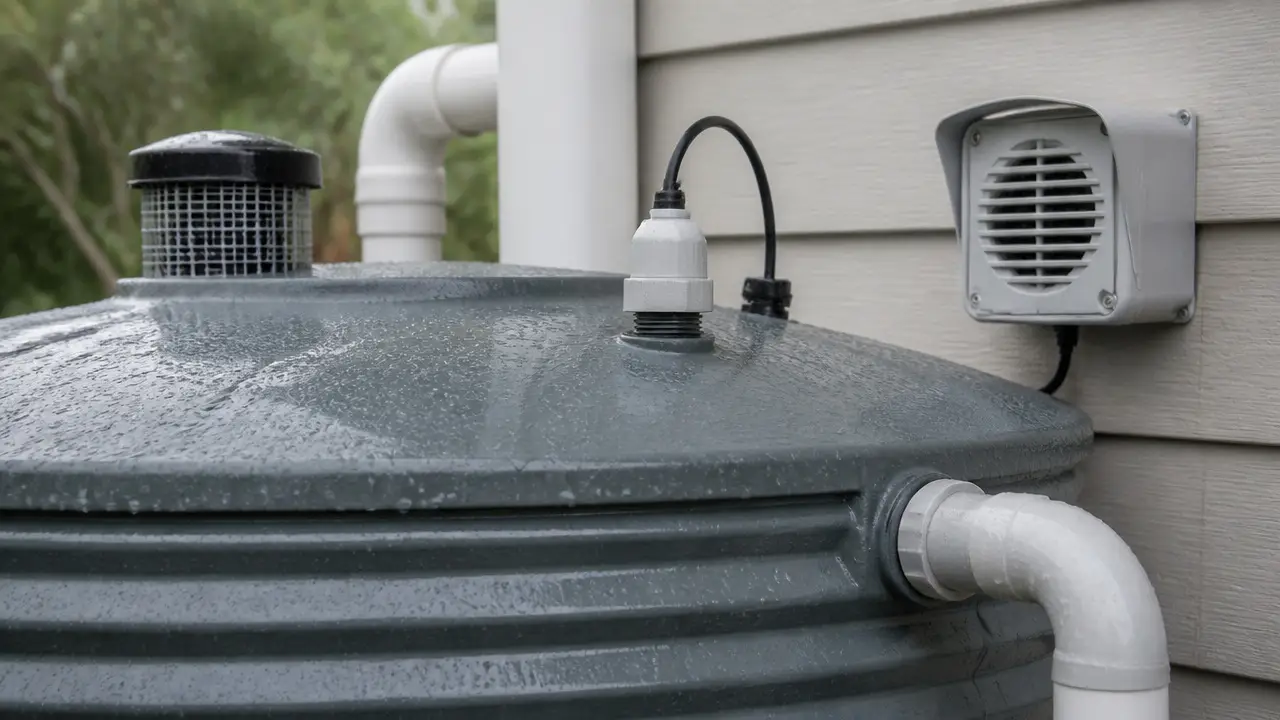
Rain Barrel or Tank
A rain chain can sometimes direct water toward a rain barrel or other storage system, but the connection needs more planning than simply hanging the chain above an open container.
The storage system needs:
- A stable inlet arrangement
- Screening against debris and insects
- An overflow path
- Enough capacity for the expected runoff
An overflow is especially important. Once a barrel is full, additional roof runoff still needs somewhere safe to go.
Keep Water Away From the Foundation
A rain chain should not simply dump gutter water beside the house.
Water repeatedly collecting close to a foundation can contribute to soil erosion, damp conditions, and drainage problems.
Look at where a conventional downspout would discharge if it served the same gutter.
The rain chain should provide an equally sensible drainage path.
If the chain ends beside the foundation, use a basin, channel, drain, or other suitable arrangement to move excess water farther away.
How far water needs to be carried depends on the site's slope, soil, foundation, drainage system, and local requirements.
Should the Bottom Be Attached?
It can be.
Rain chains are often attached or lightly anchored near the bottom to reduce movement in wind. This can be especially useful for long chains.
The bottom might be secured to:
- A basin
- A ground anchor
- A drainage feature designed for the chain
Do not pull the chain extremely tight. It should generally hang naturally rather than acting like a tightly tensioned cable.
Reviewing rain-chain capacity under roof discharge helps coordinate the drainage path linking roof runoff with storage.
Also consider what will happen during strong winds. A loose metal chain swinging against windows, siding, or other surfaces can cause damage.
Leave Enough Clearance for a Basin
If you are using a catch basin, do not size the chain as though it needs to reach the soil underneath it.
Measure from the gutter outlet to the point where you want the chain to end inside or just above the basin.
For example, if the basin is several inches tall, the chain may need to stop several inches above actual ground level.
This produces a cleaner installation and helps put the water where the basin is designed to receive it.
What If the Rain Chain Is Too Short?
A chain that stops well above the drainage point can create more splashing.
Water may leave the final cup or link and fall through open air before hitting the ground. During wind, it may travel even farther sideways.
If the gap is significant, adding compatible chain sections or repositioning the drainage basin may improve the setup.
Avoid improvised extensions that cannot safely support the wet chain or that interfere with drainage.
What If the Rain Chain Is Too Long?
A little extra length is usually easier to deal with than a chain that is much too short.
However, several feet of chain resting on the ground is not useful.
Excess chain can:
- Collect leaves and dirt
- Sit in standing water
- Interfere with drainage
- Move unpredictably
- Look untidy
- Make anchoring harder
If possible, shorten the chain according to its design rather than leaving a pile of links on the ground.
Consider Heavy Rain Before Replacing a Downspout
Rain chains work well in many installations, but they are more open than downspouts.
During intense rainfall, water may splash or overflow rather than staying completely on the chain. Their performance also depends on the gutter outlet, chain design, roof drainage area, and local rainfall.
Watch the system during a real rainstorm after installation.
Check whether:
- Water enters the rain chain properly
- The gutter outlet is overflowing
- Water is blowing against the building
- The basin is overflowing safely
- Soil is eroding
- Water is pooling near the foundation
A rain chain that looks fine during light rain may behave differently during a strong storm.
Rain Chains in Freezing Climates
Ice can add substantial weight to a rain chain.
Freezing water may also build up around the gutter outlet, links, cups, basin, or drain.
If freezing weather is common, make sure the chain and its attachment point can handle expected conditions. Keep the drainage area from creating an obvious slip hazard where water can freeze on a walkway.
Do not work from a roof or ladder to remove ice from a rain chain during unsafe conditions.
The Best Setup
For most homes, the rain chain should hang from the gutter to just above its basin or drainage point rather than ending high above it or lying in a pile on the ground.
Think of the system as three connected parts:
Gutter outlet → rain chain → safe drainage
If all three work together, the exact distance between the final link and the ground is not especially important.
What matters is that roof runoff has a controlled path away from the building.
Frequently Asked Questions
Does a rain chain need to touch the ground?
No. A rain chain can stop a few inches above a basin, gravel bed, drain, or other drainage feature. It should be close enough to the drainage point to limit splashing.
How far above the ground should a rain chain end?
There is no single required distance for every installation. Position the bottom close to the surface that will receive the water, while leaving enough clearance for the chain to hang freely.
Should I anchor the bottom of a rain chain?
Anchoring can help keep a long rain chain from swinging in the wind. It may be secured to a suitable basin or ground anchor without pulling the chain excessively tight.
Can a rain chain drain directly onto soil?
It can, but concentrated roof runoff may erode bare soil and create pooling. A basin, gravel area, drain, or other erosion-control and drainage method is usually more practical.
Can a rain chain empty into a rain barrel?
Yes, if the inlet is arranged to accept the water and the barrel has suitable debris screening and an overflow. A full barrel must still be able to send excess runoff somewhere safe.
What happens if a rain chain is too short?
If the bottom sits far above the drainage point, falling water may splash onto siding, soil, or nearby walkways. Extending the chain or raising the receiving basin can reduce the drop.
Is a rain chain as effective as a downspout?
Not always. Rain chains are open systems and may splash more during heavy rain or strong wind. The gutter outlet, drainage area, and expected runoff all need to be suitable for the installation.