As an affiliate, we may earn a commission from qualifying purchases. We get commissions for purchases made through links on this website from Amazon and other third parties.
Yes. Rain gutters can work very well with a metal roof. In fact, metal roofs are commonly paired with gutters for drainage and rainwater collection.
The main issue is not whether gutters can be installed. It is whether the gutter size, mounting method, and downspout layout can handle the fast runoff from the smooth metal surface.
Why Gutters Work Well With Metal Roofs
Metal roofing does not absorb water. Rain runs off quickly, especially on a steep roof.
Gutters catch that runoff and direct it toward a downspout. From there, the water can go to:
- A normal drainage system
- A rain barrel
- An IBC tote
- A larger cistern
- A garden or irrigation system
For rainwater harvesting, a metal roof can provide a useful collection surface when the roofing materials and coatings are suitable for the intended water use.
However, roof runoff should not automatically be considered clean or safe to drink. It can pick up dirt, bird droppings, pollen, insects, roofing residues, and other contaminants.
Metal Roofs Can Shed Water Very Quickly
One important difference between metal roofing and some rougher roofing materials is how quickly water moves across it.
A smooth metal panel offers little resistance. During heavy rain, a large amount of water can reach the roof edge within a short time.
That makes proper gutter sizing important.
An undersized gutter may overflow even when the downspout itself is not blocked. Overflow is more likely when you have:
- A large roof section draining into one gutter
- A steep roof
- Heavy rainfall
- Long gutter runs
- Too few downspouts
- Leaves or debris restricting flow
Do not choose a gutter solely because it looks proportional to the roof. The roof drainage area and expected rainfall intensity also matter.
The Gutter Must Be Positioned Correctly
Gutter placement matters more than simply attaching a gutter somewhere below the roof edge.
Water leaving a metal roof may travel outward before dropping. If the gutter sits too low or too far away, some of that water can shoot past it.
The gutter should be positioned so normal runoff enters the gutter rather than passing over its front edge.
The exact position depends on the roof pitch, panel shape, overhang, fascia, and gutter system. Follow the roofing and gutter manufacturers' installation requirements when available.
Poor placement can cause water to:
- Miss the gutter
- Splash against siding
- Pool near the foundation
- Overflow behind the gutter
- Reduce the amount of rainwater you collect
How Are Gutters Attached to a Metal Roof?
Gutters are usually supported by the building rather than simply screwed through the exposed metal roofing wherever convenient.
Depending on the roof and building design, gutter supports may attach to the fascia or use a mounting system designed for that type of roof.
Avoid drilling through metal roof panels without knowing how the roof assembly is designed. An unnecessary penetration can create a potential leak point and may conflict with the roofing manufacturer's requirements.
If the building has no fascia board, a different gutter mounting system may be needed. A roofing or gutter contractor can determine an appropriate attachment method.
Snow Guards May Be Important in Snowy Areas
A metal roof can release snow differently from a rough shingle roof.
Large sheets of snow or ice can sometimes slide down a metal roof at once. The sliding load may damage gutters or pull them away from the building.
In climates with significant snow, the roof may need a properly designed snow-retention system.
Snow guards or snow rails are intended to manage how accumulated snow leaves the roof. Their design and placement depend on the roof structure, slope, roofing system, and expected snow loads.
Do not assume that adding a few small snow guards will protect the gutter. Snow-load systems should be designed for the building and local conditions.
Metal Roofs Can Be Good for Rainwater Harvesting
A guttered metal roof can be a practical starting point for a rainwater collection system.
A basic path might look like this:
Metal roof → gutter → downspout → debris screening → storage tank
Some systems also include a first-flush device. A first flush is a setup that diverts some of the initial roof runoff before water enters the tank. This first runoff can contain a higher amount of loose dust and debris from the roof.
Screening at the gutter, downspout, or tank inlet can also help keep leaves and larger debris out of storage.
Check the Roofing Material Before Collecting Water
Not every metal roof should automatically be treated as a suitable rainwater collection surface.
Metal roofs can have different:
- Metals
- Paint systems
- Protective coatings
- Fasteners
- Sealants
- Flashing materials
If you are collecting water for garden use or another specific purpose, check whether the roof materials are suitable for that use.
Guidance on common problems with metal roofing helps evaluate a safe route for moving roof water into storage.
This becomes much more important if the water might eventually be used inside a home or for drinking.
Drinking-water use requires a whole-system approach. Appropriate collection materials, prefiltration, treatment, maintenance, current laboratory testing, and applicable local requirements all matter. A gutter or filter alone cannot make roof runoff potable.
Potable means suitable for drinking. Non-potable water is water that is not intended for drinking.
Keep Gutter Screens and Roof Debris Under Control
Metal roofs may be relatively smooth, but gutters can still collect plenty of debris.
Leaves, seeds, pine needles, insects, roof sediment, and small twigs can accumulate inside the gutter or at the downspout opening.
For a rainwater harvesting system, this debris can also end up in the tank if it is not intercepted.
Inspect the system regularly, especially:
- After storms
- During heavy leaf fall
- After long dry periods
- Before a rainy season
- When water starts overflowing from the gutter
Any roof or gutter inspection that requires working at height introduces fall risk. Use a safe ground-level method where possible, and hire a qualified professional for roof work when appropriate.
Do You Need Larger Gutters for a Metal Roof?
Not automatically.
The correct gutter size depends on how much water the roof sends toward that section of gutter and how quickly it arrives.
The important factors include:
- Roof drainage area
- Roof pitch
- Local rainfall intensity
- Gutter shape and size
- Length of the gutter run
- Number and size of downspouts
A small shed may need far less drainage capacity than a large house even if both have metal roofs.
Adding enough downspout capacity can also be just as important as gutter size. A large gutter connected to a badly undersized or clogged downspout can still overflow.
Watch for Water Overshooting the Gutter
If you already have gutters and water shoots over them during rain, do not immediately assume that the gutter needs to be replaced.
Check for several possible causes.
The gutter could be clogged. The downspout could be restricted. The gutter might be positioned incorrectly. The roof valley may also concentrate a large amount of water into one small section of gutter.
Roof valleys are especially important because they collect runoff from two roof surfaces and direct it toward one location.
A qualified gutter installer can sometimes correct a concentrated runoff problem without replacing the entire gutter system.
Plan the Downspout Around Your Intended Water Use
If the gutter will feed a rainwater system, decide where the water needs to go before finalizing the downspout arrangement.
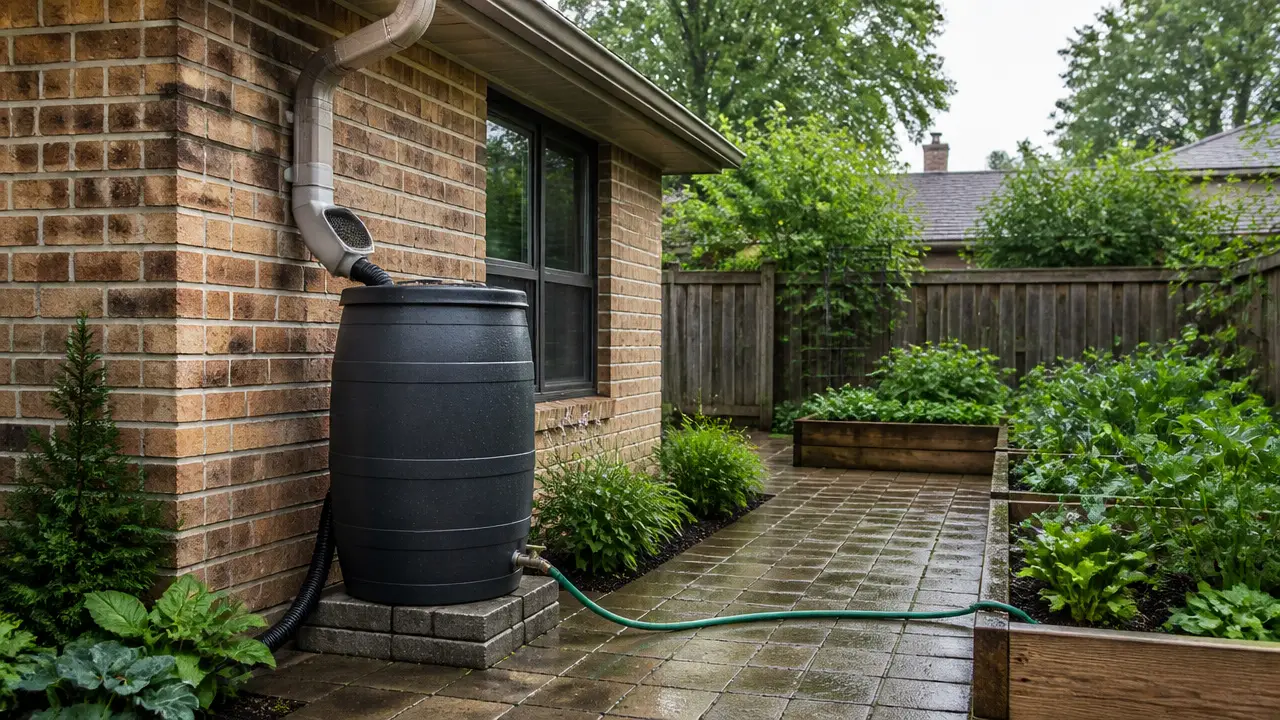
For a rain barrel, you may use a downspout diverter that sends part of the flow into the barrel.
For a larger tank, you may route the downspout toward a screened tank inlet.
Also plan for overflow.
Once a rain barrel or tank is full, additional rain still needs somewhere safe to go. The overflow should discharge where it will not damage the foundation, flood a building, erode soil, or create another drainage problem.
Frequently Asked Questions
Can you put regular gutters on a metal roof?
Yes. Many standard gutter systems can be used with metal roofs. The mounting method, gutter position, drainage capacity, and compatibility with the building still need to be correct.
Do metal roofs need special gutters?
Not necessarily. The roof may require a particular mounting arrangement, especially if there is no suitable fascia. The gutter also needs enough capacity for the roof area and rainfall conditions.
Will rain shoot over gutters on a metal roof?
It can. Metal roofs shed water quickly, and steep roofs can increase runoff speed. Incorrect gutter placement, undersized drainage, clogged downspouts, or concentrated flow from roof valleys can also cause overshooting.
Can gutters be screwed directly into a metal roof?
Do not make roof penetrations unless the roofing and gutter system is designed for them. Gutters are commonly supported from the fascia or another approved mounting point. Unplanned holes through roofing can create leak problems.
Can a metal roof fill a rain barrel?
Yes. Gutters and a downspout can direct runoff from a metal roof into a rain barrel. Include appropriate debris screening and a safe overflow route. Check that the roofing and associated materials are suitable for the intended use of the collected water.
Are metal roofs good for collecting drinking water?
A metal roof may be part of a potable rainwater system, but the roof alone does not make the runoff safe to drink. Roofing materials, contamination risks, collection design, prefiltration, treatment, maintenance, laboratory testing, and local requirements all need to be considered.
Can snow damage gutters on a metal roof?
Yes. Snow and ice can slide from some metal roofs in large amounts and damage gutters below. In snowy climates, an appropriately designed snow-retention system may be needed.