As an affiliate, we may earn a commission from qualifying purchases. We get commissions for purchases made through links on this website from Amazon and other third parties.
Bad-smelling rain barrel water usually means the water has been sitting too long, organic debris is breaking down inside the barrel, or the collection system needs cleaning. Leaves, pollen, roof dirt, algae, insects, and sediment can all add to the problem.
The best fix is usually to empty the barrel, clean out the debris and sediment, and correct the cause before collecting fresh rainwater. Do not try to cover the smell with chemicals.
A bad smell also tells you very little about whether the water is safe. Rainwater can contain germs and chemicals even when it looks and smells normal. The CDC recommends matching rainwater quality to its intended use and using regular testing when collected rainwater is used for drinking, cooking, or bathing.
Why Does Rain Barrel Water Start to Smell?
Most odor problems come from something entering the barrel and then sitting in the water.
Leaves and Other Organic Material Are Decaying
Small pieces of leaves, pollen, seeds, roof debris, and insects can pass through the collection system.
Once trapped in the barrel, this material begins to break down. If enough collects at the bottom, the water may develop a swampy, sour, musty, or rotten smell.
A dirty gutter can make this much worse. Every storm may wash another load of debris into the barrel.
The Water Has Been Sitting Too Long
A rain barrel works better when water moves through it regularly.
Water that sits undisturbed for long periods can become stagnant. Organic material continues to break down while oxygen in parts of the barrel becomes limited.
EPA guidance recommends regular emptying of rain barrels to help prevent stagnant water and related insect and algae problems.
A barrel that stays full for weeks between uses is more likely to develop odor than one that is regularly emptied and refilled.
Sunlight Is Encouraging Algae
A translucent barrel that gets direct sunlight may allow algae to grow.
Algae often causes green water, slippery surfaces, or an earthy or musty smell. Warm water and sunlight can make the problem worse.
An opaque barrel in a shaded location is usually easier to manage.
Animals or Insects Have Entered the Barrel
Check for damaged screens, open lids, uncovered overflow pipes, or other openings.
Insects, small animals, droppings, and other biological material can contaminate stored water. Roof runoff itself can also carry bird and animal waste into the barrel. The CDC notes that dirt and germs from a roof can wash into collected rainwater, especially after dry weather.
If you find a dead animal in the barrel, do not simply remove it and continue using the water. Empty the barrel and thoroughly clean the system before putting it back into service.
The Odor Is Coming From the Roof or Gutters
Sometimes the barrel is only where the problem becomes noticeable.
Check the whole collection path:
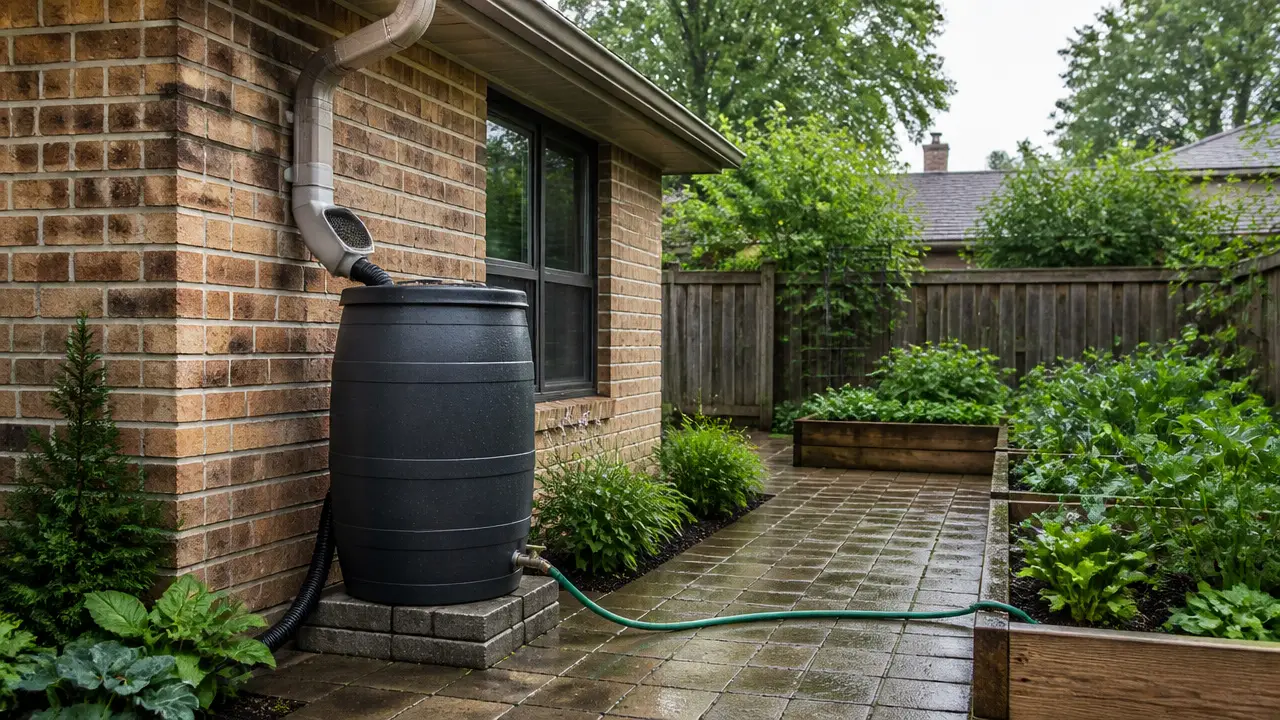
roof → gutter → downspout → diverter → inlet → barrel
Rotting leaves in a gutter can wash foul-smelling material into an otherwise clean barrel.
A roof covered with heavy debris may also send a large amount of dirty runoff into storage during the first part of a storm.
The Barrel or Plumbing Is Causing the Smell
If the water has an unusual plastic, fuel, solvent, or chemical odor rather than a natural musty smell, stop using it until you identify the source.
Check the barrel, sealants, hoses, roofing materials, coatings, and nearby sources of contamination.
Do not assume rinsing or filtering will remove an unknown chemical contaminant.
How to Fix Bad-Smelling Rain Barrel Water
For a basic rain barrel used for non-potable purposes such as landscape watering, start by resetting the system rather than trying to treat the old water.
1. Stop Using the Water Until You Know What Happened
Do not use obviously foul-smelling water for drinking, cooking, brushing teeth, washing food, or other uses where it could be swallowed.
Potable means water intended to be safe for drinking. Most simple rain barrels are set up for non-potable uses, meaning uses that do not require drinking-water quality.
Even water without an odor should not automatically be considered potable.
2. Empty the Barrel
Drain the old water in a place where it will not cause erosion, enter a building foundation, or create a large pool of standing water.
If the barrel contains only ordinary roof runoff and decaying plant material, the water may sometimes be suitable for an appropriate landscape area. If you suspect chemicals, sewage, animal remains, fuel, pesticides, or other unusual contamination, do not spread the water around your garden without appropriate local guidance.
Never enter a cistern or large tank to clean it. Tanks can be confined spaces with serious hazards.
3. Remove Sediment and Debris
After the barrel is empty, look at the bottom.
You may find:
- Leaves
- Pollen
- Roof grit
- Mud
- Insects
- Algae
- Sludge made from decomposed organic matter
Remove this material.
Also check the spigot area. Sediment tends to collect around low outlets and can keep producing an odor even after most of the barrel has been drained.
4. Clean the Barrel
Follow the barrel manufacturer's cleaning instructions when available.
For a simple non-potable barrel, scrub accessible inside surfaces using suitable cleaning tools and a cleaner that is compatible with the barrel material. Rinse the barrel well afterward so cleaning residue does not remain.
Never mix bleach, acids, vinegar, ammonia, or other cleaning chemicals. Dangerous gases can form from some combinations.
If the system supplies water for drinking, bathing, or other higher-risk household uses, cleaning a tank is only one part of water safety. Do not assume that cleaning or adding disinfectant makes the water safe to drink.
5. Clean the Gutters and Inlet
Cleaning the barrel will not help for long if dirty runoff immediately fills it again.
Remove accumulated leaves and organic material from accessible gutters and downspouts. Work from the ground when possible. Roof and ladder work carries fall risk and may be better handled by a qualified person.
Clean or replace clogged inlet screens as well.
Screens help stop larger debris and insects from entering the barrel. EPA guidance also recommends tightly closing rainwater containers and using debris screens to reduce mosquito problems.
6. Check the Lid and Screens
A rain barrel should not have large open gaps where insects or debris can enter.
Check:
- The main lid
- Downspout opening
- Inlet screen
- Overflow opening
- Vent openings
- Access covers
Repair torn screens and secure loose covers.
The openings still need to work correctly. Do not block an overflow or vent simply to make the barrel more tightly sealed.
7. Collect Fresh Water and Check Again
After cleaning, allow fresh rainwater to enter the system.
If the odor quickly returns, look farther upstream. The gutters, roof, downspout, barrel material, or plumbing may be contributing to the problem.
A persistent chemical or sewage-like odor deserves more caution than a barrel that simply developed a mild stale smell after sitting unused.
Use a First-Flush Diverter When It Makes Sense
A first-flush diverter sends the first portion of roof runoff away from your storage tank.
That first runoff can carry a large amount of dust, pollen, animal droppings, and other material that collected on the roof between storms.
After that initial runoff is diverted, cleaner roof runoff enters the barrel.
Regarding causes of unpleasant rain-barrel odors, compare storage reserves based on use rate and likely rainfall.
The CDC recommends considering a first-flush device as one way to improve collected rainwater quality. It also notes that the amount diverted depends on the roof area feeding the system.
A first-flush diverter does not make rainwater safe to drink. It is a prefiltration step that reduces some of the material entering storage.
Keep Water From Becoming Stagnant Again
Prevention is easier than repeatedly cleaning a foul barrel.
Use stored water regularly instead of keeping the barrel full for long periods when possible. This creates water turnover, meaning older water leaves and fresh water replaces it.
For a garden rain barrel, that may simply mean watering between storms.
You should also keep the barrel shaded when practical. A dark, opaque barrel reduces the amount of light available for algae growth.
Do not paint or wrap a barrel in a way that causes excessive heat buildup or damages its material.
Keep Roof Debris Out
The less organic matter that reaches storage, the less material there is to decay.
A simple collection system may use several barriers:
clean roof and gutters → debris screen → optional first flush → covered rain barrel
The goal is not to remove every microscopic contaminant. It is to stop large amounts of leaves, insects, sediment, and roof debris from building up inside the barrel.
Inspect screens after storms and during seasons when trees drop heavy amounts of leaves, pollen, seeds, or flowers.
Do Not Forget About Mosquitoes
Smelly water and mosquito problems can occur together because both are encouraged by neglected standing water.
Keep insects from reaching the water with properly fitted screens and covers. The CDC recommends screening rainwater inlets or emptying rain barrels regularly to reduce opportunities for mosquitoes to lay eggs.
EPA also stresses eliminating or managing standing water because containers such as rain barrels can become mosquito habitat.
If you use a mosquito-control product in stored rainwater, follow its label exactly and make sure it is approved for the specific water use you have planned.
Should You Add Chlorine to Fix the Smell?
Do not use chlorine simply as an odor remover.
An odor usually means there is an underlying problem such as dirty sediment, decaying debris, poor water turnover, or contamination. Adding disinfectant without removing that material does not fix the collection system.
Chemical treatment also requires the correct product, dose, contact conditions, water quality, and intended use. More is not better.
For a garden barrel, cleaning the barrel and preventing new contamination are usually more useful first steps.
For drinking-water systems, disinfection should be part of a properly designed treatment process rather than an improvised response to a bad smell.
What If the Water Smells Like Rotten Eggs?
A rotten-egg or sulfur-like smell can occur when organic matter breaks down under low-oxygen conditions.
Start by emptying and cleaning the barrel and removing bottom sediment. Then improve water turnover and reduce the amount of organic material entering storage.
Do not assume the smell identifies a specific bacterium or chemical. Different water-quality problems can produce similar odors.
If the smell immediately returns in fresh water, investigate the collection surfaces and system materials rather than repeatedly treating the barrel.
What If the Water Smells Like Sewage or Chemicals?
Treat these odors more cautiously.
A sewage-like smell may point to unusual biological contamination. A gasoline, solvent, pesticide, or strong chemical smell could indicate a contaminant that ordinary cleaning or filtration will not reliably remove.
Stop using the water while you investigate.
Look for possible contamination from:
- Nearby chemical spraying
- Roof treatments
- Spills
- Improperly connected plumbing
- Animal waste
- Damaged roofing
- Unsuitable barrel materials
- Contaminated hoses or fittings
Water suspected of chemical contamination should not be made safe by simply boiling it. Boiling does not remove many chemicals and can concentrate some contaminants as water evaporates.
Can You Still Use Smelly Rainwater on Plants?
It depends on why the water smells.
Water that became stale because of a small amount of ordinary leaf debris is a different situation from water contaminated by chemicals, sewage, or a dead animal.
If you do not know the cause, empty and clean the barrel rather than using questionable water on food crops.
The CDC recommends limiting exposure to collected rainwater and, where possible, using a safer water source for plants that will be eaten.
For ornamental plants, clean roof runoff collected in a well-maintained non-potable system generally presents a different level of concern than water intended for drinking. The intended use should always guide how carefully the water must be collected, treated, and tested.
If Your Rainwater Is Used Inside the House
A household rainwater system needs more controls than a basic garden barrel.
Odor is not a complete water-quality test. Clear, odor-free water can still contain harmful germs or chemicals.
If collected rainwater is used for drinking, cooking, bathing, or other household uses, water safety should be approached as a complete system that may include:
- Suitable roof and collection materials
- Debris control
- First-flush management
- Proper storage
- Sediment removal
- Appropriate filtration
- Treatment for identified contaminants
- Regular maintenance
- Current laboratory testing
- Protection against cross-connections with treated drinking-water plumbing
The CDC recommends regular testing for germs and chemicals when rainwater is used for drinking, cooking, or bathing and advises contacting the local health department for guidance on testing and treatment.
A filter, UV unit, purifier, test strip, or water-quality meter by itself cannot establish that a rainwater supply is safe to drink.
A Simple Maintenance Routine
You do not need to wait until the water smells bad.
Periodically check the whole collection path rather than only looking inside the barrel.
After storms, look for clogged screens and obvious debris. During dry periods, check whether water has been sitting unused for a long time. Clean accumulated sediment before it becomes a thick layer on the bottom.
Also check the barrel after heavy leaf fall, pollen season, roof work, gutter cleaning, pest problems, or any event that could add unusual material to the collection system.
A clean barrel can still receive dirty water, so maintenance should always start at the roof and end at the outlet.
Frequently Asked Questions
Is bad-smelling rain barrel water dangerous?
A bad smell does not tell you exactly what contaminants are present, but it is a good reason to stop using the water until you find the cause. Emptying and cleaning the barrel is usually the best starting point. Never use smell alone to judge whether rainwater is safe to drink.
Why does my rain barrel smell like a swamp?
Leaves, pollen, insects, sediment, and other organic debris may be decomposing in stagnant water. Empty the barrel, remove the sediment, clean it, and reduce the amount of debris entering from the roof and gutters.
How do I stop my rain barrel from getting smelly?
Keep debris out, use screened openings, clean the gutters, remove bottom sediment, keep the barrel shaded when practical, and use the stored water regularly so it does not sit for long periods.
Will a first-flush diverter prevent bad smells?
It can help by keeping some of the dirtiest first roof runoff out of storage. It will not eliminate the need for screens, cleaning, water turnover, and regular maintenance.
Can I put bleach in a rain barrel to remove the smell?
Do not add bleach simply to hide an odor. First remove the old water, sediment, and source of contamination. If chemical disinfection is appropriate for your system, follow authoritative instructions for the intended water use and never mix cleaning chemicals.
Can I water my vegetable garden with smelly rainwater?
If you do not know why the water smells, it is safer to empty and clean the barrel rather than use questionable water on edible crops. Chemical contamination, sewage, or animal contamination calls for greater caution.
Why does the smell return after I clean the barrel?
The contamination may be coming from the roof, gutters, downspout, inlet, hoses, or barrel material. Follow the entire collection path and check each part rather than repeatedly cleaning only the tank.
Does clean-smelling rainwater mean it is safe to drink?
No. Harmful germs and chemicals may be present without changing the water's smell, taste, or appearance. Drinking-water use requires suitable collection and treatment, regular maintenance, current laboratory testing, and attention to local health and plumbing requirements.