As an affiliate, we may earn a commission from qualifying purchases. We get commissions for purchases made through links on this website from Amazon and other third parties.
A 5-micron water filter can remove many visible and fine particles, but it does not make water free of germs or dissolved contaminants. Anything smaller than about 5 microns may pass through, depending on the filter design.
That can include very fine clay, some bacteria, viruses, dissolved minerals, salts, metals, and many chemicals. A 5-micron filter is usually best thought of as a sediment filter, not a complete water-treatment system.
What Does 5 Microns Mean?
A micron, also called a micrometer, is one-millionth of a meter.
A filter marked 5 micron has very small openings intended to catch particles around that size and larger. However, the rating can mean two different things.
Absolute 5-micron filter
An absolute rating gives a defined maximum pore size or removal performance. It provides more reliable particle removal at the stated size.
Nominal 5-micron filter
A nominal rating is less exact. Some openings may be larger than 5 microns, so some particles larger than the stated rating can sometimes get through.
This difference matters when choosing a filter for germs or other contaminants. The CDC recommends paying attention to whether a pore-size rating is absolute rather than nominal when microorganism removal is important.
What Can Pass Through a 5-Micron Filter?
Several important types of contamination can pass through.
Very fine sediment
A 5-micron filter catches a lot of:
- Sand
- Rust flakes
- Larger silt particles
- Insect debris
- Roof debris
- Other suspended solids
But finer material can remain in the water.
Very small clay particles and other fine suspended matter may be smaller than the filter openings. Water can therefore look much clearer after filtration without being completely free of particles.
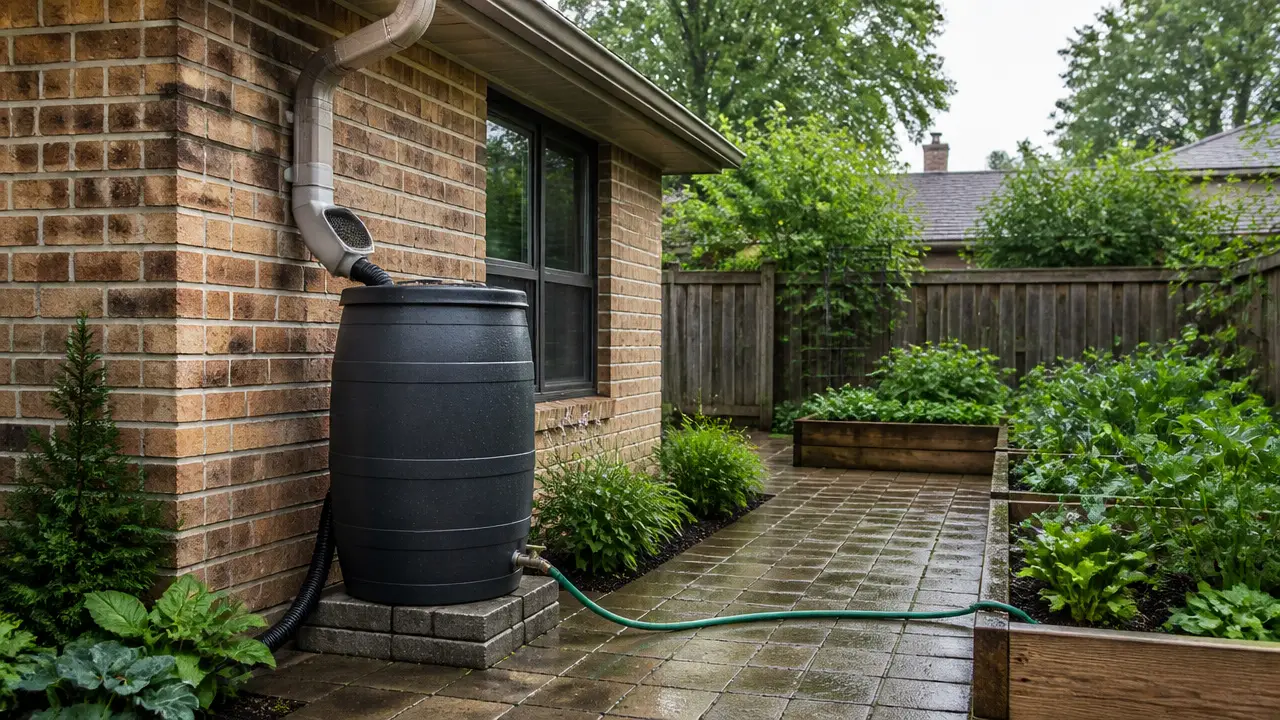
For a rainwater system, this is one reason a 5-micron cartridge is often used after larger debris has already been removed by gutter screens, leaf filters, settling, or coarser filters.
Many bacteria
A 5-micron sediment filter should not be relied on to remove bacteria.
Bacteria can be much smaller than 5 microns. The CDC states that an absolute filter rating of 0.3 micron or smaller is needed when filtration is being used for reliable removal of bacteria such as E. coli and Salmonella.
A 5-micron cartridge may accidentally trap some bacteria because they are attached to larger particles. That does not make it a bacteria-removal filter.
Viruses
Viruses can easily pass through a typical 5-micron filter.
They are much smaller than bacteria. Ordinary microfiltration is generally not considered reliable for virus removal. Finer technologies such as nanofiltration or reverse osmosis may be used when virus reduction is required.
Some parasites
Do not assume a 5-micron filter protects against parasites simply because some parasite cysts are larger than 5 microns.
For example, Giardia cysts are relatively large, while Cryptosporidium oocysts can be around the same size range as a 5-micron opening. Filter construction and the difference between nominal and absolute ratings matter.
The CDC recommends an absolute pore size of 1 micron or smaller, or an appropriately certified filter, when removal of Giardia and Cryptosporidium is needed.
So a general-purpose 5-micron sediment cartridge should not be treated as a parasite-removal device.
Dissolved minerals and salts
A sediment filter works mainly by trapping particles.
Minerals that are dissolved in water are not particles in the same sense. They normally travel through a 5-micron sediment filter with the water.
Examples can include dissolved:
- Calcium
- Magnesium
- Sodium
- Chloride
- Nitrate
This is also why a sediment filter usually does little to reduce total dissolved solids, or TDS.
TDS is a general measure of dissolved substances in water. A standard 5-micron cartridge is not designed to remove them.
Dissolved metals and chemicals
Some metals and chemicals can also pass through a 5-micron filter when they are dissolved in the water.
A sediment filter should therefore not be assumed to remove contaminants such as:
- Dissolved lead
- Arsenic
- Pesticides
- Nitrate
- Fuel-related chemicals
- Other dissolved compounds
Planning around contaminants captured by a 10-micron filter helps understand the conclusions that reliable screening measurements justify.
The CDC notes that microfiltration by itself does not remove chemicals such as lead or arsenic. Treatment has to be selected for the particular contaminant involved.
What Does a 5-Micron Filter Remove Well?
Its main job is sediment control.
In a rainwater system, it can help remove fine particles that made it past earlier screens or settling stages. That can make downstream equipment easier to operate.
A common treatment path might look something like:
Roof and gutters → leaf/debris screening → first-flush or other runoff management → storage tank → coarse sediment filtration → 5-micron filtration → any additional treatment required for the intended use
A first flush is a system that diverts some of the early roof runoff. That early runoff can carry extra dust, leaves, droppings, and other debris.
The exact treatment stages should depend on what you plan to do with the water.
Is 5-Micron Water Safe to Drink?
A 5-micron filter alone does not make collected rainwater potable.
Potable means suitable for drinking.
Roof runoff can contain microorganisms and chemical contaminants that a sediment cartridge cannot reliably remove. Clear-looking water is not proof that the water is safe.
For drinking-water use, filtration should be considered as one part of a complete system. Suitable collection, prefiltration, appropriate treatment, maintenance, current laboratory testing, and local requirements all matter.
The CDC specifically recommends choosing treatment according to the germs or chemicals that need to be removed rather than assuming one type of filter handles every contaminant.
Should You Use a Finer Filter After a 5-Micron Filter?
Sometimes.
It depends on what the water will be used for.
For garden watering or other non-potable uses, additional filtration may not be needed unless small particles are clogging valves, pumps, nozzles, or irrigation equipment.
For equipment that needs cleaner water, a 5-micron cartridge can serve as a prefilter before a finer treatment stage.
Using several filtration stages can also reduce how quickly the finest filter clogs. For example, sending dirty tank water directly into a very fine cartridge can shorten cartridge life.
Remember that a smaller micron number does not automatically solve every water-quality problem. A finer sediment filter still does not necessarily remove dissolved chemicals.
Do Not Choose a Filter by Micron Rating Alone
The micron number tells you only part of the story.
Before choosing a filter, check:
- Whether the rating is nominal or absolute
- What contaminants the filter is designed to remove
- The required flow rate
- Pressure limits
- Connection size
- Cartridge replacement needs
- Whether independent certification applies to the contaminant you want removed
Flow rate means how much water can move through the filter during a set amount of time. Finer filters usually create more resistance and may reduce flow, especially as they collect sediment.
For pumps and household rainwater systems, this pressure loss can matter. A filter that is technically fine enough may still be a poor fit if it restricts the water supply too much.
Frequently Asked Questions
Will a 5-micron filter remove bacteria?
Not reliably. Many bacteria are smaller than 5 microns. The CDC recommends an absolute pore size of 0.3 micron or smaller when filtration is being used to remove bacteria. Other treatment may also be needed depending on the water source and intended use.
Will a 5-micron filter remove viruses?
No, a typical 5-micron sediment filter should not be expected to remove viruses. Viruses are far smaller than its openings.
Will a 5-micron filter remove Giardia?
Do not rely on a general 5-micron sediment filter for Giardia protection. For parasite removal, the CDC recommends an absolute pore size of 1 micron or smaller or an appropriately certified treatment device.
Does a 5-micron filter remove rust?
It can remove many rust particles when they are large enough to be trapped. Very fine particles or dissolved iron may still pass through.
Does a 5-micron filter remove chlorine?
A standard 5-micron sediment cartridge does not remove dissolved chlorine simply because it has a 5-micron rating. Some filters contain activated carbon that can reduce chlorine, but that is a separate treatment function.
Is a 1-micron filter better than a 5-micron filter?
It is finer, but not automatically better for every system. A 1-micron filter can catch smaller particles but may clog faster and restrict flow more. Choose the rating according to the water quality, equipment, and intended use.
Can I use a 5-micron filter for rainwater?
Yes. A 5-micron sediment filter can be useful for removing fine suspended material from stored rainwater. It works best when larger leaves, grit, and sediment have already been removed. It should not be treated as a complete drinking-water treatment system.