As an affiliate, we may earn a commission from qualifying purchases. We get commissions for purchases made through links on this website from Amazon and other third parties.
A clogged downspout can often be cleared with simple hand tools. Start with the least aggressive option, such as gloves, a hose, or a drain snake. Avoid forcing a tool through the pipe if it could damage joints or push debris into a rain barrel or storage tank.
Best Tools for Unclogging a Downspout
The right tool depends on where the clog is and what is causing it. Leaves and twigs near the top usually need a different approach than packed debris inside a long downspout.
Useful tools include:
- Work gloves
- Garden hose
- Plumber's snake or hand auger
- Flexible drain-cleaning rod
- Wet/dry shop vacuum
- Downspout cleaning attachment
- Screwdriver or nut driver
- Small plumbing brush
- Bucket or tarp
You probably will not need all of them.
Start With Gloves and a Simple Inspection
Put on sturdy gloves before reaching into a downspout opening. Gutters and downspouts can contain sharp twigs, sheet-metal edges, roofing grit, insects, and dirty standing water.
Check the bottom outlet first. Many clogs form where the downspout connects to an elbow or where it empties into a drain extension.
Remove loose leaves and debris by hand if you can reach them safely.
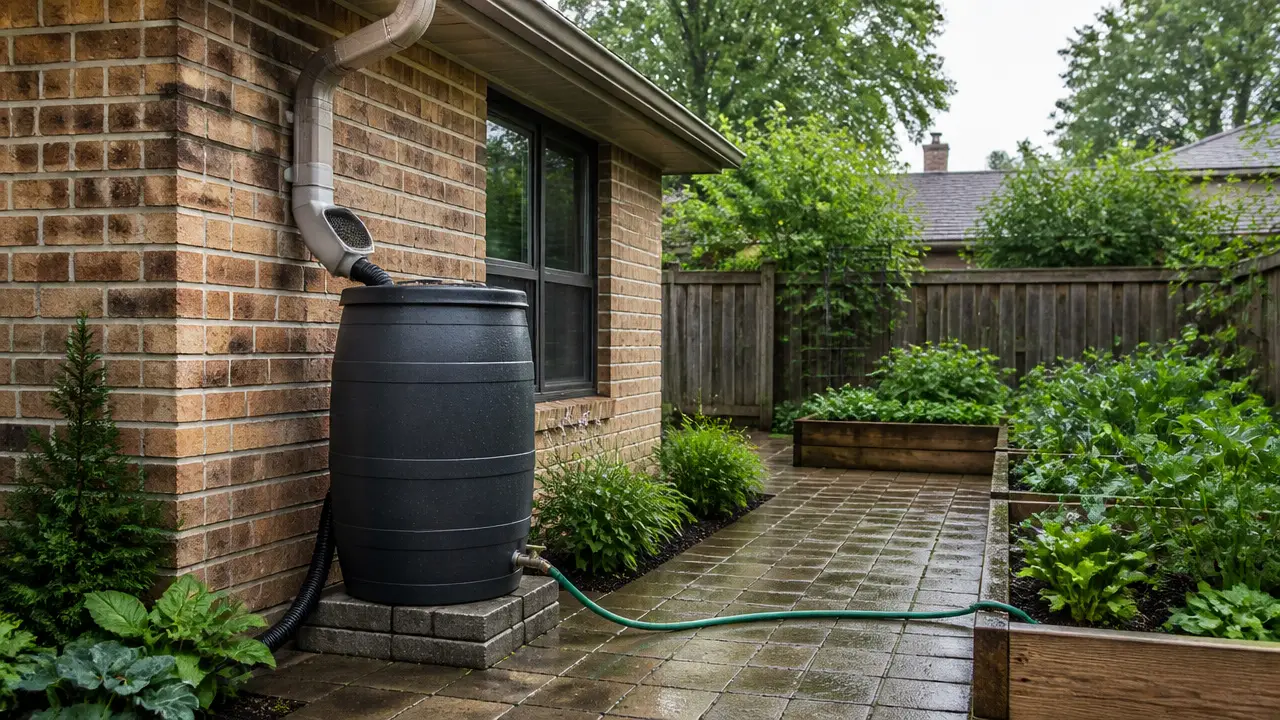
If the downspout feeds a rain barrel, IBC tote, or cistern, disconnect or divert the pipe before flushing it. Otherwise, you may wash a large amount of decomposing debris into your stored water.
Use a Garden Hose for Loose Clogs
A garden hose works well for leaves, small twigs, and sediment that have not packed tightly inside the pipe.
Remove the bottom elbow or extension if possible. Insert the hose into the lower end of the downspout and run water upward.
Working from the bottom can help push debris back toward the larger gutter opening instead of packing it deeper into a narrow elbow.
Do not immediately use maximum water pressure. Start with moderate flow. Watch the joints for leaks or separation.
If water backs up quickly and does not move the clog, stop. More pressure may only force water behind a loose joint or into part of the building.
Use a Plumber's Snake for Packed Debris
A hand-operated plumber's snake, sometimes called a drain auger, can break through compacted leaves and mud.
Feed the flexible cable slowly into the downspout. Rotate the handle as you advance it.
Do not force it around a sharp bend. Thin metal and plastic downspouts can be dented, punctured, or separated at their joints.
A short hand auger is usually easier to control than a large powered drain-cleaning machine.
For a typical residential downspout, a powered sewer machine is usually unnecessary and may damage the pipe.
Try Flexible Drain-Cleaning Rods
Flexible cleaning rods are another option for longer downspouts.
They are useful when the obstruction is farther from either opening. Some have brushes or flexible tips that help loosen leaves and roof grit.
Push them gradually through the pipe rather than ramming them into the blockage.
The biggest difficulty is usually an elbow. If the rod will not pass a bend easily, removing that section of downspout may be safer than applying more force.
A Wet/Dry Vacuum Can Pull Out Debris
A wet/dry shop vacuum can sometimes remove a clog without pushing it farther into the system.
Place the vacuum hose over the lower downspout opening. You may need to wrap a towel around the connection to improve suction.
This method works best on:
- Dry leaves
- Pine needles
- Small twigs
- Loose roofing grit
- Insect nests
Only use a wet/dry vacuum that is designed for wet material if water is present. Keep electrical connections dry and follow the vacuum manufacturer's instructions.
Downspout Cleaning Attachments Can Help
Several types of hose and cleaning attachments are made for gutters and downspouts.
Some use a flexible nozzle that directs water through the pipe. Others attach to extension poles so you can work from the ground.
These tools can be useful when the clog is fairly loose.
They are less helpful when debris has formed a hard plug inside an elbow.
Sometimes the Best Tool Is a Screwdriver
Many downspouts are held together with screws.
If the clog is stuck at an elbow, removing that section may be much easier than trying to force a snake through it.
Depending on your downspout, you may need:
- Screwdriver
- Nut driver
- Drill with the correct driver bit
- Pliers
Remove the fasteners carefully and separate the section.
Clean the elbow, reconnect it, and make sure the joints still direct water properly.
Do not dismantle sections that you cannot safely reach from the ground.
Cleaning Underground Downspout Drains Is Different
Some downspouts discharge into underground drainage pipes.
If water flows freely through the vertical downspout but backs up after entering the ground, the problem may be in the buried drain rather than the downspout.
A garden hose or small drain snake may help with a shallow obstruction near the opening. But long buried drains can have other problems, including:
- Root intrusion
- Crushed pipe
- Separated joints
- Heavy sediment buildup
- Standing water caused by poor slope
Look closely at key facts about a good tool for cleaning gutter downspouts to assess surface losses when estimating collectible runoff.
Repeatedly forcing a snake through a buried pipe can make some problems worse.
A drain-cleaning professional may be needed if the blockage is deep underground or keeps returning.
What Not to Use
Avoid methods that can damage the downspout or create unnecessary risk.
High-Pressure Washers
A pressure washer may damage thin downspout material, separate joints, or spray dirty water unpredictably.
A regular garden hose is usually a safer first choice.
Sharp Metal Rods
Do not ram screwdrivers, rebar, metal poles, or other sharp objects into the pipe.
They can puncture plastic downspouts or dent metal ones.
Strong Drain Chemicals
Chemical drain cleaners are generally not a good choice for downspouts.
They do little for leaves and sticks, and the chemical solution eventually has to discharge somewhere.
Chemical cleaners should also be kept out of rainwater collection systems.
Large Powered Drain Machines
Heavy drain augers are designed for plumbing and sewer work. A residential downspout is much lighter and easier to damage.
A Safe Order for Clearing the Clog
For most homes, work through the problem in this order:
- Disconnect the downspout from any rain barrel or storage tank.
- Check the lower opening and elbow for visible debris.
- Remove anything you can safely reach by hand.
- Flush gently with a garden hose.
- Try a flexible hand snake if water will not pass.
- Remove an accessible elbow if the clog remains trapped there.
- Flush the downspout again after the debris is removed.
Keep the dirty flushing water away from stored rainwater until the system runs clear.
Check Why the Downspout Clogged
Clearing the blockage fixes the immediate problem. It does not always fix the cause.
Common reasons downspouts clog include:
- Leaves collecting in gutters
- Pine needles
- Roof moss
- Seed pods
- Twigs
- Roofing grit
- Bird or insect nests
- A crushed downspout
- Too many sharp elbows
- A small outlet opening
Inspect the gutter and downspout inlet after clearing the pipe.
If you collect rainwater, also check screens and debris separators. A clogged inlet screen can reduce flow and cause water to spill over the gutter.
A first-flush diverter may also be part of some rainwater systems. It diverts an initial portion of roof runoff away from the main tank. It can collect debris and should be inspected and cleaned according to its design.
Keep Debris Out of Your Rainwater Tank
If your downspout supplies stored rainwater, unclogging is also a water-quality issue.
Old leaves, animal waste, insects, roof sediment, and other material can be released when a clog breaks apart.
Do not flush that material directly into a rain barrel, cistern, or other storage container.
Divert the dirty water until the roof drainage path is running normally again. Then inspect any screens, prefilters, first-flush devices, and tank inlet components that may have collected debris.
Rainwater collected from a roof should not be assumed to be safe for drinking. Drinking-water use requires a suitable collection and treatment system, proper maintenance, current water testing, and compliance with applicable local requirements.
When to Stop and Get Help
Consider calling a gutter, drainage, or plumbing professional when:
- The clog is in an underground pipe.
- The downspout repeatedly blocks after cleaning.
- Water appears inside the building.
- A pipe is crushed or badly damaged.
- The work requires unsafe roof or ladder access.
- Large sections of downspout must be removed.
- Electrical equipment would need to be used in wet conditions.
- You suspect the buried drain has collapsed or filled with roots.
Do not climb onto a roof just to reach a blockage. Many downspouts can be cleaned from the lower end or by removing an accessible section.
Frequently Asked Questions
Can I unclog a downspout with a garden hose?
Yes. A garden hose can clear loose leaves and sediment. Start with moderate water flow rather than maximum pressure. If water immediately backs up, switch to a hand snake or inspect the elbows instead of continuing to increase pressure.
Can I use a drain snake in a downspout?
Yes. A flexible hand-operated drain snake can loosen packed debris. Feed it slowly and do not force it around elbows because thin metal or plastic downspouts can be damaged.
Should I clean a downspout from the top or bottom?
The bottom is often the easier and safer place to start. Removing the lower elbow lets you check for clogs without accessing the roof. A hose can also be run upward from the bottom to loosen debris.
Can I use a pressure washer to clear a clogged downspout?
It is usually better to start with a regular garden hose. Pressure washers can damage lightweight downspouts, separate joints, and spray dirty water into unwanted areas.
Why does my downspout keep clogging?
The gutter may be carrying too many leaves, needles, twigs, or roof debris into the opening. A damaged or poorly aligned downspout can also trap material. Inspect the gutter, inlet, elbows, and any screens after clearing the clog.
What should I do if my downspout connects to a rain barrel?
Disconnect or divert the downspout before flushing the clog. This prevents old leaves, sediment, and other contamination from being washed into the stored rainwater. Reconnect the barrel after the drainage path runs clear.
How do I know if the clog is underground?
If the vertical downspout flows normally when disconnected but water backs up when it enters the buried drain, the obstruction is probably below ground. Deep or recurring underground clogs may require professional drain inspection or cleaning.