As an affiliate, we may earn a commission from qualifying purchases. We get commissions for purchases made through links on this website from Amazon and other third parties.
A cistern can make more sense than a well when groundwater is hard to reach, poor in quality, unreliable, or simply not the water source you want to use. A cistern stores water that comes from somewhere else, such as rain collected from a roof or water delivered by truck. A well draws groundwater from below the property.
Neither option is automatically better. The right choice depends on where the water will come from, how much you need, how you plan to use it, and what water sources are practical on your site.
How a Cistern Is Different From a Well
A cistern is a storage tank. It may be above ground, partly buried, or underground. It does not create a water supply on its own. Water must flow or be pumped into it.
Common cistern water sources include:
- Rainwater from a roof
- Delivered water
- Water transferred from another tank
- Well water stored for later use
A well reaches underground water held in soil and rock. Most modern wells use an electric pump to bring the water to the surface.
Private wells and rainwater systems both need proper testing and maintenance when the water is used in a home. In the United States, private wells are not regulated under the federal Safe Drinking Water Act in the same way public water systems are, although state and local requirements may apply.
Why Someone Might Choose a Cistern Instead of a Well
There May Not Be a Good Groundwater Source
Drilling a well does not guarantee a useful water supply.
Groundwater conditions can change from one property to another. A site may have:
- Groundwater that is very deep
- A low-producing aquifer
- Salty or mineral-heavy water
- Contamination concerns
- Rock or ground conditions that make a suitable well difficult to develop
Different types of wells also have different contamination risks. For example, shallow dug or driven wells can be more exposed to contamination near the ground surface than properly constructed deeper drilled wells.
A cistern lets the homeowner use another source rather than depend on the groundwater below the property.
You Want to Collect Rainwater
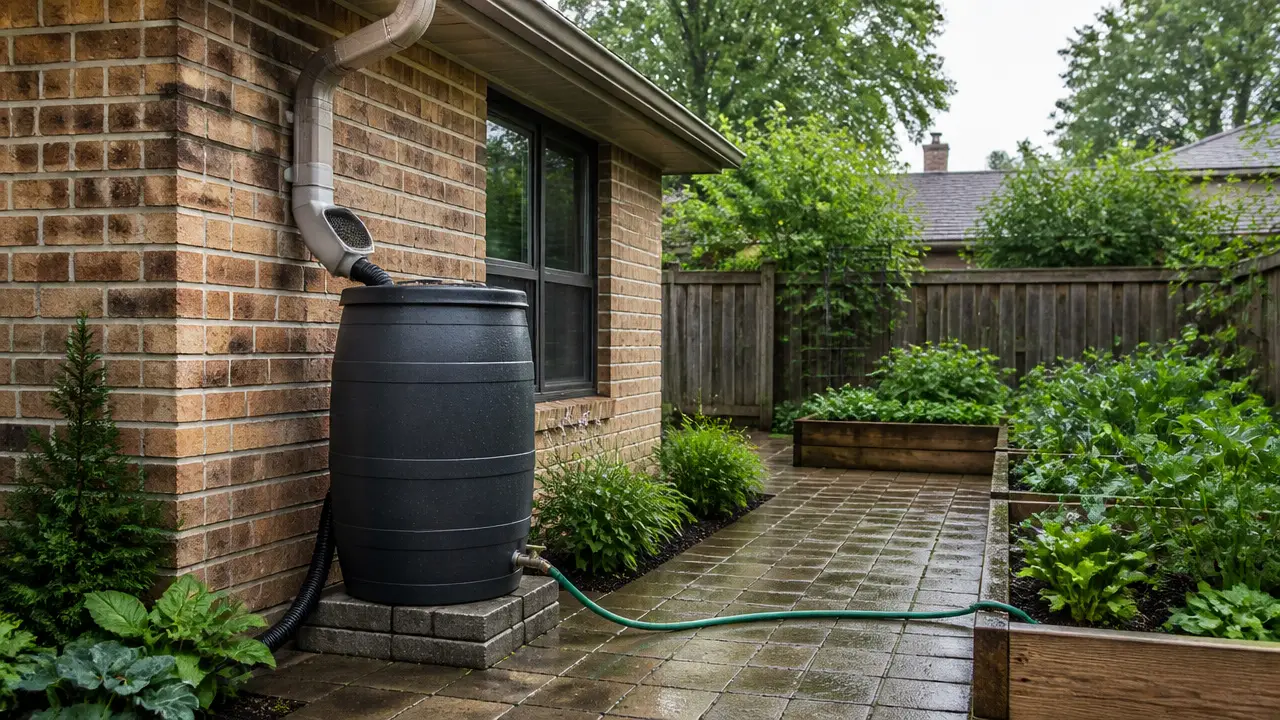
A cistern is one of the main ways to store larger amounts of harvested rainwater.
Roof runoff can be directed through gutters and screens and then into the tank. That stored water may be useful for jobs such as landscape irrigation or other approved non-potable uses. Non-potable means the water is not intended for drinking.
EPA recognizes rain barrels and cisterns as ways to capture rainwater for reuse, including irrigation and some other uses where allowed.
A well cannot capture rainwater. It uses groundwater instead.
You Need Water Storage, Not Just a Water Source
A well produces water, but a cistern stores it.
That distinction matters when water is not always available at the same rate you need to use it.
For example, a low-producing well might slowly fill a cistern throughout the day. A pump can then draw from the cistern when several fixtures or irrigation zones need water at once.
In that setup, you do not actually choose a cistern instead of a well. You use both.
A cistern can also store delivered water at a cabin or rural property where there is no practical well.
You Want a Separate Supply for Irrigation
Using treated drinking water for every outdoor job is not always necessary.
A rainwater cistern can provide a separate supply for uses such as:
- Watering ornamental plants
- Drip irrigation
- Some garden uses, depending on water quality and local guidance
- Outdoor cleaning
- Other approved non-potable uses
Keeping the rainwater system separate from drinking-water plumbing is important. CDC warns that untreated rainwater should not be allowed to contaminate pipes carrying treated drinking water.
A Well May Not Fit the Property
A well needs a suitable drilling location. Local rules may also require setbacks from septic systems and other possible contamination sources.
A small property, difficult terrain, existing buildings, or other site limits may reduce the practical places where a well can be installed.
A cistern has its own site requirements, but it gives the designer a different set of options. It may be placed beside a building or, when properly designed, installed underground.
An underground cistern is not a simple hole-and-tank project. Excavation, groundwater pressure, vehicle loads, soil conditions, tank design, and safe access all need consideration.
When a Well May Be the Better Choice
A good well can offer one major advantage: it can provide a continuing water supply rather than depending on how much water is currently stored in a tank.
If the aquifer provides enough water and the water quality is suitable, a well may supply a house through dry weather when a rainwater cistern receives little or no new water.
A cistern is always limited by the balance between:
water entering the tank → storage capacity → water being used
If you collect rainwater, the amount available depends mainly on roof collection area, rainfall, system losses, storage size, and water use.
A very large tank will not solve a collection shortage if the roof and rainfall cannot provide enough water to refill it.
Likewise, a large roof will not prevent shortages if the tank is too small to carry stored water through dry periods.
Cistern vs. Well at a Glance
| Question | Cistern | Well |
|---|---|---|
| Where does the water come from? | Rain, delivery, well, or another supply | Groundwater |
| Does it store water? | Yes | Usually only a small amount unless paired with storage |
| Does it depend on rainfall when harvesting rain? | Yes | No |
| Can it work where groundwater is poor? | Yes, if another water source is available | Possibly not |
| Does it usually need a pump? | Often | Usually |
| Does water quality need testing? | Yes, especially for household or drinking use | Yes |
| Can it be used only for irrigation? | Yes | Yes |
| Can both systems be used together? | Yes | Yes |
A Cistern Does Not Automatically Make Rainwater Safe to Drink
The tank is only one part of a rainwater system.
Regarding practical rainwater tank vs cistern, understand vessel construction compatible with the expected water use.
Roof runoff can pick up bird droppings, dirt, microorganisms, chemicals, and materials from roofing, gutters, pipes, and storage equipment. CDC states that rainwater is not necessarily safe to drink without appropriate treatment.
A rainwater system may include:
- Suitable roof and gutter materials
- Leaf and debris screening
- A first flush diverter, which sends away some of the first roof runoff from a storm
- A cistern with screened openings and controlled overflow
- Sediment management
- A pump when pressure is needed
- Treatment matched to the intended use
- Regular cleaning and maintenance
- Water testing
A filter by itself does not prove that rainwater is safe to drink. If rainwater will be used for drinking, cooking, brushing teeth, bathing, or other household purposes where people may swallow it, use appropriate treatment and current laboratory testing. CDC recommends regular testing for germs and chemicals and contacting the local health department for guidance.
Potable water means water suitable for drinking.
Think About How Much Water You Actually Need
Before choosing a cistern, estimate both supply and demand.
For rainwater harvesting, you need to know:
- Roof collection area
- Local rainfall patterns
- How much water is lost before reaching the tank
- Tank capacity
- Daily or seasonal water use
- Length of typical dry periods
For example, an irrigation-only cistern may only need to carry water between storms during the growing season.
A cistern serving a cabin or household has a much harder job. It must cover indoor demand, longer dry periods, and possible interruptions in the water source.
That makes storage sizing more important.
A Cistern Still Needs Maintenance
Stored water should not be treated as something you can put in a tank and forget.
A rainwater cistern may need regular checks of:
- Gutters
- Roof debris
- Inlet screens
- First flush equipment
- Tank openings
- Overflow screens
- Sediment buildup
- Pumps
- Pipes and fittings
- Filters and other treatment equipment
The system should also prevent insects, animals, surface runoff, and unwanted debris from entering the tank.
In freezing climates, exposed pipes, pumps, filters, valves, and above-ground tanks may also need suitable freeze protection. Do not assume that burying one part of the system protects every component.
Sometimes the Best System Uses Both
A cistern and a well do different jobs, so they can work well together.
One common arrangement is:
well → cistern → pressure pump → building
The well fills the cistern slowly. The cistern gives the building a reserve of stored water.
Another arrangement might be:
roof → rainwater cistern → irrigation system
while a separate well supplies the house.
This can reduce the demand placed on the well without mixing untreated rainwater into the drinking-water plumbing.
The exact arrangement needs proper backflow protection and plumbing separation where required.
Which One Should You Choose?
A cistern may be the better choice when you have a practical source of rainwater or delivered water and need storage.
A well may make more sense when the property has a dependable groundwater source capable of supplying the amount and quality of water you need.
Before deciding, answer these questions:
- What will the water be used for?
- How much water is needed?
- Is suitable groundwater available?
- Is enough rainwater available from the roof?
- How long must stored water last?
- Where can the tank or well safely go?
- How will water be pumped and pressurized?
- What treatment is needed?
- What maintenance can you realistically keep up with?
- What state and local rules apply?
For drinking-water systems, well construction, buried tanks, complex pumps, or connections to household plumbing, qualified local professionals can help determine what is suitable for the site.
Frequently Asked Questions
Is a cistern better than a well?
Not always. A cistern is useful when you need to store rainwater, delivered water, or water from another source. A well may be better when reliable groundwater is available and you need a continuing supply.
Can a cistern replace a well completely?
Yes, in some situations, but the cistern still needs a source of water. It might be filled by rainwater or water deliveries. Whether that supply is enough depends on storage capacity and water use.
Can you fill a cistern with well water?
Yes. A cistern can store water produced by a well. This can be helpful when the well produces water slowly but the house sometimes needs water faster than the well can supply it.
Is cistern water safe to drink?
Do not assume it is. Rainwater can contain germs and chemicals picked up from the air, roof, gutters, pipes, and tank. Drinking-water use requires suitable collection, treatment, maintenance, and current testing appropriate to the water source and local requirements.
Does a cistern need a pump?
Usually, if the cistern must supply normal household fixtures or pressurized irrigation. Some systems can use gravity when the tank is high enough above the outlet, but available pressure depends on the vertical height between the water surface and the point of use.
Can you have both a well and a rainwater cistern?
Yes. The well can supply the house while the cistern supplies irrigation, or the well can slowly refill a cistern that acts as storage. Plumbing should be arranged so lower-quality water cannot contaminate drinking-water lines.
What happens when a rainwater cistern runs dry?
Water service from that tank stops unless another approved source can refill it or a properly designed backup supply takes over. Good system planning compares collection, storage, and water demand before choosing tank capacity.