As an affiliate, we may earn a commission from qualifying purchases. We get commissions for purchases made through links on this website from Amazon and other third parties.
No. Almost any chain can guide some water downward, but not every chain will work well as a rain chain. The best chain has enough surface area to catch runoff, resists rust, hangs safely from the gutter, and can handle the amount of water coming from that section of roof.
A light decorative chain may work during a gentle rain but let water spray everywhere during a downpour. A chain that rusts quickly, has sharp edges, or is too heavy for the gutter can also create problems.
What Makes a Chain Work as a Rain Chain?
A rain chain replaces or supplements a traditional downspout. Water leaves the gutter outlet and follows the chain toward the ground.
For that to work well, the chain needs several basic features.
Enough surface area
Water follows a chain partly because it clings to the links as it falls. Larger links usually give the water more surface to follow.
Very small, thin links may not catch much water. Instead, runoff can jump away from the chain and splash onto the wall or ground.
Cup-style rain chains handle water differently. Small cups catch the runoff and pass it from one cup to the next. They usually control water better than a simple link chain, especially when rainfall is heavier.
Weather-resistant material
A chain used outdoors stays wet often, so the material matters.
Common choices include:
- Copper
- Stainless steel
- Aluminum
- Galvanized steel
- Other metals made for outdoor use
Untreated steel can rust. Rust does not always stop the chain from working right away, but it can stain concrete, siding, stone, or a rain barrel.
Plastic chain can guide water in some installations, but sunlight, cold, and weather exposure may weaken some plastics over time.
Enough weight to hang steadily
A rain chain should hang mostly straight.
A chain that is extremely light can swing in wind. That can increase splashing and may cause the chain to hit siding, windows, or other surfaces.
However, heavier is not always better. A very heavy chain puts more load on the gutter and its mounting point.
The gutter outlet, brackets, fascia, and attachment hardware all need to support the chain safely, including when the chain is wet or covered with ice.
Can You Use a Regular Hardware-Store Chain?
Often, yes.
A regular metal chain can work if it is:
- Made for outdoor exposure
- Large enough for water to follow
- Not excessively heavy
- Securely attached
- Long enough to reach close to the drainage point below
A decorative chain with medium or large links is usually a better candidate than a thin utility chain.
You do not necessarily need a chain sold specifically as a "rain chain." The label matters less than the chain's shape, material, weight, and ability to control the expected runoff.
Chain Shape Makes a Difference
Not all chain designs move water equally well.
Standard round or oval links
Ordinary round or oval links can work well for modest runoff. Water tends to wrap around the links and move downward.
Larger links usually provide better contact with the water than very small ones.
Decorative twisted links
Twisted or textured links can give water more surfaces to follow. Some decorative designs also reduce the straight free fall between links, which may reduce splashing.
The use-case discussion in “Are Rain Chains a Good Idea?” shows where debris, overflow, or poor discharge can disrupt collection.
Performance still depends on the actual shape and rainfall rate.
Very thin chains
Thin chain can work in light rain, but it gives water less surface area to cling to. During heavier runoff, much of the water may simply fall beside it.
Cup-style chains
Cup-style rain chains generally provide better water control. Each cup collects water and drains it into the cup below.
They can still overflow during intense rainfall, but they tend to contain runoff better than a basic chain.
The Gutter Outlet Matters Too
A good chain will not work properly if water does not reach it.
Ideally, runoff should leave the gutter directly above the center of the chain. Rain-chain adapters or outlet fittings can help direct the water onto it.
Simply hanging a chain beside an existing gutter hole may result in much of the water missing the chain.
Also make sure the gutter itself slopes toward the outlet and is kept reasonably clear of leaves and debris.
A Rain Chain Does Not Handle Unlimited Water
For practical considerations for rain chains work in heavy rain, first understand collection design for forecast rainfall and debris loads.
The amount of runoff depends mainly on the roof area draining to that gutter outlet and how hard it is raining.
A large roof section can send a surprising amount of water through one outlet during a storm. A small chain may not control that volume.
In heavy rainfall, excess water may:
- Jump away from the links
- Splash against siding
- Overflow a cup-style chain
- Pool around the foundation
- Overshoot a rain barrel opening
If the location receives large flows, a conventional downspout may provide better control.
Think About Where the Water Goes
A rain chain only moves water downward. You still need somewhere for that water to go.
The bottom can drain into a:
- Gravel-filled drainage area
- Splash basin
- Drain connected to a suitable discharge point
- Rain garden
- Rain barrel
- Cistern inlet
Do not allow large amounts of roof runoff to collect beside the foundation.
If you are directing the chain into rainwater storage, make sure the storage system has a safe overflow path. A full barrel or cistern still needs somewhere to send additional rain.
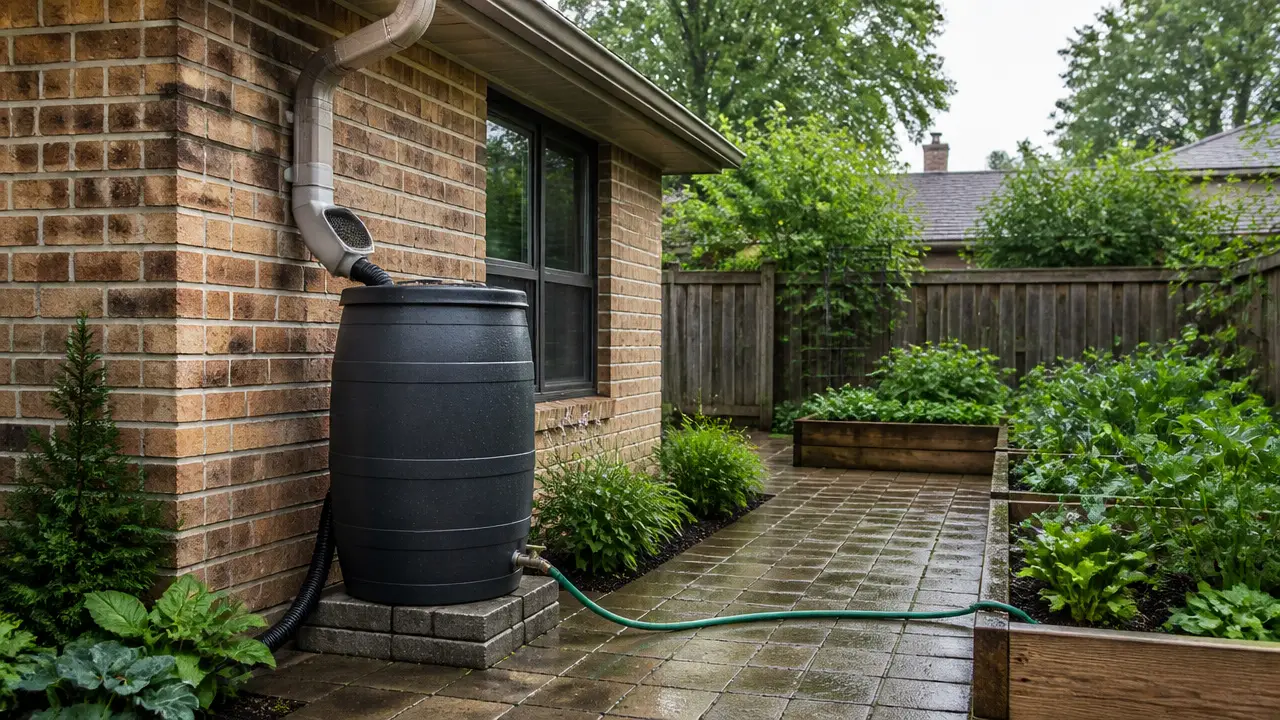
Using a Rain Chain With a Rain Barrel
A rain chain can provide an attractive way to direct roof runoff toward a rain barrel, but alignment becomes especially important.
The lower end should guide water into the barrel's inlet or screened opening without allowing large amounts of splash outside the barrel.
Keep in mind that a rain chain is not a filter. Roof runoff can carry leaves, dirt, insects, bird droppings, roofing particles, and other contaminants.
A screened inlet or suitable prefilter can help keep larger debris out of storage.
The feature comparison “6 Best Rain Chains for Gutters and Rainwater Collection” helps match the drainage path to the expected rainfall load.
Collected roof water should not be assumed safe to drink. Drinking-water use requires appropriate collection materials, treatment, current laboratory testing, regular maintenance, and compliance with applicable local requirements.
Watch for Freezing Conditions
Rain chains can collect ice in freezing weather.
Ice adds weight. A chain that is easy for a gutter to support when dry can become much heavier after repeated freezing.
Ice can also create a hard, swinging object next to siding or windows.
In freezing climates, inspect the attachment point and surrounding area carefully. Do not stand beneath an ice-covered chain or attempt risky roof or ladder work to remove ice.
How to Tell Whether Your Chain Is Suitable
You can usually make a reasonable assessment before installing it.
Check that the chain:
- Is designed to tolerate outdoor moisture.
- Has links large enough for water to follow.
- Is not so light that it swings excessively.
- Is not so heavy that it overloads the gutter.
- Has no dangerous sharp edges.
- Can be securely connected below the gutter outlet.
- Reaches the intended drainage or collection area.
After installation, observe it during actual rain from a safe location.
Look for water missing the chain, excessive splash, gutter movement, pooling near the house, or overflow from the drainage area. A setup that works during a light shower may behave very differently during heavy rain.
Frequently Asked Questions
Can I use a normal metal chain as a rain chain?
Yes. A normal metal chain can work if it is weather-resistant, large enough to guide the water, and not too heavy for the gutter. Large decorative links usually work better than thin utility chain.
Does a rain chain have to be copper?
No. Copper is popular because it handles outdoor exposure well and develops a natural patina, but stainless steel, aluminum, galvanized steel, and other suitable outdoor materials can also work.
Will a small chain carry heavy rain?
It may guide some of the water, but a small chain can splash badly when runoff becomes heavy. Larger links or cup-style chains generally provide more water control.
Can I replace any downspout with a rain chain?
Not necessarily. A rain chain works best where some splashing is acceptable and where water can drain safely at ground level. A conventional downspout may be better where large roof areas produce heavy runoff or where water must be carried away from the building.
Should a rain chain touch the ground?
It does not have to. The bottom is often secured near a basin, drain, or collection container to limit swinging. The exact arrangement depends on where you need the runoff to go.
Can a rain chain fill a rain barrel?
Yes. It can guide gutter runoff into a rain barrel if the chain and barrel inlet are aligned properly. The barrel still needs screening or prefiltration as appropriate and a safe overflow route.
Do rain chains splash?
Yes. Some splashing is normal, especially with simple link chains. Cup-style designs usually control water better, but even they can splash or overflow during intense rainfall.
Can a rain chain damage a gutter?
A chain that is too heavy or poorly attached can put unnecessary stress on the gutter or outlet. Ice can add substantial weight in freezing weather. The attachment point and gutter supports need to be strong enough for the installed load.