
As an affiliate, we may earn a commission from qualifying purchases. We get commissions for purchases made through links on this website from Amazon and other third parties.
Best Overall
Best Copper Anchor
Best Large Copper Basin
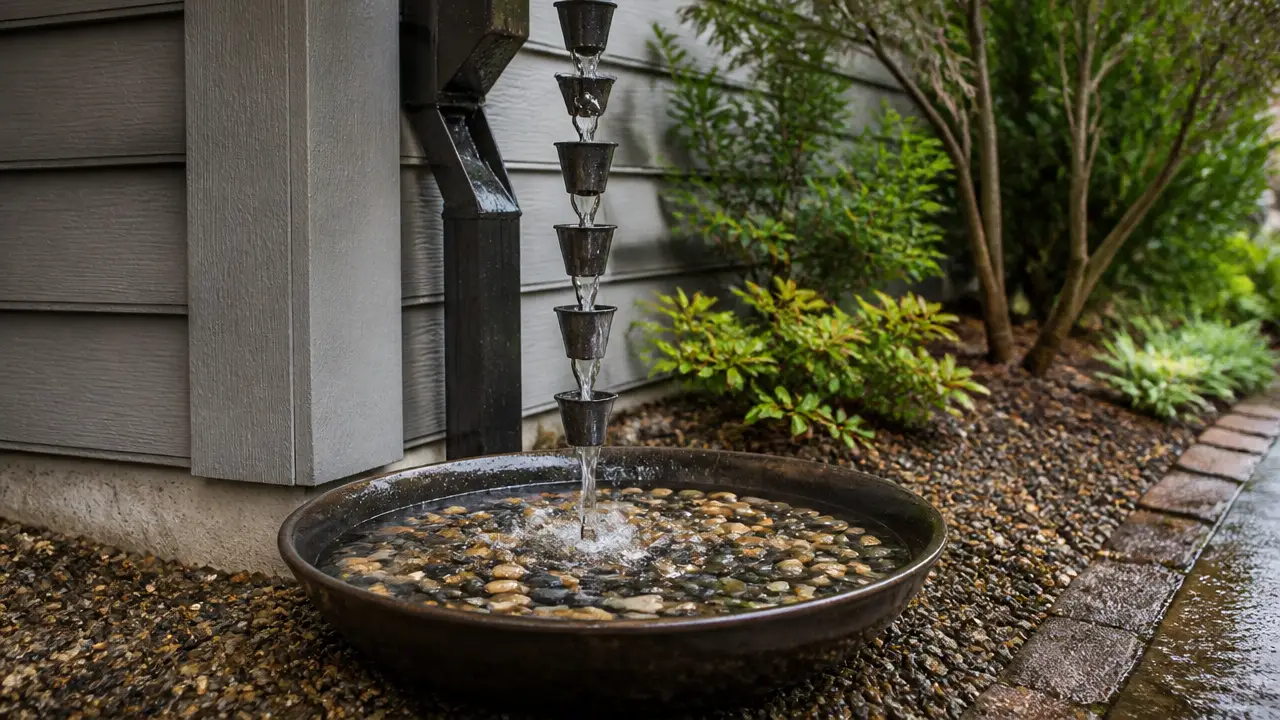
A rain chain basin gives the bottom of the chain somewhere deliberate to land. It can add weight so the chain swings less, catch part of the falling water, and reduce the hard splash you get when roof runoff hits bare soil, concrete, or mulch. The basin still needs a drainage plan, though. A decorative bowl that fills and spills toward the house can create a new problem instead of solving one.
The four basins here take different approaches. One uses a spill-bowl shape to send water toward a defined outlet. Two are copper anchor bowls that can be weighted with stones. The fourth uses an adjustable hanging-chain arrangement and can be modified for drainage, but its long-term corrosion record is weaker.
For the best result, choose the basin together with the rain chain and the landing area below it. Look at how the chain attaches, whether the bowl drains or spills where you want, how much wind the site gets, and what freezing water could do to the hardware.
Rain Chain Basins at a Glance
| Product | Best For | Key Strength | Tradeoff |
|---|---|---|---|
| U-nitt Spill Bowl Basin | Controlled spill direction | Deep bowl with a pour opening and anchoring function | Exposed connection still needs corrosion checks |
| Monarch Pure Copper Basin | Compact decorative anchoring | Copper bowl with included anchoring hardware and link chain | Connection hardware can leak, strip, or loosen |
| Good Directions Blue Verde Basin | Larger copper landing area | Broad copper bowl that can be weighted with stones | Insert and ring hardware can fail or corrode |
| 13-Inch Metal Rain Chain Basin | Adjustable decorative setup | Adjustable hanging connection and optional drainage modification | Rust and long-term breakage are concerns |
What a Rain Chain Basin Should Do
A basin is not just decoration. The first job is to keep the bottom of the rain chain controlled. A chain that swings in wind can throw water toward siding, a walkway, or the foundation. Added weight from the basin, stones, or an anchoring connection helps keep the chain closer to vertical.
The second job is to manage the water after it reaches the ground. Some basins hold water temporarily. Others use a spill edge or can be adapted so water drains through. Neither approach is automatically better. What matters is where that water goes next.
If the soil below drains well and the basin sits well away from the house, a shallow spill area may be enough. If runoff needs to move toward a drain, gravel trench, garden bed, or collection point, choose a basin that gives you a clear way to direct that overflow.
A Spill Bowl That Gives Water a Clear Exit
1 / 4
U-nitt Spill Bowl Rain Chain Basin
Bowl Size
12 x 12 x 3.5 in
Flow Control
Pour opening
Use
Rain-chain anchoring
The U-nitt basin is the most practical choice here when the goal is to do more than hold the bottom of the chain. Its bowl measures about 12 x 12 x 3.5 inches and uses a defined pour opening so water can spill in a chosen direction instead of escaping evenly around the rim. That makes the landing area easier to plan.
The bowl also adds weight at the bottom of the chain, which helps reduce movement in windy conditions. It can work as both an anchor and a small catch basin beneath the falling stream. The deeper shape gives water a little more room to settle before it leaves through the spill edge.
Long-term outdoor exposure still deserves attention. The connection point sits in a wet location, and similar basin hardware can corrode where the chain meets the bowl. One owner reported that the unit held up well beyond a year, but the sensible maintenance plan is still to inspect the anchor and finish rather than assume the hardware will stay unchanged indefinitely.
Why It Works
- The pour opening gives overflow a more predictable direction.
- The deeper bowl adds useful weight at the bottom of the chain.
- A 12-inch footprint is large enough to create a visible landing area without taking over a small garden bed.
What To Keep In Mind
- Check the chain-to-basin connection for corrosion and looseness.
- Position the spill opening so water moves away from the foundation.
- The basin does not replace a drain when the site receives more runoff than the surrounding soil can absorb.
A Compact Copper Anchor Bowl
2 / 4
Monarch Pure Copper Rain Chain Basin

Material
Pure copper
Included Hardware
Link chain, nut, bolt and washers
Stabilizing Option
Add smooth stones
The Monarch basin is a hand-hammered copper bowl built around anchoring the chain rather than directing water through a molded spillway. It includes a short copper link chain plus the nut, bolt, washers, and assembly pieces needed to connect the rain chain to the bowl. Smooth stones can be added for extra weight and a more finished garden look.
Its clearest role is a compact decorative anchor under a copper or copper-toned chain. The product information gives conflicting dimensions, so measure the intended landing area and check the current size with the seller before purchase.
The connection hardware is the main tradeoff. There are reports of stripped threads, loose anchoring hardware, and leakage around the center attachment. Adding stones can help with stability, but the mechanical connection still needs to be assembled carefully and checked after the first few storms.
Why It Works
- Pure copper matches naturally with copper rain chains and develops its own outdoor patina.
- Included anchoring hardware gives the chain a defined connection point.
- Decorative stones can add weight and reduce movement.
- The shallow-bowl format can spread water across a garden area rather than concentrating it at one small point.
What To Keep In Mind
- The exact dimensions are uncertain; ask the seller for the current measurements.
- Inspect the center hardware for stripped threads, looseness, and leaks.
- Do not depend on the bowl alone to keep runoff away from the house.
A Larger Copper Landing Area
3 / 4
Good Directions Blue Verde Rain Chain Basin
Material
Pure copper
Finish
Blue verde
Use
Anchor and catch basin
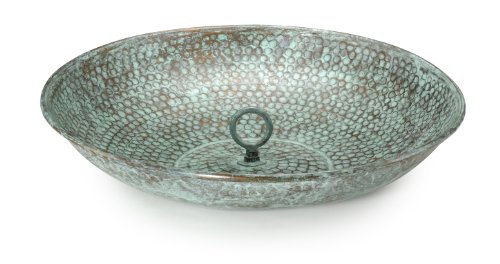
The Good Directions basin is the larger copper option in this group. Its broad bowl gives the falling stream more landing area and more room for decorative stones around the chain connection. That can help when a smaller anchor bowl feels visually undersized below a wide cup-style rain chain.
The basin is made from copper with a blue-verde finish and is intended to work as both an anchor and catch basin. The product information gives conflicting diameter and depth details. What is clear is that this model occupies a larger footprint than the compact Monarch copper basin.
Hardware is again the weak point rather than the copper bowl itself. The center insert can be stressed by freezing water, and separate ring hardware can corrode and stain nearby paving. Some installations also need added drainage so standing water does not remain in the bowl after every storm.
Why It Works
- The larger bowl gives water and decorative stone more landing area.
- Pure copper suits a visible garden installation and avoids ordinary steel-bowl rust on the main basin body.
- Added stones can help stabilize the chain and soften splash.
What To Keep In Mind
- Ask the seller for current dimensions before planning the base.
- Inspect rings and attachment hardware even though the main bowl is copper.
- Freezing water can stress the welded center insert.
- If water stands too long, the site may need a separate drainage path rather than a permanently full bowl.
An Adjustable Metal Basin for a Decorative Setup
4 / 4
13-Inch Metal Rain Chain Basin

Item Weight
2.23 lb
Adjustment
S-hook chain connection
Drainage
Can be modified with a drain hole
This metal basin uses an adjustable chain and S-hook arrangement instead of a simple fixed center anchor. That lets you change the hanging relationship between the rain chain and basin, which can be useful when the lower end needs a little more positioning flexibility.
The product information gives conflicting bowl dimensions. The dependable comparison points are the 2.23-pound item weight, adjustable hook position, and the option to add a drainage hole if the installation needs water to leave the basin instead of sitting in it.
Durability is the reason it ranks last. Product-specific feedback includes rust and components breaking down after months outdoors. The basin can still work as a decorative landing point, but it needs more inspection than the copper choices and makes the most sense where long-term exposure is moderate rather than severe.
Why It Works
- The S-hook arrangement lets you adjust the connection height.
- The basin can be modified when a drain opening is needed.
- Its decorative metal design gives the bottom of the rain chain a more finished appearance.
What To Keep In Mind
- Ask the seller for current bowl dimensions before ordering.
- Rust and long-term breakage are realistic concerns.
- Any added drain hole should send water toward a safe drainage area, not simply onto the foundation edge.
How to Choose a Rain Chain Basin
Match the Basin to the Chain
A wide, heavy cup chain needs a stable landing point. A tiny basin under a large chain can look out of proportion and may not catch much of the splash. A light link chain can use a smaller anchor, but the bottom still needs enough weight to limit movement.
Look at how the basin actually connects. Some use a center bolt and short link chain. Others use hooks or a separate anchoring arrangement. Make sure the connection works with the last link or cup on your rain chain before installation day.
Decide Whether You Want to Hold, Spill, or Drain Water
A bowl that temporarily holds water can soften the falling stream and create a decorative effect. A spill bowl can send overflow toward one side. A drilled or open drain can move water through the basin instead of storing it.
Choose from the drainage goal rather than appearance alone. Near a foundation, a defined spill direction or downstream drain is usually more useful than a bowl that overflows randomly.
Add Weight Without Blocking Drainage
Smooth stones are a common way to add weight and reduce splash. They can also hide the center hardware and make a copper basin look more finished.
Do not pack the bowl so tightly that water has nowhere to move. If the basin has a spill edge or drain opening, keep that path clear of stones and sediment.
Think About Freezing Weather
Water left in a basin can freeze solid. Expansion and ice movement can stress inserts, welds, bolts, and chain connections. In freezing climates, a basin that drains between storms is easier on the hardware than one that stays full.
If the basin is seasonal, clean and drain it before extended freezing weather. If it stays installed, inspect the connection again in spring.
Where the Basin Should Sit
Place the basin directly under the rain chain so the falling water reaches the middle rather than the rim. The chain should hang close to vertical and should not pull hard against the basin connection.
The ground below needs to be stable. Soft soil can let a weighted basin tilt, changing the spill direction and making the chain hang at an angle. A level stone, paver, compacted gravel base, or other suitable support can keep the bowl from sinking unevenly.
Basin placement depends partly on whether a rain chain should reach the ground or terminate above the splash surface.
Most important, think beyond the bowl. Follow the water after it leaves the basin. If the overflow runs back toward the wall, across a walkway, or into an already wet low spot, move the basin or add a better drainage route.
Common Rain Chain Basin Problems
The Basin Leaks Around the Anchor
Water can escape around a bolt, washer, or center fitting. Check that the hardware is seated correctly and that the connection is not cross-threaded or stripped. If sealing is needed, use a material appropriate for the basin and outdoor water exposure.
The Chain Pulls the Basin Over
The bowl may be too light, the chain may be swinging, or the ground may be uneven. Add appropriate weight, improve the base, and control movement at the bottom of the chain.
Water Pools for Days
Standing water means the basin is not draining or spilling fast enough for the site. Clear sediment, adjust the spill direction, or provide a suitable drainage path.
Metal Hardware Rusts
Copper bowls can still use non-copper rings, bolts, or inserts. Inspect every metal part rather than assuming the entire assembly has the same corrosion resistance.
Ice Damages the Connection
A bowl full of frozen water puts stress on the center hardware. Drain the basin before prolonged freezing conditions when the design allows it.
Frequently Asked Questions
What is the purpose of a rain chain basin?
A rain chain basin gives the bottom of the chain a controlled landing point. It can add weight, reduce chain movement, soften splash, and help direct runoff toward a safer drainage area.
Do rain chain basins need drainage holes?
Not always. Some basins are designed to hold and spill water, while others work better with drainage. The right choice depends on where overflow needs to go and whether standing water is acceptable at the site.
Can I put rocks in a rain chain basin?
Yes, when the basin design allows it. Smooth stones can add weight, reduce splash, and help stabilize the chain, but they should not block a spillway or drain opening.
How far should a rain chain basin be from the foundation?
There is no single distance that fits every property. The important rule is that water leaving the basin must move away from the building rather than soaking the foundation edge or flowing back toward the wall.
Will a copper rain chain basin rust?
The copper bowl itself does not rust like ordinary iron or steel, but attachment rings, bolts, or inserts may use different metals. Inspect all hardware for corrosion.
What should I do with a rain chain basin in winter?
In freezing climates, avoid leaving trapped water where it can freeze around the connection hardware. Drain and clean the basin when possible and inspect the attachment after winter.
For the chain above the basin, the best rain chains compare cup size, materials, and splash behavior. If you would rather keep runoff inside a closed path, rain barrel diverter kits route water from the downspout through a hose. A broader rainwater harvesting kit can help when the barrel connection itself is still undecided. To reduce dirty roof runoff before it reaches storage, first-flush diverters cover that separate collection step.