As an affiliate, we may earn a commission from qualifying purchases. We get commissions for purchases made through links on this website from Amazon and other third parties.
Rain barrel overflow is normal during heavy rain, but it needs a safe place to go. The best solution is usually a properly sized overflow outlet that carries extra water away from the barrel, house foundation, and nearby structures.
Other useful options include connecting a second barrel, routing overflow into a garden or drainage area, improving the downspout diverter, or increasing total storage capacity. The right choice depends on how much roof water reaches the barrel and where excess water can safely drain.
Install a Proper Rain Barrel Overflow Outlet
An overflow outlet is the simplest solution for most rain barrels.
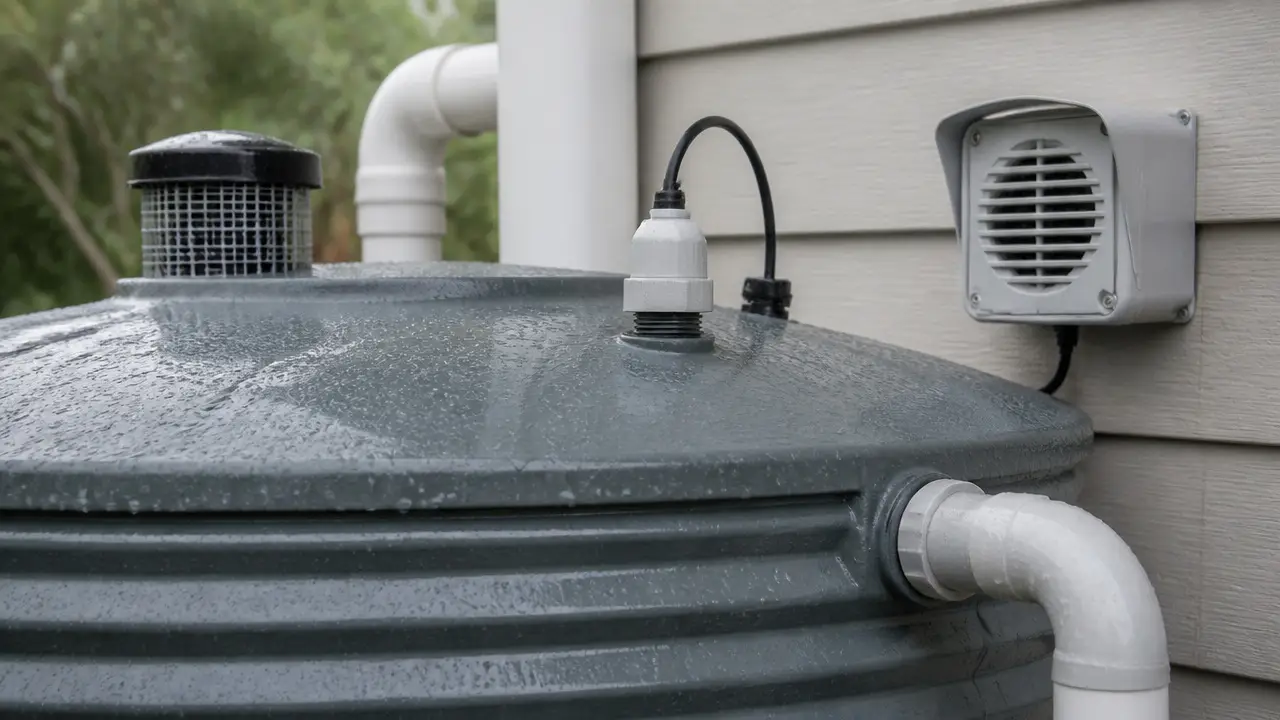
The outlet sits near the top of the barrel. When the water reaches that level, extra water flows through a hose or pipe instead of spilling over the lid or sides.
A good overflow setup should:
- Have a large enough opening to handle incoming water.
- Use a secure, watertight fitting.
- Carry water downhill when possible.
- Discharge where water will not damage the foundation.
- Include screening if the opening could allow mosquitoes or debris into the barrel.
A bulkhead fitting is often used for the connection. It passes through the barrel wall and creates a sealed connection for a hose or pipe.
Do not assume a small garden hose can handle every overflow situation. A roof and downspout can deliver water much faster than a narrow hose can drain it during a strong storm.
Route Overflow Away From the Foundation
Moving overflow away from the house is often more important than adding storage.
If a barrel sits next to the foundation and simply spills onto the ground, the system can concentrate roof runoff in one small area. That may cause puddling, erosion, wet basement walls, or foundation drainage problems.
An overflow hose or pipe can carry the water to a safer location, such as:
- A lawn area that slopes away from the house.
- A suitable garden bed.
- An existing drainage route.
- An infiltration area designed to accept runoff.
Keep the outlet visible or accessible enough that you can check it for clogs.
Do not direct large amounts of water toward neighboring property, septic systems, steep slopes, building foundations, or areas that already stay wet.
Connect a Second Rain Barrel
Connecting two barrels can delay overflow by increasing storage.
There are two common arrangements.
Connect the Barrels Near the Top
A hose or pipe connects the first barrel to the second near their upper sections.
Once the first barrel reaches the connection level, water moves into the second barrel.
This arrangement is relatively simple, but the first barrel may stay full while the second fills.
Connect the Barrels Near the Bottom
Barrels can also be connected close to their bottoms so their water levels rise and fall together.
This can make both barrels behave more like one larger storage tank.
The connection must be suitable for continuous water pressure at the bottom of the barrels. Both containers should also sit on stable, level supports.
Remember that adding another barrel does not eliminate the need for overflow. Once both barrels are full, excess water still needs somewhere to go.
Use a Downspout Diverter That Returns Excess Water
Some rain barrel systems use a downspout diverter rather than sending the entire downspout into the barrel.
Water enters the barrel through the diverter. Once the barrel fills to the intended level, additional runoff continues through the original downspout.
This can be a convenient overflow solution because the existing downspout remains the main drainage route.
For it to work correctly:
- The diverter and barrel inlet need to be installed at the correct relative heights.
- The downspout below the diverter must remain open.
- The barrel must not be positioned in a way that prevents water from returning to the downspout.
- Leaves and debris must not block the diverter.
Follow the installation requirements for the type of diverter you are using rather than assuming all diverters work the same way.
Send Overflow to a Rain Garden
A suitable rain garden can accept runoff that exceeds your storage capacity.
A rain garden is a planted depression designed to temporarily collect runoff and allow it to soak into the ground.
This approach can work well when the barrel is mainly being used to capture part of the roof runoff rather than all of it.
The overflow line should discharge where the water can spread safely instead of creating a concentrated stream that washes away soil.
Rain gardens are not appropriate everywhere. Soil drainage, slope, nearby foundations, underground utilities, local drainage rules, and the amount of roof runoff all matter.
For substantial drainage work, local stormwater guidance or professional site advice may be needed.
Use Overflow for Garden Irrigation Carefully
It may seem convenient to run a barrel overflow hose directly through the garden.
That can work in some situations, but uncontrolled storm runoff is different from normal irrigation.
During a large storm, the system could release far more water than plants need. Saturated soil may also be unable to absorb additional runoff.
If overflow goes toward a garden:
- Spread water over a suitable area.
- Avoid dumping it beside plant stems.
- Make sure water cannot pool against structures.
- Consider what happens when the soil is already saturated.
An overflow pipe should still have a safe drainage path if the garden cannot absorb the water.
Increase Your Rainwater Storage Capacity
If the barrel overflows after nearly every useful rain, the barrel may simply be too small for the amount of roof area feeding it.
Rain barrels often fill surprisingly quickly.
In U.S. units, the theoretical collection can be estimated with:
Gallons = roof area in square feet × rainfall in inches × 0.623
For example, 200 square feet of roof receiving 1 inch of rain represents about:
200 × 1 × 0.623 = 124.6 gallons
Actual collection will be lower because some water is lost to wetting the roof, leaks, splash, first-flush diversion, and other system losses.
Even so, the example shows why a typical barrel can fill quickly when connected to a substantial roof area.
If you regularly have more water than you can use, options include:
- Adding another rain barrel.
- Installing a larger storage tank.
- Reducing the roof area directed into the barrel.
- Using a diverter that sends excess water back through the normal drainage system.
Consider the effects when the rain barrel gets full to assess airflow and overflow provisions around the storage vessel.
More storage only makes sense if you have a practical use for the stored water and a suitable location for the additional weight.
Make Sure the Overflow Is Large Enough
An overflow opening can become the bottleneck in the system.
If the downspout delivers water faster than the overflow can release it, the barrel may still spill from the top.
Several things affect overflow capacity:
- Pipe or hose diameter.
- Length of the overflow line.
- Number of tight bends.
- Debris buildup.
- Screens with clogged openings.
- Whether the pipe slopes continuously downhill.
A larger, shorter, straighter overflow route generally handles water more easily than a long narrow hose.
Avoid making the overflow smaller simply because a certain hose is convenient to attach.
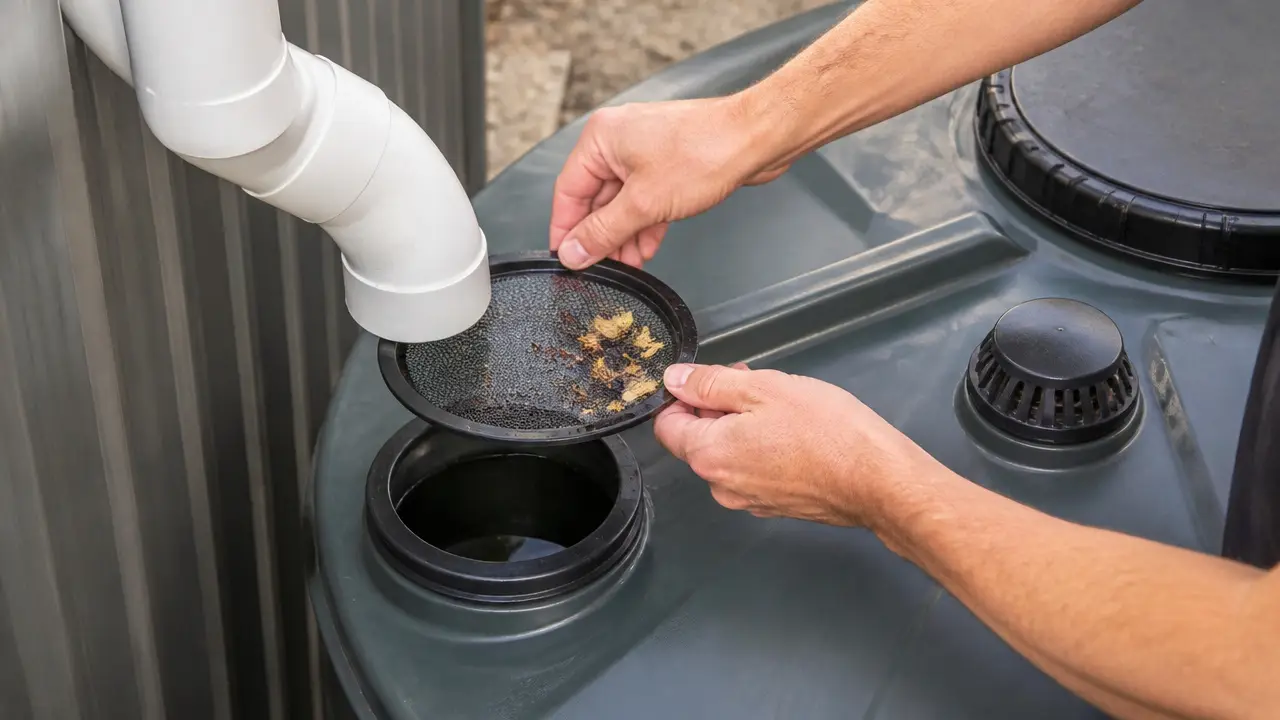
Check for Blocked Screens and Fittings
Sometimes an overflowing barrel does not need a redesigned system. It needs cleaning.
Leaves, seeds, roof grit, insects, and organic material can collect around:
- Inlet screens.
- Downspout diverters.
- Overflow screens.
- Hose fittings.
- Pipe elbows.
Check these areas regularly, especially during seasons when trees shed leaves, flowers, or seeds.
A clogged screen can dramatically reduce water flow even when the pipe behind it is large enough.
Keep mosquito screening in place where needed, but clean it rather than removing it and leaving openings exposed.
Leave Enough Height for the Overflow to Work
Overflow systems generally depend on gravity.
The water level must rise above the bottom of the overflow opening before water begins leaving the barrel.
The discharge end also needs an appropriate drainage path.
Avoid running the overflow hose uphill and then expecting the barrel to drain freely. Low spots can hold water, collect sediment, and reduce flow.
A gentle downhill route is usually simpler and more reliable.
Do Not Seal the Barrel Completely
A rain barrel needs air movement as water enters and leaves.
A tightly sealed container can create pressure or vacuum problems that interfere with normal flow.
Covered openings are useful for keeping out mosquitoes, leaves, animals, and debris, but the barrel should still be vented appropriately for the design.
Never modify a container in a way that allows it to become unintentionally pressurized.
Consider Where the Overflow Goes During Winter
Overflow arrangements can behave differently in freezing climates.
Water trapped in a hose, valve, fitting, or pipe can freeze and expand. That can damage fittings or block the overflow path.
Before freezing weather, follow the winter procedure appropriate for your system. That may involve disconnecting or draining exposed lines and restoring the downspout to its normal drainage route.
Do not assume an overflow hose is protected simply because the barrel has been emptied.
Keep the Barrel on a Stable Base
Overflow problems sometimes begin with a barrel that has shifted or tilted.
Water is heavy. A full barrel places a substantial load on its support.
The base should be:
- Firm.
- Level.
- Stable when wet.
- Able to support the full container safely.
A tilted barrel may overflow from the wrong side before water reaches the intended outlet.
Larger tanks require more careful foundation and structural planning. Do not place large storage containers on decks, platforms, or other structures unless their loaded weight can be safely supported.
A Good Overflow Setup Uses More Than One Protection
For many homes, a practical arrangement is:
- Capture water through a screened inlet or suitable downspout diverter.
- Store the water in the barrel.
- Install a generously sized overflow near the top.
- Route overflow safely away from the house.
- Keep the original stormwater path available where practical.
- Inspect screens, fittings, and drainage paths regularly.
The goal is not to prevent the barrel from ever becoming full. The goal is to make sure filling the barrel does not create a drainage problem.
Frequently Asked Questions
Why does my rain barrel overflow so quickly?
The barrel may be receiving water from a larger roof area than its capacity can hold. Even a modest section of roof can produce many gallons during an inch of rain. A clogged or undersized overflow can also make the problem worse.
Can I connect a garden hose to my rain barrel overflow?
You can in some systems, but a narrow garden hose may not carry water as quickly as the downspout delivers it during heavy rain. Make sure the overflow route has enough capacity for the expected inflow.
Can I connect two rain barrels to stop overflowing?
A second barrel provides more storage and can delay overflow, but it will not eliminate it. Once both barrels are full, you still need a safe overflow route.
Where should rain barrel overflow water go?
It should generally go to a location where it can drain or soak in without damaging buildings or neighboring property. Suitable locations may include lawns, appropriately designed gardens, rain gardens, or the home's existing stormwater drainage route.
Can I send rain barrel overflow back into the downspout?
Yes. Some downspout diverters are specifically designed so excess water continues through the downspout after the barrel fills. The system must be installed at the correct height and kept clear of debris.
Why is water coming over the top instead of through my overflow pipe?
The overflow may be clogged, too small, poorly sloped, or positioned too high. Check the screen, fitting, pipe, and discharge end for restrictions before changing the system.
Should a rain barrel overflow hose slope downhill?
A gravity-fed overflow generally works best when the hose or pipe has a continuous path toward the discharge point. Uphill sections and low spots can restrict flow and hold standing water.
Do I need to disconnect the overflow in winter?
In freezing climates, exposed hoses and fittings may need to be drained, disconnected, or winterized. The correct approach depends on the barrel design and local conditions. Make sure the normal roof drainage route remains functional when the rainwater system is out of service.