As an affiliate, we may earn a commission from qualifying purchases. We get commissions for purchases made through links on this website from Amazon and other third parties.
The best gravity-based water filter is one that matches the water you start with and the contaminants you need to reduce. For already treated tap water, a gravity filter with certified activated carbon may be enough for taste, odor, and specific chemical concerns. For rainwater, well water, or other untreated sources, a gravity filter should usually be treated as one part of a larger treatment system rather than a stand-alone way to make water safe to drink.
Gravity filters are useful because they need little or no power. Water simply moves from an upper container through the filter into a lower container. But gravity itself does not determine how well the system treats water. The filter media, pore size, certification, flow rate, and maintenance matter much more.
What Type of Gravity Filter Is Best?
For most household uses, there are three main gravity-filter designs worth understanding.
Activated Carbon Gravity Filters
Activated carbon traps certain chemicals on its surface. It can also improve taste and smell.
This type is a good fit when you have water that is already microbiologically safe and want to reduce contaminants specifically covered by the filter's certification.
Carbon filters may help with:
- Chlorine taste and odor
- Some organic chemicals
- Certain metals or other contaminants when the filter has a specific reduction claim
- Unpleasant tastes and smells
Do not assume activated carbon removes bacteria, viruses, parasites, salts, or every dissolved chemical. Many common household filters are not designed to remove germs at all.
For normal treated tap water, this is often the simplest gravity-filter option.
Ceramic Gravity Filters
Ceramic elements contain very small pores that physically block particles larger than those pores. Some systems combine ceramic with activated carbon or other treatment media.
They can be useful where sediment and certain microorganisms are concerns. However, performance varies substantially between filters.
A ceramic element should not be judged only by a statement such as "0.2 micron." Look for independent testing or certification showing exactly what the complete filter reduces.
Ceramic filters can also become clogged when water contains a lot of sediment. Prefiltration may be needed to keep a gravity system flowing at a practical rate.
Hollow-Fiber Membrane Gravity Filters
Hollow-fiber filters force water through tiny porous tubes. They are common in portable and low-pressure systems.
The CDC explains that microfiltration with pores around 0.1 micron is effective against parasites such as Giardia and Cryptosporidium and can remove some bacteria. Microfiltration does not reliably remove viruses or dissolved chemicals such as lead or arsenic.
A micron is one-millionth of a meter. A smaller micron number generally means smaller particles can be blocked, but pore size alone does not tell you everything about treatment performance.
Hollow-fiber filters are especially useful when low power use and compact size matter. They are less useful when the main problem is dissolved chemicals unless another treatment stage handles those contaminants.
The Best Choice Depends on Your Water Source
A gravity filter that works well with municipal tap water may be a poor choice for roof runoff.
Treated Tap Water
If your public water supply is already safe to drink, start by deciding what you actually want to change.
For example, you may mainly want to reduce:
- Chlorine taste
- Odor
- A specific contaminant listed in your water-quality report
A certified carbon gravity filter may be enough.
Filtering already safe water unnecessarily can also create maintenance problems. The CDC notes that germs can grow in filters when treatment systems are not properly maintained.
Collected Rainwater
Rainwater needs a different approach.
Roof runoff can contain dirt, bird droppings, microorganisms, metals, chemicals from roofing materials, and contaminants deposited from the air. Water that looks clear can still contain things you cannot see.
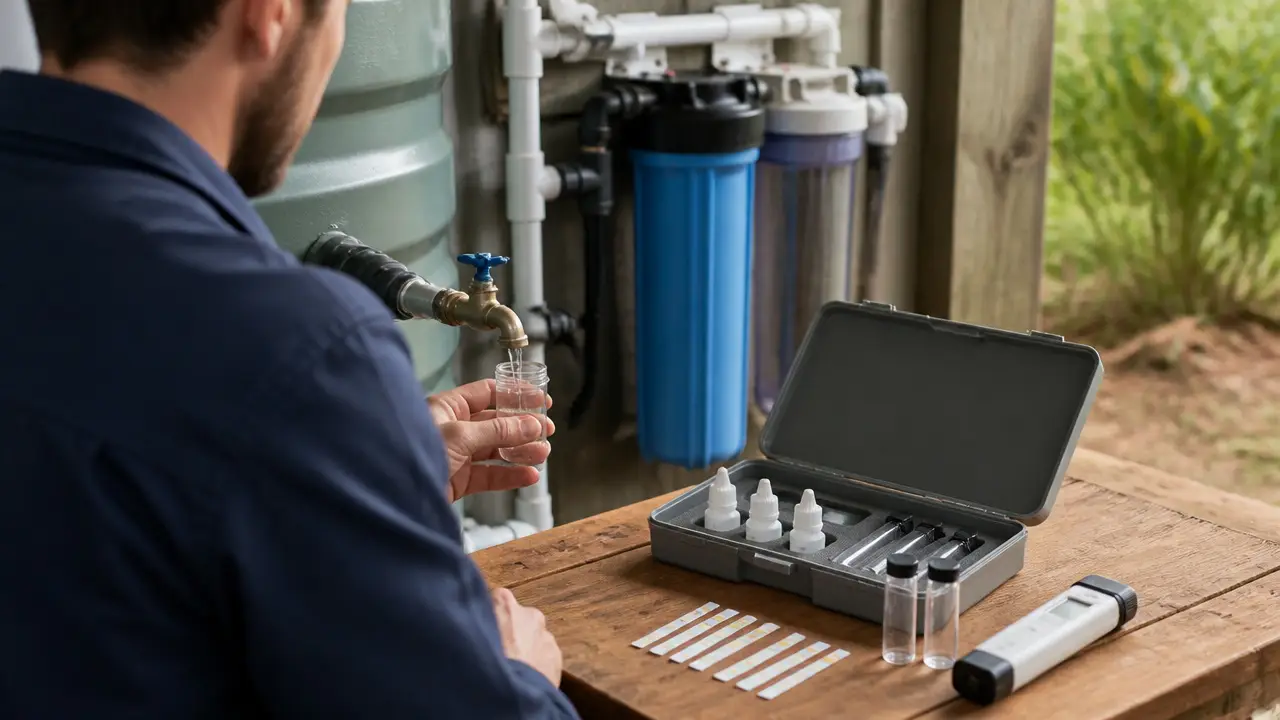
The CDC advises that collected rainwater is not necessarily safe to drink and recommends regular testing for germs and chemicals when rainwater is used for drinking, cooking, or bathing.
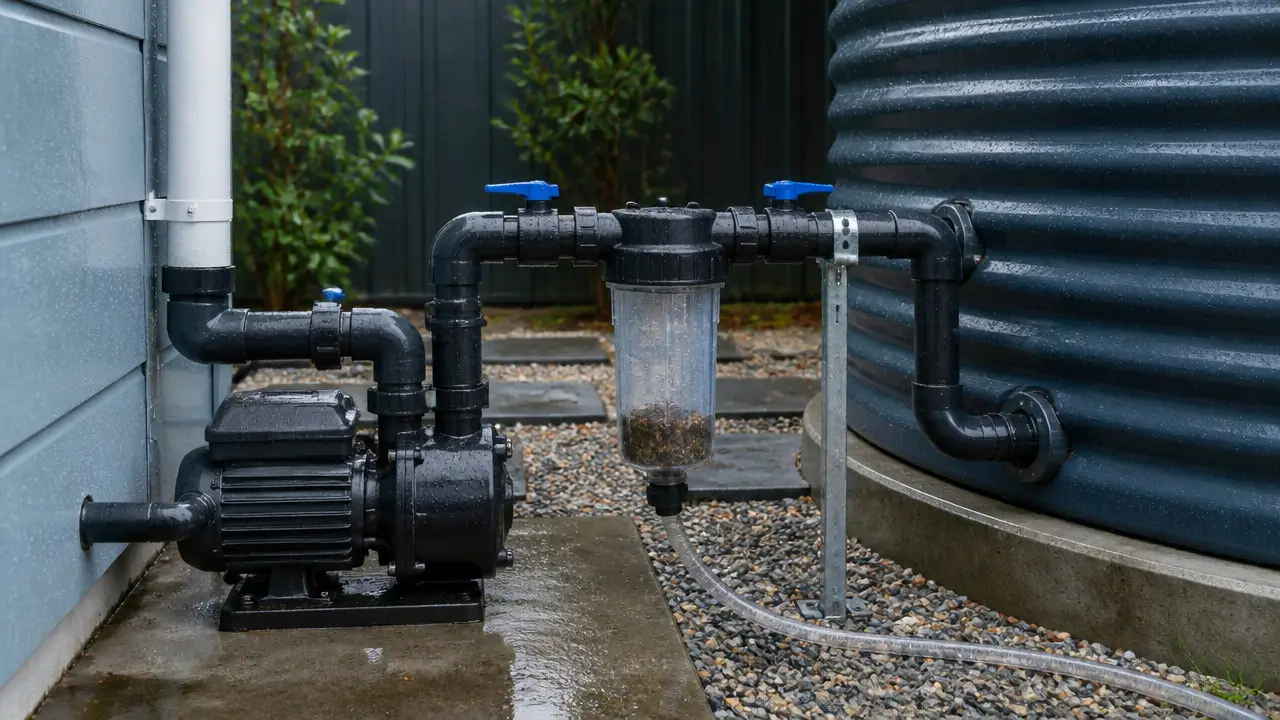
For a rainwater system, think about treatment as a sequence:
- Keep debris out at the gutter or inlet.
- Divert heavily contaminated initial runoff when appropriate.
- Allow sediment to settle or use coarse prefiltration.
- Use finer filtration suited to the contaminants present.
- Add appropriate treatment or disinfection when potable use requires it.
- Test the finished water and maintain the entire system.
A first flush diverter sends some of the first roof runoff from a storm away from the tank. That early runoff can carry a larger load of roof dirt and contaminants.
A countertop gravity filter should not be treated as a substitute for this whole process.
Well, Spring, or Surface Water
Untreated sources also require testing before choosing treatment.
If microorganisms are the concern, a filter designed only to reduce chlorine taste is clearly the wrong tool. If arsenic or another dissolved contaminant is present, a simple sediment or microfiltration element will not solve that problem either.
The right system follows the contaminant rather than the source name.
Look for Certification Claims, Not Just Marketing Terms
Terms such as "purifier," "premium filtration," and "multi-stage" do not tell you exactly what a filter removes.
Independent certification is more useful.
NSF/ANSI 42
NSF/ANSI 42 covers aesthetic effects such as certain taste, odor, chlorine, and particulate reduction claims. It does not automatically mean a filter protects against health-related contaminants.
NSF/ANSI 53
NSF/ANSI 53 covers specific contaminant reductions related to health effects.
A filter certified under this standard still does not remove everything. Check the exact contaminant claims associated with that filter.
For example, certification for lead reduction does not automatically establish performance against arsenic, bacteria, or another unrelated contaminant.
Microbiological Claims
Be especially careful with filters advertised for microorganisms.
NSF P231 covers microbiological water purifiers. NSF/ANSI 244 covers supplemental microbiological filtration, but NSF specifies that systems covered by Standard 244 are intended for water that is normally microbiologically safe rather than as general treatment for unsafe source water.
This distinction matters for rainwater and other untreated supplies.
Always check what standard applies and what reduction claims were actually certified.
Flow Rate Matters With Gravity Filters
Gravity filtration is usually slower than pumped filtration.
Water moves because of head height, which is the vertical distance that creates water pressure. A greater height difference between the water level and the filter outlet can provide more pressure.
However, actual flow also depends on:
- Filter material
- Filter surface area
- Pore size
- Sediment loading
- Water temperature
- Number of filter elements
- Condition of the filter
Evaluate gravity filtration for collected rainwater to compare what the available water-quality readings can reliably show.
Do not assume a system will maintain its new-filter flow rate indefinitely.
Sediment gradually blocks pores. That increases filtration time.
For household use, think about how much filtered water you need between refills rather than focusing only on a maximum advertised flow rate.
A system that produces excellent water slowly may work well for drinking water at a cabin. It may be frustrating if you expect it to supply irrigation or an entire household.
Gravity Filters Are Usually Point-of-Use Equipment
Most small gravity systems are best suited to point-of-use treatment.
Point-of-use means treating water where you actually use it, such as a countertop container used for drinking and cooking water.
This is very different from treating all water entering a house.
Gravity units are rarely practical for supplying:
- Showers
- Washing machines
- Large garden zones
- High-flow faucets
- Whole-house plumbing
For those jobs, storage volume, pumps, pressure, plumbing connections, and larger treatment equipment become important.
For rainwater irrigation, fine drinking-water filtration may not be necessary at all. The main goal might instead be protecting valves, emitters, and hoses from sediment.
What About Slow Sand Filters?
Slow sand filtration is also gravity-based, but it is very different from a countertop filter.
Water slowly passes through a bed of fine sand supported by gravel. Proper slow sand filtration can reduce cloudiness and microorganisms, and the CDC recognizes it as a household water-treatment approach.
However, slow sand filters require careful design and operation. They need enough surface area, controlled flow, suitable source water, and maintenance.
They are better viewed as a treatment process than as a simple container with a replacement cartridge.
For a homeowner who only wants several gallons of filtered tap water each day, a countertop unit is usually much simpler.
Features That Matter Most
When comparing gravity filters, focus on system fit rather than the longest list of stages.
Useful questions include:
- What contaminants does it specifically reduce? Match these claims to your water.
- Is the claim independently certified? Look beyond general statements about purification.
- How much water does it hold? Both the upper and lower chambers matter.
- What is the realistic flow rate? Very fine filters can be slow.
- How often does it require cleaning? Sediment-heavy water usually means more work.
- How are replacement elements installed? Poor seals can allow water to bypass the filter.
- Are replacement elements clearly specified? Mixing incompatible cartridges can affect treatment.
- Can the housing be cleaned easily? Stored water containers need routine sanitation and inspection.
For rainwater, also consider what happens before water reaches the gravity filter. A good filter can clog quickly if roof debris and tank sediment are allowed to reach it.
Maintenance Is Part of Filtration
Even a properly selected filter will not keep working indefinitely.
Follow the manufacturer's service limits for the exact element you use. Replacement may be based on water volume, time, reduced flow, or another specified condition.
Regularly inspect:
- Filter seals
- Gaskets
- Upper and lower chambers
- Spigots
- Cartridge mounting points
- Stored water for unusual odor or visible growth
Clean components according to the manufacturer's directions. Avoid improvising with chemicals that could damage the filter media or leave residues.
Also keep the clean-water side separate from untreated water. Touching the outlet or clean chamber with dirty hands or equipment can recontaminate filtered water.
The CDC specifically warns that poorly maintained filters and treatment systems can support germ growth.
Can a Gravity Filter Make Rainwater Drinkable?
Do not make that decision from the filter alone.
Rainwater intended for drinking should be treated as a whole-system water-quality issue. The collection surface, gutters, first flush, tank condition, sediment control, treatment stages, plumbing, maintenance, and final water testing all matter.
A filter may remove some particles, chemicals, or microorganisms while allowing others through.
Likewise, disinfection solves a different problem. Boiling, for example, can kill disease-causing microorganisms but does not remove contaminants such as heavy metals, salts, and many chemicals.
For potable rainwater, potable meaning intended to be safe for drinking, use current laboratory testing and advice from your health department or a qualified water-treatment professional to determine the treatment needed for your source and intended use.
So, Which Gravity Filter Is Best?
For most people, the best gravity filter is the simplest independently tested system that addresses the contaminants actually present in the water.
For treated tap water, that often means a certified activated-carbon or combination filter matched to specific taste, odor, or chemical concerns.
For untreated water where microorganisms are possible, look for validated microbiological performance rather than relying only on a micron number.
For collected rainwater intended for drinking, do not rely on a gravity filter as the entire treatment system. Use appropriate collection and prefiltration, identify water-quality risks through testing, select treatment stages for those risks, and verify that the finished water meets the requirements for its intended use.
For non-potable rainwater used in the garden, a much simpler sediment-control system may be more practical. Non-potable means water that is not intended for drinking.
The best filter is therefore not the one with the most stages. It is the one that fits the water, the use, the required flow, and the maintenance you can reliably provide.
Frequently Asked Questions
Do gravity water filters need electricity?
Most gravity filters do not. They use the weight of the water and the height difference between the upper chamber and outlet to move water through the filter. This makes them useful for cabins, countertop systems, and other places where power is limited.
Is a smaller micron rating always better?
No. A smaller pore size can block smaller particles, but micron rating is only one part of filter performance. It does not tell you which dissolved chemicals are removed, whether viruses are reduced, or whether water can bypass the element. Certified contaminant-reduction claims are more useful.
Will a carbon gravity filter remove bacteria?
Do not assume it will. Activated carbon is mainly useful for certain chemicals, tastes, and odors. A filter intended to reduce bacteria or other microorganisms should have specific validated claims for that purpose.
Can I put rainwater directly into a countertop gravity filter?
You can physically filter rainwater through some units, but doing so may clog the filters quickly and does not establish that the finished water is safe to drink. Roof runoff should normally receive appropriate debris control and prefiltration first. Potable use requires a broader treatment and testing plan.
Why has my gravity filter become very slow?
Sediment or other material may be blocking the filter pores. Low water level can also reduce the available gravity pressure. Follow the manufacturer's cleaning or replacement instructions rather than drilling, enlarging, or altering the filter element.
Is filtered rainwater safe for watering vegetables?
The answer depends on the quality of the source water and how irrigation is applied. Filtration does not automatically remove every microorganism or chemical. Local health or agricultural guidance may be appropriate where rainwater contacts edible parts of crops.
Do I need a gravity filter for rainwater irrigation?
Often, you only need enough filtration to protect the irrigation equipment. Drip emitters and small valves can clog with sediment, so the required filtration should be matched to the irrigation components rather than to drinking-water treatment standards.