As an affiliate, we may earn a commission from qualifying purchases. We get commissions for purchases made through links on this website from Amazon and other third parties.
A whole-house water filtering system often costs about $1,500 to $10,000, depending on the treatment method, home water demand, plumbing work, and the contaminants you need to address. EPA guidance also notes that point-of-entry systems commonly cost several thousand dollars and may require plumbing changes and professional maintenance.
The important part is that “whole-house filter” can mean very different systems. A simple sediment-and-carbon setup is not the same as a treatment train with sediment filtration, activated carbon, ultraviolet disinfection, softening, or reverse osmosis.
For a rainwater system, filtration also should not be treated as a shortcut to drinking-water safety. Stored roof runoff may need several treatment stages, current laboratory testing, and ongoing maintenance if it will be used as potable water. Potable means suitable for drinking.
What Does a Whole-House Water Filter Do?
A whole-house system is also called a point-of-entry, or POE, system. It treats water where the supply enters the home, before that water reaches showers, sinks, washing machines, toilets, and other fixtures.
This is different from an under-sink filter, which treats water at one faucet.
Whole-house systems can be designed for problems such as:
- Sediment and suspended particles
- Chlorine taste or odor
- Certain chemicals
- Iron or manganese
- Hard water, when a softener is included
- Certain microorganisms, when a suitable disinfection stage is included
No single filter handles every contaminant. The treatment method should match the actual water problem.
Typical Whole-House Water Filtering System Cost
A useful 2026 planning range is about $1,500 to $10,000 for a whole-house system. More complicated installations can move toward the upper end, especially when several treatment technologies are combined.
EPA's WaterSense guidance gives a similar broad picture rather than a fixed price. It states that point-of-entry treatment generally costs several thousand dollars and often requires professional installation.
That wide range exists because the filter housing itself may be only one part of the job. Your system may also need valves, bypass plumbing, pressure equipment, sediment prefilters, treatment tanks, electrical service, drains, or disinfection equipment.
What Affects the Total Cost?
The Water Problem You Are Trying to Fix
Start with the water rather than the equipment.
A home trying to reduce sediment has very different needs from one dealing with hard water, iron, chlorine, PFAS, microorganisms, or several problems at once.
NSF explains that filtration certifications apply to specific contaminant-reduction claims. For example, NSF/ANSI 42 commonly covers aesthetic issues such as chlorine, taste, odor, and some particulates, while NSF/ANSI 53 covers specific contaminants with health effects. A certification number alone does not mean that a filter removes everything covered by that standard. Check the actual contaminant claim.
Adding treatment stages generally increases equipment, installation, and maintenance needs.
Household Flow Rate
A whole-house filter has to supply enough water while several fixtures may be running.
Flow rate is how much water moves through the system in a set amount of time, usually measured in gallons per minute.
A small system may restrict water flow in a larger home. A larger filter, treatment tank, or parallel setup may be needed when the household has high peak demand.
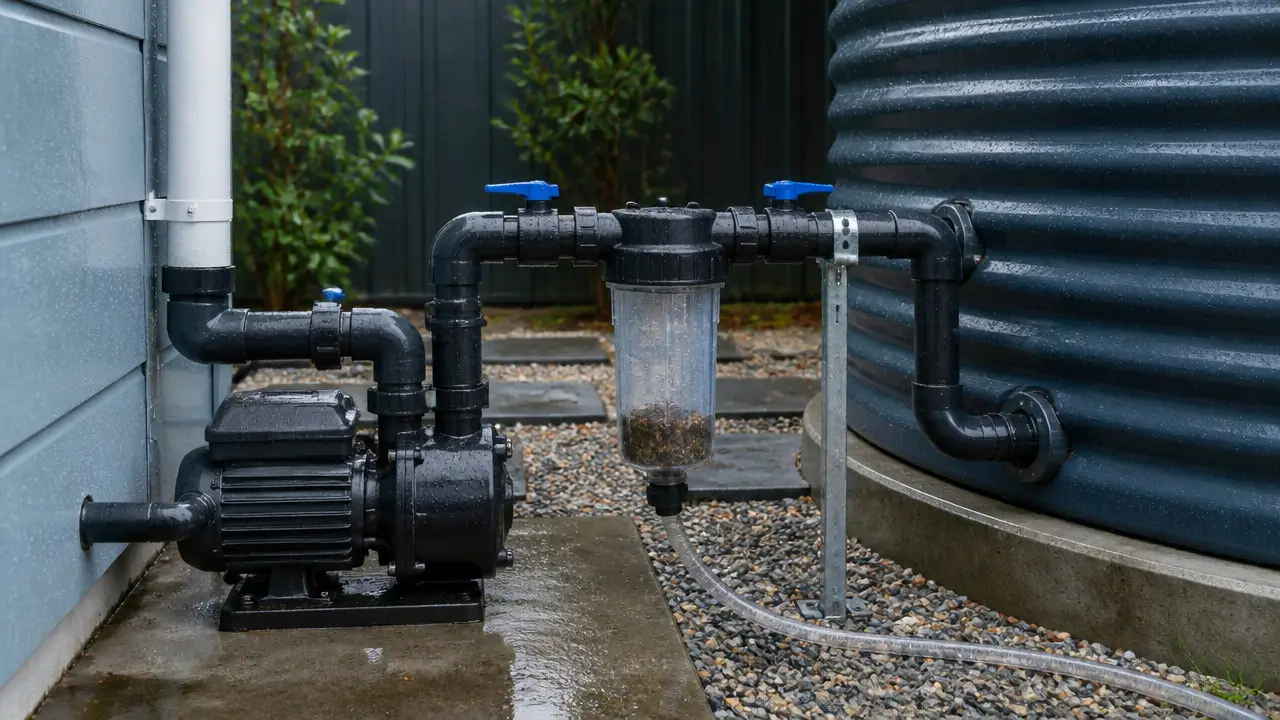
This is especially important with rainwater systems because the pump and filter must work together. A filter that causes a large pressure drop can leave showers and fixtures with weak flow even when the pump itself is large enough.
Number of Treatment Stages
A whole-house setup might include several separate stages, such as:
- A coarse sediment filter
- A finer sediment filter
- Activated carbon
- Specialized treatment media
- UV disinfection
Each stage adds fittings, housings, valves, media, maintenance, and possible pressure loss.
Adding more filters is not automatically better. Each stage should have a clear purpose.
Plumbing Changes
Installation is much easier when there is an accessible section of the main supply pipe with enough room for the equipment.
Costs can rise when the installer must:
- Reroute plumbing
- Replace old or corroded pipe
- Install a bypass
- Add shutoff valves
- Install drains
- Move equipment
- Work in a tight area
- Modify electrical service for powered equipment
Whole-house installations often take several hours, and difficult plumbing conditions can add labor.
Water Pressure
Filters create resistance as water moves through them.
A dirty filter creates even more resistance. This can reduce pressure at faucets and showers.
Homes supplied by a rainwater tank may need a pump and pressure tank sized for both the home's demand and the resistance created by the treatment system.
Do not choose a pump only by its maximum flow number. Available pressure, lift, pipe size, filter pressure loss, and required household flow all matter.
UV or Other Powered Treatment
Some treatment equipment needs electricity.
For example, ultraviolet systems use a UV lamp to disinfect properly prepared water. UV does not remove sediment, chemicals, or dissolved minerals. Water generally needs suitable prefiltration so particles do not interfere with treatment.
Powered equipment also needs a suitable electrical installation and ongoing maintenance.
Whole-House Reverse Osmosis
Whole-house reverse osmosis is much more involved than a basic filter.
Reverse osmosis, or RO, pushes water through a membrane that separates many dissolved contaminants from the treated water.
A whole-house RO installation can require storage, pressure equipment, pretreatment, drainage, and additional controls. EPA research notes that point-of-entry RO can require components such as storage and pressure tanks, and treatment design depends heavily on source-water conditions.
RO also produces a reject-water stream, so water use and drainage should be considered.
How Much Does Maintenance Cost?
The purchase price is only part of the budget.
Whole-house systems commonly need filter, media, lamp, membrane, or other consumable replacement. Current consumer cost data puts routine whole-house maintenance at roughly $150 to $500 per year, although actual spending can be lower or higher depending on the system.
More important than the exact dollar amount is the replacement schedule.
Maintenance may include:
- Changing sediment cartridges
- Replacing carbon filters
- Replacing or servicing treatment media
- Cleaning reusable components
- Replacing UV lamps
- Inspecting seals and housings
- Checking for leaks
- Monitoring pressure loss
- Replacing RO membranes when required
Use recommended whole-house filters for rainwater plumbing systems to interpret the conclusions that reliable screening measurements justify.
NSF advises owners to follow the manufacturer's filter replacement requirements because treatment performance depends on proper maintenance.
A cheaper system with expensive or frequently replaced cartridges can cost more over time than expected.
Does a Whole-House Filter Make Rainwater Safe to Drink?
Not by itself.
Roof runoff can pick up dirt, animal waste, microorganisms, roofing debris, metals, and other contaminants before reaching a tank. Conditions can also change from one rainfall event to another.
A rainwater system intended for household drinking water normally needs to be planned as a complete treatment system rather than as one filter.
Depending on the source and intended use, that may include:
- Keeping the roof and gutters maintained
- Screening leaves and insects
- Diverting an appropriate first portion of roof runoff when suitable
- Protecting the tank from outside contamination
- Sediment filtration
- Treatment selected for identified chemical concerns
- Suitable disinfection
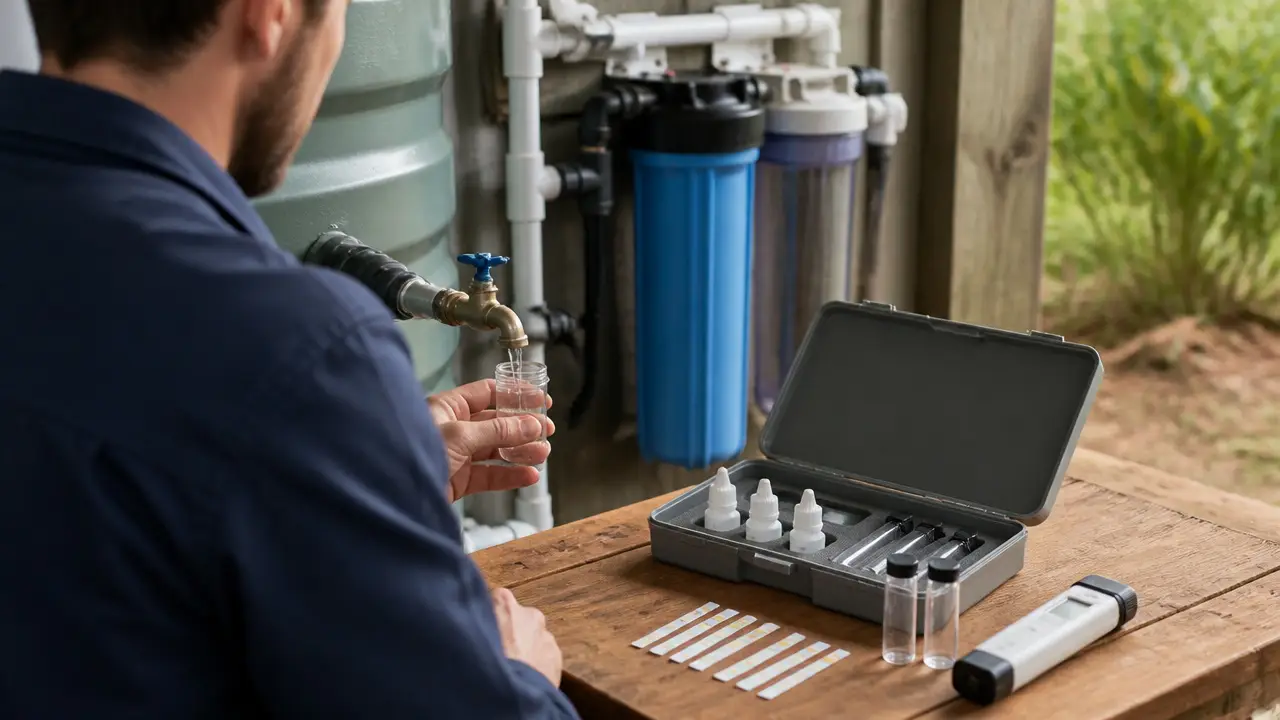
- Current laboratory water testing
- Scheduled cleaning and maintenance
A first-flush diverter is a device that sends the first portion of roof runoff away from storage. It can reduce some roof debris entering the tank, but it does not make the remaining water automatically safe to drink.
Home meters and test strips also do not provide a complete drinking-water safety assessment.
If rainwater will be used as potable water, have the source and treatment plan evaluated for the intended use and follow current local health and plumbing requirements.
Do You Need a Whole-House System?
Not every home does.
A whole-house system makes sense when a water problem needs treatment before water reaches many fixtures.
Examples include:
- Sediment affecting plumbing throughout the home
- Chlorine taste or odor throughout municipal water
- Well-water problems requiring point-of-entry treatment
- A rainwater supply feeding several indoor fixtures
- Treatment that must happen before the water reaches household plumbing
If your only concern is drinking and cooking water at the kitchen sink, a point-of-use system may be simpler and less expensive.
EPA recommends choosing treatment based on the actual water-quality problem rather than assuming that more treatment is always necessary.
How to Budget for a Whole-House Filter
Before asking for installation quotes, identify four things.
1. Your Water Source
Is the water from:
- A municipal supply?
- A private well?
- A rainwater cistern?
- Another private water source?
The source changes both treatment needs and testing requirements.
2. What You Want to Remove
Do not buy equipment based only on phrases such as “7-stage” or “maximum filtration.”
Identify the actual problem first.
Municipal-water users can review their utility's current water-quality information. Private-well and rainwater users may need appropriate laboratory testing depending on the intended use.
3. Your Required Flow
Estimate how much water the house may use at one time.
A system that treats water well at low flow may not be suitable when multiple showers, faucets, and appliances operate together.
4. Everything Included in the Quote
Ask whether the quoted total includes:
- Filter equipment
- Treatment media
- Bypass valves
- Plumbing fittings
- Labor
- Electrical work
- Drain connections
- Startup or commissioning
- Initial filters or media
- Removal of old equipment
Also ask what regular replacement parts the system uses.
That makes it easier to compare the long-term cost of different designs rather than comparing only the initial equipment cost.
Can You Install a Whole-House Filter Yourself?
Some simple cartridge filters can be installed by an experienced DIY homeowner who understands household plumbing.
However, a whole-house system becomes a poor DIY project when it involves major plumbing changes, high pressure, pumps, electrical equipment, complicated treatment controls, or drinking-water treatment.
Incorrect installation can cause leaks, pressure problems, bypassed treatment, or equipment damage.
Professional installation is generally the safer choice for complex point-of-entry systems. EPA guidance also notes that whole-house systems commonly require professional installation.
Frequently Asked Questions
Is a whole-house water filtration system worth the cost?
It can be if the water problem affects the entire home. Whole-house treatment makes more sense for issues such as widespread sediment, chlorine, iron, or source-water treatment than for a problem limited to drinking water at one sink.
How much should I expect to spend on a whole-house water filter?
A broad 2026 planning range is about $1,500 to $10,000, depending on the treatment technology, required flow, plumbing work, and number of treatment stages.
How much does whole-house filter maintenance cost each year?
Routine maintenance commonly falls around $150 to $500 per year, but systems using several filters, UV lamps, membranes, or specialty media may cost more to maintain.
Does a whole-house filter remove hard water?
A standard sediment or carbon filter does not soften water. Hardness is caused mainly by dissolved calcium and magnesium. A water softener or another treatment specifically designed for hardness is normally needed.
Does a whole-house filter remove bacteria?
Not every filter does. Microbiological treatment requires equipment specifically designed and validated for that purpose. UV disinfection is one possible treatment stage, but it does not replace proper prefiltration, testing, maintenance, or other treatment needed for the source water.
Can a whole-house filter make rainwater potable?
A filter alone cannot establish that roof-collected rainwater is potable. Drinking-water use should be treated as a whole-system decision that includes suitable collection, storage, prefiltration, treatment, disinfection where appropriate, current laboratory testing, maintenance, and local requirements.
Should I test my water before buying a whole-house filter?
Yes when the treatment decision depends on water quality. Testing helps you choose treatment for actual problems instead of buying unnecessary stages. For drinking-water concerns, use appropriate laboratory testing rather than relying only on a home meter or test strip.