As an affiliate, we may earn a commission from qualifying purchases. We get commissions for purchases made through links on this website from Amazon and other third parties.
UV sterilisers are not usually recommended as a standalone treatment for collected rainwater. UV can be very effective at inactivating bacteria, viruses, and parasites, but only when the water reaching the UV chamber is clear enough, the unit delivers the required UV dose, and the system is maintained correctly.
UV also does not remove chemicals, sediment, metals, pesticides, or other non-living contaminants. For rainwater intended for drinking, UV should therefore be treated as one stage in a complete water-treatment system, not as proof that the water is safe to drink. CDC guidance specifically notes that UV systems work better when the water is filtered before UV treatment and that UV treatment does not remove chemicals.
Why UV Sterilisers Get a Bad Reputation
The problem is usually not the UV technology itself. The problem is how it is used.
A UV unit can disinfect suitable water very well. Water utilities also use UV as part of drinking-water treatment. However, UV has several limitations that matter much more in a rainwater system than they might in a carefully controlled municipal plant.
Roof runoff can contain:
- Dust and fine sediment
- Pollen and plant material
- Bird and animal droppings
- Microorganisms
- Roofing or gutter contaminants
- Metals or other chemicals
- Organic material washed from the roof
CDC warns that rainwater can contain germs and chemicals even when it looks clean. Contaminants can enter before the rain reaches the roof or while the water moves across roofing, gutters, pipes, and storage equipment.
Putting that water directly through a UV chamber does not solve all of those problems.
Cloudy Water Can Shield Germs From UV
UV treatment depends on light reaching microorganisms.
If suspended particles are present, bacteria or other organisms can be partly shielded from the UV light. The lamp may be operating normally while some microorganisms receive less UV exposure than expected.
CDC therefore recommends filtering cloudy water before UV treatment and notes that UV does not work well when particles block the light.
This matters in rainwater systems because stored water can contain fine sediment even when a leaf screen or first-flush diverter is installed.
A first-flush diverter sends some of the first roof runoff during a rain event away from the tank. That early runoff often carries a larger amount of roof dirt and debris.
It improves incoming water quality, but it is not a drinking-water treatment device.
Clear-looking water is not necessarily suitable for UV
Water can look clear to you while still containing material that reduces the amount of UV reaching microorganisms.
Treatment-system designers may evaluate properties such as turbidity and UV transmittance when determining whether UV treatment will work as intended.
Turbidity means the cloudiness caused by particles suspended in water.
WHO drinking-water guidance notes that UV effectiveness depends on the delivered UV dose and that excessive turbidity and some dissolved substances can interfere with the process.
This is why simply installing a UV lamp after a rain tank is not enough.
UV Does Not Remove Chemicals
This is one of the biggest limitations.
UV is a disinfection process. It damages microorganisms so they can no longer reproduce effectively.
It does not function like a sediment filter, activated-carbon filter, or reverse-osmosis membrane.
UV treatment does not normally remove contaminants such as:
- Lead
- Copper
- Roofing-related chemicals
- Dissolved salts
- Many pesticides
- Sediment
- Dirt
- Rust
- Other dissolved contaminants
CDC specifically lists chemicals among the contaminants that UV systems do not remove.
This distinction is especially important with roof-collected rainwater. CDC notes that chemicals can enter rainwater from roofing, gutters, pipes, storage materials, airborne pollution, and other surfaces.
A UV-treated sample could therefore have low microbial contamination while still containing an unwanted chemical.
UV Leaves No Disinfectant Residual
UV works while water passes through the illuminated chamber.
Once that water leaves the unit, the UV treatment is finished.
There is no continuing disinfectant left in the water to control contamination farther downstream.
Chlorine and some other chemical disinfectants can leave a residual, meaning a small amount of active disinfectant remains in the water after treatment. UV does not.
The technical overview “What Is the Downside of UV Disinfection Water?” connects the measurement to a practical water-safety decision.
CDC explains that UV and ozone can work well at a treatment plant but do not continue killing microorganisms as the water moves through pipes.
That becomes important if treated rainwater then travels through:
- Long household plumbing runs
- Storage tanks
- Pressure tanks
- Little-used pipes
- Dirty faucets
- Hoses
- Other equipment where contamination may occur
Water can be disinfected correctly at the UV unit and then become contaminated afterward.
For this reason, the location of the UV unit matters. In many systems, UV is positioned near the end of the treatment train and as close as practical to the treated-water distribution system.
The Lamp Has to Deliver Enough UV
A glowing lamp does not automatically mean the water received an adequate UV dose.
Effective treatment depends on several factors, including:
- Lamp output
- Water clarity
- Flow rate
- Exposure time
- UV chamber design
- Condition of the quartz sleeve
- Lamp age
- Power supply
- The microorganisms being treated
Flow rate is how much water passes through the system during a given time, such as gallons per minute.
If water moves through a UV unit faster than it was designed to handle, the required treatment performance may not be achieved.
This is why UV units have operating limits.
A larger pump does not automatically require a larger UV unit, but the UV system needs to be suitable for the maximum flow that can actually pass through it.
UV Lamps and Sleeves Require Maintenance
UV is not a fit-and-forget system.
Most household UV units contain a lamp surrounded by a protective quartz sleeve. The light must pass through that sleeve and into the water.
Mineral deposits, iron, sediment, or other buildup on the sleeve can reduce UV transmission.
Maintenance may include:
- Cleaning the quartz sleeve
- Replacing lamps according to the manufacturer's schedule
- Replacing damaged seals
- Checking warning lights or alarms
- Inspecting for leaks
- Replacing prefilters
- Confirming that the UV monitor or sensor is working, where fitted
A lamp can also produce less useful UV output as it ages even if it still appears to be illuminated.
Skipping maintenance removes one of the main safeguards of the system.
UV Depends on Electricity
Examine the performance of UV water purifiers to understand how sampling limits affect interpretation of the result.
Most whole-house UV systems need continuous electrical power whenever water is being used.
A power outage can therefore leave the system unable to disinfect water.
This deserves special attention in cabins, off-grid homes, pumped rainwater systems, and locations with unreliable electricity.
Some UV systems include shutoff controls that prevent untreated water from passing when proper operation cannot be confirmed. Others may provide only an alarm.
Do not assume a unit automatically stops water flow when the lamp fails.
Check how the specific system handles:
- Power failure
- Lamp failure
- Low UV intensity
- Excessive flow
- Sensor failure
UV May Be Unnecessary for Some Rainwater Uses
Another reason UV is sometimes "not recommended" is simply that the intended use does not justify it.
Consider a rain barrel supplying ornamental plants through a garden hose.
The system may need good screening, mosquito control, overflow management, sediment control, and routine cleaning. Adding a whole UV treatment system would usually add plumbing, electrical use, maintenance, and replacement parts without addressing the main needs of that setup.
UV becomes more relevant as the consequences of microbial contamination increase.
A simple way to think about it is:
| Rainwater use | Typical role of UV |
|---|---|
| Ornamental garden irrigation | Usually unnecessary |
| General outdoor washing | Often unnecessary |
| Some indoor non-potable uses | Depends on system design and local requirements |
| Showering or bathing | Water-quality risks require more consideration |
| Drinking and cooking | May be useful as one treatment stage, but not by itself |
Non-potable means water that is not intended for drinking.
Potable means suitable for drinking.
Local plumbing and health requirements can differ, particularly when rainwater is connected to household plumbing.
Where UV Fits in a Rainwater Treatment System
When UV is appropriate, it generally works best toward the end of the treatment process.
The related explainer “What Are the Disadvantages of UV Filters?” clarifies when testing or treatment is needed before household use.
A rainwater system might conceptually move through stages such as:
roof collection → debris control → first flush → storage → sediment treatment → additional treatment as needed → UV disinfection → point of use
The exact arrangement depends on the water quality and intended use.
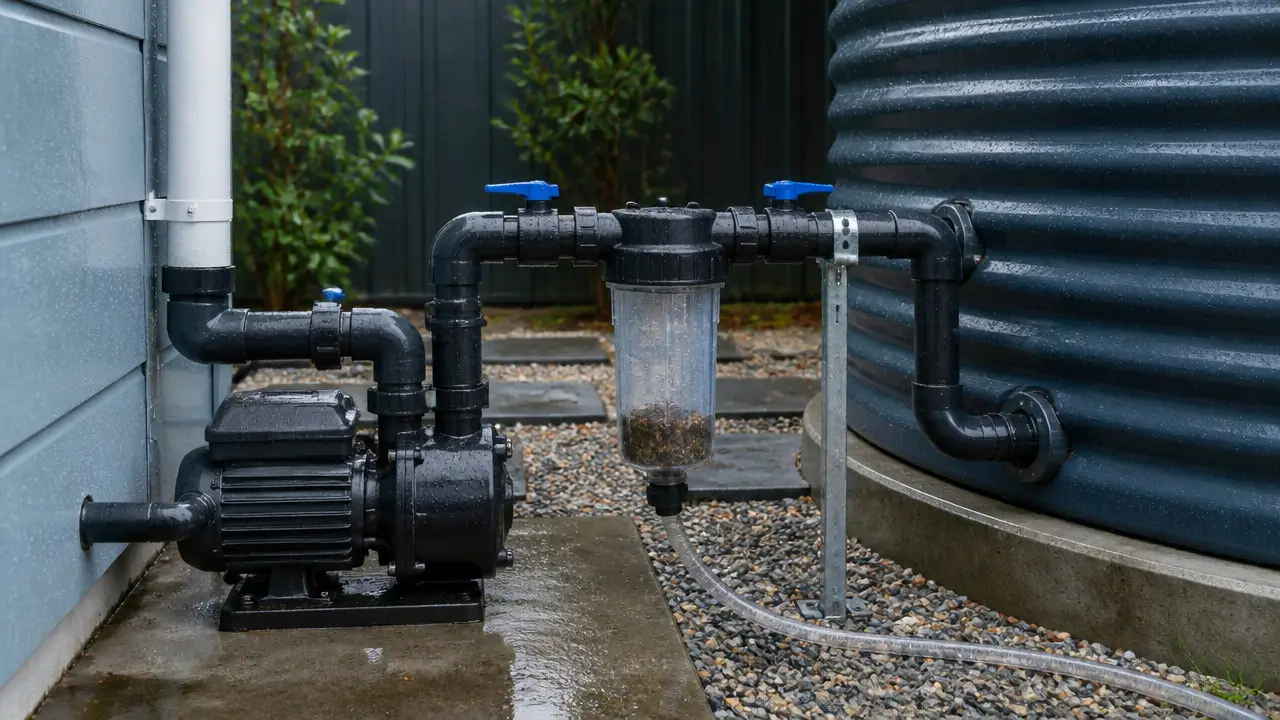
For example, filtration ahead of UV may reduce particles that could shield microorganisms or foul the UV sleeve.
A micron rating describes the approximate size of particles a filter is designed to capture. One micron is one-millionth of a meter.
However, choosing a filter by micron rating alone does not establish that the complete system will produce drinking water. Filters have different contaminant-removal capabilities, and chemical contaminants may need entirely different treatment methods.
CDC recommends selecting treatment based on the germs and chemicals actually present rather than assuming one type of equipment handles everything.
Should You Use UV for Drinking Rainwater?
UV can be a useful part of a properly designed drinking-water system, but installing a UV unit should not be treated as the point at which untreated roof runoff becomes potable.
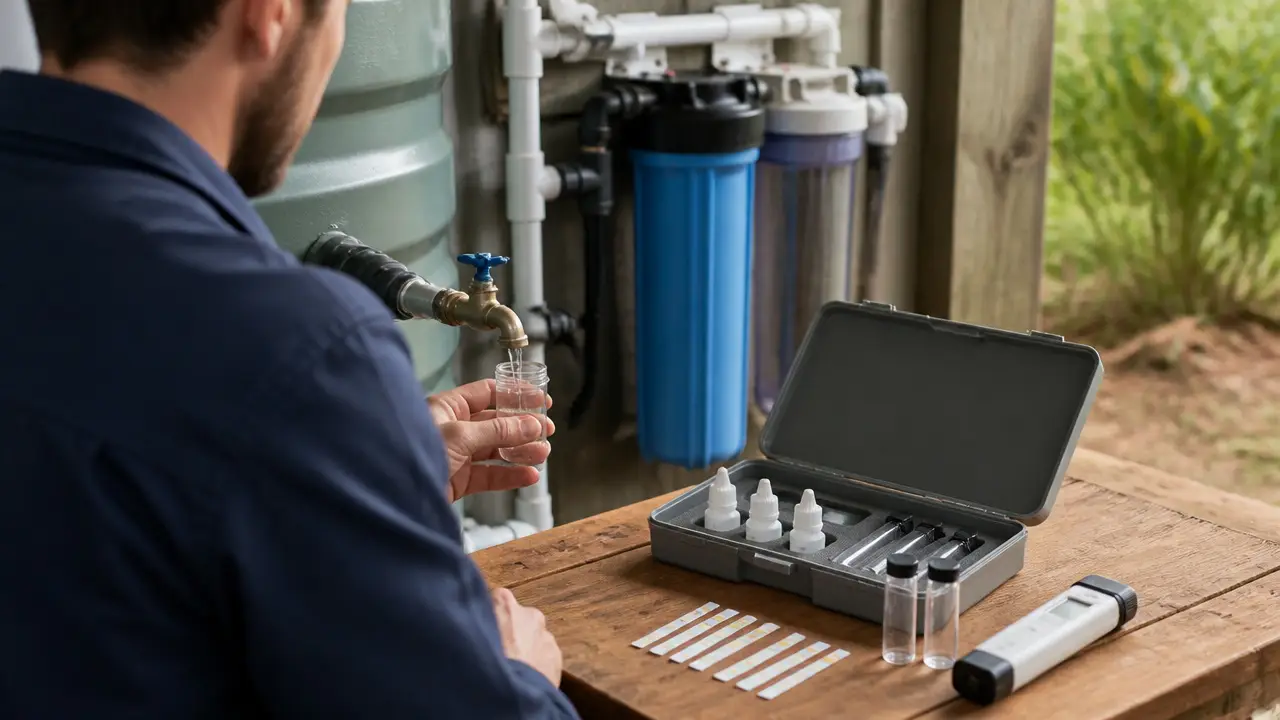
CDC recommends regular testing for germs and chemicals when rainwater is used for drinking, cooking, or bathing. It also recommends choosing treatment that addresses the particular contaminants found in the water.
For drinking-water use, consider the complete system:
- Suitable roof and collection materials
- Roof and gutter maintenance
- First-flush and debris control
- Clean, protected storage
- Appropriate prefiltration
- Treatment for relevant chemical contaminants
- Microbial treatment such as properly specified UV where appropriate
- Protection against recontamination
- Current laboratory testing
- Ongoing maintenance
- Applicable local health and plumbing requirements
A qualified water-treatment professional or local health authority can help determine what testing and treatment are appropriate for your particular water source.
So Why Are UV Sterilisers Not Recommended?
They are not universally "not recommended."
UV is a well-established water-disinfection technology. The concern is using it for a job it cannot do.
A UV unit should not be relied on by itself when the source water can contain sediment, chemicals, or other contaminants. It also needs suitable water clarity, adequate flow control, electrical power, and regular maintenance.
For rainwater, think of UV as a final microbial barrier within a larger treatment system, rather than a universal water purifier.
If all you need is water for basic garden use, UV may add unnecessary complexity.
If you intend to drink collected rainwater, UV may be valuable, but the whole collection, treatment, testing, storage, and plumbing system must be considered.
Frequently Asked Questions
Does a UV steriliser make rainwater safe to drink?
Not by itself. UV can disinfect suitable water by inactivating microorganisms, but it does not remove chemicals or sediment. Drinking-water use requires a complete treatment approach, suitable collection and storage, current laboratory testing, maintenance, and compliance with applicable local requirements.
Does rainwater need to be filtered before UV treatment?
Usually, yes. UV works best when water is clear because suspended particles can block UV light from reaching microorganisms. CDC specifically notes that UV systems with prefiltration work better than systems without it.
Does UV remove E. coli?
Properly designed and operated UV treatment can inactivate bacteria, including organisms of concern in drinking water. Actual performance depends on the UV dose, water quality, flow, equipment condition, and system design. UV should not be treated as a substitute for proper water testing and complete treatment.
Does UV remove chemicals from rainwater?
No. Conventional UV disinfection does not remove chemical contaminants. Other treatment stages may be needed depending on which chemicals are present.
Can UV work with cloudy rainwater?
Cloudiness can make UV treatment less reliable because particles can shield microorganisms from the light. Sediment and turbidity should be controlled before the water reaches the UV chamber.
Is UV needed for a rain barrel used to water the garden?
Usually not for ordinary non-potable landscape irrigation. Screens, mosquito control, debris management, safe overflow, and routine cleaning are generally more relevant. Requirements may differ for edible crops or other uses where people could come into contact with the water.
What happens if the UV lamp stops working?
Water passing through the unit may no longer receive the intended disinfection. Depending on the system, an alarm or automatic shutoff may respond to lamp or UV-intensity problems. Check the manufacturer's operating and maintenance instructions rather than assuming the unit will stop water automatically.
Is UV better than chlorine for rainwater?
Neither method is automatically better. UV provides disinfection without adding a chemical disinfectant, but it requires clear water, power, and proper equipment operation and leaves no disinfectant residual. Chlorine behaves differently and can provide some continuing residual protection. The appropriate method depends on the water quality, intended use, storage and plumbing arrangement, and local requirements.