As an affiliate, we may earn a commission from qualifying purchases. We get commissions for purchases made through links on this website from Amazon and other third parties.
Turbidity is a measure of how cloudy water is. At home, you can check turbidity with a simple visual test, a turbidity tube, or a digital turbidity meter. A meter gives the most useful number, usually in NTU, or nephelometric turbidity units.
Turbidity testing can help you spot sediment, algae, filter problems, or changes in stored rainwater. But it cannot tell you whether water is safe to drink. Clear water can still contain harmful germs or chemicals. The CDC recommends regular testing for germs and chemicals when rainwater is used for drinking, cooking, or bathing.
What Turbidity Measures
Turbidity describes how much suspended material makes water cloudy or interferes with light passing through it.
The particles may include:
- Clay or fine soil
- Silt
- Organic matter
- Algae
- Rust
- Very fine tank sediment
- Other suspended material
A turbidity test does not identify those particles. It only tells you how much they affect the clarity of the water.
This makes turbidity useful for watching changes in a rainwater system. For example, you can compare water before and after a sediment filter or check whether tank water becomes cloudier after heavy rain.
What Does NTU Mean?
Most turbidity meters report results in NTU, which stands for nephelometric turbidity unit.
A nephelometric meter shines light through a water sample and measures light scattered by particles. More scattered light usually means higher turbidity.
In simple terms:
- Lower NTU means clearer water.
- Higher NTU means cloudier water.
Do not treat a low NTU reading as proof that water is potable. Potable means suitable for drinking. Turbidity does not measure bacteria, viruses, parasites, lead, pesticides, or many other possible contaminants.
The EPA uses turbidity as an important measure of filtration performance in regulated public water systems. For conventional or direct filtration systems, EPA rules generally require turbidity to be at or below 0.3 NTU in at least 95% of monthly measurements and never above 1 NTU. These are treatment requirements for public water systems, not a simple pass-or-fail standard for household rainwater.
Three Ways to Measure Turbidity at Home
1. Do a Simple Visual Check
A visual check is the easiest starting point.
Fill a clear, clean glass or jar with water. Hold it against a white background in good light.
Look for:
- Haze
- Floating particles
- Brown or gray color
- Green tint
- Fine sediment
- Material settling on the bottom
You can also compare the sample with water that you know is normally clear.
This method costs nothing and can reveal large changes. However, it cannot give you an accurate NTU value.
Very low levels of turbidity may not be visible at all. WHO guidance notes that turbidity below about 4 NTU may require instruments to detect reliably by sight.
Use a visual check mainly as an early warning.
2. Use a Turbidity Tube
A turbidity tube is a clear tube with a target or pattern at the bottom. You add water until the target becomes difficult or impossible to see.
The depth of water at that point is matched to a turbidity scale or conversion chart supplied with the tube.
To use one:
- Mix the sample gently so settled particles are spread through the water.
- Place the tube in good, even light.
- Add the sample slowly.
- Look straight down through the water.
- Stop when the target at the bottom just disappears.
- Read the marked value or use the tube's conversion chart.
- Repeat the test to see whether you get a similar result.
A turbidity tube is useful for checking fairly cloudy water. It is less useful when you need accurate measurements of very clear water.
Do not make up your own NTU conversion based only on tube depth. Use the markings or chart designed for that specific tube.
3. Use a Digital Turbidity Meter
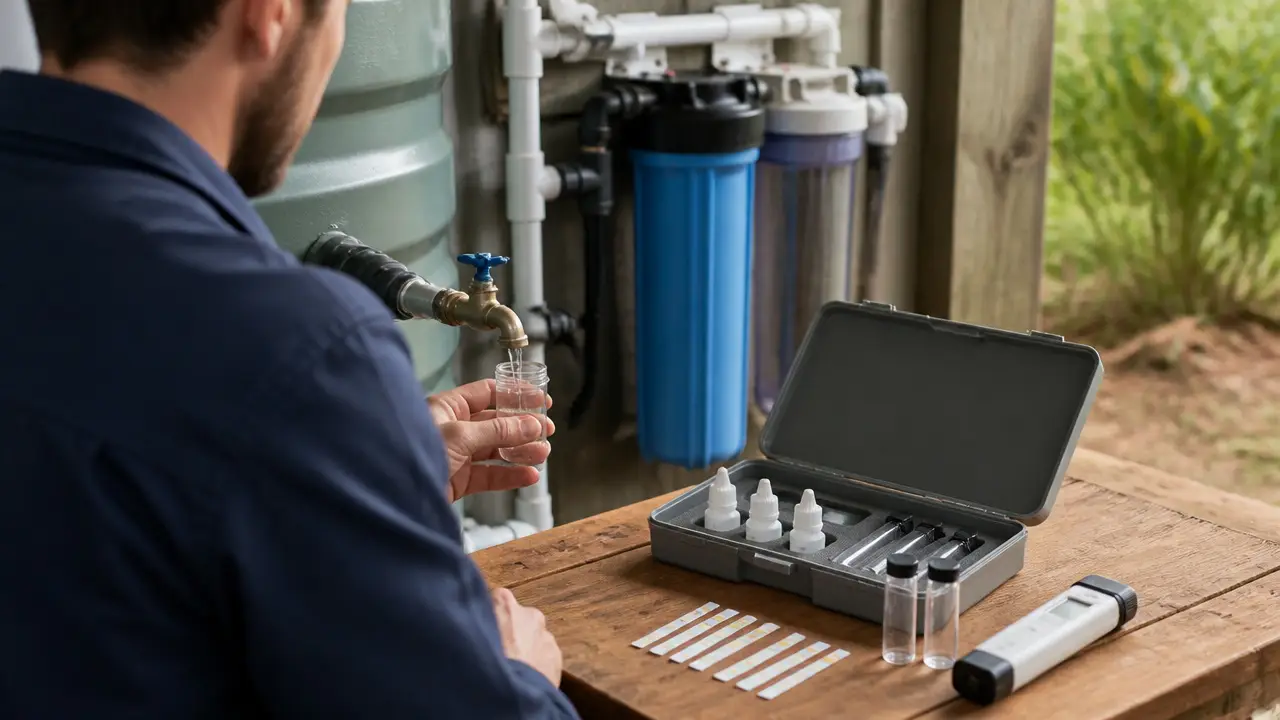
A digital turbidity meter is the best practical home option when you want to track small changes or compare different parts of a water system.
Most handheld meters use a small clear sample vial called a cuvette.
The exact procedure depends on the meter, so follow its instructions. In general:
- Calibrate the meter using the standards specified by its manufacturer.
- Gently mix your water sample.
- Fill the clean sample vial to the required level.
- Avoid making bubbles.
- Wipe water, fingerprints, and dirt from the outside of the vial.
- Place the vial into the meter in the correct position.
- Take the reading soon after preparing the sample.
- Repeat the measurement two or three times if the readings seem inconsistent.
Particles can settle quickly, so waiting a long time before measuring can change the result. EPA turbidity measurement guidance also emphasizes prompt measurement and avoiding air bubbles because both can affect readings.
How to Get More Consistent Results
Turbidity changes easily during sampling. Good technique matters if you want to compare readings over time.
Test Water From the Same Location
Choose a repeatable sampling point.
For a rainwater system, useful locations may include:
- Water entering the tank
- Tank outlet
- Before a sediment filter
- After a sediment filter
- After the final treatment stages
- A household tap supplied by the system
Testing several locations can help you work out where cloudiness is entering or being removed.
For example, if the water measures high before a sediment filter and much lower afterward, the filter is probably removing suspended material. If turbidity starts rising at the filter outlet, the filter may need inspection or replacement.
Mix the Sample Gently
If sediment has settled, your result can depend on whether you sampled the clear water at the top or the particles near the bottom.
Mix the sample gently before testing when your goal is to measure the overall sample.
Do not shake it hard enough to create lots of bubbles. Bubbles can scatter light and interfere with some turbidity meters.
Keep Sample Vials Clean
A dirty or scratched cuvette can affect a digital meter.
Handle the vial near the top rather than touching the optical area with your fingers. Keep the outside clean and dry before inserting it into the meter.
Follow the meter manufacturer's cleaning and replacement instructions.
Compare Results Under Similar Conditions
A single turbidity number is often less useful than a pattern.
For example, record turbidity:
- Before and after storms
- Before and after filter changes
- At the same sampling point each month
- Before and after tank cleaning
- Before and after changes to a first-flush system
A first flush device sends the first part of roof runoff away from the tank. That first runoff can carry dirt, bird droppings, dust, and other material from the roof. CDC guidance notes that first-flush diversion can help improve collected rainwater quality.
How to Interpret a Turbidity Reading
There is no single household turbidity number that tells you whether all water is safe for every use.
Instead, ask three questions:
Is the Reading Different From Normal?
Details about health risks from water turbidity help verify the maintenance response that the measured values warrant.
A sudden increase often tells you more than the number alone.
For example, rising turbidity in stored rainwater might be linked to:
- Heavy roof runoff
- A dirty gutter or inlet screen
- A first-flush problem
- Tank sediment being stirred up
- Algae
- A damaged filter
- A filter that is overloaded
- Pipe corrosion or debris
Look for the cause rather than simply trying to make the number lower.
What Will the Water Be Used For?
Turbidity matters differently for different uses.
Slightly cloudy water used for ornamental garden irrigation presents a different concern from water intended for drinking.
If rainwater will be swallowed or used for drinking, cooking, or other potable purposes, turbidity is only one small part of water-quality control. CDC guidance says roof-collected rainwater can contain germs and chemicals even when it looks clean and recommends regular testing when the water is used for drinking, cooking, or bathing.
Is Turbidity Affecting Treatment?
High turbidity can interfere with some disinfection processes because particles can protect microorganisms from treatment.
This is especially important when using ultraviolet light or chemical disinfection.
WHO guidance for small water supplies identifies turbidity below 1 NTU as a target for effective disinfection. That target should be understood as part of a treatment system, not proof that water below 1 NTU is automatically safe to drink.
Turbidity and Rainwater Harvesting
Roof-collected rainwater can change greatly from one storm to another.
Water may pick up:
- Dust from the roof
- Pollen
- Leaves
- Bird and animal waste
- Roofing particles
- Material from gutters and downspouts
Stored water can also collect sediment over time.
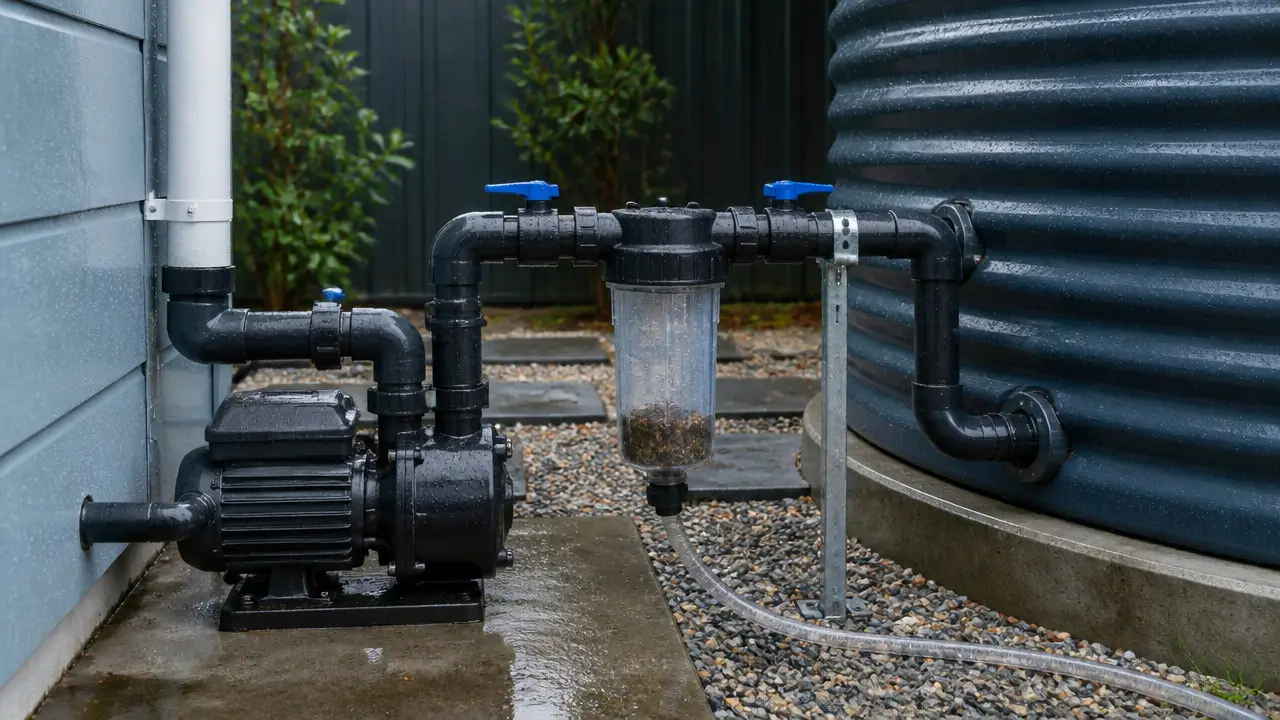
For a rainwater system, turbidity testing is especially useful as a trend-monitoring tool.
You might measure at three points:
| Sampling point | What the reading may help you check |
|---|---|
| Tank outlet | General condition of stored water |
| Before sediment filtration | Particle load entering treatment |
| After sediment filtration | Whether filtration is reducing suspended particles |
Keep the sampling points consistent. Changes over weeks or months can reveal problems that one isolated test might miss.
What to Do if Turbidity Suddenly Increases
Start with the parts of the system most likely to add sediment.
Check accessible components such as:
- Roof gutters
- Leaf screens
- Downspout screens
- First-flush diverter
- Tank inlet
- Visible tank sediment
- Sediment filters
- Filter housings
- Pipes supplying the sample point
Do not enter a cistern or storage tank. Tanks can be confined spaces and can present serious hazards.
If the tank contains heavy sediment, use a safe cleaning method appropriate for the tank or hire someone equipped to service it.
If a filter is clogged or has reached its service limit, replace or clean it according to its instructions. Do not assume that installing a finer filter will solve every turbidity problem. Very fine filtration can restrict flow and may require more pressure or more frequent maintenance.
Can You Measure Turbidity With a TDS Meter?
No.
A TDS meter estimates total dissolved solids by measuring the electrical conductivity of water.
Turbidity mainly deals with suspended particles that scatter light.
The two measurements describe different things.
Water can have:
- Low turbidity but high dissolved mineral content.
- High turbidity but relatively low dissolved solids.
- Low readings for both while still containing microorganisms.
A TDS meter cannot replace a turbidity test, and neither test provides a complete drinking-water safety assessment.
Turbidity Is Not a Drinking-Water Safety Test
One of the most important limits of home turbidity testing is what it cannot detect.
A clear sample may still contain:
- E. coli
- Other bacteria
- Viruses
- Parasites
- Lead
- Arsenic
- Pesticides
- Other dissolved chemicals
CDC guidance specifically warns that water's appearance, taste, and smell do not reliably show whether harmful germs or chemicals are present.
If rainwater, cistern water, or another private water source will be used for drinking, do not rely on turbidity alone.
A potable rainwater system should be considered as a whole. That may include suitable collection surfaces, debris control, first-flush management, protected storage, appropriate treatment stages, maintenance, and current laboratory testing for contaminants relevant to the source and location.
CDC recommends testing private rainwater used as drinking water at least annually for harmful germs and chemicals, with additional testing when conditions or water quality change. Local health authorities can help identify suitable tests.
A Simple Home Turbidity Testing Routine
For routine monitoring of stored rainwater, a simple approach is:
- Choose one or more fixed sampling locations.
- Inspect the water visually.
- Measure turbidity with the same tube or meter each time.
- Record the NTU reading, date, and sampling point.
- Note recent storms, filter changes, or tank maintenance.
- Compare the result with your normal readings.
- Investigate unexpected increases.
This gives you a useful history of how your system behaves.
The goal is not simply to chase the lowest possible number. It is to notice changes, keep sediment under control, support effective treatment, and match water quality to the way the water will be used.
Frequently Asked Questions
What is a normal turbidity level for water?
There is no single "normal" value for every private water source. Treated public drinking-water systems may operate at very low turbidity, while untreated rainwater or tank water can vary widely. Use turbidity mainly to monitor changes in your own system. If the water will be disinfected or used for drinking, follow the requirements or guidance that applies to the complete treatment system.
Can I measure turbidity without a meter?
Yes. A turbidity tube can provide an approximate measurement, and a clear jar can reveal obvious changes in cloudiness. A digital turbidity meter is more useful when you need low-level NTU measurements or want to compare small changes.
Is cloudy rainwater unsafe to drink?
Cloudiness alone cannot tell you whether water is safe or unsafe. Higher turbidity may indicate increased particles and can interfere with treatment, so unexpected cloudiness should be investigated. Even clear rainwater can contain harmful microorganisms or chemicals.
Does boiling reduce turbidity?
Boiling is not a sediment-removal method. Suspended particles may remain in the water after boiling. Boiling also does not remove many chemical contaminants. If water requires treatment, the treatment process should address the specific contaminants present.
Does a sediment filter lower turbidity?
A suitable sediment filter can reduce turbidity caused by particles that it is designed to capture. Performance depends on the particle size, filter type, flow rate, condition of the filter, and system design. A low turbidity result after filtration still does not prove that the water is safe to drink.
Can a TDS meter measure cloudy water?
A TDS meter measures electrical conductivity to estimate dissolved solids. It does not directly measure turbidity. Use a turbidity tube or turbidity meter if you want to measure cloudiness caused by suspended particles.
How often should I check rainwater turbidity?
There is no universal home schedule. Checking at regular intervals and after major storms, filter problems, tank cleaning, or noticeable changes can help you establish a useful baseline. If rainwater is intended for drinking, turbidity monitoring should be combined with appropriate laboratory testing for harmful germs and chemicals.