As an affiliate, we may earn a commission from qualifying purchases. We get commissions for purchases made through links on this website from Amazon and other third parties.
The best home water quality tester for drinking water is not a single handheld meter or test strip. If you need to know whether water is suitable for drinking, the strongest choice is testing through a state-certified drinking water laboratory. Home meters and test strips are useful for routine checks, troubleshooting, and watching for changes, but they cannot give a complete drinking-water safety assessment.
A practical home setup often combines a simple meter or test kit for routine monitoring with laboratory testing for contaminants that matter to your water source.
What Is the Best Type of Drinking Water Tester?
The right tester depends on what you need to know.
| Testing method | Good for | What it cannot tell you |
|---|---|---|
| Digital pH meter | Acidity and alkalinity | Whether water contains harmful bacteria, lead, arsenic, nitrate, or other contaminants |
| TDS or conductivity meter | Changes in dissolved minerals and salts | Which substances are dissolved or whether they are harmful |
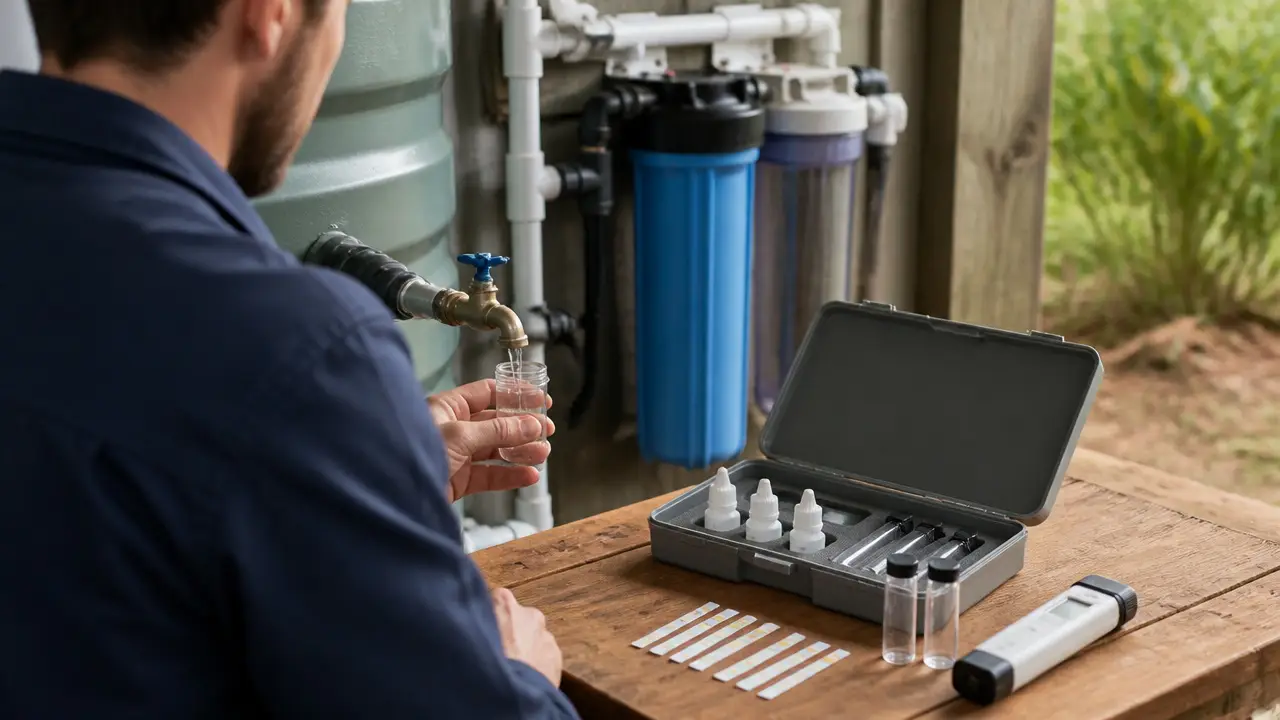
| Test strips | Quick checks for specific listed parameters | A complete picture of drinking-water safety |
| Chlorine test | Checking disinfectant levels in treated municipal water | Most other contaminants |
| Home bacteria screening kit | Basic screening for certain bacteria | A complete microbiological safety assessment |
| Certified laboratory testing | Specific bacteria, metals, chemicals, nitrate, and other contaminants | Nothing outside the contaminants ordered for the test |
For drinking water, laboratory testing should be the foundation when health and safety are the main concern.
The EPA encourages people who want independent drinking-water testing to use a state-certified drinking water laboratory. Certified laboratories use approved analytical methods and must meet testing and quality-control requirements.
Why a Multiparameter Water Tester Is Not a Drinking-Water Safety Test
Many handheld water testers measure several values at once. Common measurements include:
- pH
- Total dissolved solids
- Electrical conductivity
- Temperature
- Sometimes salinity or oxidation-reduction potential
These measurements can be useful. They can help you notice a change in the water or troubleshoot a treatment system.
But they do not answer the most important question:
Is this water safe to drink?
A TDS reading, for example, tells you roughly how much dissolved material is present. It does not tell you what those dissolved substances are.
A glass of water with a low TDS reading could still contain a contaminant the meter cannot detect. A higher TDS reading could simply reflect naturally occurring minerals.
The EPA lists total dissolved solids, or TDS, under its secondary drinking-water standards. These secondary standards mainly address issues such as taste, staining, deposits, and appearance rather than serving as a simple pass-or-fail health test.
That makes a TDS meter useful for monitoring, not for proving water is potable.
Potable means suitable for drinking under the applicable water-quality requirements.
What Should You Test Drinking Water For?
Start with the water source.
Public or municipal tap water
If your home uses a regulated public water supply, begin with your water supplier's Consumer Confidence Report.
This report describes contaminants detected in the system and whether the water met applicable drinking-water standards. EPA recommends that public-water customers review this information when they want to understand their water quality.
You may still have reasons to test water at your own tap. For example, concerns about plumbing, lead, unusual taste, discoloration, or a change after treatment equipment may justify additional testing.
A home pH, TDS, or chlorine tester can help with routine observations. For a suspected health contaminant, use an appropriate laboratory test.
Private well water
Private wells need a different approach because they are generally not monitored like public drinking-water systems.
CDC recommends that private well owners test at least annually for:
- Total coliform bacteria
- Nitrate
- Total dissolved solids
- pH
CDC also recommends checking with local health or environmental officials about additional contaminants that may occur in your area. These may include substances such as arsenic, lead, pesticides, volatile organic compounds, or other locally important contaminants.
EPA gives similar annual testing guidance and recommends using a certified drinking-water laboratory.
So for a private well, a handheld meter can supplement testing, but it should not replace the annual laboratory work.
Harvested rainwater
Drinking-water testing is especially important if you are considering harvested rainwater for potable use.
Roof runoff can pick up material from:
- Roofing surfaces
- Gutters
- Bird and animal droppings
- Dust and airborne material
- Leaves and organic debris
- Storage tanks
- Pumps and plumbing
- Treatment equipment
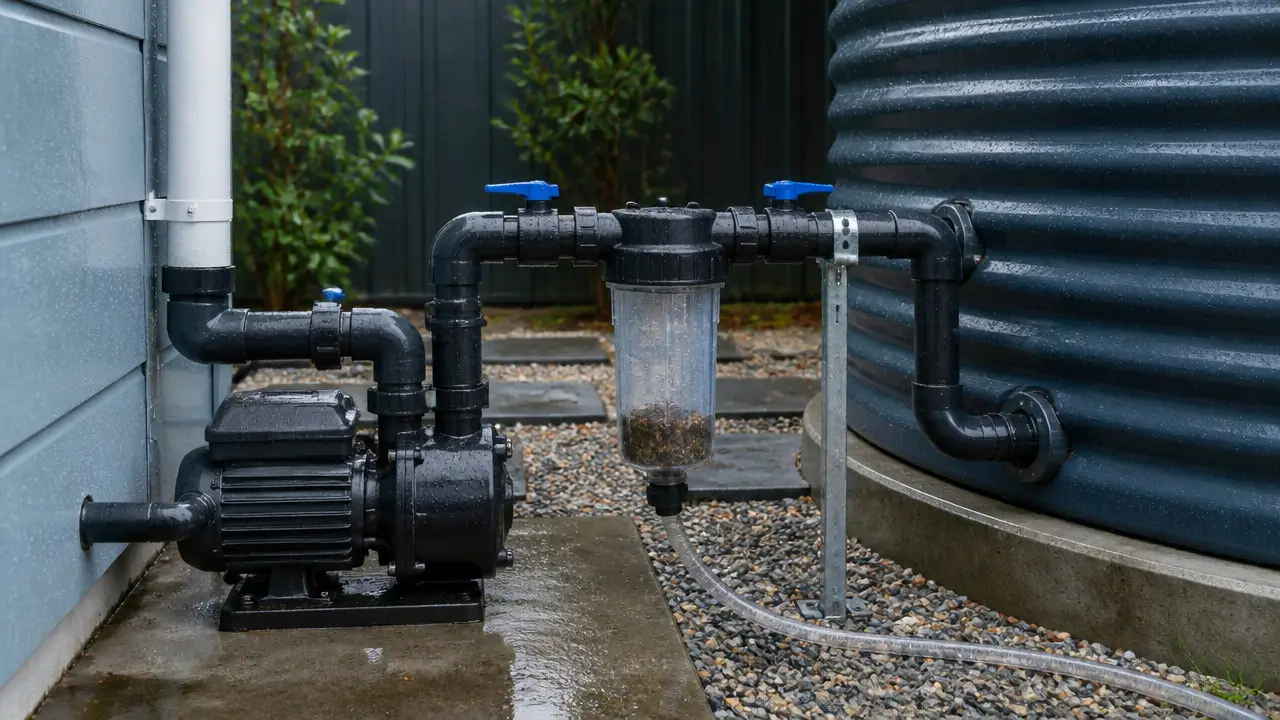
A first-flush diverter can reduce some of the dirty runoff from the beginning of a rain event, but it does not make the remaining water automatically safe to drink.
Likewise, a sediment filter, carbon filter, UV unit, or home water meter does not by itself establish that harvested rainwater is potable.
Drinking harvested rainwater should be treated as a whole-system water-quality decision. That includes suitable collection materials, debris control, first-flush management where appropriate, protected storage, correctly designed treatment, maintenance, and current laboratory testing.
Local plumbing and drinking-water requirements can also apply.
Which Home Tester Is Most Useful for Routine Monitoring?
If you want one simple tool for checking water between laboratory tests, a good-quality digital pH and conductivity/TDS meter can be useful.
It can help you spot changes such as:
- A sudden shift in pH
- A large difference in dissolved solids
- Changes before and after certain treatment stages
- Unexpected changes between your normal readings
The important word is change.
Your normal readings can provide a baseline. If a parameter suddenly moves far away from that baseline, something in the source water, storage system, plumbing, or treatment equipment may have changed.
The meter still cannot tell you why the reading changed.
For example, a TDS meter cannot distinguish between harmless calcium salts and a specific harmful contaminant.
What to Look for in a Home Water Quality Tester
You do not need the device with the longest list of measurements. Look for measurements that are actually useful for your water system.
Clear measurement range
The tester should state what it measures and the units it uses.
For example, pH is measured on the pH scale. TDS is normally displayed in milligrams per liter or parts per million, depending on the device.
Avoid treating a vague "water purity" number as a complete drinking-water rating.
Calibration
Digital sensors can drift.
For measurements such as pH, look for a tester that can be calibrated using appropriate reference solutions. Follow its instructions for calibration, storage, cleaning, and replacement.
A poorly maintained sensor can give a precise-looking number that is still wrong.
Replaceable or serviceable sensors
Some probes have limited useful lives. A device that can be properly maintained may be more useful for long-term monitoring than a sealed meter with no practical way to verify its accuracy.
Measurements you actually need
More parameters do not necessarily make the tester better.
For example, someone monitoring a rainwater storage system may find pH and conductivity useful for spotting changes. Someone checking chlorinated city water might also want a test designed for chlorine.
Choose the parameter first, then choose the testing method.
Are Water Test Strips Accurate Enough?
Test strips can be useful for quick screening when they are designed for the specific parameter you want to check.
They are convenient for measurements where an approximate range is enough.
But strips have several limitations.
For options for home water-quality testing, first understand maintenance priorities supported by meaningful test results.
Results can be affected by:
- Storage conditions
- Expired strips
- Timing
- Water temperature
- Color interpretation
- Interference from other substances
- Differences between test methods
A strip showing a normal result for the parameters printed on the package does not mean the water has been tested for every possible contaminant.
If a result affects whether you will drink the water, prepare infant formula, or select a treatment system, laboratory confirmation is the safer approach.
Is a TDS Meter a Good Drinking Water Tester?
A TDS meter is useful, but it is often misunderstood.
TDS means total dissolved solids. These are dissolved minerals, salts, metals, and other charged substances in the water.
Most inexpensive TDS meters do not directly identify or weigh every dissolved substance. They measure electrical conductivity and estimate TDS from that measurement.
That can be useful for comparing:
- Source water and treated water
- Water before and after reverse osmosis treatment
- Different storage tanks
- Current readings with your normal baseline
What it cannot tell you is whether the dissolved material is safe.
A low TDS number does not prove that water is free from bacteria, lead, arsenic, pesticides, or other contaminants.
What About pH?
pH tells you whether water is acidic, neutral, or alkaline.
It can be useful because unusual pH may affect:
- Corrosion
- Plumbing materials
- Treatment equipment
- Taste
- Mineral deposits
EPA's secondary guidance gives a pH range of 6.5 to 8.5 for aesthetic and operational concerns. This should not be treated as a complete drinking-water safety test.
Water can fall within that pH range and still contain contaminants that require separate testing.
When Should You Use a Laboratory?
Use laboratory testing whenever the answer could change an important health or treatment decision.
It is especially appropriate when:
- Testing a private well for drinking
- Considering harvested rainwater for drinking
- You suspect lead or another metal
- You need nitrate testing
- You are concerned about bacteria
- There has been flooding near a well
- The water suddenly changes color, taste, or smell
- A nearby spill or contamination event occurs
- You are choosing treatment for a known contaminant
- You need to confirm that treatment is working
- Someone in the household is pregnant or an infant begins using the water
CDC specifically recommends additional well testing after certain changes or events, including flooding, repairs, changes in taste, color, or smell, and some changes in household circumstances.
For U.S. households, EPA provides current contact information for state drinking-water laboratory certification programs.
Testing Before and After Water Treatment
Testing is most useful when you know what question you are trying to answer.
Suppose laboratory testing finds a specific contaminant. You can then choose a treatment method designed for that contaminant and operating conditions.
After installation, appropriate testing can help confirm whether the system is doing its job.
This is better than buying a filter first and testing later.
Different treatment methods remove different things. Sediment filtration, activated carbon, reverse osmosis, ion exchange, and UV disinfection perform different jobs. A treatment stage that solves one problem may do little or nothing for another.
For drinking water, match the treatment to confirmed water conditions instead of relying on a general "water quality" reading.
A Practical Home Testing Setup
For many households, a sensible approach has three parts.
1. Know your water source
Determine whether the water comes from a public system, private well, rainwater system, or another source.
That tells you which contaminants and maintenance issues deserve attention.
2. Use simple home tools for routine checks
A pH/TDS or conductivity meter can give you useful baseline measurements.
Specific test strips or color tests may also help monitor individual parameters when used correctly.
Record the date and result. Trends are often more useful than one isolated measurement.
3. Use certified laboratory testing for drinking-water decisions
Order tests that match the actual risks associated with your source and location.
Do not assume that ordering a large panel automatically covers every possible contaminant. A laboratory only reports what it tests.
For private wells, your local health or environmental department can help identify contaminants that matter in your area. CDC and EPA both recommend this approach.
The Bottom Line
For checking whether water is suitable for drinking, a state-certified laboratory is the best water-quality testing method.
For day-to-day home monitoring, a calibrated digital pH and conductivity/TDS meter can be useful because it lets you establish a baseline and spot changes. Test strips can also help with specific parameters.
Just keep their role clear.
A home meter tells you about the measurements it was designed to make. It does not prove that water is safe, sterile, or free from contaminants it cannot detect.
That distinction matters even more with private wells and harvested rainwater, where drinking-water safety depends on the entire source, storage, treatment, maintenance, and testing system.
Frequently Asked Questions
What is the best home water tester for drinking water?
For decisions about drinking-water safety, testing through a state-certified drinking water laboratory is the strongest option. A digital pH/TDS or conductivity meter can be useful for routine home monitoring, but it cannot provide a complete safety assessment.
Can a TDS meter tell whether water is safe to drink?
No. A TDS meter estimates the amount of dissolved material in the water. It does not identify individual contaminants and cannot rule out bacteria, lead, arsenic, nitrate, pesticides, or many other substances.
Are home water test strips reliable?
They can be useful for screening specific parameters when stored and used correctly. They should not be treated as a complete drinking-water test, especially when the result will determine whether water is safe to consume.
What should private well water be tested for?
CDC recommends testing private wells at least annually for total coliform bacteria, nitrate, total dissolved solids, and pH. Local health officials can recommend additional tests based on contaminants that may occur in your area.
Can a water quality meter test for bacteria?
Most common digital multiparameter meters cannot detect disease-causing bacteria. Microbiological testing requires a method specifically designed for bacteria, and laboratory testing is appropriate when drinking-water safety is involved.
Does low TDS mean water is pure?
No. Low TDS simply means the meter detected relatively little electrical conductivity associated with dissolved ions. It does not mean the water is sterile or free of harmful contaminants.
How often should drinking water be tested?
It depends on the source. CDC recommends that private wells be tested at least annually for several basic parameters and again when certain changes or contamination concerns occur. Public-water customers can review their utility's Consumer Confidence Report and arrange additional tap testing when there is a specific concern.
Can I use a home tester to confirm that rainwater is safe to drink?
No single home tester can establish that harvested rainwater is safe to drink. Potable rainwater use requires suitable collection and storage, appropriate treatment, maintenance, testing for relevant contaminants through qualified laboratories, and compliance with applicable local requirements.