As an affiliate, we may earn a commission from qualifying purchases. We get commissions for purchases made through links on this website from Amazon and other third parties.
What Is the Best DIY Leak Detection Method?
The best DIY leak detection method is a step-by-step isolation test. Shut off water use, inspect the system in sections, dry suspect fittings, and watch for new moisture. For pressurized plumbing, you can also watch a water meter or pressure gauge for changes when no water should be flowing.
There is no single detector that finds every type of leak. A slow drip at a rain barrel fitting needs a different check than a buried irrigation line or a pressurized house pipe.
For most DIY rainwater and irrigation systems, start with the simplest method: clean, dry, isolate, and observe.
Start by Finding Out What Kind of Leak You Have
Before taking anything apart, look at where the water could be escaping.
Common leak locations include:
- Rain barrel spigots
- Bulkhead fittings
- Tank outlets
- Hose connections
- Threaded adapters
- Pump fittings
- Filter housings
- Irrigation tubing
- Valves
- Overflow connections
A bulkhead fitting is a fitting that passes through the wall of a tank or barrel. It usually has a gasket that seals against the tank wall.
Leaks can also come from cracks in the container itself rather than from a fitting.
Knowing the general area helps you avoid dismantling parts that are working correctly.
The Best Basic DIY Method: Dry and Observe
For an exposed rainwater system, this is usually the most useful first test.
1. Clean the Area
Wipe dirt, algae, and old water from the fitting or pipe.
A dirty fitting can stay damp long after a leak stops. Cleaning it makes fresh moisture easier to spot.
2. Dry Everything Completely
Use a clean cloth or paper towel.
Pay special attention to:
- The underside of fittings
- Threaded joints
- Valve stems
- Tank walls below outlets
- Filter housing seams
Do not assume water directly below a fitting means that fitting is leaking. Water can travel along a pipe before dripping.
3. Stop Other Water Movement
Turn off pumps and irrigation zones if it is safe to do so.
Close valves as needed to isolate the part you are checking.
The goal is to remove other sources of water so that any new moisture is easier to identify.
Do not run a pump against a closed outlet unless the pump and system are specifically designed for that condition.
4. Watch for Fresh Moisture
Check the dry area for new drops or a growing wet spot.
A dry paper towel can be useful around exposed fittings because even a small amount of water becomes easy to see.
Check again after several minutes. Very slow leaks may take longer to appear.
5. Repeat One Section at a Time
If the source is unclear, divide the system into sections.
For example:
tank → outlet fitting → valve → pump → filter → irrigation line
Test one area before moving to the next. This is usually faster than replacing several fittings at once.
How to Check a Rain Barrel or Tank for Leaks
Storage containers often leak around penetrations rather than through the main tank wall.
Start with:
- The outlet or spigot
- Bulkhead fittings
- Overflow fittings
- Connected hoses or pipes
- Seams and damaged areas of the tank
Dry each area and watch it while the water level is above the fitting.
The water level matters because pressure at the bottom of a tank increases as the water gets deeper. A fitting might stay dry when the tank is nearly empty but leak when the tank is full.
If the water level keeps dropping, mark the level and stop adding or removing water for a period of time. A continuing drop may point to a leak, but also check for evaporation, connected irrigation lines, siphoning, and unnoticed valve flow before blaming the tank.
Use a Water Meter for Household Plumbing
If your home has a water meter, it can help identify an unseen plumbing leak.
Turn off faucets, appliances, irrigation, and other known water uses. Then check the meter.
If the meter continues to show water movement when everything should be off, water may be escaping somewhere in the system.
This test tells you that water is moving. It does not tell you where the leak is.
Make sure automatic equipment is not running during the test. Examples include:
- Toilets refilling
- Ice makers
- Water softeners
- Irrigation systems
- Automatic livestock watering
- Appliances using water
If unexplained water use continues, isolate branches of the plumbing system if you can do so safely. Otherwise, a plumber can perform more precise testing.
Pressure Testing Can Help With Closed Plumbing
A pressure gauge can sometimes help identify a leak in a pressurized water system.
With the system filled and no water being used, an unexpected pressure drop can indicate water loss.
However, pressure can also change because of:
- Temperature changes
- Pressure tank behavior
- Check valves
- Pump controls
- Trapped air
- Equipment cycling
A falling gauge reading therefore does not automatically prove that a pipe is leaking.
Pressure testing also becomes more risky when pipes, tanks, or fittings have unknown pressure ratings. Do not add compressed air or increase system pressure beyond its normal operating limits to search for a leak.
If a system needs formal pressure testing, especially inside a house or on buried plumbing, it is often better to have a qualified plumber do it.
How to Find a Leak in Irrigation Tubing
Drip irrigation leaks can be harder to spot because water is already supposed to come out of the system.
Run one irrigation zone at a time and walk the line.
Look for:
- Unusually wet soil
- Water spraying from tubing
- Large puddles
- Loose emitters
- Split tubing
- Damaged connectors
- Flow from capped ends
- Wet areas where no emitter is installed
Review practical steps for finding a water leak that isn’t visible to assess likely upkeep demands over the system’s service life.
If the system has several branches, close or disconnect sections where appropriate and narrow the search.
Low flow at the far end does not always mean there is a leak. Clogged filters, undersized tubing, low tank height, pump problems, or too many emitters can produce similar symptoms.
A Simple Paper Towel Test Works Well on Fittings
For very slow leaks around exposed plumbing, a dry paper towel is one of the easiest detection tools.
Press or wrap it around the outside of the suspect connection without disturbing the fitting.
Fresh water will usually create a visible dark patch.
This works especially well on:
- Threaded adapters
- Hose connections
- Filter housings
- Valve connections
- Tank outlets
It is less useful outdoors during rain, heavy condensation, or when the fitting is already wet.
Do Not Confuse Condensation With a Leak
Cold pipes and tanks can collect moisture from humid air.
Condensation usually appears over a wider surface. A plumbing leak is more likely to begin at one joint, crack, gasket, or fitting.
Dry the area and watch where the first new moisture appears.
If the entire cold surface becomes evenly wet, condensation may be responsible.
Food Coloring Can Help With Some Toilet Leaks
For household toilets, a small amount of food coloring in the toilet tank can sometimes reveal water leaking past the flush valve into the bowl.
If color appears in the bowl without flushing, the tank is losing water into the bowl.
This method is useful for toilets, but it is not a general-purpose way to test rainwater tanks or drinking-water systems.
Avoid adding dyes, soaps, or other substances to stored rainwater simply to look for a leak. They can contaminate the stored water and may complicate later treatment or use.
What About Electronic Leak Detectors?
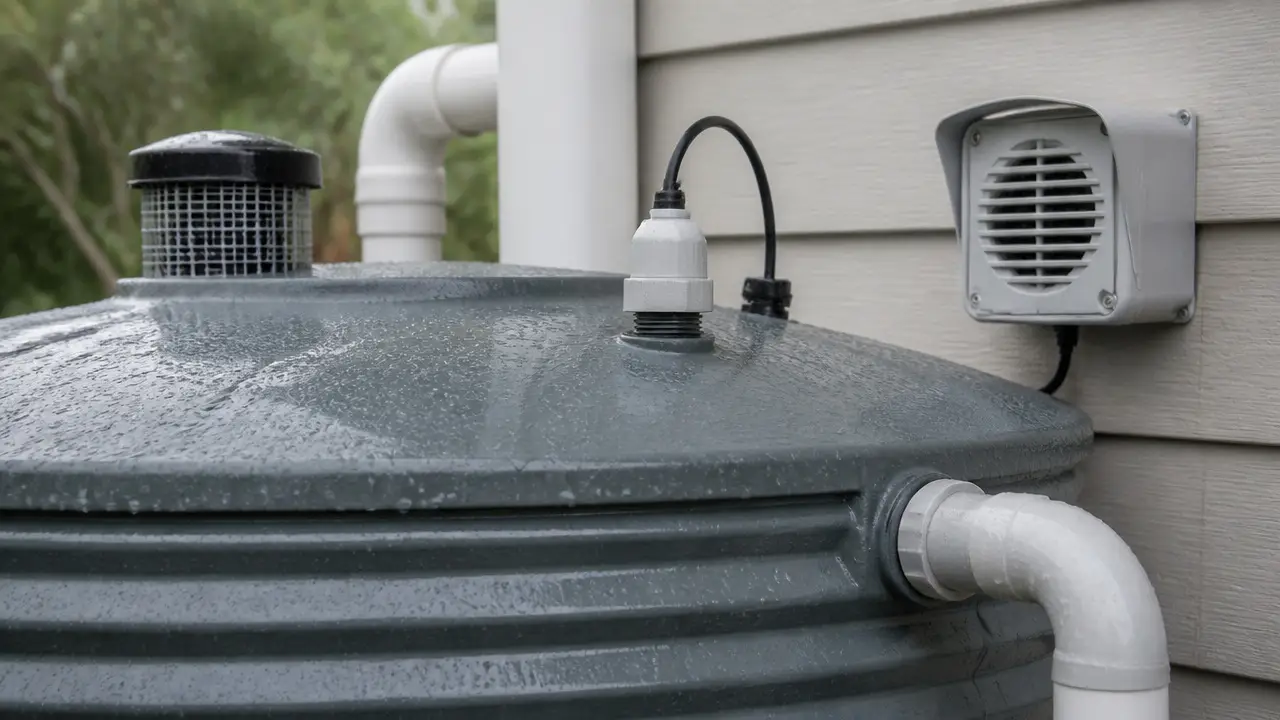
Electronic sensors can be helpful for places where even a small leak could cause damage.
They are often placed near:
- Pumps
- Indoor tanks
- Water heaters
- Washing machines
- Filters
- Plumbing manifolds
These sensors usually detect water after it reaches the sensor.
They can provide an early warning, but they do not replace inspection. A sensor several feet away from a slow fitting leak may never get wet.
Automatic shutoff systems can go further by closing a valve when abnormal water use or moisture is detected. Installation becomes more complex when powered valves, household plumbing, or electrical connections are involved.
Finding Underground Leaks Is Harder
Buried pipes can leak without leaving an obvious puddle.
Possible signs include:
- A wet patch that does not dry
- Unusual plant growth
- Soft ground
- Loss of pressure
- Unexpected pump cycling
- Higher-than-normal water use
- A storage tank dropping faster than expected
You can isolate sections of an irrigation system and compare their behavior, but accurately locating a buried leak may require professional equipment.
Plumbers and leak-detection specialists may use acoustic equipment or other methods to narrow down the location without digging up the entire line.
What to Do After You Find the Leak
Finding the leak is only the first part of the repair.
First determine why the connection failed.
Common causes include:
- Loose fittings
- Damaged gaskets
- Cross-threaded parts
- Cracked adapters
- Unsupported pipe pulling on a tank fitting
- Freeze damage
- Excess pressure
- UV-damaged tubing
- Poorly matched thread types
- Tank movement
Simply tightening a fitting is not always the right repair.
Overtightening plastic fittings can crack them or distort a gasket. Tank bulkhead fittings can also leak if connected piping places sideways force on them.
When replacing parts, confirm that the fittings have compatible sizes, thread types, materials, and pressure ratings.
When to Stop Troubleshooting Yourself
A basic inspection is suitable for many exposed rainwater and irrigation systems.
Professional help makes more sense when a leak involves:
- Pipes inside walls or ceilings
- Buried household water lines
- Major structural water damage
- Electrical equipment near standing water
- High-pressure plumbing
- A cracked underground cistern
- Large storage tanks with structural damage
- Plumbing connected to household potable water
- Repeated leaks that cannot be explained
Potable means water intended to be safe for drinking. A rainwater system connected to potable plumbing can involve cross-connection and water-quality requirements, so repairs may need to follow local plumbing rules.
A Practical DIY Leak-Checking Routine
For most exposed systems, use this order:
- Stop normal water use.
- Look for obvious wet areas.
- Clean and completely dry suspect locations.
- Isolate one section at a time.
- Watch for fresh moisture.
- Check fittings with a dry paper towel.
- Compare tank levels, meter readings, or pressure only when appropriate.
- Repair the confirmed cause rather than guessing.
- Test the repaired area again before returning the system to normal use.
This method requires little equipment and works for many rain barrels, tanks, pumps, filters, and garden irrigation systems.
Frequently Asked Questions
What is the easiest way to find a small water leak?
Dry the suspect area completely and watch for fresh moisture. A clean paper towel placed around an exposed connection can make a very slow leak easier to see.
How can I tell whether my rain barrel is leaking?
Mark the water level when no water is being added or used. Check the outlet, bulkhead fittings, overflow, and tank wall for moisture. Allow for evaporation and any connected lines before assuming a falling level means the barrel itself is leaking.
Can I use food coloring to find a water leak?
Food coloring can be useful for checking whether a toilet tank is leaking into its bowl. It generally should not be added to rainwater storage tanks or plumbing systems just to search for leaks.
How do I find a leak in a buried irrigation pipe?
Run one zone at a time and look for unusually wet soil, soft ground, unexpected plant growth, or reduced flow. Isolating branches can help narrow the location. Difficult underground leaks may require professional leak-detection equipment.
Will a pressure gauge tell me exactly where a leak is?
No. A pressure drop can help show that a closed pressurized system may be losing water, but it cannot identify the location. Temperature changes, pumps, tanks, valves, and trapped air can also affect pressure readings.
Should I tighten a leaking plastic fitting?
Only after identifying the cause. A loose fitting may need adjustment, but overtightening plastic parts can crack fittings or deform gaskets. Damaged seals, incorrect threads, or poorly supported pipe may require a different repair.
Are electronic water leak sensors worth using?
They can be useful around indoor tanks, pumps, filters, and other places where an unnoticed leak could cause damage. They provide an extra warning but should not replace regular inspection and maintenance.