As an affiliate, we may earn a commission from qualifying purchases. We get commissions for purchases made through links on this website from Amazon and other third parties.
Rainwater is usually a good choice for potted plants. It is naturally low in dissolved salts and does not normally contain the chlorine or chloramine used in some public water systems.
But collected rainwater is not automatically clean. Roof runoff can pick up dirt, bird droppings, roofing debris, pollen, and other contaminants. For most ornamental plants, properly collected rainwater is useful for routine watering. More care is needed when watering edible plants, especially herbs and vegetables that will be eaten raw.
Why Rainwater Can Be Good for Potted Plants
Potted plants depend completely on the water and nutrients you give them. Unlike plants in the ground, their roots cannot spread into a large area when conditions inside the pot become less favorable.
Rainwater has several qualities that can make container care easier.
Rainwater Is Usually Low in Dissolved Minerals
Tap water may contain calcium, magnesium, sodium, and other dissolved minerals. The amount varies greatly by location.
These minerals are not always harmful. Some are plant nutrients. But repeated watering can leave salts behind as water evaporates.
Because rainwater normally contains fewer dissolved minerals, it can help reduce mineral buildup in potting soil.
You may notice this buildup as:
- White crust on the soil surface
- White deposits around the pot rim
- Deposits on saucers
- Brown leaf tips on sensitive plants
Rainwater will not remove every cause of these problems, but it can reduce the amount of new mineral residue being added with each watering.
It Usually Does Not Contain Municipal Disinfectants
Many public water systems disinfect water with chlorine or chloramine.
Most common houseplants tolerate properly treated municipal water without a problem. You do not need rainwater simply because your tap water contains a disinfectant.
However, some growers prefer rainwater for plants that are sensitive to water chemistry.
Rainwater can also be useful when your tap water is very hard or contains enough dissolved salts to cause repeated problems in containers.
Rainwater Can Help Flush Container Soil
Watering deeply enough for some water to drain from the bottom of a pot helps carry accumulated salts out of the root zone.
Low-mineral rainwater is useful for this purpose.
Make sure the pot has working drainage holes. Adding more water to a container that cannot drain can cause root problems instead of fixing salt buildup.
Is Rainwater Better Than Tap Water for Potted Plants?
Sometimes, but not always.
Good-quality tap water is perfectly suitable for many potted plants. Rainwater becomes more useful when the local tap water is hard, salty, or causes visible mineral buildup.
The plant also matters.
Plants grown in containers can have different tolerances for minerals, soil pH, and moisture. Some sensitive plants may respond better to low-mineral water, while tougher plants may show little difference.
Instead of assuming one source is always better, watch the plant and the potting mix.
Signs worth investigating include:
- Repeated brown leaf tips
- Poor growth despite proper light and feeding
- Heavy mineral deposits on the pot
- A hard white crust on the soil
- Water that stops soaking evenly into the potting mix
These symptoms can also have other causes, including fertilizer buildup, overwatering, underwatering, poor drainage, root damage, and unsuitable soil.
Collected Rainwater Is Different From Rain Falling Directly From the Sky
Water falling through the air and water collected from a roof are not the same thing.
Roof runoff can carry material from:
- Bird and animal droppings
- Leaves
- Pollen
- Dust
- Insects
- Roofing materials
- Gutters and downspouts
- Nearby smoke or pollution
A rain barrel therefore contains roof runoff, not purified water.
That does not mean you cannot use it for plants. It means the collection system should be maintained.
How to Collect Rainwater for Potted Plants
A simple rain barrel can supply plenty of water for a small container garden.
For better water quality, keep debris out before it reaches storage.
A basic system may include:
- A reasonably clean roof and gutter.
- A screen or leaf guard at the inlet.
- A covered storage container.
- An overflow route that carries excess water away safely.
- A screened opening that helps keep mosquitoes and larger debris out.
Some systems also use a first-flush diverter.
A first-flush diverter sends the first portion of roof runoff away from the storage tank. That first runoff often carries more dust, pollen, droppings, and loose debris from the roof.
It does not make the remaining water sterile or safe to drink. It simply reduces some of the material entering storage.
Keep Stored Rainwater Covered
An open barrel can quickly become harder to manage.
Sunlight can encourage algae growth. Openings can also allow leaves, insects, animals, and other debris into the water.
Use a covered container designed for water storage, and screen openings where practical.
Do not completely seal a tank in a way that interferes with required venting, overflow, or safe operation.
Periodically inspect:
- The inlet screen
- Gutters
- Downspouts
- The bottom of the barrel
- The outlet
- Overflow piping
- Mosquito screens
Sediment will often collect at the bottom over time. The storage container will eventually need cleaning.
How to Water Potted Plants With Rainwater
The watering method matters more than simply switching water sources.
Water the potting mix thoroughly rather than giving the plant a tiny amount each day.
For most container plants, water until the root zone is evenly wet and excess water can drain from the bottom. Then wait until the plant needs water again.
For plants that benefit from rainwater, first compare this detail’s place in the collection and delivery chain.
Exactly when to water depends on:
- Plant species
- Pot size
- Potting mix
- Temperature
- Sun exposure
- Wind
- Humidity
- Time of year
A small pot sitting in full summer sun can dry much faster than a large container in shade.
Do not assume that using rainwater means a plant should receive more water. Overwatering with rainwater can damage roots just as easily as overwatering with tap water.
Does Rainwater Provide Enough Nutrients?
No. Rainwater is water, not a complete fertilizer.
Container plants gradually use the nutrients available in their potting mix. Regular watering can also wash some nutrients through the drainage holes.
Follow an appropriate fertilizing plan for the type of plant you are growing.
Do not increase fertilizer just because you switch to rainwater. Too much fertilizer can create salt buildup and root damage.
What About the pH of Rainwater?
Rainwater is often mildly acidic, but its chemistry can vary with local air conditions and the surfaces it contacts.
Once rainwater passes across a roof and enters a storage tank, its pH may change further.
For ordinary potted plants, you usually do not need to adjust rainwater pH without a specific reason.
If a plant is showing nutrient problems, consider the whole growing setup before blaming the water. Potting-mix pH, fertilizer, drainage, root health, and mineral buildup can all affect nutrient availability.
Can You Use Rain Barrel Water on Potted Vegetables and Herbs?
More caution is sensible with edible plants.
Roof runoff may contain microorganisms and other contaminants picked up from the collection surface. Avoid assuming that water from a rain barrel is clean simply because it looks clear.
When using collected rainwater around edible crops, reduce contact between questionable stored water and the parts you plan to eat. Applying water directly to the soil or potting mix is generally preferable to spraying it over leaves, herbs, fruit, or vegetables.
The suitability of a roof, roofing material, collection system, and stored water can vary. Follow local public-health or agricultural guidance where available.
If water quality is uncertain, a safer water source may be a better choice for crops that will be eaten raw.
Do You Need to Filter Rainwater Before Watering Pots?
Usually, elaborate treatment is unnecessary for ordinary ornamental container watering.
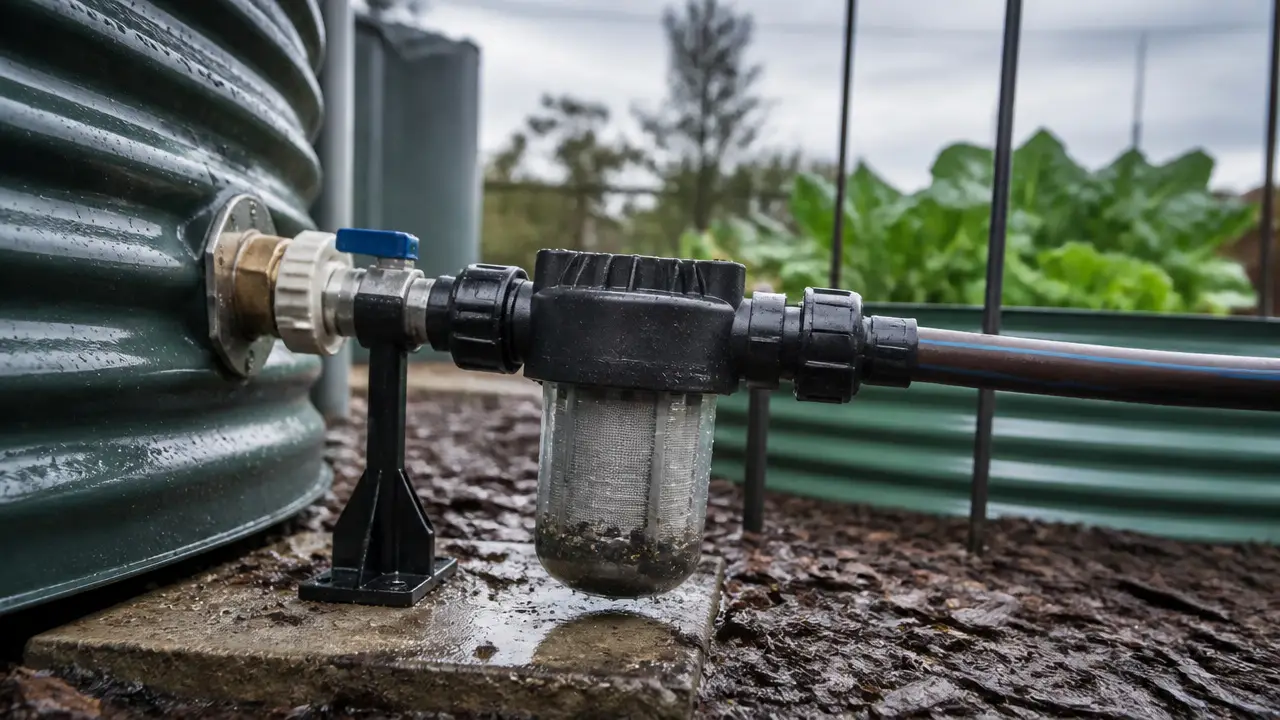
A simple screen is useful because it keeps leaves and larger debris out of the tank. Additional sediment control may help if you use small irrigation tubing or drip emitters that can clog.
A filter does not automatically make collected rainwater safe for drinking or remove every possible contaminant.
For hand-watering pots, the main goals are usually keeping the storage system clean and preventing large debris from reaching your watering can or outlet.
Using a Rain Barrel With Drip Irrigation
Rainwater can also feed container drip lines, but check the system before connecting everything.
A barrel sitting close to ground level provides very little water pressure. Many irrigation devices are designed for pressurized household water and may not work properly with gravity alone.
If you plan to use gravity-fed irrigation, pay attention to:
- Height of the barrel above the emitters
- Tubing size
- Number of containers
- Required flow
- Filters or screens
- Elevation changes
- Emitter requirements
Raising a full barrel increases water pressure, but it also creates a serious structural load.
Water is heavy. Do not place a large tank on a weak platform, deck, wall, or improvised stand. Use a stable base designed to support the full weight of the container.
When Rainwater May Not Be the Best Choice
Consider another water source if the collected water:
- Has a strong unusual odor
- Contains heavy contamination
- Has received runoff from a questionable surface
- Has been contaminated with chemicals
- Contains large amounts of decaying organic matter
- Comes from a storage system that has not been maintained
Do not try to judge safety only by appearance. Clear water can still contain contaminants you cannot see.
For ordinary ornamental plants, occasional leaves or light sediment are mainly maintenance problems. Suspected chemical contamination is different and should be treated more cautiously.
Rainwater Works Best as Part of Good Container Care
Switching to rainwater cannot compensate for a poor growing setup.
Healthy potted plants still need:
- The right amount of light
- Suitable potting mix
- Drainage holes
- Proper watering frequency
- Enough root space
- Appropriate nutrients
- Protection from extreme heat or cold when needed
If your tap water causes mineral buildup, rainwater can be a useful improvement. If your plants already grow well with tap water, there may be little reason to change other than saving treated household water.
Frequently Asked Questions
Can I water indoor plants with rainwater?
Yes. Rainwater can work well for indoor plants, especially where tap water is hard or leaves mineral deposits. Store collected water in a covered container and avoid using water that is obviously contaminated or has a strong unusual odor.
Is rainwater better than distilled water for plants?
Both are generally low in dissolved minerals, but they are not identical. Distilled water has been processed to remove most dissolved material. Collected rainwater can pick up contaminants from air, roofs, gutters, and storage containers. Neither provides a complete source of plant nutrients.
How long can I store rainwater for plants?
There is no single safe storage period that applies to every system. Water quality depends on how the rain was collected, how the tank is covered, temperature, sunlight, debris, and maintenance. A covered, screened, regularly maintained container is better than leaving water exposed.
Can rainwater cause root rot?
Rainwater itself does not cause root rot simply because it is rainwater. Problems usually develop when roots remain too wet because of excessive watering, poor drainage, compacted potting mix, or an unsuitable container.
Should I boil rainwater before giving it to plants?
Boiling is generally unnecessary for routine watering of ornamental potted plants. It also does not address every type of possible contaminant in roof runoff.
Can I mix rainwater and tap water for plants?
Yes. There is usually no problem with alternating or mixing suitable rainwater and tap water for ordinary container plants. This can be useful when your stored rainwater supply is limited.
Why do some plants seem to prefer rainwater?
The difference may come from lower levels of dissolved salts and minerals compared with local tap water. However, plant growth also depends on light, soil, fertilizer, temperature, drainage, and watering habits.