As an affiliate, we may earn a commission from qualifying purchases. We get commissions for purchases made through links on this website from Amazon and other third parties.
The easiest drip irrigation system to use is usually pre-spaced drip tubing, also called dripline or emitter tubing. It has small emitters built into the tubing at regular intervals, so you do not have to punch holes and install each dripper by hand.
For a simple garden bed, you can connect the tubing to a hose bib, filter, pressure regulator, and timer. Then lay the tubing beside the plants. This setup has fewer small parts than many micro-drip systems and is easier to check for leaks or clogs.
The best choice changes a little depending on what you are watering. Raised beds and vegetable rows are well suited to pre-spaced dripline. Pots and widely spaced plants may be easier to water with individual emitters.
Why Pre-Spaced Drip Tubing Is Easy to Use
Traditional drip irrigation can involve many small parts. You may need main tubing, small feeder tubes, punches, connectors, stakes, and separate emitters.
Pre-spaced drip tubing combines several of those jobs into one line. The emitters are already installed inside the tubing.
A basic system may include:
- A water connection
- A filter
- A pressure regulator
- A timer, if desired
- Main tubing
- Pre-spaced drip tubing
- End fittings
The emitters are the small outlets that release water slowly near the plants.
Because they are already spaced along the tubing, installation is mostly a matter of laying out the lines and connecting them.
Best Easy System for Different Gardens
There is no single drip system that is easiest for every garden.
Raised Beds and Vegetable Rows
Pre-spaced drip tubing is often the simplest choice.
Run one or more lines along each planting row. The built-in emitters release water at regular points.
This works well when plants are relatively close together, such as:
- Lettuce
- Beans
- Peppers
- Tomatoes
- Herbs
- Flowers
You do not have to put an emitter beside every individual plant. Water spreads through the soil around each outlet.
Pots and Containers
Individual drip emitters can be easier for containers.
A larger main tube runs past the pots. Small feeder tubes branch from it to individual emitters placed in each container.
This adds more fittings, but it gives you much better control over where the water goes.
Adjustable emitters can be useful when pots have different watering needs, although they also require more checking and adjustment.
Trees and Shrubs
Individual emitters or short loops of drip tubing are usually more practical than running long rows of pre-spaced tubing.
Larger plants often need water spread over a wider root area rather than delivered at one small point near the trunk.
Closely Planted Garden Beds
Pre-spaced dripline is usually the easiest option because the same tubing can water many plants at once.
What You Need for a Simple Drip System
A beginner system does not need to be complicated, but the parts must work together.
Water Source
Your system might connect to:
- An outdoor faucet
- A garden hose
- A pump
- A rain barrel
- An IBC tote
- A cistern
The water source affects the pressure available to the drip system.
Filter
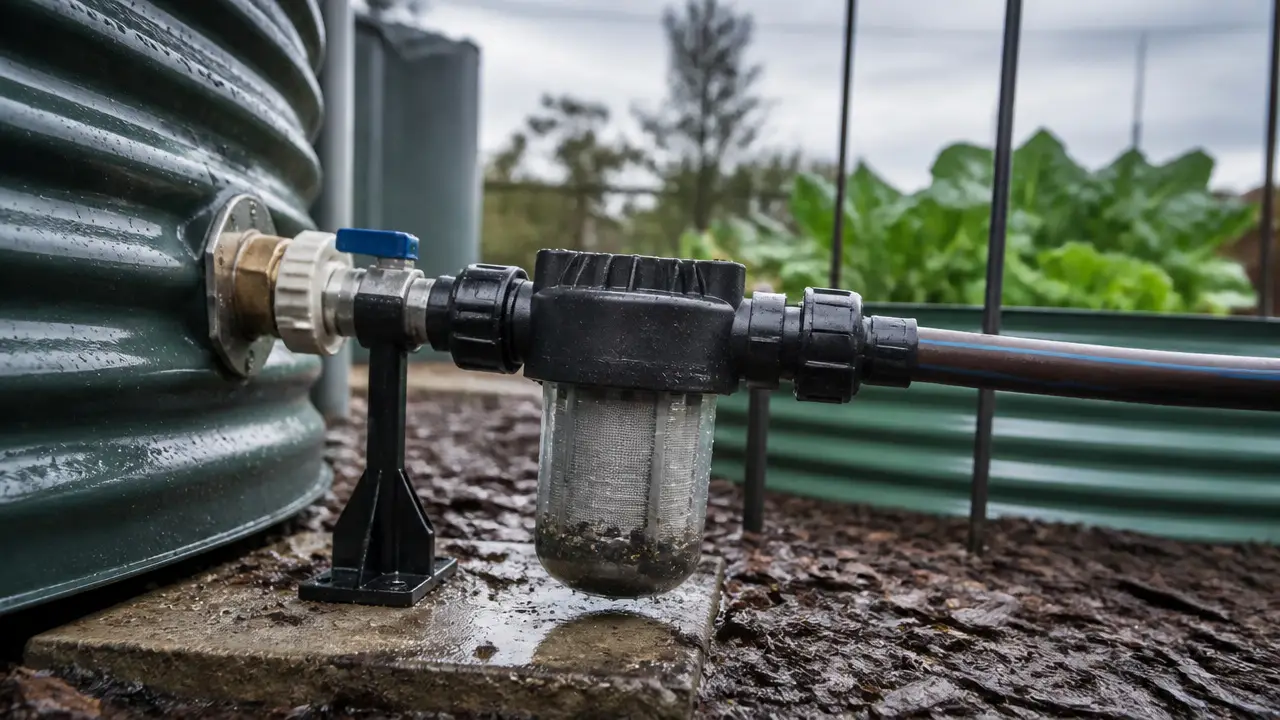
A filter catches sediment before it reaches the small openings in the emitters.
This is especially important with stored rainwater. Roof runoff and tanks can contain fine debris even when larger leaves have already been removed.
A filter does not make collected rainwater safe to drink. In an irrigation system, its main job is to help protect the emitters from clogging.
Pressure Regulator
Many drip systems are designed to operate within a limited pressure range.
A pressure regulator lowers incoming water pressure to a level suitable for the tubing and emitters.
Do not assume every regulator works with every dripline. Check the operating pressure required by the components you are using.
Tubing
Larger tubing normally carries water through the garden. Smaller lines or dripline distribute it to the plants.
Check the actual inside and outside dimensions before buying connectors. Tubing described by similar nominal sizes does not always use interchangeable fittings.
Timer
A timer is optional, but it can make a drip system much easier to live with.
It turns the water on and off automatically.
A timer does not determine how long every garden should be watered. Soil type, weather, plant size, emitter flow, and rainfall all affect watering needs.
The Simplest Basic Layout
For a typical raised-bed garden, a simple system can look like this:
Faucet → timer → filter → pressure regulator → main tubing → dripline
The exact order can vary depending on the equipment manufacturer's instructions.
Main tubing carries water to the beds. Short lengths of pre-spaced dripline branch from it and run beside the plants.
At the end of each line, install a suitable end fitting or flushing valve.
Keeping the layout simple makes troubleshooting easier later.
Flow Rate Matters More Than It May Seem
Flow rate is the amount of water moving through an emitter or system during a certain amount of time.
Emitters may be rated in gallons per hour or liters per hour.
The total demand on your water source depends on how many emitters are running at once.
For example, 50 emitters each releasing 0.5 gallon per hour would theoretically use:
50 × 0.5 = 25 gallons per hour
Actual operation can vary with pressure and emitter design.
A large garden may need to be divided into separate watering zones if the available water source cannot supply every line at once.
The Easiest System From a Rain Barrel Is Different
A standard drip irrigation kit may not work well when connected directly to a rain barrel.
The problem is pressure.
Water stored above the irrigation line creates pressure through gravity. As a useful rule, each foot of vertical water height provides only about 0.43 psi of static pressure.
That means a barrel with its water surface 4 feet above the dripline provides less than 2 psi before allowing for losses through fittings, filters, and tubing.
Many conventional drip components are designed for much higher pressure.
For a gravity-fed rainwater system, look for components specifically designed to work at very low pressure. Keep lines reasonably short and avoid adding unnecessary restrictions.
If reliable pressure is needed across a larger garden, a properly selected pump may be a better solution.
Emitter Tubing vs. Individual Drippers
Choosing between these two designs can make the biggest difference in how easy the system is to use.
| Feature | Pre-Spaced Emitter Tubing | Individual Emitters |
|---|---|---|
| Installation | Simple | More parts to install |
| Best for | Rows and beds | Pots and widely spaced plants |
| Watering points | Fixed spacing | Put them where needed |
| Adjustments | Limited | More flexible |
| Maintenance | Fewer connections | More small parts to check |
| Layout changes | Moderate | Easier for unusual plant spacing |
If your garden consists mainly of straight rows or raised beds, pre-spaced tubing is usually easier.
If you have 20 pots scattered around a patio, individual emitters may make more sense despite the extra parts.
How to Set Up an Easy Drip Irrigation System
Understanding simple watering systems for raised beds helps verify low-head valves and timers for scheduled watering.
The exact installation depends on the tubing and fittings you choose, but the basic process is straightforward.
1. Decide What You Are Watering
Map out the beds, rows, pots, shrubs, or trees.
This determines whether pre-spaced tubing or individual emitters will be easier.
2. Check Your Water Source
Find out whether you are using normal household pressure, a pump, or gravity-fed stored water.
Make sure your chosen drip components can operate at the pressure available.
3. Install the Required Filter and Pressure Control
Follow the component manufacturer's instructions.
Good filtration is important because drip emitters have small water passages that can clog.
4. Lay the Main Tubing
Run the main supply line where it can reach each watering area without creating an unnecessarily complicated layout.
Avoid sharp bends and places where the tubing could be crushed.
5. Connect the Dripline
Run pre-spaced tubing beside the plants.
Follow the manufacturer's recommendations for maximum line length, spacing, operating pressure, and connections.
6. Secure the Tubing
Use suitable stakes or clips so the line stays where you placed it.
Do not stretch tubing tightly. Temperature changes can make plastic tubing expand and contract.
7. Flush the Lines
Before permanently closing the ends, run water through the tubing to remove loose debris.
Periodic flushing is also useful during normal maintenance.
8. Check Every Line
Turn the system on and walk through the garden.
Look for:
- Leaks
- Kinked tubing
- Loose fittings
- Blocked emitters
- Areas receiving too much or too little water
Fixing these problems while the layout is still simple is much easier than finding them later.
Avoid Making the System Too Complicated
More adjustable parts do not always make irrigation better.
Beginners often have an easier time with a few simple watering zones than with one large network containing many valves, emitters, adapters, and tubing sizes.
Try to keep the system consistent.
Using one main tubing size and one compatible family of fittings can prevent many connection problems.
Also avoid adding separate pressure regulators, filters, or check valves simply because they came with different kits. Every component changes the way water moves through the system.
Do You Need Pressure-Compensating Emitters?
A pressure-compensating emitter is designed to keep its flow more consistent as pressure changes within its operating range.
These emitters can be useful for longer runs, uneven terrain, or systems where pressure varies.
They do not solve every pressure problem.
A pressure-compensating emitter still has an operating pressure range. It may not work properly when connected directly to a low-pressure rain barrel.
For a small, level garden with short lines, a simpler system may be adequate.
How Much Maintenance Does Drip Irrigation Need?
Drip irrigation is fairly easy to maintain, but it is not maintenance-free.
Check the system during the growing season for clogged emitters, damaged tubing, loose fittings, leaks, and uneven watering.
Filters also need regular inspection and cleaning.
Stored rainwater systems may require more frequent attention because sediment and organic material can enter the water supply.
Periodically flushing the ends of drip lines can help remove accumulated debris.
What About Freezing Weather?
Water left inside irrigation tubing and fittings can freeze.
Freezing water expands and can damage valves, filters, regulators, pumps, connectors, and other components.
If your area freezes, follow the winterizing instructions for your particular irrigation equipment. Parts such as timers and filters may need to be removed or drained.
Do not assume that flexible tubing alone makes a system freeze-proof.
When a Simple DIY System May Not Be Enough
Small garden drip systems are usually suitable DIY projects.
Larger systems become more complicated when they involve:
- Long pipe runs
- Large elevation changes
- Multiple irrigation zones
- Pumps
- Pressure tanks
- Electrical controls
- Underground plumbing
- Connections to household plumbing
- Large rainwater cisterns
These systems may require flow and pressure calculations.
A qualified irrigation or plumbing professional can also help when local plumbing requirements, backflow protection, pumps, or electrical equipment are involved.
Which Drip Irrigation System Is Easiest Overall?
For most beginners watering garden beds, pre-spaced emitter tubing connected to a simple filtered and pressure-regulated supply is the easiest drip irrigation system to use.
It reduces the number of small parts you need to install and gives you a simple layout that is easy to inspect.
Choose individual emitters instead when plants are widely spaced or when you need to direct water into separate pots.
If you are using a rain barrel or cistern, make pressure compatibility your first check. A system that is easy to assemble will not be easy to use if the water source cannot provide the pressure its emitters need.
Frequently Asked Questions
Is drip tape easier to use than drip tubing?
Drip tape can be simple for long, straight vegetable rows, but it is thinner and is commonly used in layouts where careful pressure control and seasonal replacement may be expected. For many home gardens, thicker pre-spaced drip tubing is easier to handle and reuse.
Can I connect drip irrigation directly to a garden hose?
Often, yes, but the system may still require a filter and pressure regulator. Check the operating pressure and connection requirements of the drip equipment rather than attaching tubing directly and assuming household pressure is suitable.
Can I run drip irrigation from a rain barrel?
Yes, but only if the irrigation components can operate with the low pressure available from the barrel. Gravity systems may provide only a few psi or less. Low-pressure drip components or a properly selected pump may be needed.
Do I need a timer for drip irrigation?
No. A timer is optional. It can make watering more convenient, but you still need to adjust watering based on soil moisture, weather, plant needs, and rainfall.
How do I keep drip emitters from clogging?
Use suitable filtration, keep the water source reasonably clean, inspect the filter, and flush the lines periodically. Stored rainwater may contain fine sediment that makes filtration especially important.
Is dripline better than soaker hose?
Dripline releases water through defined emitters and can provide more predictable watering when operated within its design range. Soaker hose releases water along its porous surface and can be simpler for some small beds, but its flow may be less uniform over longer runs.
How far apart should drip emitters be?
There is no single correct spacing. It depends on the crop, soil, bed layout, and how water spreads through the soil. Choose emitter spacing that matches the area you need to wet rather than assuming one spacing works for every garden.