As an affiliate, we may earn a commission from qualifying purchases. We get commissions for purchases made through links on this website from Amazon and other third parties.
Yes. Dawn dish soap can help loosen and remove algae from the inside of an empty rain barrel or water tank, especially when you scrub the surface. But dish soap is a cleaner, not an algae treatment. Do not pour it into a barrel full of rainwater and expect it to control algae.
For a rainwater system, the better approach is to empty the container, physically remove the algae, rinse away all soap, and then correct the light or debris problem that allowed the algae to grow.
How Dish Soap Removes Algae
Most liquid dish soaps, including Dawn, are detergents rather than traditional soaps. Detergents help loosen grease, dirt, and organic material from hard surfaces. Scrubbing then removes the algae film.
The important part is the combination of:
- Water
- A small amount of detergent
- Physical scrubbing
- Thorough rinsing
The detergent does not make the tank sanitary. Cleaning and sanitizing are different jobs.
The CDC describes cleaning as removing dirt and impurities with soap, water, and scrubbing. Sanitizing or disinfecting is a separate process when it is needed.
Should You Put Dawn in a Rain Barrel Full of Water?
No. Do not add Dawn to stored rainwater as an algae-control treatment.
Doing so creates several problems. The detergent becomes part of the water instead of being rinsed away. It may foam as water passes through a pump, hose, or irrigation system. It can also leave residue inside the barrel and plumbing.
This is especially important if you plan to use the rainwater on plants. Household dish detergents are not designed as irrigation products. Extension guidance notes that dish detergents can damage the protective waxy coating on plant leaves and cause plant injury.
A little detergent used while cleaning an empty barrel is very different from adding detergent to hundreds of gallons of stored irrigation water.
How to Clean Algae From a Rain Barrel
If the algae is coating the inside of a rain barrel, cleaning the barrel itself is usually more useful than treating the water.
1. Disconnect the incoming water
Temporarily divert the downspout so the barrel does not refill while you are cleaning it.
If the barrel is connected to other tanks, pumps, filters, or irrigation lines, isolate it first if your system allows that.
2. Empty the barrel
Drain the old water somewhere appropriate for its condition.
Avoid sending detergent-containing cleaning water directly onto sensitive plants, into a pond, or into a natural waterway.
A large tank can be extremely heavy even when partly full. Do not move or tip a tank containing significant amounts of water.
3. Remove sediment and debris
Leaves, pollen, dirt, roof grit, and other organic material often collect on the bottom of rain barrels.
That material matters because algae need more than water. Light and available nutrients help support growth.
Nebraska Extension recommends reducing sediment and plant debris entering rain barrels because these materials can supply nutrients that encourage algae.
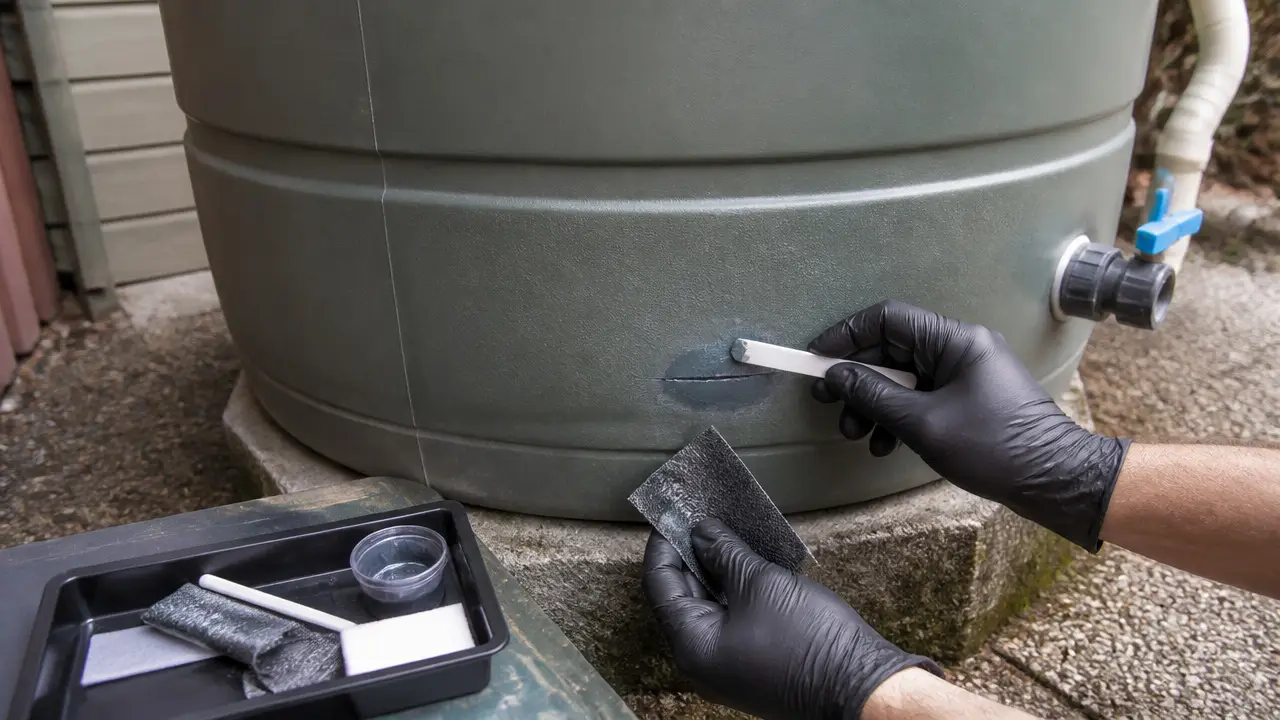
4. Scrub the accessible surfaces
For a small rain barrel that can be safely cleaned, use water, a suitable brush, and a small amount of ordinary dish detergent if needed to loosen stubborn film.
You generally do not need a barrel full of soapy water. Apply only enough cleaner to help remove the material from the surface.
Pay attention to areas around:
- The bottom
- Corners and seams
- The inlet
- The outlet and spigot
- Overflow fittings
- Screens
- Accessible plumbing connections
Never climb into a cistern or enclosed tank. A large tank can be a confined-space hazard and should be handled using appropriate professional cleaning methods.
5. Rinse thoroughly
This step matters when using Dawn or another detergent.
Keep rinsing until you no longer see foam or feel slippery detergent residue on accessible surfaces. Also flush any fittings that received cleaning solution.
If the barrel feeds a garden, you do not want leftover detergent moving through the irrigation system the next time it rains.
Does Dish Soap Sanitize a Rain Barrel?
Not by itself.
Dish soap and scrubbing are useful for cleaning, which means physically removing algae, dirt, sediment, and other material.
Sanitizing is different. It is meant to reduce microorganisms after surfaces have first been cleaned.
For containers intended to store safe water, the CDC recommends washing with soap and water, rinsing completely, and then using a separate sanitizing step. The CDC also warns never to mix bleach with other cleaners or disinfectants.
That means you should rinse all dish soap away before using any bleach-based sanitizing procedure.
For a simple garden rain barrel, physical cleaning and algae prevention may be all that is needed. For a cistern connected to household plumbing or any system intended to supply drinking water, cleaning is only one part of a much larger water-quality process.
What If the Rainwater Is Used for Drinking?
Removing visible algae does not make collected rainwater potable.
Reviewing practical considerations for vinegar stop algae growth helps assess assembly details that affect everyday performance.
Potable means suitable for drinking. Non-potable water is water used for purposes such as irrigation or toilet flushing rather than drinking.
Roof runoff can pick up bird and animal waste, microorganisms, roofing contaminants, dust, and other pollutants before reaching the tank. Algae is therefore not the only water-quality concern.
For drinking-water use, treat the system as a whole. That may include suitable collection surfaces, debris control, first-flush management, storage design, treatment stages, current laboratory testing, maintenance, and compliance with applicable local requirements.
A first flush device diverts some of the first runoff from a roof so that part of the accumulated dirt and debris does not immediately enter the storage tank.
Do not rely on Dawn, visible clarity, a single filter, or the absence of algae to establish that rainwater is safe to drink.
Why Does Algae Keep Coming Back?
Repeated algae growth usually means the conditions supporting it are still present.
Light is reaching the water
This is one of the biggest factors.
Algae use light to grow. Dark or opaque storage tanks reduce the amount of light reaching the water. Virginia Tech recommends dark-colored rain barrels to block sunlight and help prevent algae.
If you can see daylight through the tank wall, algae may have enough light to grow.
Possible improvements include:
- Moving the barrel out of strong direct sun when practical
- Using an opaque tank
- Using a suitable exterior covering
- Correcting translucent lids or openings that admit light
Do not paint or coat the inside of a water-storage tank unless the coating is specifically suitable for that use.
Too much organic debris is entering
Leaves, pollen, seeds, insects, and roof debris can collect in the tank.
Check the gutter, inlet screen, prefilter, and tank bottom. Cleaning the tank without improving debris control may only solve the problem temporarily.
Sediment has accumulated
A layer of sediment can remain even after the water looks relatively clear.
Inspect accessible areas periodically and remove accumulated material before it becomes a thick layer.
The barrel stays full for long periods
A rain barrel that is constantly full receives little turnover. Using the stored water regularly can reduce long periods of stagnant storage.
Some extension guidance also recommends keeping rain barrels shaded and regularly using or emptying the water as part of algae and mosquito management.
A Better Long-Term Fix Than Adding Chemicals
If algae keeps appearing, focus on the cause rather than repeatedly adding something to the water.
A useful order is:
- Block light from entering the tank.
- Keep leaves and debris out.
- Clean accumulated sediment.
- Maintain inlet screens and prefilters.
- Use stored water regularly when practical.
- Inspect the tank between seasons.
- Clean the tank when buildup becomes noticeable.
For many garden rain barrels, those changes are more useful than trying to maintain the water with household chemicals.
They also avoid introducing detergent into pumps, hoses, irrigation emitters, soil, or plants.
When Dawn Is Reasonable—and When It Is Not
| Situation | Use Dawn? |
|---|---|
| Scrubbing algae from an empty plastic rain barrel | Yes, a small amount can help, followed by thorough rinsing |
| Cleaning removable fittings or a lid | Usually reasonable if the material tolerates detergent and is thoroughly rinsed |
| Pouring it into stored rainwater to kill algae | No |
| Adding it to irrigation water | No |
| Treating algae in a pond containing fish or aquatic life | No |
| Making collected rainwater safe to drink | No |
| Sanitizing a drinking-water storage system | Not by itself |
For large cisterns, household plumbing systems, difficult-to-access tanks, or potable-water systems, use cleaning and sanitizing procedures appropriate to that specific system rather than improvising with household cleaners.
Frequently Asked Questions
Will Dawn kill algae or just clean it off?
Dawn can help loosen algae and organic film so they can be scrubbed from a hard surface. It should be treated as a cleaning detergent, not as a dependable algaecide or sanitizer.
Can I add Dawn directly to my rain barrel?
It is better not to. Adding detergent to stored water can leave residues and may send detergent through hoses, pumps, irrigation lines, or onto plants. Empty and clean the barrel instead.
How much Dawn should I use to clean a rain barrel?
There is no standard Dawn-to-water concentration for rain-barrel algae removal. You usually need only a small amount of detergent to help with scrubbing. The important step is rinsing until all foam and slippery residue are gone.
Is green algae in a rain barrel dangerous?
Algae itself does not tell you whether the water is safe or unsafe. Roof-collected rainwater can contain other biological and chemical contaminants even when no algae is visible. Do not use appearance alone to judge water safety.
How can I stop algae from growing in my rain barrel?
Keep light out of the stored water and reduce debris entering the barrel. An opaque barrel, clean gutters, inlet screening, sediment removal, and regular maintenance can greatly reduce recurring algae.
Can I use soapy rain-barrel water on my garden?
Avoid intentionally adding household dish detergent to irrigation water. Dish detergents can damage some plant tissues, especially when they contact leaves. If detergent was used to clean the barrel, drain and rinse the barrel thoroughly before returning it to service.
Do I need to sanitize the barrel after removing algae?
Not every non-potable garden barrel needs the same sanitizing procedure. Cleaning may be sufficient for routine maintenance. If the tank stores water intended for drinking or another higher-risk use, follow an appropriate cleaning, sanitizing, treatment, and testing plan rather than assuming algae removal makes the water safe.