As an affiliate, we may earn a commission from qualifying purchases. We get commissions for purchases made through links on this website from Amazon and other third parties.
Leak repair tape can work, but usually as a temporary repair, not a permanent fix.
How well it works depends on the type of tape, where the leak is, and whether the pipe or fitting is under pressure. Tape may stop a small drip long enough to keep a rainwater system running, but cracked fittings, damaged pipe, and leaking tank penetrations usually need a proper repair or replacement.
What Is Leak Repair Tape?
“Leak repair tape” can mean several different products.
Common types include:
- Self-fusing silicone tape
- Rubber repair tape
- Butyl-based sealing tape
- Waterproof patch tape
- Pipe wrap made for temporary leak control
Self-fusing silicone tape is especially common for pipe repairs. It stretches tightly around a pipe and bonds to itself rather than sticking directly to the pipe surface.
Waterproof adhesive tapes work differently. They use a sticky backing that must bond to the surface around the leak.
Neither type should be confused with thread seal tape, often called PTFE or plumber's tape. Thread seal tape is used inside threaded connections before assembly. Wrapping it around the outside of a leaking fitting usually does not provide a reliable repair.
When Leak Repair Tape Can Work
Tape has the best chance of working when the leak is small and the pipe itself is still structurally sound.
It can be useful for:
- A slow drip from a small crack
- A pinhole leak in low-pressure plumbing
- A temporary repair on an irrigation line
- A leaking hose
- A minor split in flexible tubing
- Emergency sealing until a fitting can be replaced
For a rain barrel or gravity-fed irrigation system, repair tape may work better than it would on a high-pressure household water line. Gravity systems often operate at relatively low pressure.
Even then, the condition of the pipe matters. Tape cannot restore strength to badly damaged material.
When Leak Repair Tape Usually Does Not Work Well
Tape becomes much less dependable when the leak involves movement, high pressure, large damage, or a failed fitting.
Do not expect tape to permanently fix:
- A cracked bulkhead fitting
- A split threaded fitting
- A badly cracked PVC pipe
- A hole caused by corrosion
- A leaking pump housing
- A damaged pressure fitting
- A loose mechanical connection
- A large tank crack
- A pipe that continues to flex
A bulkhead fitting is the fitting that passes through the wall of a tank or barrel. It normally seals with a gasket.
If water is leaking around a bulkhead fitting, wrapping tape around the outside may slow the leak but usually does not address the cause. The gasket may be damaged, incorrectly installed, overtightened, loose, or sitting against an uneven surface.
Pressure Makes a Big Difference
Water pressure tries to force open the damaged area.
A small repair that holds on a rain barrel may fail quickly on the discharge side of a pump.
For example, a gravity-fed rain barrel near ground level usually places much less pressure on its plumbing than a pump supplying sprinklers or household fixtures.
As pressure increases, the repair must withstand both:
- Water pushing through the damaged area
- Forces trying to separate or expand the pipe
Tape wrapped around the outside does not restore the original strength of a cracked fitting.
For pressurized rainwater systems, replacing the damaged pipe or fitting is usually the better repair.
The Surface Has to Be Prepared
Adhesive repair tapes work poorly on dirty or wet surfaces.
Rainwater-system plumbing may have:
- Dirt
- Algae
- Dust
- Pipe residue
- Mineral deposits
- Oils from handling
These can prevent adhesive tape from making a good seal.
When practical, shut off the water and drain the section before making the repair. Clean the outside of the pipe and follow the tape manufacturer's directions for surface preparation and application.
Self-fusing silicone tape is somewhat different because it primarily bonds to itself. It still needs to be wrapped tightly enough to create compression around the damaged area.
How to Use Self-Fusing Tape on a Small Pipe Leak
If the pipe is suitable for a temporary taped repair, first stop the water flow if possible.
Then:
- Clean the pipe around the damaged area.
- Inspect the crack or hole.
- Make sure the pipe is not badly split or weakened.
- Begin wrapping beyond one side of the leak.
- Stretch the tape as directed by its manufacturer.
- Overlap each wrap.
- Continue beyond the other side of the damaged area.
- Restore water slowly and check for leaks.
The tape should cover more than just the visible hole. Extending the wrap onto sound pipe helps distribute the force around the repair.
Do not assume a repair is successful simply because it stops dripping immediately. Check it again after the system has been operating.
Can You Put Leak Tape on a Wet Pipe?
Some repair tapes are made for damp or wet conditions, while others need a clean, dry surface.
Adhesive tape generally works best when the pipe is dry.
Even tape marketed for wet repairs may have trouble sealing if water is actively spraying through the leak. The escaping water can prevent good contact and push against the repair before it has formed a seal.
Whenever possible, isolate and drain the pipe first.
Does Leak Repair Tape Work on PVC?
It can temporarily seal some small PVC leaks, but the location of the damage matters.
A small hole along a straight section of pipe is a better candidate than a cracked fitting.
PVC fittings often crack because of:
- Excessive tightening
- Pipe stress
- Impact
- Freezing
- Poor alignment
- Unsupported plumbing
Wrapping tape around the crack may hide the symptom without correcting the cause.
A damaged PVC fitting should normally be replaced.
Does It Work on Polyethylene Pipe?
Self-fusing repair tape may temporarily help with a small leak in polyethylene irrigation or rainwater tubing.
However, polyethylene pipe can flex and move. That movement makes many adhesive repairs less dependable.
Leaks at barbed fittings or compression fittings are often better fixed by repairing the actual connection. Depending on the system, that may involve replacing damaged tubing, correcting the fitting, or replacing the clamp.
What About Garden Hoses?
Look closely at practical considerations for there a tape that will stop a leak to understand the connection between this choice and system operation.
Repair tape can work reasonably well on a small puncture or split in a garden hose.
Hoses are flexible, though, so repeated bending can loosen some repairs.
A leak near the end of a hose is often better repaired by cutting off the damaged section and installing a suitable replacement hose end.
Leaks at hose connections should also be checked for worn washers before adding tape. A damaged washer is often the real problem.
Can Tape Fix a Leaking Threaded Connection?
Wrapping repair tape around the outside of a threaded fitting is rarely the best solution.
The leak usually originates between the threads.
A better repair normally involves:
- Depressurizing the system.
- Disassembling the connection.
- Inspecting the threads.
- Replacing cracked parts.
- Using the appropriate thread-sealing method.
- Reassembling the fitting correctly.
Do not keep tightening plastic fittings in an attempt to stop a leak. Overtightening can crack the fitting.
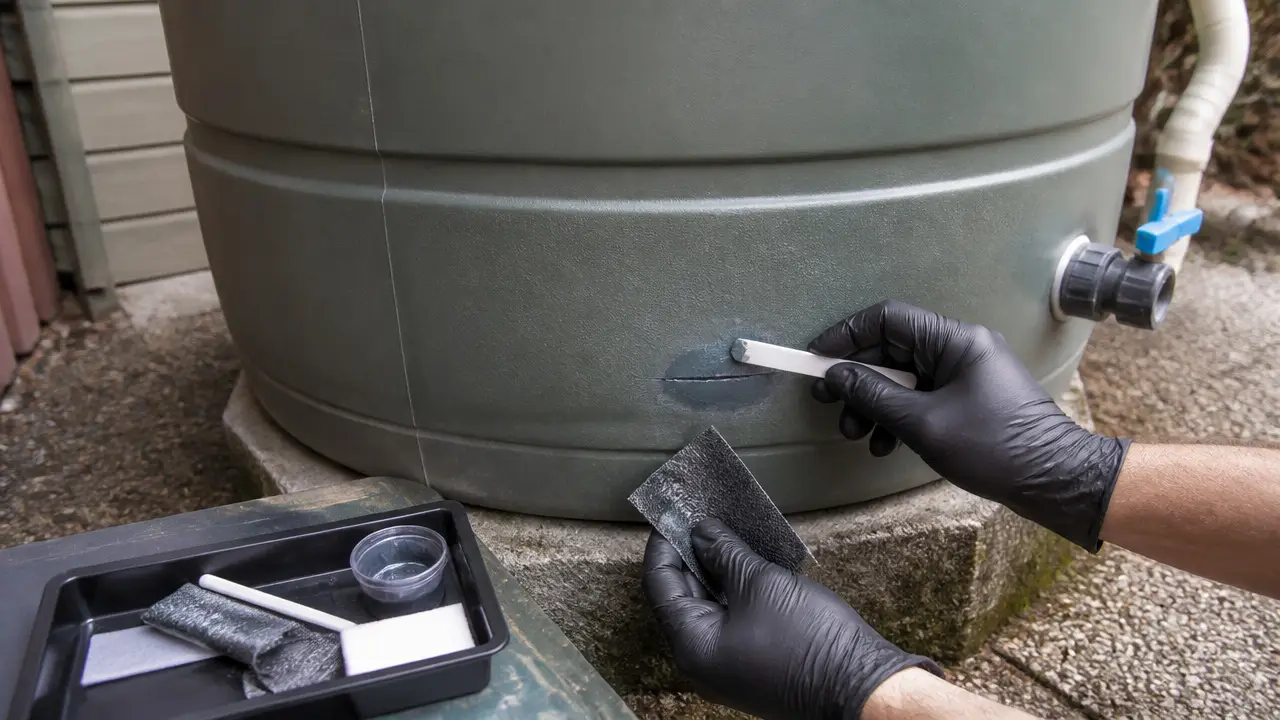
Can Leak Repair Tape Fix a Rain Barrel?
Sometimes.
Tape may temporarily repair a small crack in a low-pressure pipe attached to the barrel.
Leaks directly from the barrel require more care.
A leak could come from:
- The spigot
- A gasket
- A bulkhead fitting
- An overflow connection
- A crack in the barrel itself
Finding the actual source is more important than covering the wet area with tape.
For example, water around a spigot may be coming through the gasket rather than through the spigot body.
Can Tape Repair a Water Storage Tank?
Small temporary repairs may sometimes be possible, but tank damage should be evaluated carefully.
Water is heavy. A large tank places significant force on its walls, especially near the bottom.
A crack that appears small while the tank is nearly empty may spread as the tank fills.
Large cisterns and storage tanks should be repaired using methods suitable for the tank material and the manufacturer's requirements. Significant structural cracks should not be treated as simple tape repairs.
If the tank stores water intended for drinking, any repair material that contacts the water must also be suitable for that intended use.
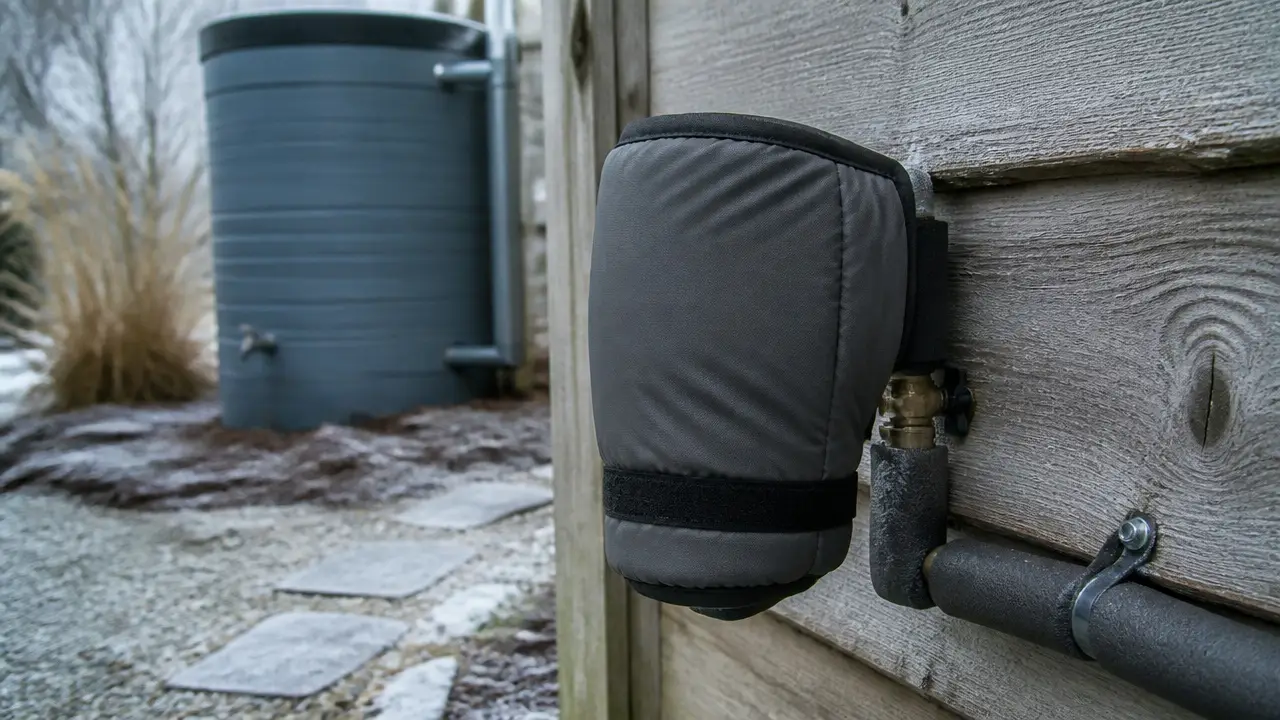
Cold Weather Can Cause the Leak to Return
Freezing conditions deserve special attention.
If water freezes inside a pipe, fitting, filter housing, pump, or valve, it expands. Tape placed over the resulting crack does not correct the freeze problem.
The next freeze may:
- Reopen the crack
- Create another crack
- Push apart a fitting
- Damage the pump
- Break the temporary repair
In freezing climates, fix both the leak and the reason the component froze.
That may require draining exposed plumbing, relocating equipment, or using a properly designed freeze-protection method.
Temporary Repair vs. Permanent Repair
Think of repair tape as a way to buy time.
It can be useful when you need to stop a small leak before replacing a part.
A proper permanent repair usually means restoring the system with undamaged components.
| Problem | Better Long-Term Fix |
|---|---|
| Cracked PVC fitting | Replace fitting |
| Damaged pipe section | Replace damaged section |
| Leaking hose end | Replace or repair hose end |
| Worn gasket | Replace gasket |
| Loose bulkhead fitting | Inspect and reseal correctly |
| Split irrigation tubing | Cut out and reconnect damaged section |
| Corroded metal pipe | Replace affected pipe |
| Freeze-damaged component | Replace part and correct freeze exposure |
A taped repair should be inspected regularly until the permanent repair is made.
Do Not Rely on Tape for Critical Plumbing
Temporary tape repairs deserve extra caution when failure could cause major damage.
That includes plumbing:
- Inside walls
- Above electrical equipment
- Near pumps and controls
- Inside a home
- Connected to pressure tanks
- Carrying drinking water
- Serving critical household water needs
For these situations, replacing the damaged component is usually a safer choice.
If the system involves household plumbing, high pressure, electrical equipment, or difficult-to-access piping, a qualified plumber or water-system professional may be appropriate.
Frequently Asked Questions
How long does leak repair tape last?
There is no reliable universal lifespan. It depends on the tape, pipe material, pressure, temperature, sunlight exposure, pipe movement, and condition of the damaged area. Treat a taped leak as temporary unless the manufacturer specifically approves the product for the intended permanent repair.
Does waterproof tape stop water leaks?
It can stop some small leaks, especially on clean surfaces and low-pressure systems. It is much less dependable on large cracks, moving pipes, damaged fittings, and pressurized plumbing.
Can I wrap tape around a leaking pipe while the water is running?
Some products may tolerate damp surfaces, but active water flow makes a dependable repair harder. Shut off and drain the pipe whenever possible before applying repair tape.
Is leak repair tape the same as plumber's tape?
No. PTFE plumber's tape is normally wrapped around male pipe threads before the fitting is assembled. Leak repair tape is wrapped around the outside of damaged plumbing.
Can tape permanently fix a cracked PVC fitting?
Usually not. A cracked fitting has lost structural strength. Replacing the fitting is generally the better long-term repair.
Will leak repair tape work on a rain barrel spigot?
It may slow an external leak, but first check the spigot, gasket, and bulkhead connection. Water around the spigot often comes from a failed or poorly seated seal rather than a hole that needs to be covered.
Can I use any repair tape on drinking-water plumbing?
Do not assume that every tape is suitable for drinking-water systems. Repair materials that contact potable water should be specifically appropriate for that use, and the repaired plumbing must still meet applicable requirements. Potable means water intended for drinking and food preparation.