As an affiliate, we may earn a commission from qualifying purchases. We get commissions for purchases made through links on this website from Amazon and other third parties.
The best tape for sealing a water leak depends on where the leak is coming from. For a small emergency leak on the outside of a pipe or hose, self-fusing silicone tape is usually the most useful choice. It stretches tightly around the damaged area and bonds to itself rather than relying on sticky adhesive.
For leaking threaded fittings, PTFE thread-seal tape is the better choice. It is made to seal pipe threads during assembly, not to wrap over an active leak.
No tape should be treated as a permanent repair for a cracked water tank, split pressure pipe, damaged fitting, or failing joint.
Which Tape Works Best for Each Type of Water Leak?
| Leak location | Better tape choice | Best use |
|---|---|---|
| Small pipe or hose leak | Self-fusing silicone tape | Temporary external repair |
| Threaded pipe fitting | PTFE thread-seal tape | Sealing threads during assembly |
| Flexible hose | Self-fusing silicone tape | Temporary wrap around small damage |
| Cracked plastic tank | Usually not tape | Proper plastic repair or fitting replacement |
| Leaking tank fitting | Usually not tape | Repair gasket, bulkhead, or threaded connection |
| High-pressure plumbing | Tape is rarely a repair | Replace damaged pipe or fitting |
The important difference is whether you are sealing a connection or trying to cover physical damage.
Self-Fusing Silicone Tape Is Best for Many Emergency Leaks
Self-fusing silicone tape is sometimes called self-amalgamating or self-bonding tape. It has no conventional glue layer. Instead, stretched layers fuse together when wrapped around a pipe or hose.
That makes it useful around wet equipment where ordinary adhesive tape may quickly loosen.
It can work well for temporary repairs on:
- Garden hoses
- Low-pressure irrigation lines
- Rainwater-system pipes
- Pump hoses
- Small pipe leaks
- Awkward fittings that need a temporary containment wrap
The tape must normally be stretched firmly and overlapped as it is wrapped. Several layers are usually needed.
The manufacturer's directions matter because tape thickness, stretching requirements, temperature limits, and pressure ratings vary.
Why Silicone Tape Is Better Than Ordinary Waterproof Tape
Waterproof adhesive tape may stick well to a dry, smooth surface, but water pressure can still push underneath its adhesive.
Self-fusing silicone tape works differently. Wrapping tension helps compress the tape around the pipe, while overlapping layers bond to each other.
That makes it much better suited to cylindrical pipes and hoses.
It still has limits. It does not restore the strength of a cracked pipe.
Use PTFE Tape for Leaking Threaded Connections
PTFE tape, sometimes called plumber's tape or thread-seal tape, has a completely different job.
It is wrapped around male pipe threads before the fitting is assembled. The tape helps fill small spaces between threaded surfaces and makes the connection easier to tighten.
PTFE tape can be useful on connections such as:
- Threaded rain barrel fittings
- Pump connections
- Irrigation fittings
- Threaded valves
- Some tank outlets
- Pipe adapters
It should not simply be wrapped around the outside of a leaking threaded joint.
If a threaded fitting is already leaking, the proper repair usually involves depressurizing the system, taking the connection apart, checking it for damage, and resealing it correctly.
Some threaded connections are designed for thread sealant rather than PTFE tape alone. Others use a gasket or O-ring and should not depend on thread tape at all.
Always check how the fitting is designed to seal.
Tape Is Usually the Wrong Repair for a Leaking Water Tank
A leaking rainwater tank needs more investigation before reaching for tape.
The repair depends on what is actually leaking.
Leaking Bulkhead Fitting
A bulkhead fitting is the fitting that passes through the tank wall and creates a sealed connection for a pipe, valve, or outlet.
Leaks around one can come from:
- A damaged gasket
- Dirt between the gasket and tank
- A loose fitting
- An overtightened fitting
- A damaged tank wall
- Incorrectly installed threads
- A cracked fitting
Wrapping tape around the outside usually does not correct the problem.
The fitting may need to be drained below the leak, inspected, reseated, or replaced.
Cracked Tank Wall
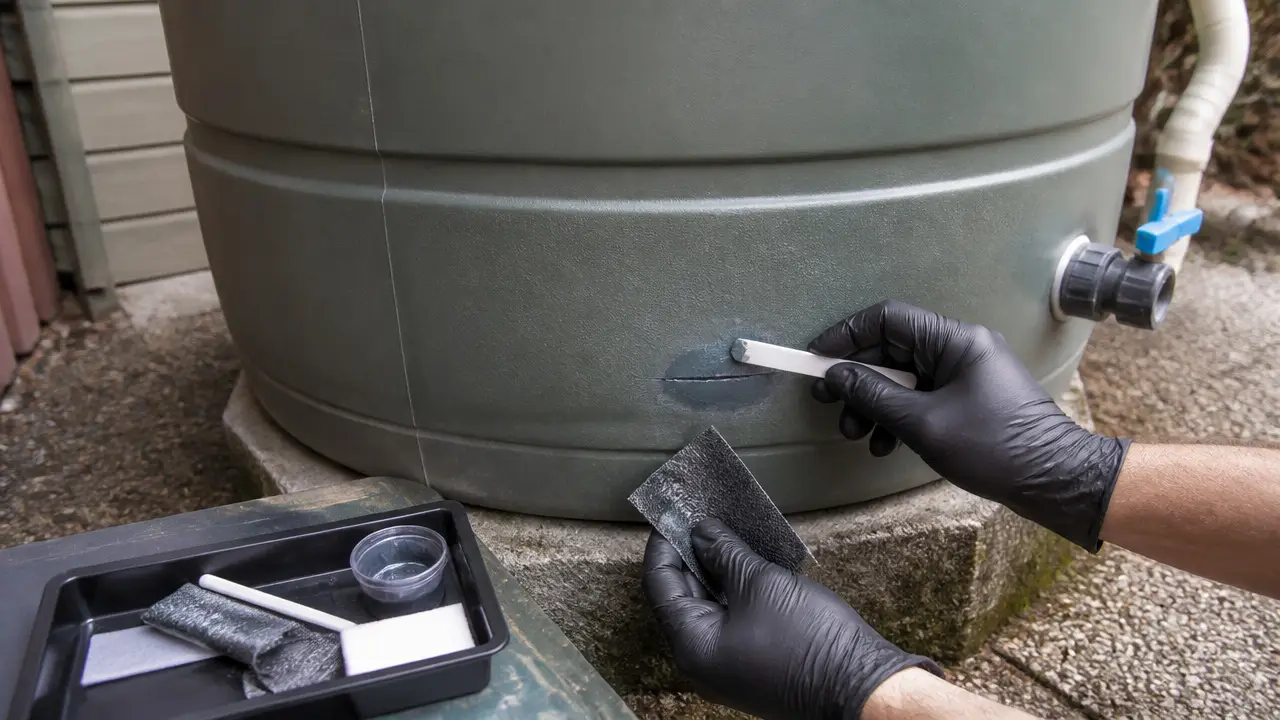
Tape is also a poor permanent repair for a crack in a plastic rainwater tank.
A full tank creates substantial outward force on its walls. A patch that appears dry when the tank is nearly empty may fail when the water level rises.
Tank repair methods vary according to the plastic type, tank construction, crack location, and manufacturer recommendations.
Large cracks, cracks around outlets, or structural damage should be assessed before refilling the tank.
What About Waterproof Repair Tape?
Heavy waterproof adhesive tapes are useful for many household jobs, but they have a limited role in water systems.
They may temporarily slow water escaping from a low-pressure surface. However, their success depends heavily on:
- Surface cleanliness
- Surface dryness
- Pipe material
- Water pressure
- Temperature
- Shape of the damaged area
- Condition of the pipe
Adhesive tape usually performs much better on a clean, dry surface than on a pipe that is actively leaking.
It can be useful as an emergency measure, but it should not replace a proper plumbing repair.
What About Fiberglass Pipe Repair Tape?
Some pipe repair systems use fiberglass fabric impregnated with resin. The material hardens around the pipe after installation.
These systems can create a much more rigid repair than ordinary tape.
However, they are not interchangeable with self-fusing silicone tape. Their suitability depends on the pipe material, pressure, temperature, water use, surface preparation, and specific repair system.
A structural pipe repair should follow the repair product manufacturer's instructions.
For pressurized household plumbing or important supply lines, replacing the damaged section is often the more reliable solution.
Can Duct Tape Stop a Water Leak?
Duct tape may slow a very small leak briefly, but it is rarely a good water-system repair.
Its adhesive can lose its grip when continuously exposed to water. Pressure inside a pipe can also force water underneath the tape.
Duct tape is more useful for holding something in place than for permanently sealing plumbing.
For an emergency pipe wrap, self-fusing silicone tape is generally a better choice.
How to Use Self-Fusing Tape for a Temporary Pipe Leak
Guidance on repair tapes compatible with leaking water tanks helps compare reserve capacity for likely demand and collection rates.
Before attempting a repair, shut off the pump or water supply if possible.
Reducing pressure makes the repair safer and gives the tape a better chance of holding.
1. Find the Exact Leak
Dry the pipe and determine where the water is escaping.
A leak that appears to come from the middle of a pipe may actually be running down from a fitting above it.
2. Reduce or Remove Water Pressure
Turn off the pump, close the appropriate valve, or otherwise depressurize the line when it can be done safely.
Do not attempt to wrap a badly damaged high-pressure pipe while it remains pressurized.
3. Clean the Pipe
Remove dirt, grease, algae, and loose material around the repair area.
The surface does not need adhesive for self-fusing silicone tape to work, but dirt can interfere with a tight wrap.
4. Stretch and Overlap the Tape
Follow the tape manufacturer's instructions.
Self-fusing tape normally works by being stretched and wrapped with significant overlap. Extend the wrap beyond both sides of the damaged area rather than covering only the exact hole.
5. Restore Pressure Carefully
Once the repair has been made according to the tape instructions, restore pressure gradually and inspect the area.
Treat the wrap as a temporary repair unless the manufacturer specifically approves the application as a permanent repair under your operating conditions.
Pressure Makes a Big Difference
A slow drip from a gravity-fed rain barrel is very different from a leak in a pressurized household pipe.
Higher pressure places much more force on a repair.
A tape patch may be reasonable as temporary containment on a low-pressure irrigation line but inappropriate on:
- Household pressure plumbing
- Pump discharge lines operating at substantial pressure
- Hot-water piping
- Pipes with spreading cracks
- Damaged pressure tanks
- Critical water-supply lines
If a pipe is cracked, swollen, badly corroded, or mechanically damaged, replacing the affected section is usually safer than trying to reinforce it with more tape.
Temperature and Freezing Matter Too
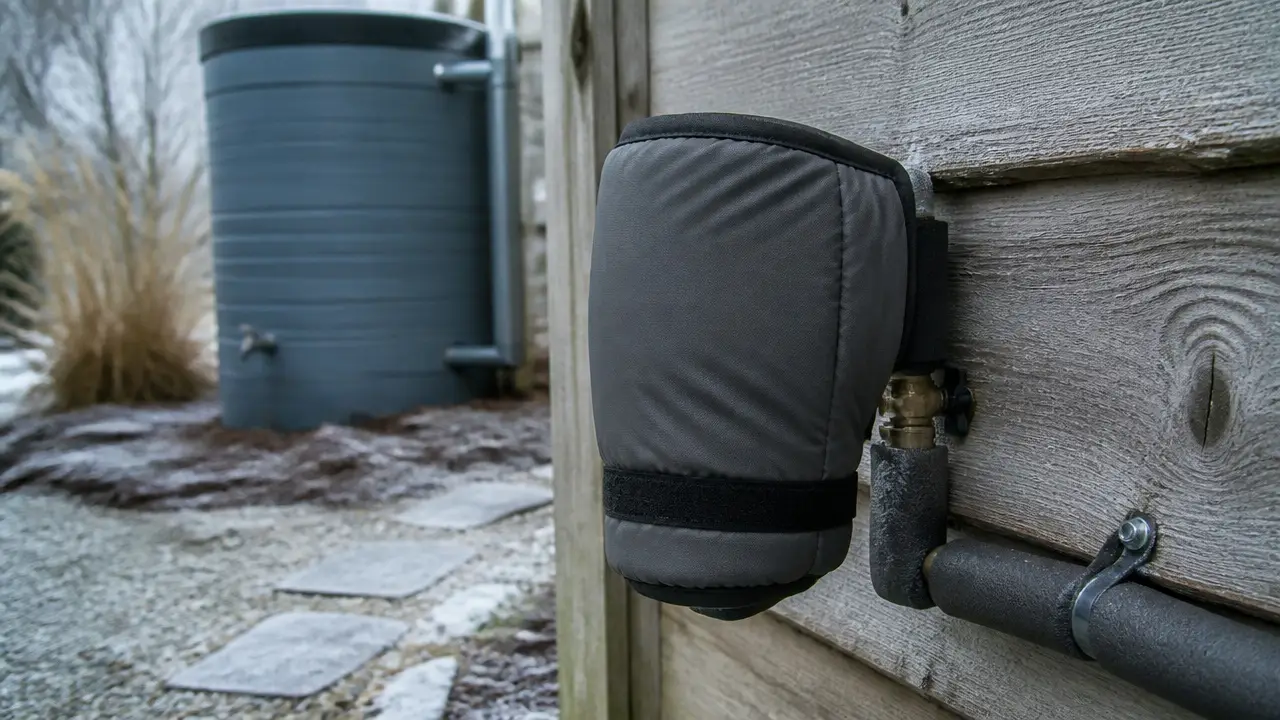
Outdoor rainwater and irrigation systems can experience large temperature changes.
Freezing water expands and can crack:
- Pipes
- Valves
- Filter housings
- Pump bodies
- Tank fittings
Tape placed over freeze damage does not correct the underlying weakness.
If a leak develops after freezing weather, inspect the surrounding pipe and fittings carefully. There may be more damage than the visible leak suggests.
Be Careful With Drinking-Water Systems
A tape that stops water from leaking is not automatically suitable for contact with drinking water.
If the repair is part of a potable-water system, meaning a system intended to provide drinking water, confirm that every material in contact with the water is specifically suitable for that use.
Roof-collected rainwater should not be assumed to be safe to drink simply because a leak has been repaired. Drinking-water use requires suitable collection, treatment, maintenance, water-quality testing, and compliance with applicable local requirements.
When Tape Is Not Enough
Stop treating the problem as a tape repair when you find:
- A long or spreading crack
- A split pressure pipe
- A damaged tank wall
- A leaking glued joint
- A broken valve
- A distorted fitting
- A damaged bulkhead opening
- Major corrosion
- Repeated leaks in the same location
Replacing the damaged component usually gives a more dependable result.
Electrical pumps should also be disconnected safely before working near leaking water. If the leak involves electrical equipment, household pressure plumbing, inaccessible piping, or significant structural damage, qualified help may be appropriate.
The Best Practical Choice
For a temporary wrap around a leaking pipe or hose, self-fusing silicone tape is generally the best type of tape to keep available. It conforms well to round surfaces, bonds to itself, and does not depend on ordinary adhesive.
For threaded plumbing connections, use PTFE thread-seal tape when the fitting design calls for it.
For cracks, broken fittings, tank damage, and high-pressure plumbing, tape should be viewed as an emergency measure rather than the final repair. Finding the actual cause of the leak and fixing the damaged component is usually the better long-term solution.
Frequently Asked Questions
What is the best waterproof tape for a leaking pipe?
Self-fusing silicone tape is usually the most useful tape for temporarily wrapping a small pipe leak. It stretches around the pipe and bonds to itself. Its suitability still depends on the pipe pressure, temperature, material, and condition.
Will PTFE tape stop an active water leak?
PTFE tape is mainly designed to seal threaded fittings during assembly. Wrapping it around the outside of an already leaking pipe or fitting is not an effective repair.
Can I use duct tape on a leaking water pipe?
Duct tape may temporarily slow a minor leak, but its adhesive can fail when continuously wet. Self-fusing silicone tape is usually better for temporary pipe wrapping.
Can waterproof tape permanently repair a cracked water tank?
Usually not. A full water tank places substantial force on its walls. Tank cracks normally require a repair method appropriate for the tank material and the location of the damage.
Why does my threaded fitting still leak after using PTFE tape?
Possible causes include damaged threads, incorrect tape application, cross-threading, overtightening, or a fitting that actually seals with a gasket or O-ring instead of the threads.
Can self-fusing silicone tape be used on a garden hose?
It can be useful for a temporary repair to a small hose leak if the hose is otherwise in good condition. A badly split, brittle, or deteriorated hose is better replaced.
Is waterproof repair tape safe for drinking-water pipes?
Do not assume it is. Materials used in contact with potable water should be specifically suitable for that application. Check the manufacturer's documentation for the exact tape and intended use.