As an affiliate, we may earn a commission from qualifying purchases. We get commissions for purchases made through links on this website from Amazon and other third parties.
Silicone sealant can stop some water leaks, but only when the leak comes from a joint, seam, or small gap that silicone can properly bond to. It works best on clean, dry, non-pressurized surfaces such as glass, metal, ceramic, and some rigid plastics.
It is much less reliable for cracked tanks, loose fittings, pressurized plumbing, or plastics such as polyethylene. Many rain barrels, IBC totes, and water tanks are made from polyethylene, which silicone often does not stick to well.
When Silicone Sealant Can Stop a Leak
Silicone works by forming a flexible waterproof barrier over or inside a gap. Once cured, it can handle normal movement better than many rigid adhesives.
It may work well for:
- Small gaps around some tank fittings
- Seams between compatible materials
- Leaks around gutters and downspouts
- Joints between metal, glass, ceramic, or certain rigid plastics
- Non-pressurized water containers when the sealant is compatible with the container material
The key is that the silicone must stay firmly attached to both sides of the leaking area.
Simply covering a wet leak with silicone does not guarantee a repair.
When Silicone Is Unlikely to Work
Silicone is not a universal leak repair.
It is usually a poor choice when the problem is structural or when water pressure is pushing through the damaged area.
Cracked Rain Barrels or Tanks
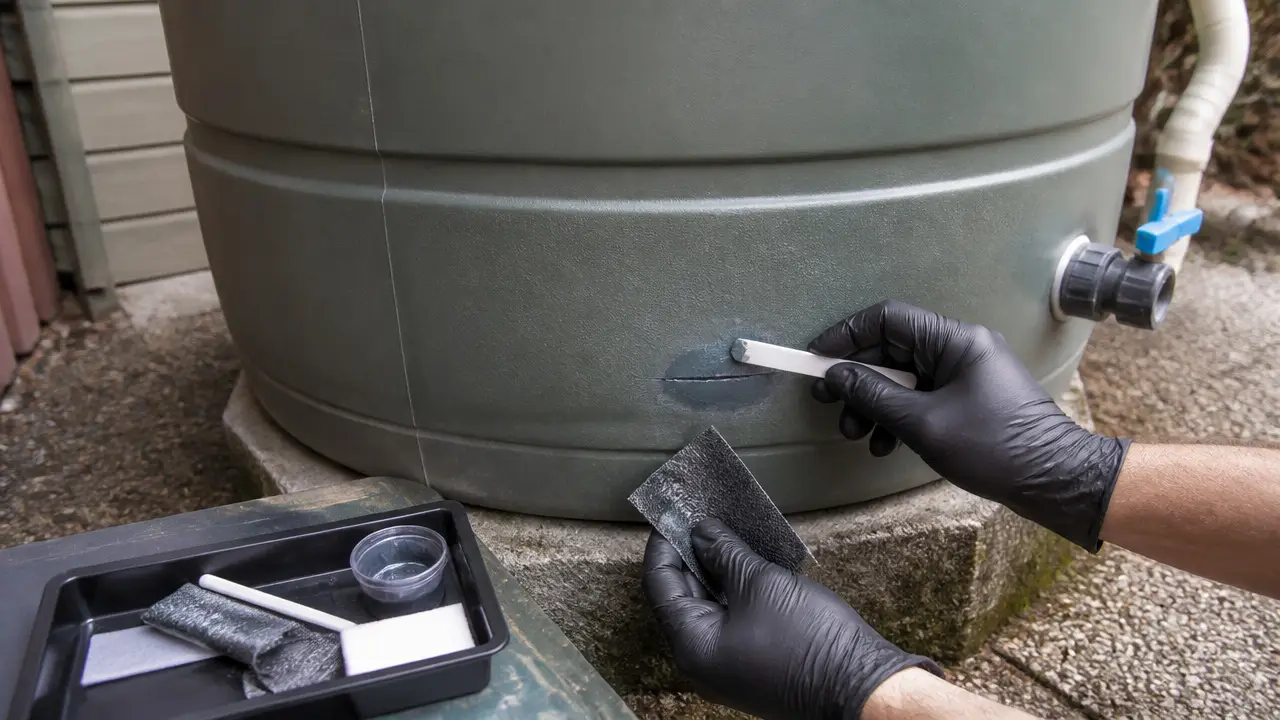
A crack can continue spreading even after silicone is placed over it. Water pressure from inside the container can also push against the repair.
A crack near the bottom of a full tank receives more water pressure than one near the top.
For a cracked tank, the correct repair depends heavily on the tank material. Plastic welding or another material-specific repair may be more suitable than silicone.
Polyethylene Tanks
Many rain barrels, IBC totes, and larger cisterns are made from high-density polyethylene, often called HDPE.
Silicone generally has poor adhesion to polyethylene. The bead may initially appear sealed but later peel away from the plastic.
If the container has an HDPE or PE marking, do not assume ordinary silicone will make a dependable permanent repair.
Pressurized Water Lines
Silicone should not normally be used as the main repair for a damaged pressurized pipe, hose, or fitting.
Pressure can force water behind the silicone and break the seal.
A leaking pressure connection usually needs the fitting, gasket, pipe, hose, or threaded connection repaired correctly.
Loose Bulkhead Fittings
A bulkhead fitting is a fitting that passes through the wall of a tank and creates a sealed connection for a pipe, hose, or valve.
If a bulkhead leaks because its gasket is damaged, twisted, installed incorrectly, or sitting on an uneven surface, coating the outside with silicone may only hide the real problem.
It is usually better to fix the fitting and gasket first.
Can You Put Silicone Over an Active Water Leak?
Usually, no.
Most common silicone sealants need a clean and reasonably dry surface before application. Water can prevent good contact between the sealant and the surface.
For a rain barrel or storage tank, that often means:
- Drain the water below the leaking area.
- Let the surface dry.
- Remove dirt, algae, loose old sealant, and other material that could interfere with adhesion.
- Apply a sealant that is compatible with the surfaces involved.
- Allow it to cure according to its instructions before exposing it to water.
Do not refill the tank simply because the outside of the silicone feels dry. Surface drying and full curing are not necessarily the same thing.
Cure requirements vary by product, bead thickness, temperature, and humidity.
Silicone Around a Rain Barrel Spigot
A leak around a rain barrel spigot is common, but silicone should not be the first solution.
First find where the water is actually escaping.
If it leaks between the barrel wall and the spigot assembly, check:
- Whether the gasket is present
- Whether the gasket is damaged
- Whether the fitting is loose
- Whether the hole is too large or uneven
- Whether the tank wall is badly curved at the fitting
- Whether the fitting is designed for that wall thickness
A proper gasket or bulkhead fitting normally provides the main seal.
Silicone may sometimes be useful as a secondary seal when it is compatible with both materials, but it should not compensate for a badly fitted connection.
What About Threaded Connections?
A leaking threaded connection needs the correct type of thread seal rather than a coating of silicone around the outside.
For example, a leak between threaded plumbing parts may result from:
- Incorrectly matched threads
- Damaged threads
- Insufficient thread sealing
- Cross-threading
- Cracked fittings
- Excessive tightening
Smearing silicone around the outside can make the leak disappear temporarily while water continues moving through the threaded joint underneath.
Disassemble and correct the connection instead.
Silicone for Gutters and Downspouts
Silicone can be more useful on gutters and downspouts because these systems normally operate without significant water pressure.
It may seal small gaps around:
- Gutter joints
- Downspout connections
- Collection-system transitions
- Flashing details where the sealant is intended for that application
However, standing water, dirty surfaces, corrosion, movement, or poorly aligned components can still cause the repair to fail.
Evaluating a suitable way to patch a plastic water tank helps understand vessel capacity and fittings within the available space.
If a gutter joint is separating mechanically, fix the joint rather than depending on sealant alone.
Does Silicone Work Underwater?
Some specialty sealants are designed for wet or underwater applications, but ordinary silicone should not automatically be treated that way.
Read the manufacturer's instructions for the exact sealant.
A product that can tolerate water after curing may still require a dry surface during application.
Those are two different things.
Is Silicone Safe for Drinking-Water Systems?
Do not assume a silicone sealant is suitable for potable water simply because it is waterproof.
Potable water means water intended to be safe for drinking.
If a sealant will contact drinking water, it needs to be specifically suitable for that application and used according to its instructions. Product formulations and approvals vary.
More importantly, sealing a rainwater tank does not make the stored rainwater safe to drink.
Drinking-water use requires a whole-system approach that can include suitable collection surfaces, debris control, prefiltration, treatment, current laboratory testing, proper maintenance, and compliance with local requirements.
Why Silicone Repairs Sometimes Start Leaking Again
A silicone repair can fail even when the silicone itself remains waterproof.
Common reasons include:
Poor Adhesion
If the silicone does not bond firmly to the surface, water can travel underneath it.
This is especially important with polyethylene and polypropylene plastics.
Dirty Surfaces
Algae, dust, oils, old adhesive, and loose material can prevent silicone from sticking.
Movement
A loose fitting or flexible tank wall may repeatedly pull on the seal.
Silicone can stretch, but it cannot correct a connection that moves too much.
Water Pressure
A patch near the bottom of a tank experiences continuous pressure while the tank contains water.
A repair that holds with a nearly empty barrel may leak after the barrel fills.
The Damage Is Growing
Silicone can cover a crack without stopping the crack itself from getting longer.
That is why structural damage needs more than a surface seal.
How to Decide Whether Silicone Is the Right Repair
Before using silicone, identify three things: what is leaking, what material it is made from, and why it started leaking.
Silicone is a reasonable option when you have a small, stable gap between materials that the sealant can bond to and the joint does not carry significant pressure.
Look for another repair when you have:
- A spreading tank crack
- A polyethylene surface with poor sealant adhesion
- A damaged gasket
- A loose bulkhead fitting
- A cracked valve
- A damaged pipe or hose
- A pressurized plumbing leak
- A fitting that was installed incorrectly
Fixing the cause of the leak is usually more dependable than covering the symptom.
Frequently Asked Questions
Will silicone sealant stop a leaking rain barrel?
It can stop some leaks around compatible seams or fittings, but it is not dependable for every rain barrel. Many barrels are polyethylene, which silicone often does not bond to well. Cracks and damaged fittings may need a different repair.
Can I put silicone on a leak while water is coming out?
Ordinary silicone usually needs a clean, dry surface for reliable adhesion. Drain the water below the repair area and follow the sealant manufacturer's surface preparation and curing instructions.
Will silicone seal a cracked plastic water tank?
Sometimes it may temporarily cover a small crack, but it may not stop the crack from spreading. The correct repair depends on the plastic. Polyethylene tanks often require a repair method specifically suited to polyethylene.
Will silicone stick to an IBC tote?
Most IBC tote bottles are made from HDPE polyethylene. Ordinary silicone generally does not bond reliably to polyethylene, so it should not be assumed to provide a permanent repair.
Can silicone fix a leaking bulkhead fitting?
Silicone may sometimes serve as a secondary seal, but the gasket and fitting should provide the main seal. If the gasket is damaged, misplaced, or improperly tightened, correct that problem first.
Can silicone stop a pressurized pipe leak?
Silicone is generally not the proper primary repair for a pressurized pipe or fitting. Repair or replace the damaged component and use the correct sealing method for the connection.
Is waterproof silicone safe for drinking-water tanks?
Not necessarily. Waterproof does not mean suitable for potable-water contact. Use only materials specifically intended for the application, and remember that repairing the tank does not make collected rainwater safe to drink.