As an affiliate, we may earn a commission from qualifying purchases. We get commissions for purchases made through links on this website from Amazon and other third parties.
Cold weather can damage a rain barrel if water freezes inside the barrel, spigot, hose, or fittings. The safest way to winterize a rain barrel in a freezing climate is to disconnect it from the downspout, drain it completely, remove attached hoses and fittings that can hold water, clean the barrel, and store or secure it until spring.
If your area rarely freezes, you may not need to remove the barrel for the whole winter. But you should still protect exposed plumbing and make sure trapped water cannot freeze inside valves or connectors.
Why Rain Barrels Need Winterizing
Water expands when it freezes. A barrel that contains water can be placed under a lot of pressure as ice forms.
The barrel itself is not the only concern. Small parts are often more vulnerable, including:
- Spigots
- Ball valves
- Hose connectors
- Bulkhead fittings
- Short sections of hose
- Pumps
- Filter housings
- Connecting pipes between barrels
A little trapped water can freeze inside one of these parts and crack it.
Winterizing also keeps the barrel from filling during winter storms after you have drained it.
How to Winterize a Rain Barrel
1. Stop New Water From Entering the Barrel
Start by disconnecting the barrel from its rainwater supply.
If your downspout was cut to feed directly into the barrel, reconnect the downspout so roof runoff can reach the normal drainage system.
If you use a downspout diverter, switch or configure it so water bypasses the barrel.
Make sure the winter drainage path sends water somewhere suitable. Do not create a new drainage problem next to your home's foundation.
2. Drain the Barrel Completely
Open the barrel's spigot and drain as much water as possible.
Water near the bottom may not drain through the spigot because many spigots sit slightly above the lowest part of the barrel. If your barrel has a lower drain plug, use it according to the barrel's design.
You may need to carefully tip an emptying barrel to remove the last small amount of water. Do not try to move or tip a barrel that still contains a large amount of water. Water is heavy, and a full barrel can weigh hundreds of pounds.
The goal is to leave as little trapped water as practical.
3. Drain Hoses and Irrigation Lines
Disconnect garden hoses, soaker hoses, drip lines, and other equipment connected to the barrel.
Drain the water from each line before storing it.
Pay special attention to low spots. Water can remain trapped in a hose even when both ends appear empty.
If the barrel supplies a pump, irrigation timer, filter, or pressure system, winterize those components according to their own requirements. A drained barrel does not protect equipment connected farther down the line.
4. Protect the Spigot and Other Fittings
Open the spigot after draining so water does not remain trapped behind the valve.
Some removable fittings can be taken off and stored indoors. This can be useful for small plastic valves, adapters, and other parts that might be damaged by repeated freezing.
Do not force a bulkhead fitting or threaded connection apart just for winter storage if it is not meant to be removed regularly.
A bulkhead fitting is a fitting that passes through the wall of the barrel and creates a sealed connection for a valve, pipe, or hose.
If you leave a fitting installed, check that it is drained and not connected to anything that can collect water.
5. Clean Out Sediment and Debris
Winter is a good time to clean the barrel.
Remove leaves, roof grit, dirt, and other sediment that has collected inside. Follow the barrel manufacturer's cleaning instructions when available.
Also clean accessible screens and inlet strainers.
You do not need to make the barrel sterile for winter storage. The goal is to remove debris and leave the system reasonably clean and dry.
Never climb inside a rain barrel or storage tank to clean it. Enclosed tanks can create serious confined-space hazards.
6. Let the Barrel Dry
Allow the barrel to drain and dry as much as practical before closing or storing it.
A dry barrel is less likely to have water trapped around fittings or frozen into a layer at the bottom.
Keep the barrel covered or screened while it dries so debris and animals cannot enter.
7. Store the Barrel or Secure It Outdoors
Indoor storage is useful when you have space, but not every rain barrel needs to be moved into a heated building.
An empty barrel may be stored in a garage, shed, or other protected location if its design allows it.
If you leave it outdoors:
- Keep it empty.
- Prevent rain and snowmelt from refilling it.
- Secure it against wind.
- Keep the lid in place.
- Avoid leaving it where falling ice or heavy snow could damage it.
- Follow any cold-weather limits provided by the barrel manufacturer.
Some people turn an empty barrel upside down for winter storage. This can keep precipitation from entering, but only do this if the barrel's shape, lid, and fittings allow safe storage in that position.
Do not assume every plastic barrel can tolerate the same winter conditions.
What Should You Do With the Downspout During Winter?
Once the barrel is disconnected, the roof still needs a safe drainage path.
A normal arrangement is:
Roof → gutter → downspout → suitable drainage area
Make sure the downspout is not left pouring water against the wall or foundation because the barrel has been removed.
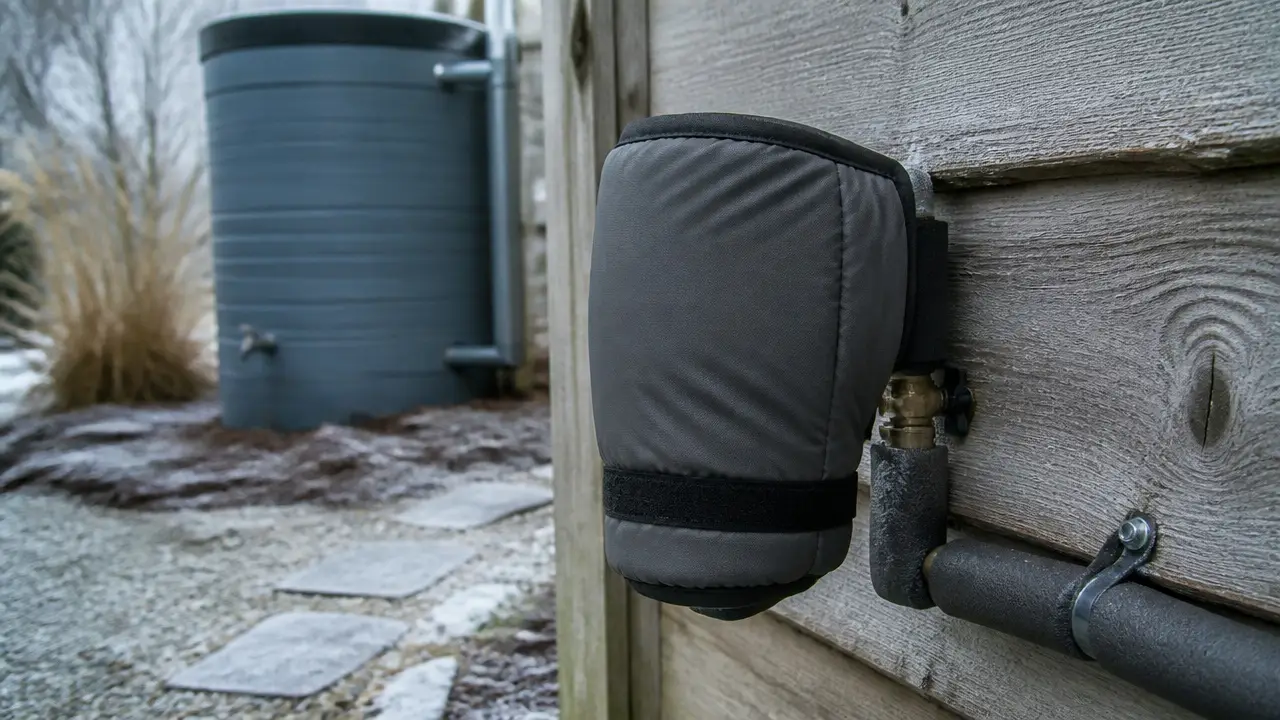
Reviewing protecting a rain barrel from freezing helps assess cold-weather protection without sealing off service points.
If you use a diverter, winterizing may be simpler because the downspout itself can remain intact while the diverter sends water past the barrel.
Check the drainage path again after snow, ice, or heavy rain. Winter runoff can behave differently when the ground is frozen.
Do You Have to Empty a Rain Barrel for Winter?
In a climate with regular hard freezes, emptying the barrel is usually the safer approach.
Leaving a barrel partly full does not solve the problem. The water can still freeze, and ice can put pressure on the barrel and its fittings.
Leaving the barrel completely full is also risky unless the system was specifically designed and documented for freezing conditions.
Rain barrels are made from different materials and have different shapes, wall thicknesses, fittings, and cold-weather limits. Follow the manufacturer's winter-storage instructions when available.
What If You Live Somewhere With Only Occasional Freezes?
A mild climate requires a different approach.
You may be able to keep collecting rainwater during winter if freezing weather is unusual. However, exposed parts can still freeze during a short cold spell.
Before freezing temperatures arrive:
- Check the forecast.
- Drain exposed hoses.
- Protect or drain pumps and filters.
- Make sure valves do not hold trapped water.
- Follow the cold-weather instructions for your barrel and connected equipment.
A single freezing night can damage a small fitting even when the main barrel does not freeze solid.
If freezes are common rather than unusual, a full winter shutdown is usually simpler.
What About Connected Rain Barrels?
Multiple barrels need extra attention because water can remain in the connecting lines.
Drain every barrel individually when possible. Then inspect the pipes or hoses connecting them.
A line between two apparently empty barrels may still contain water if it has a low point.
If your barrels are connected near the bottom, make sure the connection and its valves can drain.
Do not assume that opening one barrel's spigot automatically empties every part of a multi-barrel system.
Should You Remove a Rain Barrel Pump?
If a pump is connected to the rain barrel, check its winter-storage instructions.
Many water pumps can be damaged by freezing water inside the pump body.
Simply unplugging the pump is not the same as winterizing it. The pump, hoses, filters, pressure tanks, and other connected parts may need to be drained.
Disconnect electrical equipment from power before servicing it. Do not work on electrical connections in wet conditions. Permanently installed electrical equipment should be handled according to its instructions and applicable electrical requirements.
Do You Need Antifreeze in a Rain Barrel?
Do not add automotive antifreeze to a rainwater barrel.
A better approach for a seasonal rain barrel is normally to remove the water from parts that could freeze.
Do not add chemicals simply to keep a rainwater system from freezing unless the entire system was specifically designed for that method and the chemical is suitable for the intended water use.
This is especially important when stored rainwater may later be used around gardens, animals, household systems, or other sensitive areas.
A Simple Rain Barrel Winterizing Checklist
Before the first sustained freeze:
- Stop rainwater from entering the barrel.
- Restore a safe downspout drainage route.
- Drain the barrel.
- Drain hoses and irrigation lines.
- Drain or winterize pumps and filters.
- Open or remove fittings that could trap water.
- Clean sediment and debris from the barrel.
- Let the barrel dry as much as practical.
- Store it under cover or secure it outdoors.
- Make sure rain and snowmelt cannot refill it.
When to Put the Rain Barrel Back Into Service
Reconnect the barrel after the risk of damaging freezes has passed and you can safely use the system again.
Before collecting water:
- Inspect the barrel for cracks or distortion.
- Check the spigot.
- Look at seals and bulkhead fittings.
- Reconnect hoses securely.
- Clean inlet screens.
- Check the overflow route.
- Confirm the barrel sits on a stable base.
- Test connections with a small amount of water before allowing the barrel to fill.
If the barrel is elevated, also check the stand or platform. Wet soil, frost movement, and winter weather can shift supports.
Do not place a full barrel on a damaged or unstable base. Stored water is very heavy.
Frequently Asked Questions
Can I leave a rain barrel outside all winter?
You can sometimes leave an empty rain barrel outdoors if it is protected from refilling, securely positioned, and suitable for the local winter conditions. Follow the barrel manufacturer's storage instructions when available. Leaving water inside is more likely to cause freeze damage.
Should I leave the rain barrel spigot open in winter?
After the barrel has been disconnected and drained, leaving the valve open can help prevent water from being trapped inside it. Make sure no rain or snowmelt can enter the barrel and refill the system.
Can I leave a little water in the bottom of the barrel?
It is better to remove as much water as practical in a freezing climate. Small amounts may still freeze around drains, fittings, or low spots. You do not need to make the barrel perfectly dry, but it should not contain a meaningful pool of standing water.
Will a plastic rain barrel crack if it freezes?
It can. The risk depends on the barrel's material, shape, construction, how much water is inside, and where the ice forms. Fittings and valves may fail before the barrel itself. Draining the system reduces the amount of water available to freeze and expand.
Do I need to disconnect a rain barrel from the downspout?
In areas with regular freezing weather, disconnecting or bypassing the barrel prevents winter rain and snowmelt from filling it again. Make sure the downspout still has a safe drainage route.
Should I cover an empty rain barrel for winter?
Yes. Keep the inlet covered or screened so leaves, animals, snow, and rain cannot enter. The exact method depends on whether the barrel remains upright or is stored in another position.
When should I winterize my rain barrel?
Winterize it before your first period of sustained freezing temperatures. Do not wait until water in the barrel, valves, or hoses has already frozen.