As an affiliate, we may earn a commission from qualifying purchases. We get commissions for purchases made through links on this website from Amazon and other third parties.
Best Overall
Best for Landscape Harvesting
Best for Whole-Home Water Conservation
A good rainwater harvesting book can save you from building the wrong system on paper before you spend money on tanks, fittings, pumps, or treatment. The most useful book is not always the thickest one. It is the one that matches what you are trying to learn: home-scale system design, landscape harvesting, broader household water conservation, or a shorter project-focused introduction.
The four books here take noticeably different approaches. Essential Rainwater Harvesting focuses most directly on home-scale system thinking and sizing. Rainwater Harvesting for Drylands and Beyond, Volume 1 is the strongest fit for shaping landscapes to slow, spread, and use rainfall. The Water-Wise Home steps back to look at conservation and water reuse across the home and yard. Harvesting Rainwater for Your Homestead in 9 Days or Less is the shortest, lightest option and uses a more project-driven approach to barrels, totes, and cisterns.
No book can tell you that one design is safe or legal everywhere. Roof materials, local rainfall, overflow paths, structural loads, plumbing rules, intended water use, and water-quality requirements all change the final system. Use a book to understand the decisions, then match those decisions to your property and current local requirements.
Quick Comparison
| Book | Best For | Length | Main Strength | Main Limitation |
|---|---|---|---|---|
| Essential Rainwater Harvesting | Home-scale system planning | 172 pages | Connects design choices to the whole rainwater system | Not a simple parts-list or step-by-step barrel manual |
| Rainwater Harvesting for Drylands and Beyond, Volume 1 | Landscape rainwater harvesting | 288 pages | Deep treatment of harvesting rain in the landscape | Strong dryland focus may be less direct for an urban barrel project |
| The Water-Wise Home | Whole-home conservation and reuse | 256 pages | Broad water-saving context with practical illustrations | Rainwater storage and roof-catchment detail is not its only focus |
| Harvesting Rainwater for Your Homestead in 9 Days or Less | Shorter project-style introduction | 169 pages | Covers first-barrel, tote, and cistern ideas in a compact format | Broader preparedness framing may not suit every reader |
What Kind of Rainwater Book Do You Need?
Start by deciding what you want the book to help you do.
If you are planning a roof-to-tank system, look for guidance that helps you think through collection area, rainfall, storage size, overflow, and intended water use as one connected system. A book that explains only how to attach a barrel can leave important questions unanswered once the setup grows.
If your main goal is to keep rainfall on the property, landscape-focused guidance may be more useful than tank-focused plumbing detail. Swales, basins, grading, soil, vegetation, and runoff paths all deal with rainwater before it ever reaches a storage container.
If you are trying to reduce total household water demand, a broader conservation book can be more useful because it puts rainwater alongside other ways to use water more carefully. That is a different job from designing a dedicated rainwater storage system.
A shorter project guide can be easier to finish and act on, but compact books often trade depth for speed. That can work well for a first barrel or tote as long as you know when to seek more detailed information for structural support, pumps, treatment, electrical work, or potable-water use.
A Practical Home-Scale System Guide
1 / 4
Essential Rainwater Harvesting: A Guide to Home-Scale System Design

Publisher
New Society Publishers
Length
172 pages
Published
2018
Essential Rainwater Harvesting is the clearest match here for a reader who wants to understand a home-scale rainwater system rather than copy one barrel setup. Its 172 pages cover preliminary considerations and design fundamentals before moving into sizing and other system requirements. That makes it useful when you are still deciding how collection, storage, fittings, and water use should work together.
The book leans into systems thinking. That is its biggest strength and also the reason it can frustrate someone who wants a short shopping list followed by step-by-step assembly. Readers describe it as detailed and well written, but some wanted more direct instructions for basic downspout-to-barrel installations and more simple equipment-sizing examples. The technical material and spreadsheet-based analysis can take time to work through.
Choose this one when you want to understand why the parts of a rainwater system need to be sized and planned together. It is a better fit for a reader willing to think through rainfall, demand, storage, and system behavior than for someone who wants a weekend project manual with product suggestions.
Why It Works
- Focuses directly on home-scale rainwater system design and the decisions that come before equipment sizing.
- Its 172-page length is substantial without being the longest reference in this group.
- Helps frame a tank as one part of a larger collection and use system rather than the whole solution.
What To Keep In Mind
- It is not a simple step-by-step guide for connecting a downspout to a 55-gallon barrel.
- Some of the system-analysis material takes more effort than a basic DIY project requires.
- Readers looking for exact equipment-sizing rules may still need additional technical references for their specific property.
A Deep Guide to Harvesting Rain in the Landscape
2 / 4
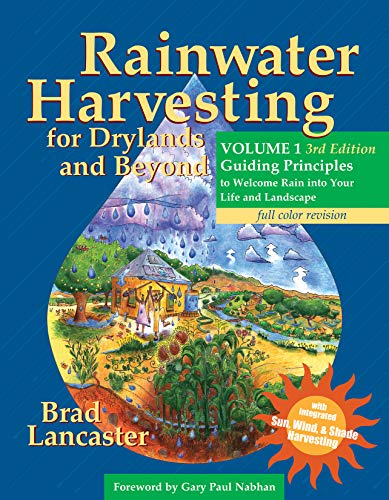
Rainwater Harvesting for Drylands and Beyond, Volume 1, 3rd Edition
Publisher
Rainsource Press
Edition
3rd
Length
288 pages
Rainwater Harvesting for Drylands and Beyond, Volume 1 is the longest book in this group at 288 pages, and it has the clearest landscape-harvesting focus. It is built around principles for welcoming rain into a property rather than treating every drop as water that must first go into a tank. That makes it especially useful when soil, slopes, planted areas, and runoff routes are part of the project.
Its depth is valuable for a reader who wants more than a barrel beside a downspout. Practical techniques have been applied on properties of different sizes, and the book is written as a substantial reference rather than a quick assembly guide. The tradeoff is that its strong dryland and Arizona context can feel less direct if you live in a wet climate, a dense urban area, or a location where local building rules sharply limit landscape changes.
This is the book to choose when your main question is how to use rainfall across the site. If your immediate goal is selecting tank fittings, sizing a pump, or building a compact urban roof-catchment system, another reference may get you to that specific answer faster.
Why It Works
- The 288-page third edition provides the deepest landscape-oriented treatment among these four books.
- Strong fit for readers thinking about how rainfall moves across soil and planted areas, not only into storage.
- Useful when the goal is to make the property itself part of the rainwater strategy.
What To Keep In Mind
- The dryland emphasis may require adaptation in wetter climates.
- Urban readers with tight lots or restrictive local rules may not be able to use every landscape technique.
- It is not primarily a detailed tank-and-plumbing design manual.
A Broader Water-Conservation Reference
3 / 4
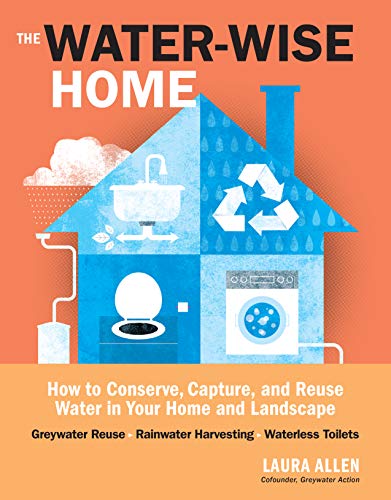
The Water-Wise Home: How to Conserve, Capture, and Reuse Water
Publisher
Storey Publishing
Length
256 pages
Published
2015
The Water-Wise Home is a broader book than a dedicated rainwater manual. Its 256 pages cover conserving, capturing, and reusing water in the home and landscape. That makes it useful for someone who wants to reduce overall water demand and understand how rainwater can fit beside other water-saving approaches.
The practical strength is presentation. Readers found the plans, photographs, and explanations easy to follow, and the detail can help you learn which questions to ask even if you are not ready to install anything yourself. At the same time, rainwater capture is only part of the subject. Some readers wanted more roof-catchment, tank-storage, filtering, and pumping detail than the book provides, while others valued the wider look at household and landscape water use.
Pick this book when your project starts with the question, “How can this property use water more wisely?” rather than, “How do I design a complete rainwater tank system?” It can give useful context before you move to more specialized references for storage sizing, plumbing, pumping, or treatment.
Why It Works
- Connects rainwater to a broader home-and-landscape water conservation plan.
- The 256-page format gives it room for detailed explanations, plans, and illustrations.
- Helps readers understand tradeoffs and questions before committing to installation work.
What To Keep In Mind
- It is not focused only on roof-collected rainwater.
- Tank storage, filtration, and pumping are not covered with the depth of a dedicated system-design book.
- Some regulatory examples and water-reuse practices are location dependent and should be checked against current local requirements.
A Shorter Project-Style Starting Point
4 / 4
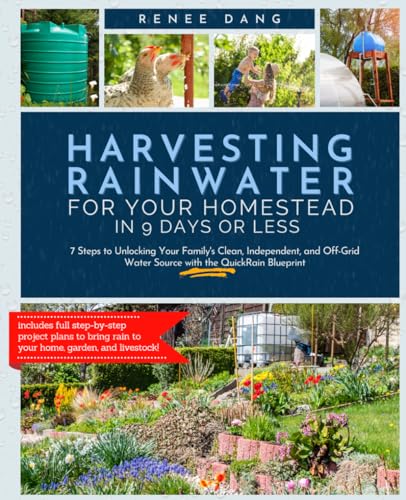
Harvesting Rainwater for Your Homestead in 9 Days or Less
Publisher
Independently published
Length
169 pages
Published
2022
Harvesting Rainwater for Your Homestead in 9 Days or Less is the shortest book here at 169 pages and the lightest at 11.7 ounces. Its material is organized around a more direct project path, including installing a first rain barrel, IBC tote, or cistern. It also discusses options such as a basket strainer or inline filter and basic site choices such as a gravel pad.
That compact format can be helpful when a large technical reference feels like too much for a first project. The book is more strongly framed around homesteading and preparedness than the other choices, though, so not every section will match a suburban garden-barrel setup. Its basic concepts still need to be adapted to the actual roof, surrounding trees, collection area, storage container, and intended water use.
Treat it as an entry point, not as proof that one fast blueprint works everywhere. A first barrel or tote still needs a stable base, a safe overflow path, compatible fittings, and maintenance access. Any drinking-water plan needs a complete treatment approach and current water testing rather than relying on a book title or a single filter step.
Why It Works
- The 169-page format is the most compact option in this group.
- Covers a direct first-project path involving rain barrels, IBC totes, and cisterns.
- Includes practical setup topics such as strainers, inline-filter variations, and base preparation.
What To Keep In Mind
- The homestead and preparedness framing may be broader than a simple backyard collection project needs.
- Site conditions such as roof debris and nearby trees can change what prefiltration and maintenance make sense.
- More complex systems still need separate technical guidance for pumps, treatment, structural support, and local plumbing requirements.
How to Choose Between These Four Books
Choose System Design if You Are Still Sizing the Whole Setup
A home-scale rainwater system has several connected limits. Your roof determines how much water can be collected from a given rainfall. Storage determines how much can be held between storms. The intended use affects demand. Overflow needs somewhere safe to go, and pumps or treatment add their own requirements.
If you are still working through those relationships, Essential Rainwater Harvesting is the strongest starting point. It is the most directly focused on system design rather than one isolated project.
Choose Landscape Harvesting if the Yard Is Part of the Storage Strategy
Not every useful gallon needs to enter a tank. A landscape can slow runoff and make more rainfall available to plants and soil. That can reduce erosion and make better use of rainfall before it leaves the property.
Rainwater Harvesting for Drylands and Beyond is the better fit when these landscape decisions matter more than tank hardware. Its dryland perspective is especially relevant where rainfall is limited or arrives in intense events, but the principles still need to be adapted to local soil, slope, rainfall, and rules.
Choose a Broader Water Book if Conservation Comes First
Sometimes the best rainwater project begins by reducing demand. A household that uses less irrigation water may need less storage. A property that reuses water appropriately may be able to reserve rainwater for the jobs where it adds the most value.
The Water-Wise Home is the broadest reference here. It is a good fit when rainwater is one part of a larger plan for using water carefully around the home and landscape.
Choose a Compact Guide if You Need Momentum
A shorter book can be more useful than a deep reference if it gets you through the basics without losing the thread. Harvesting Rainwater for Your Homestead in 9 Days or Less is the compact choice for readers who want a project-oriented introduction.
The key is knowing when the short guide stops being enough. As soon as a system involves significant structural loads, powered pumps, household plumbing, treatment for potable use, or difficult site conditions, move to more specialized guidance and qualified help where appropriate.
Details Worth Checking Before You Rely on Any Book
Publication Date
Rainwater principles do not change quickly, but codes, rebates, plumbing rules, treatment guidance, and product standards can. The books here were published from 2015 through 2022. Use them for principles and planning, but check current official sources for rules that can change.
Climate Assumptions
Advice written for a hot, dry climate may put more emphasis on capturing short rain events and reducing evaporation. Advice written for a wetter region may assume more frequent tank turnover. Freezing climates add winter shutdown and freeze-protection concerns.
A useful book helps you understand the variables. It should not make you assume the author's local conditions are the same as yours.
Intended Water Use
Garden irrigation, toilet flushing, cleaning, livestock use, and drinking water do not have the same water-quality requirements. A book may discuss one or several of these uses, but the final system has to match the intended use and current local requirements.
For potable use, treat roof-collected rainwater as a whole-system water-quality problem. Collection surfaces, debris control, storage, treatment, maintenance, and current testing all matter. No book or single filter makes a universal safety guarantee.
The Level of DIY Detail
Some readers want principles first. Others need drawings and a clear sequence of tasks. Those are different strengths.
If you learn best by understanding the system, start with the book that explains relationships and sizing. If you need a practical first project, a shorter guide may be easier. Either way, avoid following a diagram blindly when your roof, downspout, storage container, slope, or local requirements differ from the example.
Common Mistakes When Learning Rainwater Harvesting From a Book
Copying a System Without Matching the Property
A tank size that works for one house can be wrong for another. Roof area, rainfall timing, water demand, and available space all change the answer. Use examples to learn the method, not as automatic specifications for your property.
Before choosing equipment, calculate the recommended rainwater tank size from the property’s collection potential and demand.
Treating Storage as the Only Design Question
A large tank does not fix a poor inlet, undersized overflow, difficult cleaning access, incompatible pump, or badly planned outlet. Think from the roof all the way to the intended water use.
Ignoring Maintenance
Screens clog. Sediment settles. Gutters collect organic debris. Pumps and meters need inspection. A design that looks good on paper can become frustrating if routine cleaning requires moving a tank or dismantling several fittings.
Assuming Old Rules Still Apply
Books can stay useful for years, but local rules can change faster than print editions. Check current official guidance for permits, plumbing connections, rebates, and potable-water requirements before building around an old regulatory example.
Frequently Asked Questions
What is the best rainwater harvesting book for beginners?
For a beginner who wants to understand a complete home-scale system, Essential Rainwater Harvesting is the strongest starting point here. It explains preliminary design considerations and system sizing rather than focusing only on one barrel installation. If you prefer a shorter project-style introduction, Harvesting Rainwater for Your Homestead in 9 Days or Less is easier to work through quickly.
Which book is best for rainwater harvesting in a garden or landscape?
Rainwater Harvesting for Drylands and Beyond, Volume 1 is the clearest landscape-focused choice. It is especially useful when you want to slow, spread, and use rainfall across the property rather than route all of it into a storage tank.
Is The Water-Wise Home mainly about rainwater tanks?
No. It is a broader water-conservation and reuse reference for the home and landscape. That breadth is useful if rainwater is one part of your water plan, but readers who need deep tank, filtration, or pump design will likely want an additional specialized reference.
Can a rainwater harvesting book tell me what tank size to buy?
A good book can teach you how to think about sizing, but the final capacity depends on your collection area, local rainfall pattern, intended water use, available space, and how much reserve you want between storms. Use the sizing method rather than copying a tank size from an example project.
Do I need a newer book for rainwater harvesting?
Not necessarily for basic principles. Roof collection, storage, overflow, and water-balance concepts remain useful for years. Newer information matters more for changing laws, rebates, plumbing rules, treatment guidance, and currently available equipment, so check official and manufacturer information for those details.
Can I use one of these books to make rainwater safe to drink?
Do not treat any book as a potable-water guarantee. Drinking-water use requires a suitable whole system, including collection practices, prefiltration, treatment, maintenance, current water testing, and applicable local requirements. The right approach depends on the water source and the contaminants that need to be controlled.
Should I start with a rain barrel book or a landscape-harvesting book?
Start with the part of the property you are actually changing. If the goal is to collect roof runoff in a barrel or tank, a home-scale system guide is more direct. If the goal is to keep rainfall in the soil and planted areas, a landscape-harvesting guide is the better first reference.
If you are turning the reading into a first build, compare rainwater harvesting kits for simple roof-to-barrel collection hardware. When storage is the next decision, portable water storage tanks show how container size and access change the setup. If you need to move stored water without a powered pressure system, hand pumps for water barrels are a useful next comparison. For any project where water quality matters, rainwater test kits can help you understand what basic home screening can and cannot tell you.