As an affiliate, we may earn a commission from qualifying purchases. We get commissions for purchases made through links on this website from Amazon and other third parties.
For most home gardens, a drip line does not need to be buried deeply. In many cases, it works best on the soil surface or just under mulch. If you are installing a true subsurface drip system, the tubing is commonly placed a few inches below the soil, with the exact depth based on the plants, soil, and tubing design.
The important point is that deeper is not always better. A drip line should put water where roots can reach it without making the system hard to inspect, repair, or flush.
Typical Drip Line Burial Depths
A useful starting point is:
| Use | Typical placement |
|---|---|
| Vegetable garden | Surface or under 1–2 inches of mulch |
| Flower beds | Surface or lightly covered with mulch |
| Shrubs and trees | Surface or shallow placement within the root area |
| Subsurface garden drip | Often about 2–6 inches below soil |
| Subsurface lawn irrigation | Often about 4–8 inches below soil |
These are general ranges, not installation rules. Some emitter tubing is made specifically for underground use, while other drip tubing should stay at or near the surface.
Always follow the tubing manufacturer's installation limits when using buried drip line.
Surface Drip Is Usually Best for Garden Beds
For vegetable gardens, raised beds, and many landscape beds, placing the tubing on top of the soil is often the simplest choice.
You can cover it with mulch to:
- Protect it from sunlight.
- Keep it from moving.
- Make the bed look neater.
- Reduce evaporation around the wet soil.
- Make the tubing less noticeable.
A thin mulch layer is different from burying the tubing several inches underground. You can still pull the mulch aside to inspect an emitter, find a leak, or move the line when your planting layout changes.
This accessibility is especially useful in vegetable beds that are replanted each season.
When Should Drip Line Be Buried?
Buried drip irrigation can make sense when you want water delivered below the soil surface.
Common uses include lawns, permanent planting beds, and areas where exposed tubing would be damaged by mowing, foot traffic, pets, or landscaping work.
Subsurface irrigation can also reduce water loss at the surface. However, it requires more planning than simply laying drip tubing under mulch.
The tubing must be designed for the job. You also need suitable filtration, pressure control, flushing points, and protection against soil or roots interfering with emitters.
Why Burial Depth Matters
Water from a drip emitter moves through the soil both downward and sideways. How far it spreads depends heavily on soil type.
Sandy Soil
Sandy soil drains quickly. Water tends to travel downward more than sideways.
A deeply buried line may send much of its water below shallow plant roots before the surrounding soil becomes evenly wet.
Closer emitter spacing or shallower placement may work better.
Clay Soil
Clay holds water longer and usually allows it to spread farther sideways.
If tubing is buried too deeply, the surface may remain dry even while the deeper soil becomes saturated.
Loam
Loam usually provides a balance between sideways and downward movement. It is often easier to irrigate evenly, but you should still check the actual wetting pattern instead of assuming a certain depth will work.
Match the Depth to the Root Zone
The goal is not simply to hide the irrigation line. The goal is to deliver water into useful soil around the roots.
Young vegetables have relatively shallow roots. Putting drip tubing several inches below them can make establishment difficult.
Established shrubs and grasses may have deeper active root zones, making subsurface irrigation more practical.
Trees need special consideration. Most water-absorbing roots are spread through the surrounding soil rather than concentrated directly beside the trunk. A buried drip line should therefore be positioned according to the active root area, not simply installed deeply next to the tree.
Do Not Bury Ordinary Drip Tubing Automatically
Not every drip hose or emitter line is designed to operate underground.
Buried emitters can face problems such as:
- Soil entering openings.
- Roots growing toward emitters.
- Mineral buildup.
- Hidden leaks.
- Insects entering tubing.
- Difficult repairs.
- Uneven water distribution that is hard to see.
Tubing intended for subsurface irrigation may include features designed to reduce some of these problems. Even then, good filtration and routine flushing remain important.
How Deep Should Drip Line Be Under Mulch?
If your main goal is to hide and protect the tubing, you usually do not need to bury it in soil.
Lay the tubing on the soil and cover it with about 1 to 2 inches of mulch. Keep the mulch loose enough that you can reach the tubing when necessary.
This arrangement works well for many garden beds because you get most of the benefits of concealed tubing without making maintenance difficult.
Do not bury connectors, valves, filters, or other parts that you may need to inspect unless they are specifically installed in an accessible irrigation box or another appropriate enclosure.
How Deep Should Drip Line Be for a Lawn?
Subsurface drip irrigation for turf is different from garden drip tubing placed beneath mulch.
The emitter line may be installed several inches below the lawn so water can reach the grass roots without leaving irrigation equipment at the surface. A range around 4 to 8 inches is common for some systems, but the correct depth depends on the particular tubing, grass, soil, emitter spacing, and installation instructions.
Too shallow can make the tubing vulnerable to aeration, edging, or other lawn work. Too deep can make it harder for newly planted grass to receive enough moisture near the surface.
Subsurface lawn irrigation therefore needs to be designed as a complete system rather than installed according to depth alone.
Think About Future Digging
Before burying drip tubing, consider what will happen to the area later.
Shovels, tillers, aerators, edging tools, stakes, and new plantings can all damage hidden irrigation line.
Alongside an easy-to-use drip irrigation system, assess control options for dependable low-pressure operation.
Permanent beds are much better candidates for buried drip than areas you regularly dig.
Make a simple map or take measurements showing where buried lines run. This can prevent accidental damage years later.
Use Proper Filtration
Small drip emitters can clog easily.
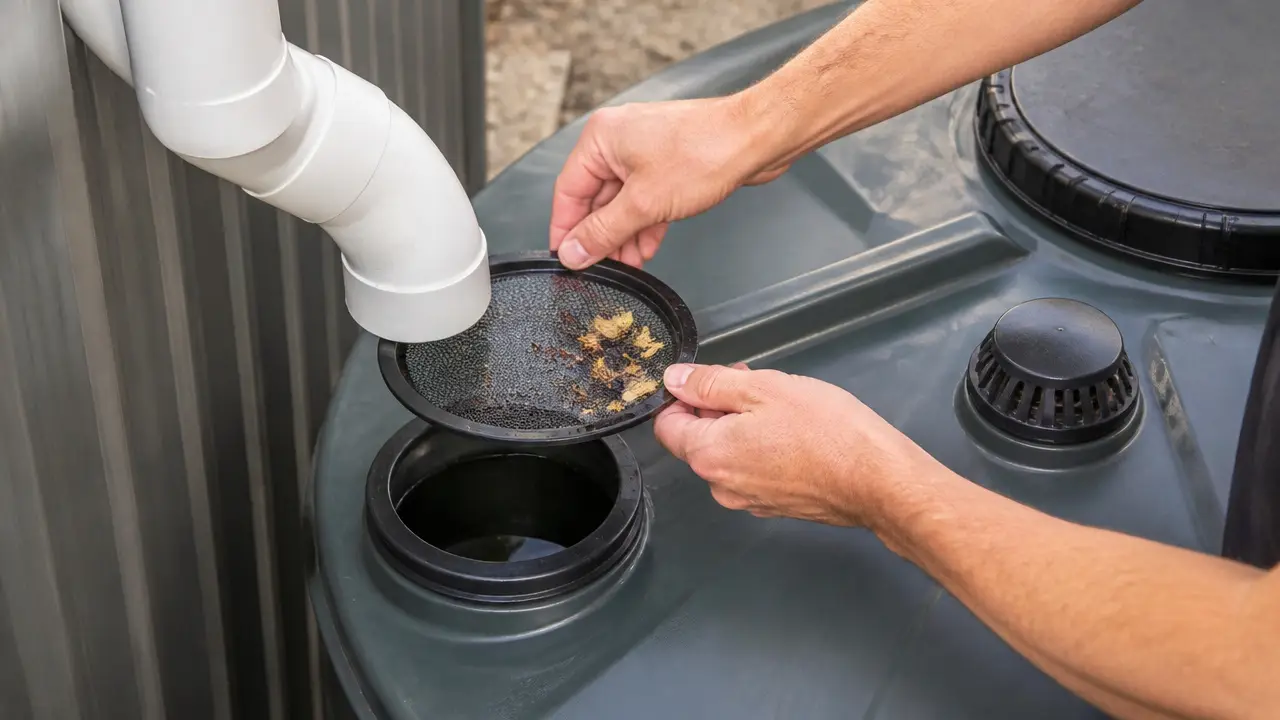
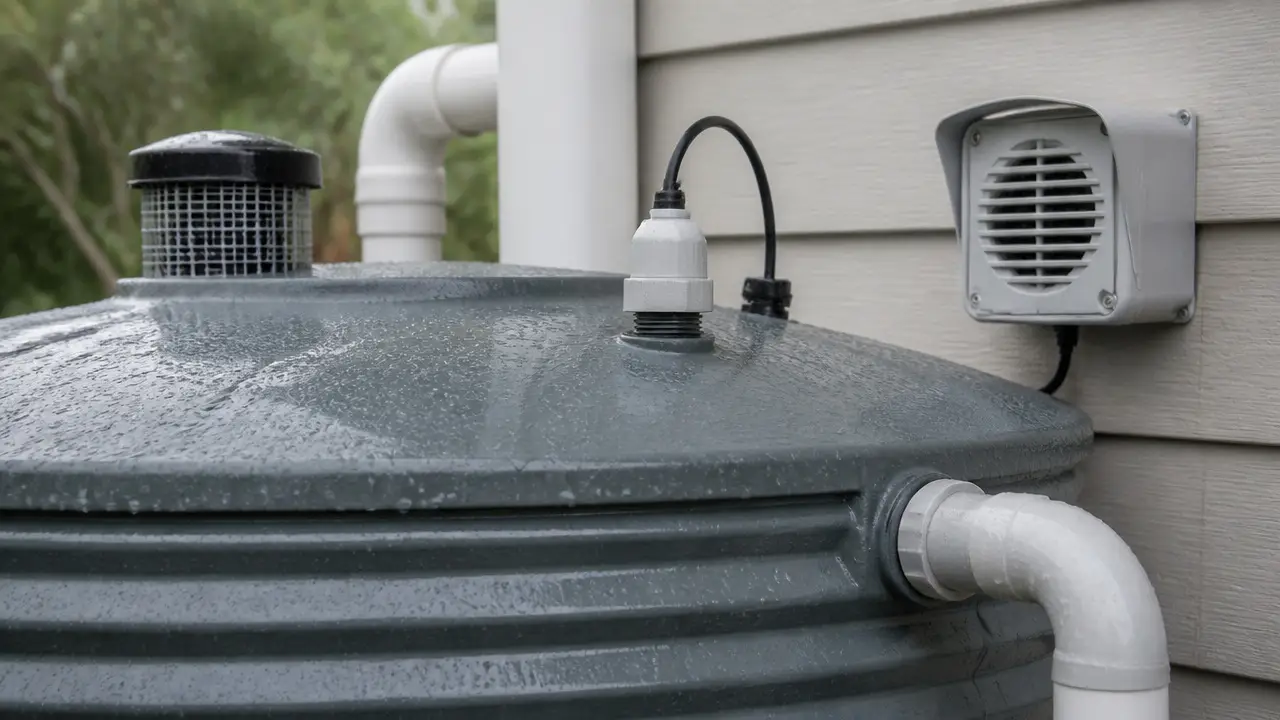
This becomes even more important when the system uses stored rainwater. Rainwater collected from a roof can carry sediment, organic debris, and other material into the storage tank.
A rainwater-fed drip system may need several stages before the irrigation line, such as:
- Roof and gutter debris control.
- Tank inlet screening or prefiltration.
- A pump when gravity does not provide enough pressure.
- A suitable irrigation filter.
- A pressure regulator when required by the drip equipment.
- Flush points at the ends of drip lines.
The required filter size depends on the emitter manufacturer's specifications. Do not choose a micron rating simply by guessing.
A micron is one-thousandth of a millimeter. A smaller micron rating means the filter catches smaller particles, but it can also restrict flow more quickly as the filter becomes dirty.
Check Pressure Before Burying the System
Drip irrigation is designed to operate within a particular pressure range.
If you are connecting it to a rain barrel or cistern, gravity alone may or may not provide enough pressure.
Water pressure from gravity depends mainly on head height, which is the vertical distance between the water surface and the irrigation outlet. Raising a tank increases available pressure, but modest elevation provides much less pressure than many household water systems.
A pump may be required for larger systems or pressure-compensating emitters.
Check that your pump, filter, regulator, tubing, and emitters are compatible before burying anything. It is much easier to correct flow problems while the tubing is still exposed.
Test the System Before Covering It
Do not install an entire buried system and immediately cover it.
Run the irrigation first.
Check:
- Every emitter or section receives water.
- Connections do not leak.
- Pressure is within the required range.
- Water reaches the intended root area.
- The soil wets evenly enough for the plants.
- End-of-line flushing works.
Dig several small inspection holes after the system has run. Look at how far the moisture moves sideways and downward.
That wetting pattern is more useful than choosing burial depth from a number alone.
Plan for Flushing and Repairs
Buried irrigation still needs maintenance.
Install the system so you can reach important components, including:
- Filters.
- Pressure regulators.
- Valves.
- Manifolds.
- Flush ends.
- Major connections.
Periodically flush the tubing according to the system instructions. Clean the filter as needed.
If flow suddenly falls in one area, investigate rather than simply increasing watering time. A blocked emitter, damaged line, dirty filter, or pressure problem may be responsible.
Consider Freezing Conditions
Burial alone does not guarantee that a drip system will survive freezing weather.
Shallow irrigation tubing can freeze, and trapped water can damage fittings or other components. Local frost depth may also be much greater than the practical installation depth for drip irrigation.
In freezing climates, follow the irrigation equipment manufacturer's winterization instructions. Systems with pumps, filters, backflow components, or exposed valves may need additional seasonal protection.
Do not assume that placing drip line a few inches underground makes winterization unnecessary.
A Good Rule for Most Home Gardens
If you are growing vegetables, flowers, or ordinary landscape plants, start with drip tubing on the soil surface and cover it with mulch.
Only bury the line when there is a clear reason to do so.
For a purpose-built subsurface system, a few inches below the soil may be appropriate, but depth should be chosen around the plant roots, soil type, emitter design, and manufacturer instructions.
Most importantly, test the wetting pattern before completing the installation.
Frequently Asked Questions
Can I bury regular drip irrigation tubing?
Sometimes, but you should not assume ordinary drip tubing is suitable for underground use. Check the manufacturer's instructions. Subsurface systems may use tubing and emitters specifically designed to reduce problems from soil and roots.
Should drip irrigation be above or below mulch?
For most garden beds, placing the drip line directly on the soil and putting mulch over it works well. This keeps the tubing protected while still allowing easy inspection and repair.
Is 6 inches too deep for drip irrigation?
It can be. Six inches may work for some subsurface systems, but it may be too deep for young plants or shallow-rooted crops. Soil type also changes how water moves from the emitter.
How deep should drip tubing be in a vegetable garden?
Most vegetable gardens do not require buried tubing. Placing it on the soil or beneath a shallow layer of mulch usually makes watering, inspection, and seasonal changes easier.
Can roots clog buried drip emitters?
Root intrusion can be a concern with some subsurface drip systems. Use equipment intended for underground irrigation and follow its requirements for filtration, flushing, installation, and maintenance.
Can I run buried drip irrigation from a rain barrel?
Possibly, but check the pressure and filtration requirements first. A low rain barrel may not provide enough gravity pressure for every drip system. Stored rainwater should also be filtered well enough to protect small emitters from debris.
Do buried drip lines need to be winterized?
They may. Shallow burial does not guarantee freeze protection. Follow the system manufacturer's winterization guidance and account for local freezing conditions, exposed fittings, filters, valves, and pumps.