As an affiliate, we may earn a commission from qualifying purchases. We get commissions for purchases made through links on this website from Amazon and other third parties.
A rainwater tank can cost anywhere from a few hundred dollars to well over $20,000 to install, depending on the tank size, location, plumbing, and intended water use.
For U.S. homeowners in 2026, a simple above-ground cistern installation often costs about $1,500 to $4,500. A more complete above-ground rainwater collection system commonly falls around $2,000 to $12,000. Underground systems are much more expensive and often cost $6,500 to $24,000 or more because they require excavation, drainage work, and additional plumbing.
The tank itself is only part of the bill. The base, pipes, overflow, filters, pump, electrical work, and site access can all change the final price.
Typical Rainwater Tank Installation Costs
Here is a useful starting point for budgeting.
| Installation type | Typical installed cost |
|---|---|
| Small rain barrel system | $200–$2,500 |
| Basic above-ground cistern | $1,500–$4,500 |
| Complete above-ground cistern system | $2,000–$12,000+ |
| Underground cistern system | $6,500–$24,000+ |
These are broad U.S. ranges rather than quotes for a specific property. Tank capacity, site preparation, plumbing distance, and local labor rates can move a project far outside the average.
If you already have suitable gutters and only want an above-ground tank for garden watering, your project may be near the lower end. A large buried tank connected to pumps, irrigation, or household plumbing will usually be near the upper end.
How Much Is Installation Labor Alone?
If you already have the tank, installation labor may cost much less than the total figures above.
Current cost estimates put general rainwater harvesting installation labor at roughly $200 to $2,400, before major excavation, extensive piping, or other specialized work.
That range can include jobs such as:
- positioning an above-ground tank
- connecting a downspout
- installing inlet and overflow fittings
- connecting basic distribution pipes
- fitting simple pre-tank filters
Large tanks may need lifting equipment. Underground tanks require excavation equipment and careful site preparation. Household systems may also involve plumbers and electricians.
What Makes Rainwater Tank Installation More Expensive?
Tank size
A larger tank does not just cost more to buy. It may also require a stronger base, bigger equipment for delivery, and more labor to position.
Water is heavy. One U.S. gallon weighs about 8.34 pounds. That means 1,000 gallons of water alone weighs more than 8,000 pounds.
The tank needs to sit on a base designed for its full operating weight. Do not place a large tank on a deck, raised structure, or questionable slab without confirming that the structure can safely carry the load.
Above-ground versus underground installation
An above-ground tank is usually the least expensive option.
The installer may only need to:
- Prepare a stable, level base.
- Position the tank.
- Connect the inlet.
- Install an overflow.
- Connect the outlet or pump.
An underground tank adds excavation, bedding, backfilling, drainage planning, and more piping.
HomeGuide estimates excavation alone at roughly $1,000 to $5,000 on projects that require it. Trenching can add roughly $500 to $1,200.
Not every buried tank can simply be placed in a hole. The tank must be designed for underground use, and groundwater conditions, soil, vehicle loads, and manufacturer installation requirements can matter.
The tank base
A small rain barrel may only need a simple firm platform.
A large cistern may need a carefully prepared compacted base or concrete pad. A poor base can allow the tank to tilt or settle unevenly.
Site grading can also increase labor costs if the chosen location is sloped.
Distance from the downspouts
A tank placed next to a downspout usually has simple plumbing.
Moving the tank across the yard can require buried pipe. That makes the project more expensive.
A dry system normally sends water directly from the gutter into a nearby tank. The pipe drains after rain stops.
A wet system can collect water from several downspouts through pipes that remain partly full between storms. Wet systems allow more freedom in tank placement but need more pipe, excavation, and careful design.
HomeGuide reports above-ground wet cistern systems costing more than comparable dry systems because of the extra underground piping and excavation.
Overflow plumbing
Every tank needs somewhere for excess water to go once the tank is full.
A simple garden system might discharge overflow to a safe landscape area. Other sites may need buried drainage pipe or a connection to an approved stormwater system.
Overflow should not simply dump beside a house foundation or somewhere that causes erosion or flooding.
Pumps and pressure systems
Gravity may be enough if you only need slow water flow from a raised tank.
A pump is usually needed when you want stronger flow, irrigation pressure, or water delivered uphill or over longer distances.
Pump installation raises the cost because the system may also require:
- suction or delivery pipe
- valves
- pump controls
- dry-run protection
- pressure tank
- electrical supply
- weather protection
HomeGuide estimates installed pump costs for rainwater systems at roughly $150 to $1,200 per pump, depending on the equipment and installation.
The right pump depends on both flow rate and head height.
Flow rate is how much water the pump can move in a given time. Head height describes how hard the pump must work to lift and push that water through the system.
Choosing a pump from tank capacity alone can lead to weak pressure or an oversized pump.
Filters and First-Flush Devices Can Add to the Cost
A basic rainwater tank should normally have some way to keep leaves, insects, and large debris out.
Depending on the system, this may include:
- gutter screens
- inlet screens
- leaf filters
- sediment traps
- first-flush diverters
A first-flush diverter sends the first portion of roof runoff away from the tank. That first runoff can carry more dirt, bird waste, and other material that has collected on the roof.
The CDC recommends considering first-flush diversion and screened openings as ways to improve collected rainwater quality and reduce contamination and mosquito problems.
These parts add some cost, but they can make the tank easier to maintain.
Installation for Garden Watering Is Usually Simpler
If the tank is only supplying a garden, installation can often remain fairly simple.
A typical setup might be:
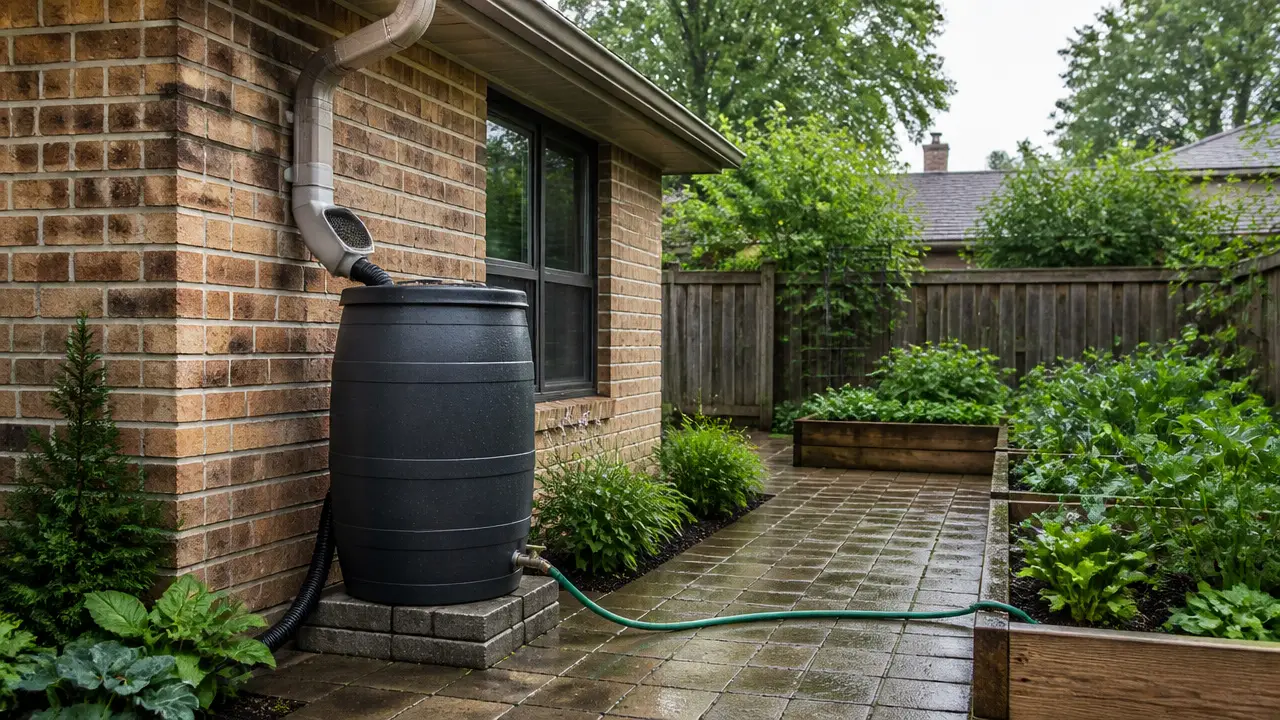
roof → gutter → leaf screen → downspout → first-flush device → tank → hose or irrigation line
Look closely at practical where should an underground water tank be placed to verify service access for sediment removal and odor prevention.
A pump may not be needed if gravity provides enough flow.
Keep in mind that drip irrigation and sprinklers have different pressure needs. A tank sitting only a few feet above the garden may provide enough pressure for some low-pressure watering but not enough for a standard sprinkler.
Household Rainwater Systems Cost More
Connecting rainwater to household plumbing is a different level of project.
Even if rainwater will only serve toilets or another non-potable use, the system may require:
- dedicated plumbing
- backflow protection
- labeling
- pumps and controls
- additional filtration
- approved connections
- permits or inspections
Non-potable means water that is not intended for drinking.
Local plumbing and rainwater rules vary, so check the current requirements with your local building, plumbing, health, or water authority before connecting rainwater to a house.
Professional plumbing becomes especially important when a property has both rainwater and municipal drinking water. The CDC advises keeping collected rainwater from entering pipes carrying treated drinking water because cross-connections can contaminate that supply.
What If You Want to Drink the Rainwater?
Do not treat the cost of a storage tank as the cost of a drinking-water system.
Roof runoff can contain germs and chemicals from the air, roof, gutters, bird waste, piping, and storage materials. Rainwater that looks clear is not automatically safe to drink.
A potable rainwater system may require several stages selected for the actual water quality. Potable means suitable for drinking.
Depending on the system and test results, treatment could involve prefiltration, sediment removal, other filtration, disinfection, and ongoing laboratory testing.
No single filter, UV unit, purifier, or home test can by itself establish that a roof-water system is safe for drinking.
The CDC recommends regularly testing rainwater used for drinking, cooking, or bathing for relevant germs and chemicals and getting guidance from the local health department.
Professional design and current local requirements should therefore be part of the budget for a potable system.
Can You Install a Rainwater Tank Yourself?
A small above-ground tank or rain barrel can often be a reasonable DIY job when the site is simple.
DIY work may include:
- preparing a small level base
- fitting a downspout diverter
- installing a screened inlet
- connecting an overflow
- attaching a garden hose
Larger systems quickly become less DIY-friendly.
Consider professional installation when the project involves:
- large or very heavy tanks
- excavation
- structural supports
- buried tanks
- household plumbing
- electrical pump wiring
- complex pressure systems
- difficult drainage
- major trenching
Never enter a rainwater tank or cistern. A tank can be a confined space with serious hazards.
How to Estimate Your Own Installation Budget
Start by deciding how you will actually use the water.
A small garden tank needs a much different system than a tank serving irrigation, toilets, or a cabin.
Then price the project in separate parts:
Tank + base + collection plumbing + overflow + prefiltration + distribution + pump if needed + electrical work if needed + excavation + permits
Breaking the project into parts makes contractor quotes much easier to compare.
Also ask whether a quote includes tank delivery. Large tanks can be awkward to transport and may require special unloading equipment.
Do Not Choose Tank Size From Price Alone
A large tank is not automatically better.
Tank size should make sense for your roof area, rainfall, available space, and expected water use.
The basic rainwater yield relationship is:
Rainfall × roof collection area = potential collection
Real systems collect less than the theoretical maximum because of splash, evaporation, first-flush diversion, overflow, and other losses.
A tank that is much larger than your normal collection may rarely fill. A tank that is too small may overflow often during wet periods.
Sizing the storage before getting installation quotes can prevent spending money on a tank that does not fit the rest of the system.
Questions to Ask an Installer
Before accepting a quote, find out exactly what is included.
Useful questions include:
- Is tank delivery included?
- Who prepares the tank base?
- Are inlet and overflow fittings included?
- Where will the overflow discharge?
- Are downspout changes included?
- Does the quote include a first-flush device or inlet screen?
- Is trenching included?
- Is a pump included?
- Is electrical work included?
- Are permits or inspections required?
- Who is responsible for repairing landscaping after excavation?
Two contractors can quote very different amounts because they are pricing different scopes of work.
Frequently Asked Questions
How much does it cost to install an above-ground rainwater tank?
A basic above-ground cistern installation often costs around $1,500 to $4,500. Complete systems with more plumbing, pumps, or multiple downspouts may cost $2,000 to $12,000 or more.
How much does it cost to install an underground rainwater tank?
Current U.S. estimates commonly put underground cistern systems around $6,500 to $24,000 or more. Excavation, site conditions, tank size, and plumbing have a major effect on the final cost.
Is it cheaper to install a rainwater tank above ground?
Usually, yes. Above-ground installation avoids most excavation and makes the tank easier to inspect and service. You still need a stable base, safe overflow, and suitable plumbing.
Does a rainwater tank need a pump?
Not always. Gravity may work for low-flow garden use, especially when the outlet is higher than the watering point. Irrigation systems and household uses often need a pump because they require more pressure.
Can I put a rainwater tank directly on the ground?
A large tank needs a level, stable base that can support the tank when completely full. The exact base requirements depend on the tank design and manufacturer instructions. Soft or uneven ground can allow the tank to settle or tilt.
Do I need a plumber to install a rainwater tank?
A plumber may not be necessary for a small garden-only tank. Professional plumbing is much more important when rainwater connects to household fixtures, pressure systems, or plumbing located near a potable water supply.
Can I drink water straight from a rainwater tank?
Do not assume stored rainwater is safe to drink. Roof runoff can contain germs and chemicals. Drinking-water use requires suitable collection, treatment based on the water quality, regular testing, maintenance, and compliance with applicable local requirements.