As an affiliate, we may earn a commission from qualifying purchases. We get commissions for purchases made through links on this website from Amazon and other third parties.
The best insulation blanket for a pressure tank is usually a moisture-resistant, closed-cell foam insulation jacket with a durable outer cover. It should fit the tank closely, resist damp conditions, and still let you reach the air valve, plumbing, pressure switch, gauge, and other service points.
For a tank in an unheated garage, crawl space, or pump house, a removable insulated jacket can slow heat loss well. For a tank outdoors or in a place that stays below freezing for long periods, a blanket by itself may not be enough. The better solution is often an insulated enclosure combined with a properly installed, safe source of heat.
Pressure-tank manufacturers warn that the tank and connected piping should not be allowed to freeze. Freezing can damage the tank and plumbing and can create a serious pressure hazard.
What Makes a Good Pressure Tank Insulation Blanket?
A pressure tank blanket has a different job from a decorative tank cover. It needs to slow heat loss without creating new moisture or maintenance problems.
Look for these features:
- Closed-cell foam or another moisture-resistant insulation
- A water-resistant outer layer for damp locations
- Enough flexibility to fit around the tank without large gaps
- A removable seam, zipper, straps, or fasteners
- Access to the tank's air valve and plumbing
- Enough room around the pressure switch, gauge, and electrical wiring
- Material suitable for the tank's location, especially if it will see outdoor moisture or sunlight
Closed-cell foam is a strong choice because its cells do not readily soak up water. That matters around well equipment, where condensation, plumbing drips, and damp floors are common.
A thick blanket that becomes soaked is much less useful than a thinner insulation layer that stays dry.
Closed-Cell Foam Is Usually the Best Material
For most pressure tanks, closed-cell foam offers the best mix of insulation, moisture resistance, and ease of use.
It works especially well in:
- Unheated garages
- Pump houses
- Utility sheds
- Crawl spaces
- Covered outdoor installations
- Seasonal cabins where the water system stays operating
A fitted jacket is usually easier to maintain than loose insulation wrapped around the tank. You can remove it to inspect the steel shell, check for leaks, or adjust the tank's air charge.
Pressure tanks commonly have an air valve used to check and adjust the tank's pre-charge. That valve needs to remain accessible. Manufacturer instructions also require pressure and water to be handled correctly before tank service.
Is a Water Heater Blanket Good for a Pressure Tank?
A water heater insulation blanket can work in some indoor installations, but it is not automatically the best choice.
The main problem is fit. A pressure tank may have plumbing, a tank tee, pressure gauge, pressure switch, relief valve, and drain connections clustered near its base. A water heater blanket may cover these parts or leave large gaps.
Fiberglass-style blankets also need to stay dry. If the insulation absorbs moisture, it can lose insulating ability and may keep moisture against a steel tank.
If you already have a water heater blanket, use it only when:
- The tank is in a dry location.
- The material is suitable for the surroundings.
- It fits without crushing or interfering with equipment.
- You can keep electrical components accessible and dry.
- It does not block the pressure-relief system.
For a damp pump house or outdoor enclosure, moisture-resistant foam is usually easier to live with.
What About Reflective Foil or Bubble Insulation?
Reflective foil can be useful as part of an insulation system, but a thin reflective wrap is usually not the best stand-alone choice for freeze protection.
Reflective materials are most effective when they face an air space. A thin foil layer wrapped tightly against a cold tank does not provide the same type of insulation as a thicker material that traps air.
That means a foil-faced foam blanket can make sense. A very thin foil-bubble wrap by itself should not be treated as strong protection against a long freeze.
A Blanket Does Not Create Heat
This is the most important limit of pressure tank insulation.
Insulation only slows heat transfer. It does not warm the water.
If the tank starts at 45°F and the surrounding space remains well below 32°F for long enough, an insulated tank can eventually freeze too.
Clemson Cooperative Extension notes that a pressure tank located in a well-insulated or heated building has much better freeze protection than one in a poorly insulated location. Adding both insulation and safe heat to an enclosure can reduce freeze risk.
Manufacturer instructions are even clearer: the tank, pump, and piping should not be allowed to freeze because freeze damage can cause equipment failure and serious pressure hazards.
Mild, occasional freezes
A good insulation jacket plus insulated pipes and protection from wind may be enough for brief cold periods, depending on the installation.
Regular freezing weather
An insulated pump house or enclosure is usually a better approach than simply adding a thicker tank blanket.
Long, severe freezes
You may need active freeze protection, winterization, or a different tank location. A qualified well contractor or plumber can help if the tank is exposed to sustained freezing conditions.
Insulate the Pipes Too
Wrapping only the pressure tank can leave the most vulnerable parts of the system exposed.
Pay attention to:
- The tank inlet
- Tank tee
- Short pipe nipples
- Pressure-switch connection
- Gauge connection
- Above-ground well piping
- Pipes entering or leaving the pump house
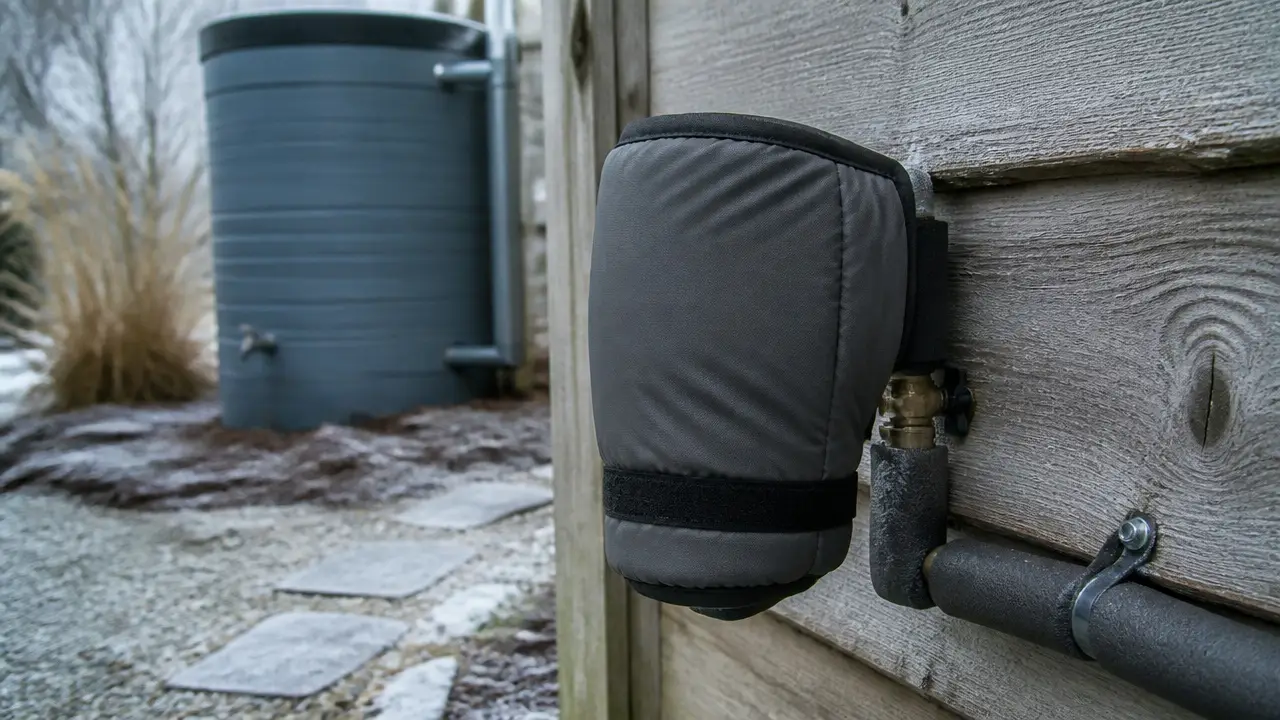
- Outdoor valves
Small water-filled fittings can freeze even when the large pressure tank has not yet frozen.
Use pipe insulation made for the pipe size and location. Seal obvious gaps where cold air blows directly across the plumbing.
A well service provider may recommend protecting the whole group of equipment rather than wrapping only individual components, especially when the equipment sits beneath an outdoor cover.
Do Not Bury the Pressure Switch Under Insulation
The pressure switch tells the pump when to start and stop based on system pressure.
It is usually connected near the pressure tank and has electrical wiring inside.
Do not pack loose insulation tightly around the switch, wiring, junction boxes, or other electrical parts. They need to remain accessible for inspection and service.
If you need to work close to the pressure switch, shut off electrical power to the pump first. Pressure-tank instructions specifically call for disconnecting pump power and releasing system pressure before servicing the tank.
An insulated enclosure around the equipment is often cleaner than trying to wrap every control separately.
Keep the Relief Valve Clear
Planning around a suitable thermal covers for water tanks helps evaluate stored volume against consumption and seasonal refill patterns.
A pressure system may include a relief valve near the tank. This valve provides an important safety path if system pressure becomes too high.
Never wrap, tape, cap, or obstruct the valve or its discharge path.
Pressure-tank manufacturers specify relief-valve requirements because excessive pressure can damage a tank and cause serious injury.
Your insulation should fit around safety equipment rather than hiding it.
How to Measure a Pressure Tank for an Insulation Blanket
Measure the tank before choosing a blanket.
You mainly need:
- Tank height — Measure the part of the tank you plan to cover.
- Tank circumference — Wrap a tape measure around the widest part.
- Connection locations — Note pipes, valves, switches, gauges, and electrical boxes.
- Top access — Check where the tank's air valve is located.
- Base clearance — Look for standing water, condensation, or plumbing near the bottom.
If you are cutting insulation from a sheet, allow enough width for the edges to meet or overlap as the insulation manufacturer recommends.
Do not make the cover so tight that you must compress thick insulation heavily to close it. Compressing some insulation types can reduce their ability to trap air.
Should the Bottom of the Tank Be Covered?
Usually, keeping the tank protected from drafts is more useful than tightly wrapping every square inch.
Be cautious about placing absorbent insulation directly on a damp concrete floor or soil. It can collect moisture and keep the bottom of a steel tank wet.
A fitted jacket that ends near the base, combined with an insulated and draft-resistant enclosure, is often easier to inspect and keep dry.
Check the tank manufacturer's installation instructions before covering the base or stand. Tank designs vary.
Outdoor Pressure Tanks Need More Than a Blanket
A pressure tank that sits fully exposed outdoors is difficult to protect with insulation alone.
Wind removes heat quickly. Rain can wet insulation. Sunlight can damage some foam and plastic materials. And after several hours or days of freezing temperatures, the tank has little heat available for the insulation to preserve.
For an outdoor installation, consider protection in this order:
- Protect the tank and pipes from rain and wind.
- Use moisture-resistant insulation.
- Insulate the surrounding enclosure where practical.
- Seal major drafts without trapping water around the equipment.
- Use an appropriately designed source of freeze protection if the climate requires it.
Some pressure tanks are designed for outdoor use, but that does not mean they can safely freeze. Amtrol, for example, lists some well tanks for indoor or outdoor use, while pressure-tank installation guidance still treats freezing as something that must be prevented.
Is Heat Tape a Better Choice?
Heat cable can be useful on exposed plumbing, but it should not be treated as a general-purpose heating blanket for a pressure tank.
Use heat cable only on pipe materials and in locations specifically allowed by the cable manufacturer. Follow its instructions for spacing, insulation, electrical protection, and whether overlapping is permitted.
For the tank itself, heating the insulated space around it is often a cleaner approach.
Electrical freeze protection in a wet pump-house environment deserves extra care. If you are unsure about wiring, outlets, grounding, or equipment suitability, have a qualified electrician or well contractor handle that part of the system.
What Is the Best Setup for a Freezing Climate?
In a climate with regular freezes, think beyond the blanket.
A strong setup is usually:
Tank + insulated pipes + draft-resistant insulated enclosure + safe temperature control
The blanket then becomes one layer of protection instead of the only layer.
For buried installations specifically designed for burial, manufacturers may require placing the pressure tank below the frost line. For example, Amtrol's underground tank instructions specify installation below the frost line to prevent freezing.
Do not bury a standard above-ground pressure tank unless the manufacturer specifically approves that installation.
Choosing the Best Blanket for Your Situation
| Tank location | Practical insulation choice |
|---|---|
| Heated basement | Usually no blanket needed for freeze protection |
| Cool but dry garage | Removable closed-cell foam jacket |
| Unheated crawl space | Foam jacket plus insulated pipes and draft control |
| Insulated pump house | Foam jacket can add extra protection |
| Damp pump house | Moisture-resistant foam with washable outer cover |
| Covered outdoor tank | Weather-resistant jacket plus enclosure protection |
| Fully exposed outdoor tank | Blanket alone is usually not enough |
| Area with long hard freezes | Insulated enclosure and suitable active protection |
The goal is not to find the thickest blanket possible. It is to protect the whole pressurized water system from freezing while keeping its controls, valves, plumbing, and safety parts accessible.
Frequently Asked Questions
What type of insulation is best for a well pressure tank?
A removable closed-cell foam jacket is a good choice for many pressure tanks because it resists moisture and slows heat loss. The blanket should fit closely without blocking plumbing, controls, the air valve, or safety equipment.
Can I wrap my pressure tank with fiberglass insulation?
You can use fiberglass in some dry indoor locations, but it must stay dry and should not be packed around electrical components. Moisture-resistant foam is usually easier to use in pump houses, crawl spaces, and damp areas.
Will an insulation blanket stop a pressure tank from freezing?
Not indefinitely. Insulation slows heat loss but does not create heat. During a long period below freezing, an insulated tank can still freeze. Manufacturers warn that pressure tanks and connected piping must be protected from freezing.
Should I insulate the pressure switch?
Protect the pressure-switch area from freezing temperatures, but do not bury the electrical switch under loose insulation. Keeping the entire tank and plumbing assembly inside an insulated enclosure is often safer and easier to maintain.
Can I use a water heater blanket on a pressure tank?
Sometimes. It can work in a dry location if it fits properly and leaves all connections and safety parts accessible. A moisture-resistant tank jacket is usually a better fit for damp or outdoor well installations.
Should I insulate the pipes connected to the pressure tank?
Yes. The pipes, fittings, tank tee, and small connections near the pressure switch can be vulnerable to freezing. Protecting the tank while leaving this plumbing exposed gives incomplete freeze protection.
What should I use for a pressure tank outside?
Use a weather-resistant insulated enclosure when possible, with moisture-resistant insulation around the tank and piping. In climates with long freezes, insulation alone may not be enough, so the enclosure may also need a properly designed source of heat.