As an affiliate, we may earn a commission from qualifying purchases. We get commissions for purchases made through links on this website from Amazon and other third parties.
Off-grid water purification works best as a treatment chain, not as one filter or gadget. Start with the cleanest source you can reasonably use. Remove debris and sediment first. Then use treatment that matches the germs or chemicals you need to control. Finish with a reliable disinfection step for drinking water, and keep the treated water from becoming contaminated again.
For rainwater, well water, spring water, or surface water that will be used for drinking, regular laboratory testing is an important part of the system. Water that looks, smells, and tastes clean can still contain harmful germs or chemicals. The CDC specifically recommends regular testing when rainwater is used for drinking, cooking, or bathing.
Start With the Water Source
Before choosing filters, decide where the water comes from.
The source affects both the risk and the amount of treatment needed.
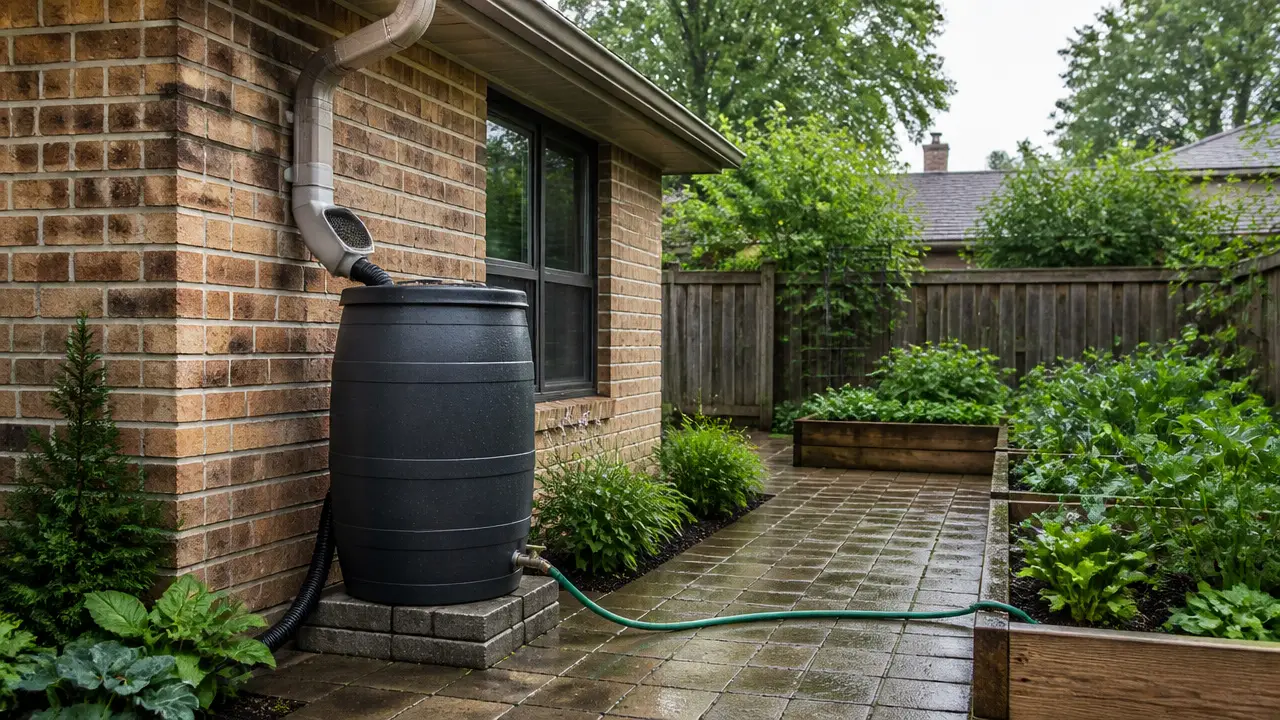
Roof-collected rainwater
Rainwater can pick up contaminants before and after it reaches the roof. Dust, smoke, roofing materials, gutters, animal droppings, insects, and dirty storage tanks can all affect water quality.
A good rainwater system reduces contamination before the water reaches the tank. Useful parts may include:
- A clean, suitable roof catchment
- Gutter screens or leaf guards
- A first-flush diverter
- A screened tank inlet
- A covered, opaque storage tank
- An overflow protected from insects and animals
- A way to remove settled sediment
A first-flush diverter sends away some of the first roof runoff from a storm. This early runoff often carries more dirt, droppings, and other material from the roof.
These steps improve incoming water quality, but they do not automatically make rainwater safe to drink. The CDC notes that collected rainwater can contain both germs and chemicals and recommends treatment based on the contaminants present.
Wells and springs
Groundwater may look very clear while still containing bacteria, nitrate, metals, minerals, or other contaminants.
The right treatment depends heavily on testing. For example, a sediment filter that fixes cloudy water will not solve a dissolved chemical problem.
Springs also need careful source protection. An open or poorly protected spring can be contaminated by animals, runoff, septic systems, or surface water.
Streams, ponds, and lakes
Surface water generally deserves more cautious treatment because it is exposed to animals, soil runoff, people, and changing weather.
Do not assume that a clear mountain stream is safe because it looks clean.
Surface water may contain bacteria, viruses, and parasites. It may also contain chemical contamination that normal camping filters and disinfectants cannot remove.
If you suspect fuel, pesticides, industrial contamination, toxic chemicals, or similar pollution, use another water source rather than trying to make the water safe with simple off-grid treatment. Boiling and ordinary disinfection do not remove most chemical contaminants.
Decide Whether You Need Potable or Non-Potable Water
Potable water is water suitable for drinking.
Non-potable water is water that is not intended for drinking.
The difference matters because you may not need to purify every gallon to drinking-water quality.
For example, an off-grid cabin might use stored rainwater for:
- Garden irrigation
- Toilet flushing
- Outdoor washing
- General cleaning
A smaller treatment system could then prepare only the water needed for drinking and cooking.
Separating uses can reduce filter replacement, power use, fuel use, and maintenance.
Keep potable and non-potable plumbing clearly separated. Rainwater or other untreated water should not be allowed to flow backward into a drinking-water system. Local plumbing and health requirements may also apply.
A Practical Off-Grid Water Purification Process
There is no single treatment sequence that fits every water source. However, many off-grid drinking-water systems follow the same general pattern:
source protection → debris removal → sediment filtration → contaminant-specific treatment → disinfection → clean storage
Each stage has a different job.
1. Keep Contamination Out of the Water
It is easier to protect water before contamination occurs than to remove everything afterward.
For rainwater, keep gutters and catchment surfaces maintained. Keep animals and insects out of the tank. Use screens where water enters the system.
For wells and springs, protect the source from surface runoff, septic contamination, livestock, and chemical storage areas.
For storage tanks, keep openings covered and prevent sunlight from reaching the water where practical.
Do not use a tank for drinking water if it previously held fuel, pesticides, industrial chemicals, or other toxic materials. Safe storage is part of water treatment, not an afterthought.
2. Remove Leaves, Dirt, and Large Sediment
Large particles should usually be removed before finer treatment.
Rainwater systems may start with gutter screens and tank inlet screens. Water pumped from a cistern may then pass through a sediment filter.
If the source is very cloudy, allowing sediment to settle before filtration can reduce the load on later filters.
This stage helps protect pumps, cartridges, UV systems, and other equipment.
It does not necessarily remove disease-causing organisms.
3. Use Sediment Filtration
A sediment filter removes suspended particles such as fine dirt, rust, and tank sediment.
Filters are often described by their micron rating.
A micron is one-thousandth of a millimeter. A lower micron number means the filter can catch smaller particles, although the exact performance also depends on how the filter is designed and rated.
A finer filter is not automatically better.
Very fine filters can clog quickly when the incoming water contains a lot of sediment. That is why systems sometimes use several stages, moving from coarse to fine filtration.
For example:
coarse screen → larger sediment cartridge → finer cartridge
The correct sizes depend on the source and the equipment that comes afterward.
A micron number by itself also does not prove that a filter makes water microbiologically safe.
4. Treat Specific Chemical or Taste Problems
After sediment removal, another treatment stage may be needed depending on the water test.
Activated carbon
Activated carbon is commonly used to improve taste and odor. Certain carbon systems can also reduce specific chemicals.
But carbon is not a universal purifier.
A basic carbon cartridge should not be treated as proof that water is free of bacteria, viruses, parasites, metals, nitrate, or other contaminants.
Choose treatment based on the contaminant you actually need to reduce and on verified performance claims for that treatment.
Reverse osmosis
Reverse osmosis, or RO, pushes water through a special membrane.
It can reduce many dissolved contaminants when the system is properly selected and operated.
RO has several drawbacks for off-grid use:
- It requires water pressure.
- It produces a reject-water stream.
- Membranes need protection from sediment and other fouling.
- Pumps may require electricity.
- Filters and membranes need replacement.
- Output can be much slower than the feed-water flow.
RO can be useful when testing identifies dissolved contaminants that simpler filtration cannot address. It should not be added merely because a system needs "more filtration."
Distillation
Distillation boils water and collects condensed steam.
It can remove many contaminants, but it requires substantial heat or electricity. That can make it impractical for producing large amounts of water in an off-grid home.
Distillation also should not be assumed to remove every possible chemical without considering the contaminant involved and the equipment design.
5. Add a Reliable Disinfection Step
Filtration and disinfection are different jobs.
A filter physically removes certain materials. Disinfection is intended to inactivate harmful microorganisms.
For drinking water, this distinction is important.
Boiling
Boiling is one of the simplest methods for treating small amounts of microbiologically contaminated water.
Current CDC guidance says to bring clear water to a rolling boil for 1 minute. At elevations above 6,500 feet, boil it for 3 minutes. Let it cool naturally and store it in a clean, covered container.
If water is cloudy, settle or prefilter it first.
Boiling is useful because it does not require a specialized water-treatment device. The main disadvantage is energy use. Heating several gallons every day can consume a large amount of propane, wood, electricity, or other fuel.
Boiling also does not remove contaminants such as salts, heavy metals, or most chemicals.
Chlorine treatment
Chlorine can disinfect water and is widely used for controlling bacteria and viruses.
However, chemical concentration, water temperature, cloudiness, contact time, and the organisms present can affect performance. Some parasites are more resistant to chlorine than common bacteria and viruses.
Do not guess at bleach quantities.
If chlorine is being used for emergency drinking-water treatment, follow current public-health instructions and the concentration shown on the bleach label. Only appropriate plain, unscented products should be used where public-health guidance calls for household bleach. Products with fragrances, cleaners, or other additives are not substitutes.
For a permanent potable off-grid system, chemical treatment deserves more careful design than simply adding bleach occasionally to a tank.
Ultraviolet disinfection
Factor in a suitable water filter for off-grid water to interpret the conclusions that reliable screening measurements justify.
UV treatment exposes water to ultraviolet light that can inactivate microorganisms.
UV works best when water has already been filtered. Particles and cloudy water can interfere with the light reaching microorganisms. The CDC notes that UV systems with prefiltration work better than UV systems without it.
UV does not remove dissolved chemicals.
It also depends on equipment working correctly. An off-grid installation needs to account for:
- Electrical supply
- Required flow rate
- Lamp or UV-source condition
- Cleanliness of the treatment chamber
- Prefilter condition
- Manufacturer maintenance
- What happens during a power failure
A solar-powered cabin can run UV equipment from a properly designed electrical system, but a separate backup treatment method can be useful when power is unavailable.
Portable Filters Have Important Limits
A portable gravity or pump filter can be very useful for cabins, camping, and small-volume off-grid water treatment.
But check what the filter is actually designed to remove.
The CDC notes that many portable filters can remove parasites while failing to remove bacteria or viruses adequately. Filtered water may therefore require another treatment step.
Do not assume that "0.1 micron," "carbon," or another number printed on a filter tells the whole story.
Look for clearly stated contaminant-reduction or microorganism-removal claims that match your water source.
Why Multiple Treatment Stages Work Better
Each stage can make the next one easier to operate.
Consider roof-collected rainwater entering a cistern.
A sensible treatment path might look like this:
- Keep the roof and gutters maintained.
- Screen leaves and insects before the tank.
- Divert an appropriate first flush.
- Keep the tank covered and protected from animals and light.
- Draw water in a way that limits intake of bottom sediment.
- Remove sediment before fine treatment.
- Add treatment for contaminants identified by testing.
- Disinfect water intended for drinking.
- Store treated water so it cannot be contaminated again.
- Test and maintain the system on a regular schedule.
The exact filters and treatment equipment cannot be chosen safely from the source name alone. Rainwater from two neighboring houses can differ because their roofs, gutters, tanks, animals, maintenance, and surrounding environment are different.
Keep Treated Water Clean
Water can become contaminated again after treatment.
This is especially easy in systems where people dip cups, hoses, or containers into an open tank.
Use clean, covered containers for treated drinking water. A narrow opening, tap, or other controlled outlet can reduce hand contact with stored water.
The CDC recommends protecting safely treated water from recontamination and keeping storage containers away from fuels, pesticides, and similar toxic substances.
Also avoid connecting untreated rainwater directly to plumbing that carries potable water unless the system has the required separation and backflow protection.
Testing Is Part of an Off-Grid Drinking-Water System
A filter cannot tell you whether the water is safe.
Neither can a handheld meter.
For example, a total dissolved solids, or TDS, meter estimates the amount of electrically conductive dissolved material in the water. It can be useful for observing changes or checking some treatment processes.
It cannot tell you whether the water contains harmful bacteria, viruses, parasites, pesticides, or a particular toxic metal.
Likewise:
- Clear water is not proof of safety.
- Good taste is not proof of safety.
- Low TDS is not proof of safety.
- A new filter is not proof of safety.
- UV light does not prove that chemical contaminants are absent.
If rainwater is used for drinking, cooking, or bathing, CDC guidance recommends regular testing for germs and chemicals and consulting the local health department about what should be tested.
Testing needs vary by source and location. A laboratory or local health authority can help identify appropriate tests for wells, springs, rainwater, and other private supplies.
Plan Around Flow Rate and Daily Water Use
A purification system must produce enough water for its intended job.
Flow rate describes how much water can move through the system in a certain amount of time, commonly gallons per minute or liters per minute.
A small gravity filter may work well when a cabin needs only a few liters of drinking water each day.
It may become frustrating if it is expected to supply:
- A shower
- Kitchen faucets
- Laundry
- Several people at once
Higher flow also affects UV exposure, filter pressure drop, pump sizing, and cartridge life.
Decide first whether you are treating drinking water at one faucet or trying to supply the entire building.
Point-of-use treatment
A point-of-use system treats water near one outlet, such as the kitchen drinking-water tap.
This can reduce equipment size and maintenance if most stored water is used for non-potable purposes.
Whole-building treatment
A whole-building system treats water before it is distributed around the home or cabin.
This may make sense when the same treated supply serves sinks, showers, and other indoor fixtures.
It also requires more capacity, larger filters, suitable pressure, and more careful maintenance.
Do Not Forget the Pump and Pressure System
Many off-grid purification systems need pressure.
A storage tank sitting above the faucet may provide enough gravity pressure for basic use, but equipment such as fine filters, RO membranes, and some treatment devices may have specific pressure requirements.
A pump system may need:
- A suitable intake arrangement
- Sediment protection
- Enough flow for the treatment equipment
- A pressure tank or controller
- Dry-run protection
- Freeze protection
- A safe electrical supply
Avoid choosing the pump separately from the filters. A very restrictive filter can reduce flow and cause pressure problems, while an oversized pump can create other operating issues.
Plan for Power Failures
Off-grid equipment should have a plan for days when solar production is low, batteries are depleted, or a pump fails.
Treatment methods that depend on electricity include many:
- UV systems
- RO booster pumps
- Pressure pumps
- Electronic controllers
You do not necessarily need to avoid powered equipment. You simply need to understand what stops working when power disappears.
For drinking water, keeping a simple backup method such as boiling can provide another option for small quantities of water when the normal treatment train cannot operate.
Maintain the System Before Performance Drops
Water treatment equipment is not maintenance-free.
Typical maintenance can include:
- Cleaning roof catchments and gutters
- Emptying first-flush devices
- Cleaning screens
- Removing tank sediment when needed
- Replacing sediment cartridges
- Replacing or servicing carbon media
- Maintaining RO membranes
- Cleaning UV sleeves
- Replacing UV components according to the equipment instructions
- Sanitizing plumbing or storage equipment when appropriate
- Checking pumps and pressure
- Inspecting for animal or insect entry
- Watching for leaks and damaged fittings
- Retesting drinking water
Do not wait for the water to taste bad before servicing the system.
Filters can clog slowly, allowing flow to decline over time. Poorly maintained filters can also become places where microorganisms grow. CDC guidance specifically notes the importance of maintaining water filters according to manufacturer instructions.
Off-Grid Rainwater Purification Example
Consider a small cabin collecting roof runoff into a cistern.
The cabin uses rainwater for garden irrigation, washing, and drinking.
Instead of treating every gallon to the same level, the system could keep general-use water separate and treat drinking water through a dedicated line.
The collection side might include a clean roof, gutter screening, first-flush diversion, protected tank inlet, covered cistern, and sediment management.
The drinking-water line could then include sediment treatment, any contaminant-specific treatment indicated by testing, and a validated disinfection stage.
The important point is not the exact number of cartridges.
It is that each part has a defined job and that the finished water is verified as suitable for its intended use.
When DIY Treatment Is Not Enough
Some off-grid water systems are reasonable DIY projects. Others should involve a qualified water-treatment professional, laboratory, electrician, plumber, well professional, or local health authority.
Get additional help when:
- Laboratory results show contaminants you do not know how to treat.
- Fuel or toxic chemical contamination is suspected.
- Water is being supplied as the household's regular drinking source.
- Several treatment processes must work together.
- Chemical dosing equipment is required.
- A large pressure system is involved.
- Electrical equipment will be installed near water.
- Potable and non-potable plumbing share the property.
- A well or spring has repeated bacterial contamination.
- Local rules require specific treatment or plumbing protection.
The goal is not to build the most complicated system possible. It is to build the simplest system that reliably produces water suitable for its intended use.
Frequently Asked Questions
What is the best way to purify water off-grid?
There is no single best method for every source. A reliable drinking-water system usually combines source protection, sediment removal, treatment for known contaminants, disinfection, clean storage, and regular testing. The treatment should be chosen based on whether the water comes from rainwater, a well, a spring, or surface water.
Is boiling enough to make off-grid water safe to drink?
Boiling is very effective against disease-causing microorganisms, but it does not remove most chemicals, salts, or heavy metals. Current CDC guidance calls for a rolling boil for 1 minute, or 3 minutes above 6,500 feet.
Can I drink rainwater after filtering it?
Do not assume filtered rainwater is safe to drink. Roof runoff can contain germs and chemicals, and different filters remove different contaminants. Drinking-water treatment should be based on the collection system, water testing, suitable treatment, disinfection, and proper maintenance.
Does a 0.1-micron filter make water safe?
Not necessarily. Micron rating describes particle size filtration, but it does not prove that a filter removes every harmful microorganism or chemical. Some microfilters are effective against parasites while being less effective against bacteria and ineffective against viruses.
Can UV light purify rainwater?
UV can provide an effective microbial disinfection stage when the system is properly selected and the water is sufficiently clear. Prefiltration improves UV performance. UV does not remove chemical contaminants, so it should be viewed as one treatment stage rather than a complete rainwater purification system.
Can a TDS meter tell me if water is safe to drink?
No. A TDS meter measures electrical conductivity related to dissolved material. It does not identify harmful bacteria, viruses, parasites, or individual chemicals. Drinking-water safety requires appropriate water testing rather than relying on TDS alone.
Should I purify all the water in an off-grid home?
Not always. You may be able to use appropriately managed non-potable water for irrigation or other suitable uses while treating a smaller amount for drinking and cooking. Any potable and non-potable plumbing should remain safely separated, and local requirements should be followed.