As an affiliate, we may earn a commission from qualifying purchases. We get commissions for purchases made through links on this website from Amazon and other third parties.
Professional gutter cleaners use a mix of hand tools, ladders, vacuums, blowers, inspection tools, and safety equipment. The exact setup depends on the building height, roof shape, gutter condition, and whether the gutters can be cleaned safely from the ground.
For a homeowner, the most useful lesson is not to copy every professional tool. It is to choose the safest tool that can reach the blockage without damaging the gutter, roof, or downspout.
Common Tools Professional Gutter Cleaners Use
Gutter Scoops
A gutter scoop is one of the simplest tools in a professional kit. It is used to remove:
- Wet leaves
- Roof grit
- Pine needles
- Mud
- Small twigs
- Decomposed debris
Many scoops are made from plastic so they are less likely to scratch painted gutters.
A scoop works well when debris is packed tightly and cannot be blown out easily.
Buckets and Debris Bags
Professionals often carry a bucket or attach a debris container to the ladder.
This keeps gutter waste from being thrown onto landscaping, decks, or walkways.
Wet gutter debris can be heavy. Removing it in small amounts is usually easier than trying to move a large pile at once.
Extension Poles
Extension poles let cleaners work on sections of gutter without constantly moving a ladder.
Different attachments can be fitted to the pole, including:
- Scoops
- Brushes
- Scrapers
- Inspection cameras
- Vacuum tubes
Some systems are long enough to clean gutters from the ground.
Ground-based tools can reduce fall risk, but they may not work well when debris is heavily compacted.
Gutter Vacuum Systems
Professional gutter vacuums are powerful wet-and-dry vacuum systems designed to remove debris through long poles.
They are especially useful for:
- Multi-story buildings
- Hard-to-reach gutters
- Wet leaves
- Roof grit
- Areas where ladder placement is difficult
The vacuum hose connects to lightweight poles that reach into the gutter.
Some systems include a camera near the top of the pole so the operator can see what is happening.
When a Vacuum Works Best
A gutter vacuum can be a good choice when the gutter contains loose or moderately packed material.
It may struggle with:
- Roots
- Large branches
- Debris cemented together by mud
- Objects stuck beneath gutter brackets
Those problems may need hand removal.
Leaf Blowers
Leaf blowers are another common professional tool.
They work best when gutter debris is dry and loose.
A blower can quickly remove:
- Dry leaves
- Small twigs
- Pine needles
- Light roof debris
However, blowers can scatter debris across roofs, siding, landscaping, or neighboring property.
They are usually less effective on wet, compacted material.
Blowing debris toward a downspout can also create a clog. Professionals generally avoid forcing large amounts of leaves into the downspout opening.
Pressure Washing Equipment
Some gutter-cleaning companies use pressure washers, but they are not the best tool for every gutter.
Water pressure may help remove stubborn dirt after loose debris has already been taken out.
Too much pressure can:
- Force water behind fascia boards
- Damage seals
- Loosen gutter joints
- Spray dirty water under roof edges
- Push debris deeper into downspouts
Pressure washing should not be treated as the default way to clean gutters.
A normal hose with controlled flow is often enough for flushing and checking drainage.
Garden Hoses and Spray Nozzles
Professionals often flush gutters after removing solid debris.
This helps them check whether water flows toward the downspouts.
A hose can also reveal:
- Standing water
- Poor gutter slope
- Leaking joints
- Blocked outlets
- Downspout clogs
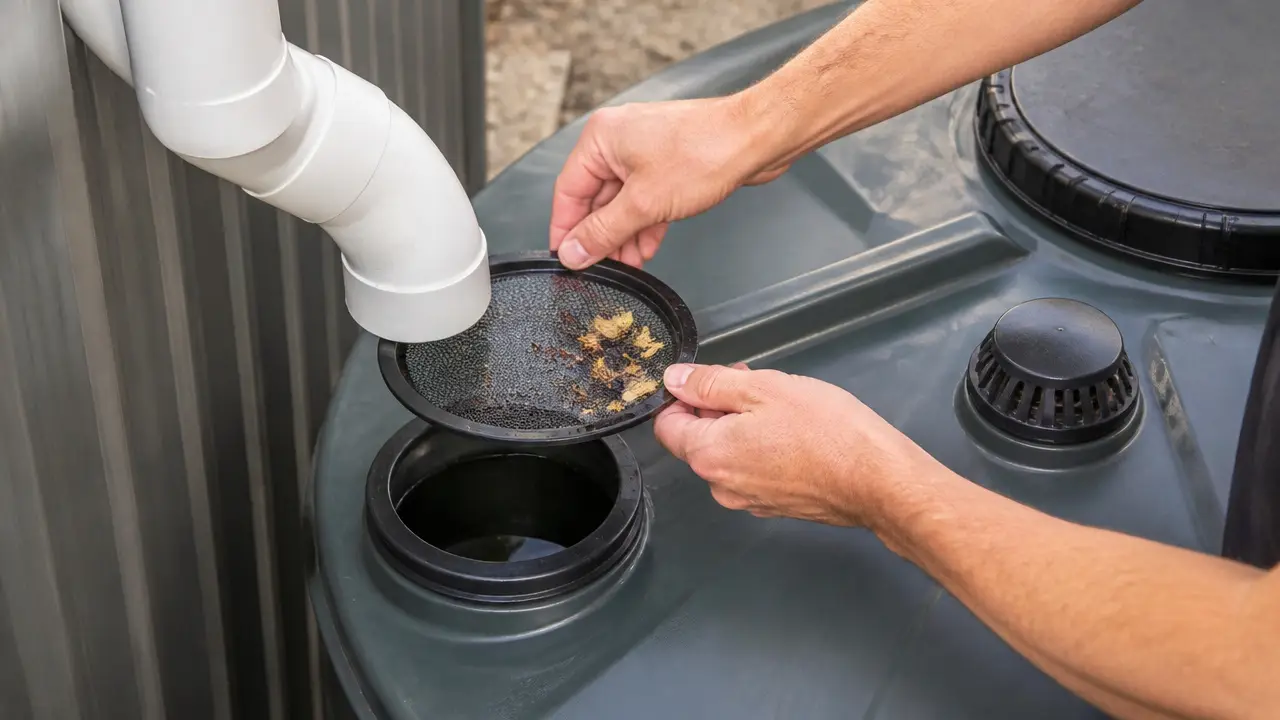
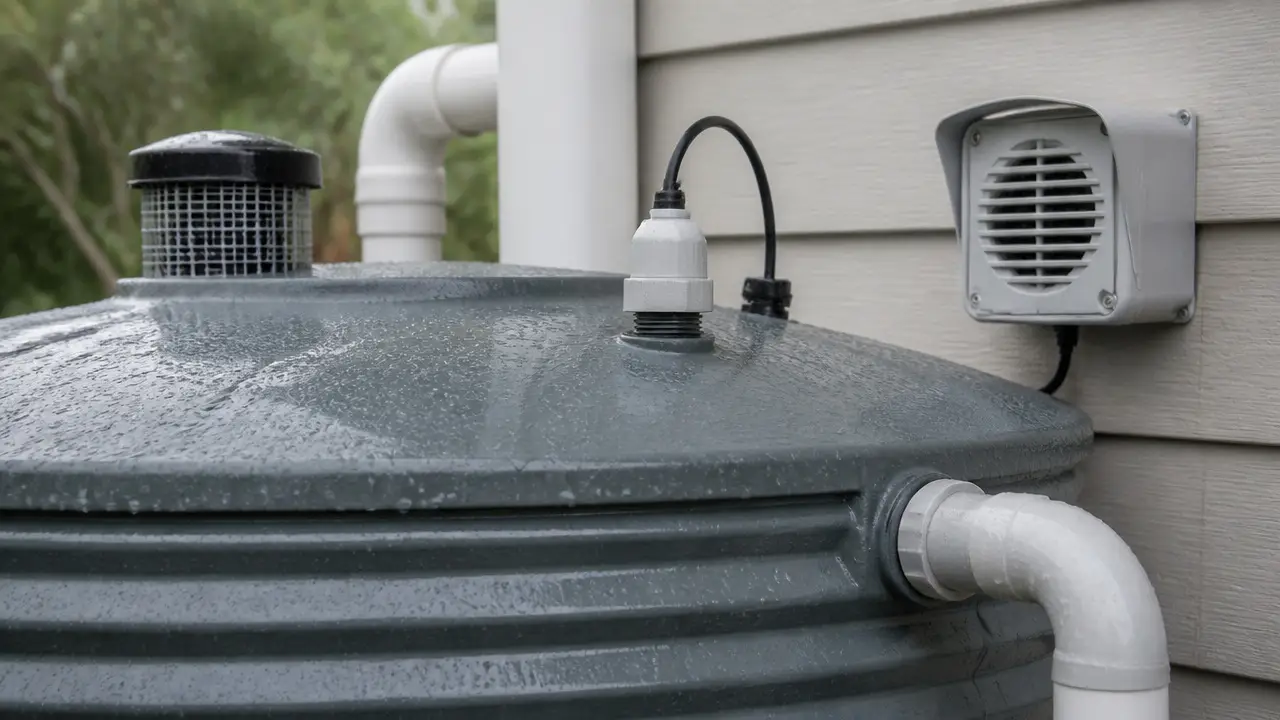
If your gutter feeds a rain barrel or cistern, flushing should be handled carefully. Dirty cleaning water can carry concentrated roof debris into your storage tank.
Disconnecting or bypassing the rainwater storage inlet during gutter cleaning can help keep that waste out of stored water.
Downspout Cleaning Tools
Clearing the gutter does not always clear the downspout.
Professional cleaners may use several tools for blockages.
Flexible Drain Rods
Flexible rods can be pushed through a downspout to break apart a clog.
They work best when the pipe has relatively gentle bends.
Rigid tools should not be forced around elbows because they can separate joints or damage thin downspout material.
Plumbing Snakes
A small plumbing snake may sometimes be used for stubborn blockages.
However, metal snakes need care around thin aluminum or plastic downspouts.
The goal is to loosen the blockage, not puncture the pipe.
Hose Flushing
Water can sometimes clear loose debris.
Professionals usually avoid applying uncontrolled pressure to a completely blocked downspout because pressure can separate joints.
Vacuuming
Some clogs can be pulled from the bottom or top with a wet-and-dry vacuum.
This is especially useful for loose leaves and roof grit.
Gutter Brushes
Stiff brushes may be used after heavy debris has been removed.
They help loosen:
- Mud
- Moss
- Algae growth
- Fine roof sediment
Guidance on cleaning gutters safely from the ground helps evaluate overflow and blockage protection for roof drainage.
Cleaning does not mean the gutter needs to look polished. For a rainwater collection system, the main goal is to remove material that can wash into storage or block water movement.
Scrapers
Plastic scrapers can help remove compacted debris stuck to the gutter bottom.
Professionals generally avoid sharp metal tools where they could scratch protective coatings or damage seams.
A scratched metal gutter may become more vulnerable to corrosion over time.
Inspection Cameras
Some professional cleaners use pole-mounted cameras.
These allow them to inspect gutters without climbing onto the roof.
They can help locate:
- Blockages
- Standing water
- Separated joints
- Damaged gutter guards
- Vegetation growth
- Downspout outlet problems
A camera is especially useful on two-story buildings where the gutter cannot easily be seen from the ground.
Gutter Cleaning Robots
Small robotic gutter cleaners exist, but they are less universal than vacuums, scoops, and extension poles.
Their usefulness depends on the gutter shape and the type of debris.
Brackets, tight corners, large sticks, and heavily packed material can limit where a robot can travel.
Ladders and Ladder Accessories
Ladders remain common in professional gutter work.
Typical equipment may include:
- Extension ladders
- Stabilizer bars
- Ladder stand-offs
- Leveling devices
- Non-slip feet
A stabilizer can help keep the ladder from resting directly against the gutter.
That matters because gutters are not designed to carry ladder loads.
Ladder work carries serious fall risk. Uneven ground, wet roofs, electrical lines, steep slopes, and upper stories make the job more hazardous.
If you cannot position and use a ladder safely, ground-based tools or a professional service are better choices.
Personal Safety Equipment
Professional cleaners may also use safety equipment appropriate to the job.
This can include:
- Work gloves
- Eye protection
- Slip-resistant footwear
- Hard hats on some sites
- Fall-protection equipment where required
Gutter debris can contain sharp screws, broken roof material, insects, animal waste, and decaying organic matter.
Gloves and eye protection are useful even when cleaning from the ground.
Roof Access Equipment
Some jobs require roof access, but walking on a roof should not be treated as a normal DIY gutter-cleaning method.
Roof pitch, roofing material, moisture, moss, and edge conditions all affect fall risk.
Professionals working at height may use appropriate anchors, harnesses, ropes, or other fall-protection systems depending on the work and applicable requirements.
A homeowner should not improvise fall-protection equipment.
Tools for Cleaning Gutters That Feed Rainwater Tanks
Gutter cleaning becomes especially important when runoff is collected for later use.
A practical toolkit may include:
- Gutter scoop
- Soft or medium-stiff brush
- Bucket
- Hose
- Downspout rod
- Ground inspection camera
- Wet-and-dry vacuum
Before cleaning, divert the dirty wash water away from the storage tank if your system allows it.
Gutter-cleaning water can contain concentrated sediment, bird droppings, plant material, and roof residue.
Check the First-Flush System Too
A first-flush device diverts the first portion of dirty runoff away from the storage tank.
If your system has one, inspect it while cleaning the gutters.
Leaves and sediment can clog:
- Screens
- Diverters
- Small drain holes
- Ball valves
- Downspout inlets
A clean gutter does little good if the next part of the rainwater system is blocked.
Which Professional Gutter Tools Are Worth Using at Home?
Most homeowners do not need commercial gutter-cleaning equipment.
For a single-story home, a basic setup may be enough:
| Tool | Best Use |
|---|---|
| Gutter scoop | Packed leaves and mud |
| Bucket | Collecting removed debris |
| Extension pole | Reaching sections from the ground |
| Wet-and-dry vacuum | Loose or wet debris |
| Garden hose | Flushing and checking drainage |
| Flexible downspout rod | Clearing simple clogs |
| Inspection camera | Checking hard-to-see areas |
The safest tool is usually the one that allows you to stay on the ground.
When Professional Equipment Is the Better Choice
Consider hiring a gutter-cleaning professional when:
- Gutters are above a second story
- The roof is steep or slippery
- Ground around the building is uneven
- Power lines are nearby
- Gutters are pulling away from the fascia
- A downspout clog cannot be cleared without dismantling the system
- Roof access would be required
- You are not comfortable working from a ladder
A professional may also be useful when a rainwater collection system needs troubleshooting beyond basic cleaning.
Repeated gutter overflow can point to undersized outlets, poor slope, blocked underground drainage, or other problems that cleaning alone will not solve.
Frequently Asked Questions
Do professional gutter cleaners use pressure washers?
Some do, but pressure washers are not necessary for most routine gutter cleaning. Scoops, vacuums, blowers, and hoses are usually more suitable for removing debris without applying excessive pressure.
What is the best tool for removing wet leaves from gutters?
A gutter scoop or wet-and-dry vacuum usually works better than a leaf blower. Wet leaves tend to stick together and become heavy.
Can professionals clean gutters without ladders?
Yes. Ground-based gutter vacuum systems and long extension poles can reach many one- and two-story gutters. Access still depends on building height and layout.
What do professional cleaners use to unclog downspouts?
Common tools include flexible rods, small drain snakes, wet-and-dry vacuums, and controlled water flushing. The correct method depends on the pipe material and where the clog is located.
Should gutters be flushed after cleaning?
A controlled hose flush can help confirm that water moves toward the downspout and reveal remaining blockages or leaks. If the gutter feeds rainwater storage, divert dirty flushing water away from the tank when possible.
Can I use a leaf blower to clean my gutters?
A blower can work well on dry, loose debris. It is less effective on wet leaves and may scatter debris around the property. Avoid blowing a large mass of debris into the downspout.
What gutter-cleaning tool is safest for homeowners?
A ground-based extension pole or gutter vacuum generally reduces fall exposure compared with working from a ladder. No tool removes every risk, so difficult or high gutters may still need professional service.
Do clean gutters make collected rainwater safe to drink?
No. Clean gutters can reduce debris entering a rainwater system, but they do not make roof runoff automatically potable. Drinking-water use requires suitable collection, treatment, maintenance, current water testing, and compliance with applicable local requirements.