As an affiliate, we may earn a commission from qualifying purchases. We get commissions for purchases made through links on this website from Amazon and other third parties.
A UV water purification system can be worth it when your main concern is microorganisms such as bacteria, viruses, and parasites. It can be especially useful for private wells, rainwater systems, cabins, and other water supplies that do not receive dependable disinfection.
But UV is not a complete water-treatment system. It does not remove sediment, minerals, salts, most chemicals, hardness, or high total dissolved solids. The water also needs to be clear enough for the UV light to reach microorganisms.
For collected rainwater that may be used for drinking, UV should be viewed as one treatment stage near the end of a larger system, not as the device that makes untreated roof runoff safe to drink.
What Does a UV Water Purification System Do?
A UV system passes water through a chamber containing an ultraviolet lamp. The UV light damages microorganisms so they can no longer reproduce and cause infection.
The CDC says home UV systems are used to disinfect water or reduce germs. When paired with proper prefiltration, they can address bacteria, viruses, and parasites. UV treatment does not remove chemicals from the water.
This distinction is important.
UV is a disinfection treatment, not a filter.
Water may look exactly the same before and after going through the UV chamber. Dirt, dissolved minerals, pesticides, metals, salts, and other unwanted substances do not simply disappear because the water was exposed to UV light.
When Is a UV System Worth It?
UV makes the most sense when microbial contamination is a realistic concern and the rest of the water system can provide suitable water to the UV chamber.
It is commonly worth considering for:
- Private well water with a microbial risk
- Rainwater intended for household use
- Cabins supplied by untreated private water
- Cistern systems
- Whole-house systems where dependable microbial treatment is needed
- Water systems that already have good sediment treatment but need a disinfection stage
The EPA notes that ultraviolet treatment is one method that may be used to control bacterial contamination in private well systems.
UV can be particularly useful because it disinfects without continuously adding chlorine or another chemical to the water.
However, whether it is worth it depends on what is actually wrong with your water.
When a UV System Will Not Solve the Problem
UV is usually the wrong treatment if your main concern is something other than microorganisms.
A UV unit by itself will not fix:
| Water problem | Will normal UV treatment fix it? |
|---|---|
| Bacteria | Yes, when the system is properly selected and operated |
| Viruses | Yes, with an appropriate validated system |
| Parasites | Yes, with an appropriate system |
| Dirt and sediment | No |
| Cloudy water | No |
| Hard water | No |
| High TDS | No |
| Iron | No |
| Manganese | No |
| Nitrate | No |
| Arsenic | No |
| Salt | No |
| Chlorine taste | No |
| Most chemical contamination | No |
TDS, or total dissolved solids, is a broad measure of dissolved substances in water. A UV lamp does not remove those substances.
If laboratory testing identifies a chemical contaminant, the treatment system needs to be selected for that contaminant. Adding UV does not replace that treatment.
Why Prefiltration Matters
UV light needs to reach the microorganisms in the water.
Cloudy water, suspended particles, and other material can interfere with that process. A microorganism can potentially be shielded from the UV light by a particle.
The CDC specifically recommends filtering water before UV treatment because UV works poorly when particles block the light.
That is why a typical installation may look something like:
Water source → sediment treatment → other needed treatment → UV → household plumbing
The exact stages depend on the source and the water test results.
A sediment filter has a micron rating, which describes the approximate size of particles the filter is designed to capture. A smaller micron number generally means finer filtration. The correct rating depends on the UV manufacturer's requirements and the condition of the incoming water.
Simply installing a very fine filter is not always the answer. A filter that is too restrictive can clog quickly and reduce flow or pressure.
UV Is Especially Dependent on Flow Rate
Every UV unit has a maximum rated flow rate.
Flow rate means how much water passes through the unit over a given time, such as gallons per minute.
Water must remain in the UV chamber long enough to receive the intended UV exposure. If more water is pushed through a system than it was designed to handle, treatment performance can be affected.
For a whole-house installation, sizing needs to account for times when several fixtures operate together.
For example, a household may briefly have a shower, sink, washing machine, and toilet drawing water at the same time. The UV system must be suitable for the expected peak flow, not merely the household's average daily water use.
This is especially important with rainwater systems using a pump because pump capacity and UV capacity need to work together.
Is UV Worth Adding to a Rainwater System?
For rainwater used only for garden irrigation, a UV system is usually unnecessary.
For water intended for drinking or other uses where microbial safety matters, UV may be a useful final disinfection stage. But installing UV does not automatically make collected rainwater potable.
Potable means suitable for drinking.
Roof runoff can pick up:
- Bird and animal waste
- Dirt
- Leaves and organic matter
- Roofing material contaminants
- Airborne pollution
- Insects and other debris
- Contamination inside gutters, pipes, and storage tanks
A drinking-water rainwater system therefore needs to be considered from the roof all the way to the tap.
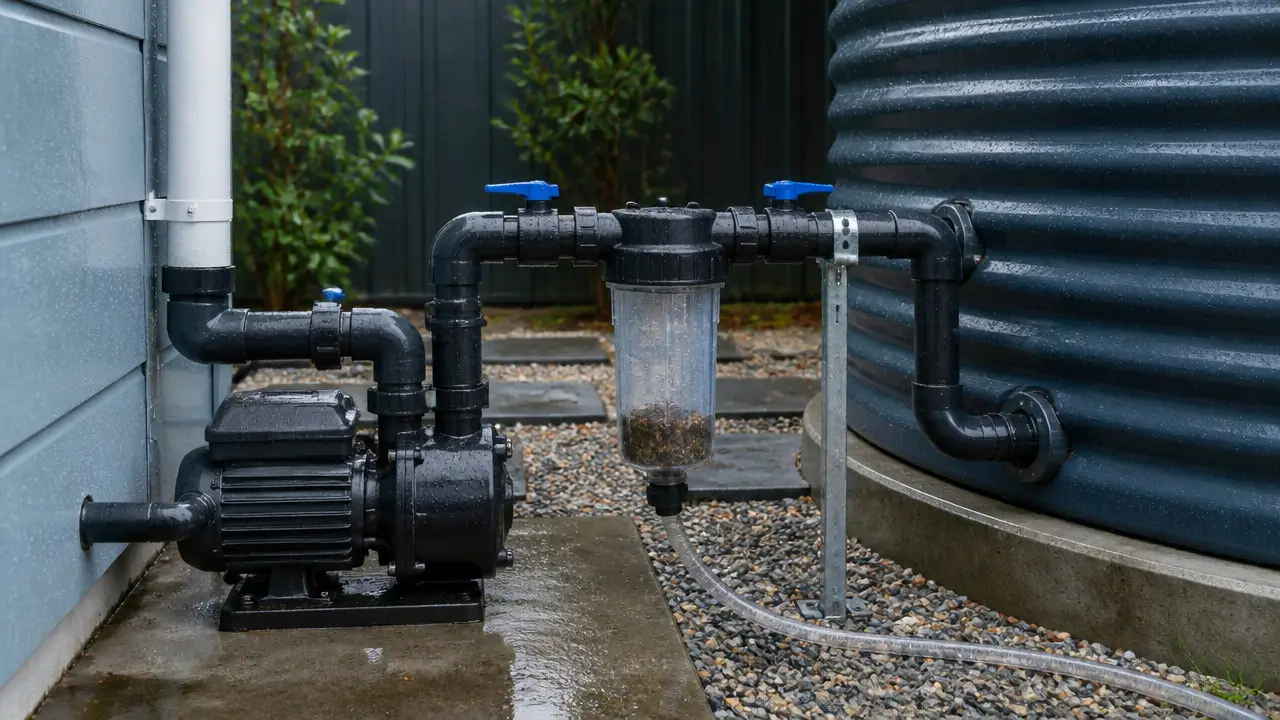
That may include suitable collection surfaces, gutter screens, a first-flush system, protected storage, sediment removal, additional treatment selected for the water quality, UV disinfection, maintenance, and current laboratory testing.
A first flush diverts some of the initial runoff from a rain event so dirt accumulated on the roof is less likely to enter the storage tank. It reduces incoming contamination but does not disinfect the water.
UV should not be used as a reason to ignore problems earlier in the system.
Where Should UV Go in a Rainwater System?
For household rainwater treatment, UV is normally placed after the storage tank and after the necessary filters, close to the point where treated water enters the household plumbing.
A simplified arrangement could be:
Roof → debris screening → first flush → storage tank → pump → sediment treatment → other required treatment → UV → house
The actual arrangement varies.
For example, carbon treatment may be useful when certain tastes, odors, or organic compounds need to be addressed. Other water-quality problems may require completely different treatment.
Placing UV after filtration helps provide clearer water to the UV chamber.
Treating water with UV before it enters a large storage tank generally does not protect it from contamination that occurs inside the tank afterward.
UV Does Not Leave Residual Disinfection
One important limitation of UV is what happens after the water leaves the chamber.
UV disinfects water while it passes through the unit. It does not normally leave behind a continuing disinfectant that protects the water farther down the plumbing.
CDC guidance notes the same issue with municipal UV treatment: UV can disinfect effectively at the treatment point but does not continue killing microorganisms as the water moves through pipes.
For a household system, this means the plumbing after the UV chamber still matters.
A dirty pressure tank, contaminated faucet, poorly maintained pipe, or untreated storage tank located downstream can introduce microorganisms again.
Keeping the downstream side clean is part of maintaining the system.
What Should You Look for in a UV System?
The most important factors are not extra features. They are whether the unit matches your water and intended use.
Appropriate Certification
For drinking-water applications, look for independently certified equipment with claims appropriate to your intended use.
NSF/ANSI 55 covers ultraviolet microbiological water-treatment systems. As of August 2026, NSF has published NSF/ANSI 55-2026.
NSF describes two important categories:
- Class A systems are intended to inactivate or remove microorganisms, including bacteria, viruses, and cysts, from contaminated water.
- Class B systems are intended to reduce normally occurring, non-disease-causing bacteria in water already considered safe.
Those categories are not interchangeable.
Review limitations of UV water treatment to verify safety testing and treatment aligned with the planned application.
If microbial safety is the reason you are installing UV, check the system's actual certification and performance claim rather than assuming that any device containing a UV lamp provides the same treatment.
Correct Flow Capacity
The UV system should handle your required peak water flow without exceeding its validated operating conditions.
A small point-of-use system and a whole-house unit serve very different jobs.
Water-Quality Requirements
Check the manufacturer's limits for the incoming water.
Sediment, color, hardness, iron, and other water conditions can interfere with the lamp, foul the quartz sleeve, or reduce the amount of UV light reaching the water.
Water treatment may be needed before the UV system.
UV Monitoring and Alarms
For a drinking-water application, knowing that the lamp is powered is not always the same as knowing that adequate UV treatment is occurring.
Depending on the system, useful safeguards can include operating alarms, lamp-life indicators, UV intensity monitoring, and automatic shutoff arrangements.
The appropriate level of monitoring depends on the system and the consequences of treatment failure.
How Much Maintenance Does UV Require?
UV systems are relatively simple, but they are not maintenance-free.
Typical maintenance can include:
- Replacing the lamp according to the manufacturer's schedule
- Cleaning or replacing the quartz sleeve
- Changing upstream filters
- Checking alarms and indicators
- Inspecting for leaks
- Confirming that flow stays within the unit's limits
- Keeping treatment records
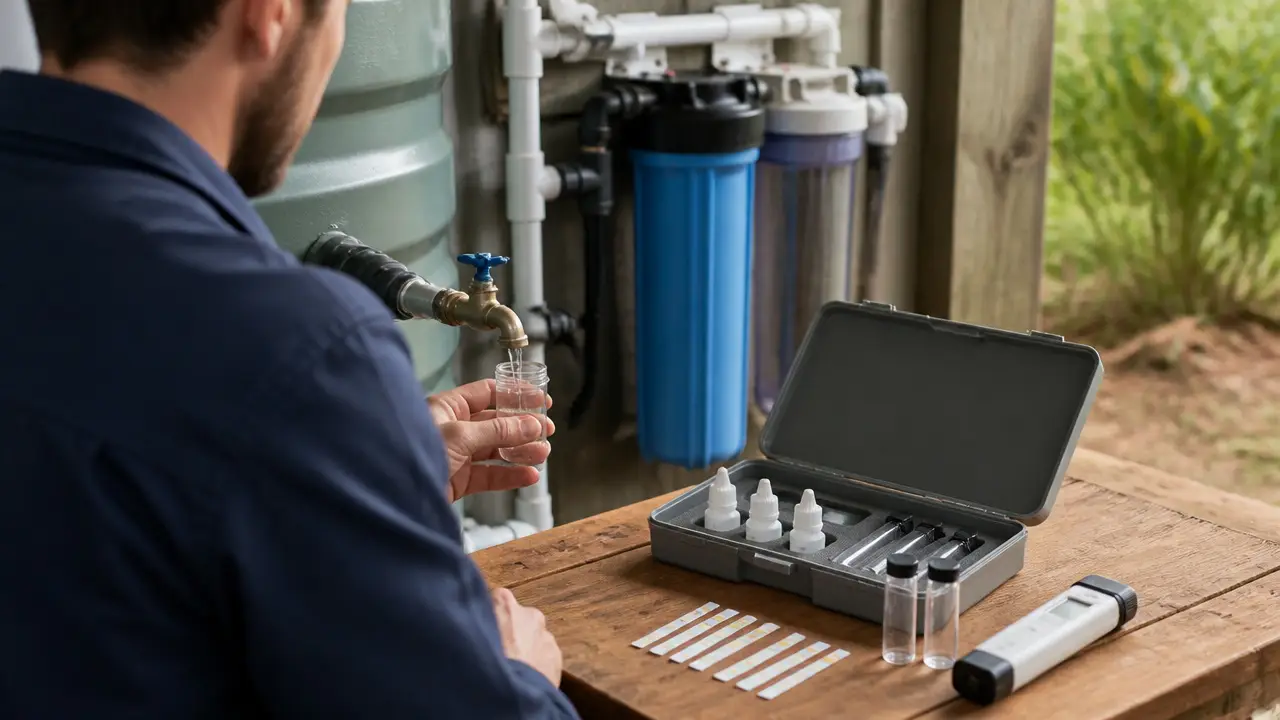
- Testing the source and treated water when appropriate
A lamp can continue glowing even after its useful disinfection output has fallen, so visual inspection alone is not a reliable replacement schedule.
Mineral deposits can also form on the quartz sleeve surrounding the lamp. Those deposits can block UV light even when the lamp itself is working.
Follow the maintenance schedule for the specific system rather than using a universal replacement interval.
What Happens During a Power Outage?
Most household UV systems need electricity whenever water is being treated.
If the power fails, UV disinfection stops.
This matters for:
- Off-grid cabins
- Rainwater systems with battery-powered pumps
- Homes with frequent outages
- Systems used for drinking water
If a pump also requires electricity, water flow may stop at the same time. But systems with pressure tanks, gravity storage, backup pumps, or other arrangements may still be capable of moving water even though the UV unit is off.
A system used for drinking water should be designed so untreated water cannot quietly bypass the disinfection stage.
Electrical installation around plumbing and water should follow applicable requirements. Have a qualified professional handle electrical work when needed.
Is UV Better Than Chlorine?
Neither method is automatically better.
UV provides effective disinfection without continuously adding a chemical to the water. It can therefore avoid chlorine taste associated with some treatment systems.
Chlorine has a different advantage: properly controlled residual chlorine can continue providing some microbial protection after the original treatment point.
UV generally does not provide that residual protection.
For some systems, one method is enough. More complex water systems may use more than one treatment method.
The choice should be based on the source water, plumbing arrangement, storage system, laboratory results, intended use, maintenance ability, and applicable drinking-water requirements.
Is UV Better Than a Water Filter?
UV and filtration perform different jobs.
A filter physically removes certain material from the water. What it removes depends on the filter design and its stated performance.
UV primarily disinfects microorganisms.
For many private water systems, the useful comparison is therefore not:
UV or filter?
It is:
What filtration and treatment does the water need before it reaches the UV system?
Sediment treatment can actually make UV more effective by keeping particles from interfering with the light.
Is a UV System Worth It for City Water?
Usually, UV is less important when your home already receives properly treated municipal drinking water and there is no identified microbial problem.
Public drinking-water systems already use regulated treatment and monitoring.
Adding a household UV system may still make sense in unusual circumstances, but it should address a specific need rather than simply adding another treatment stage because more equipment seems safer.
If your concern is chlorine taste, hardness, sediment, lead, or another specific contaminant, UV is probably not the treatment you are looking for.
Start by identifying the problem.
The Bottom Line
A UV water purification system is worth considering when microbial disinfection is a real need and the water can be properly pretreated before it reaches the UV chamber.
It is especially useful for some private wells, cisterns, cabins, and rainwater systems.
It is usually not worth buying as a general-purpose solution for sediment, high TDS, hardness, chemicals, taste, or mineral problems because UV does not remove those contaminants.
For drinking-water rainwater systems, treat UV as one part of the whole system. Suitable collection, protected storage, filtration, treatment based on water quality, correct UV sizing, regular maintenance, current laboratory testing, and applicable local requirements all matter.
Frequently Asked Questions
Does UV-treated water become safe to drink?
Not automatically. UV can provide an important microbial disinfection step, but it does not remove many chemical or physical contaminants. Drinking-water safety depends on the source, other treatment stages, system maintenance, laboratory testing, and applicable requirements.
Does UV remove bacteria from water?
UV normally inactivates microorganisms rather than physically removing them. Properly selected and operated UV systems can disinfect water containing bacteria. If you need the organisms physically removed, that requires an appropriate filtration process.
Does UV remove viruses?
An appropriately designed and validated UV system can inactivate viruses. The system must deliver the required UV exposure at the actual water quality and flow rate. Do not assume every UV device provides the same level of virus treatment.
Do I need a sediment filter before a UV system?
Often, yes. Prefiltration helps remove particles that could block UV light from reaching microorganisms. The CDC notes that UV treatment works better when the water is filtered first. The exact filtration requirements should follow the UV system manufacturer's specifications.
Can UV make rainwater drinkable?
UV alone cannot make untreated roof runoff reliably safe to drink. Rainwater intended for drinking requires a whole-system approach that can include suitable collection, protected storage, prefiltration, treatment selected for the water quality, UV disinfection, maintenance, current laboratory testing, and compliance with local requirements.
Does a UV system work without electricity?
Most household UV systems require electricity to operate the lamp and controls. When power is lost, normal UV disinfection stops unless the system has a suitable backup power arrangement.
Does a UV system reduce TDS?
No. UV does not meaningfully reduce total dissolved solids. If high TDS is a concern, identify what dissolved substances are present before choosing treatment.
Is UV worth using for garden rainwater?
Usually not. Rainwater used only for ordinary garden irrigation generally does not need a household UV disinfection system. Screening, storage, mosquito control, suitable irrigation equipment, and keeping sediment from clogging lines are usually more relevant concerns.