As an affiliate, we may earn a commission from qualifying purchases. We get commissions for purchases made through links on this website from Amazon and other third parties.
The best water monitoring system for a rainwater setup is usually a combination of tank-level monitoring, leak or overflow detection, pump protection, and periodic water-quality testing. One sensor rarely tells you everything you need to know.
For a simple rain barrel, a visible level gauge may be enough. For an IBC tote or garden cistern, a remote tank-level sensor can be useful. For a pumped household system, monitoring should also cover pressure, flow, pump operation, and leaks.
If the water may be used for drinking, cooking, or bathing, electronic sensors are not a replacement for proper treatment and laboratory testing.
What Should a Water Monitoring System Monitor?
Start with what could cause a problem in your particular system.
A rainwater system may need to monitor:
- How much water is in the tank
- Whether the tank is overflowing
- Whether pipes or fittings are leaking
- Whether the pump has enough water to operate
- Water pressure
- Water flow
- Filter condition
- Treatment equipment operation
- Water temperature in freeze-prone areas
- Water quality when required for the intended use
You do not necessarily need all of these.
A gravity-fed garden barrel needs far less monitoring than a cistern supplying toilets, laundry, irrigation, or household fixtures.
Best Monitoring Setup for Most Rainwater Tanks
For most homeowners, the most useful setup has three parts.
1. A Tank-Level Sensor
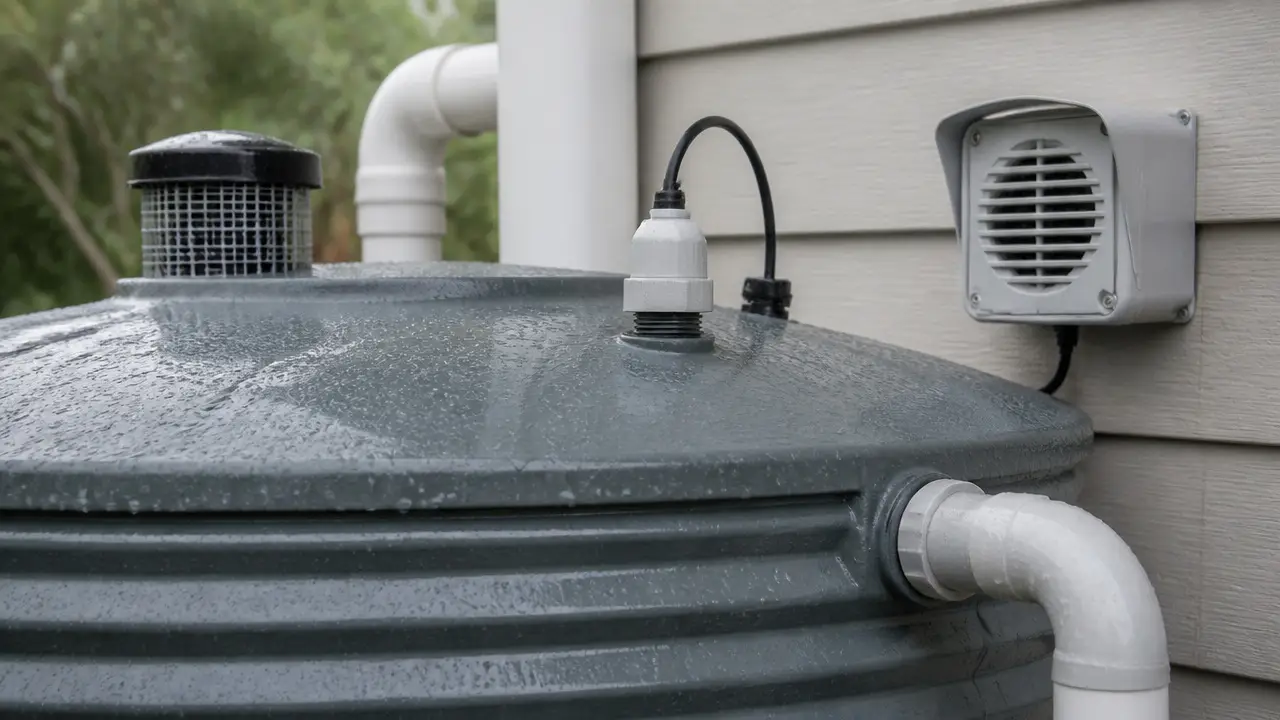
A tank-level monitor tells you approximately how much water remains.
This is usually the most valuable sensor in a rainwater system because it helps you decide when to use water and when to conserve it.
Common options include:
| Type | Best Use | Main Limitation |
|---|---|---|
| Mechanical level gauge | Simple barrels and tanks | Usually requires checking the tank |
| Float sensor | High or low level alerts | May only show one level |
| Pressure sensor | Tall tanks and cisterns | Must be installed correctly |
| Ultrasonic sensor | Remote tank monitoring | Sensor placement and tank shape matter |
| Smart wireless sensor | Tanks that are hard to check | Depends on power and wireless connection |
An ultrasonic sensor measures the distance from the top of the tank to the water surface without touching the water.
For a large outdoor tank, this can be a practical option because there are fewer moving parts inside the tank.
2. High- and Low-Water Protection
Knowing the exact percentage in the tank is useful, but high- and low-level switches can protect equipment even when nobody is watching the monitor.
A low-water switch can stop a pump before it runs without enough water.
Running a pump dry can damage some pumps.
A high-water sensor can warn you about an overflow problem or activate equipment if the system was designed for automatic control.
These simple switches can sometimes provide more practical protection than a sophisticated display.
3. Leak Monitoring
Leak detection becomes important when rainwater pipes enter a building or when a pumped system remains under pressure.
Place water sensors where a leak could cause damage, such as near:
- Pumps
- Pressure tanks
- Filters
- Treatment equipment
- Indoor pipe connections
- Water heaters supplied by the system
- Mechanical rooms
A sensor on the floor can warn you after water appears. A flow-monitoring system may detect unusual water movement before a large amount of water escapes.
When Flow Monitoring Is Worth Adding
A flow meter measures how much water passes through a pipe.
It can answer questions that a tank-level gauge cannot.
For example, you can see:
- How much water an irrigation zone uses
- Whether water is flowing when everything should be off
- Whether system flow has fallen
- How quickly stored water is being consumed
- Whether a pump is delivering roughly the expected flow
Flow rate means the amount of water moving through the system over time, such as gallons per minute.
Flow monitoring is especially useful for larger irrigation systems and household rainwater systems.
It is usually unnecessary on a small rain barrel.
Pressure Monitoring for Pumped Systems
If you use a pump, pressure information can help diagnose problems.
Low or unstable pressure can point toward several issues, including:
- Low tank water
- A clogged filter
- A restricted pipe
- Air entering the suction line
- A failing pump
- Pressure-tank problems
- Excessive water demand
A pressure gauge is inexpensive and useful even if you do not install electronic monitoring.
Smart pressure sensors can provide alerts, but the basic measurement is the same.
Pressure monitoring works best when paired with flow information. Pressure by itself does not tell you how much water is moving.
Monitoring Filters and Treatment Equipment
Filters can slowly restrict water as they collect debris.
A useful way to monitor some filters is to measure pressure before and after them.
A growing pressure difference can indicate increasing restriction.
Do not assume every filter should be changed at the same pressure difference. Follow the filter or housing manufacturer's service guidance.
Treatment systems may also have their own indicators.
For example, a UV water treatment unit may monitor lamp operation. That can tell you whether the UV equipment appears to be operating.
It does not prove that the water is safe to drink.
Successful treatment also depends on water quality, pretreatment, equipment condition, flow, maintenance, and correct system design.
Can a Water-Quality Sensor Monitor Rainwater?
Some water properties can be monitored electronically.
Common measurements include:
- Temperature
- pH
- Conductivity
- Total dissolved solids
- Turbidity
Total dissolved solids, usually shortened to TDS, is an estimate of dissolved substances in water based on electrical conductivity.
These measurements can help identify changes.
For example, an unexpected change in conductivity may tell you that the water is different from normal.
It cannot tell you exactly what caused the change.
More importantly, a TDS meter cannot determine whether rainwater is safe to drink.
Harmful bacteria, viruses, parasites, metals, or chemicals may be present without producing an obvious TDS reading, smell, taste, or appearance.
CDC guidance says rainwater is not necessarily safe to drink and recommends regular testing for germs and chemicals when collected rainwater is used for drinking, cooking, or bathing.
The Best System Depends on How You Use the Water
The easiest way to choose monitoring equipment is to start with the water's job.
Rain Barrel for Garden Watering
Keep it simple.
A useful setup may include:
- Visible tank-level gauge
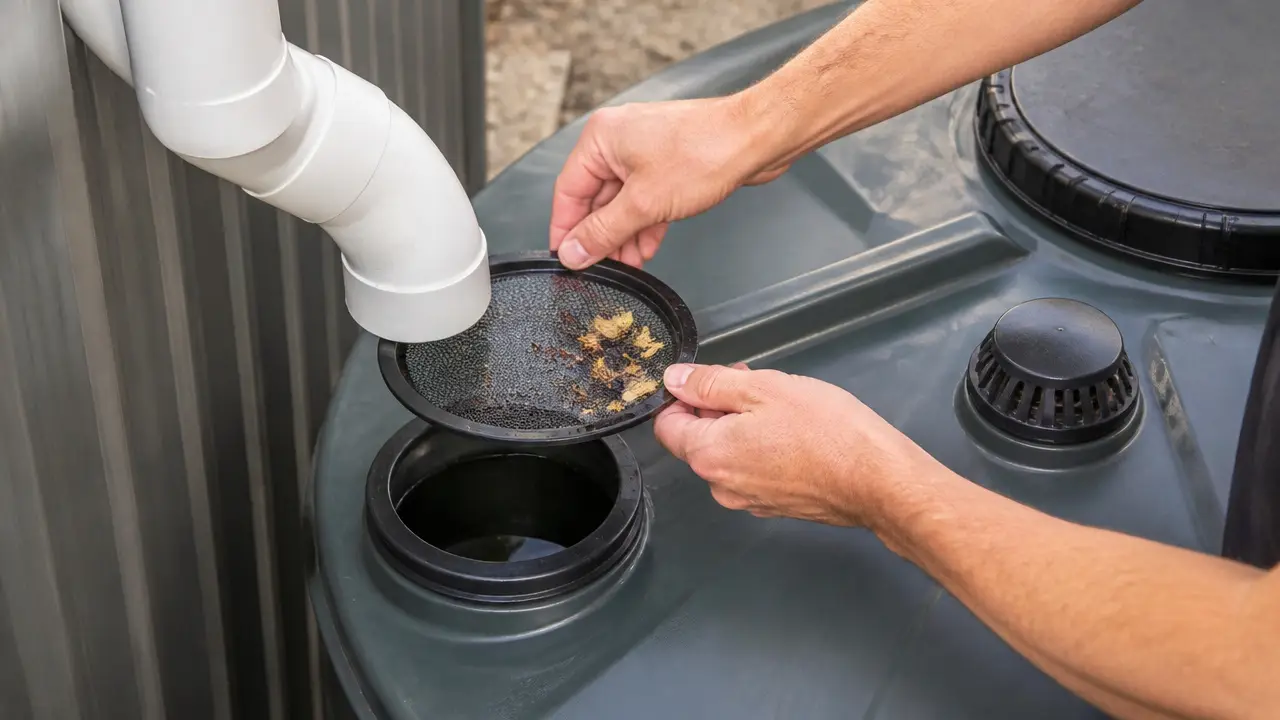
- Screened inlet
- Proper overflow
- Occasional inspection for leaks and debris
Electronic monitoring usually adds little value unless the barrel is difficult to access.
IBC Tote or Larger Garden Tank
Consider:
- Tank-level sensor
- High-level alert if overflow is a concern
- Low-level pump shutoff
- Simple pressure gauge if using a pump
- Flow meter for larger irrigation systems
Check key facts about a water level alert system to assess long-term maintenance priorities for the installation.
Pay attention to sensor compatibility with the tote, fittings, and water depth.
Large Cistern
Remote level monitoring becomes more valuable because opening or climbing around a large cistern just to check water depth is undesirable.
A system may monitor:
- Tank level
- High level
- Low level
- Pump operation
- Flow
- Pressure
- Leaks
Avoid entering a cistern to install or service sensors. Tanks and cisterns can present serious confined-space hazards.
Household Rainwater System
Monitoring should usually extend beyond the tank.
Depending on the design, it may include:
- Tank level
- Pump status
- Pressure
- Flow
- Dry-run protection
- Filter condition
- Leak detection
- Treatment-system status
Rainwater plumbing should also remain properly separated from potable plumbing where required so collected water cannot contaminate the drinking-water system.
CDC specifically warns against allowing untreated rainwater to enter pipes carrying treated drinking water.
Wired or Wireless Monitoring?
Both can work.
Wireless Monitoring
Wireless sensors are useful when the tank is:
- Away from the house
- Difficult to see
- Underground
- Behind a building
- Part of a remote cabin system
Some systems can send alerts to a phone when the level becomes too high or too low.
Check the actual communication method before choosing one. Wi-Fi may not reach an outdoor cistern even when it works inside the house.
Wired Monitoring
Wired sensors can make sense when you already have electrical or control wiring near the tank.
They avoid wireless signal problems but require more installation work.
Any electrical equipment installed outdoors, around pumps, or near water must be suitable for that location. Have a qualified electrician handle work that goes beyond low-voltage sensor connections or simple plug-in equipment.
Features Worth Looking For
For a useful rainwater monitoring system, prioritize reliability over a long feature list.
Look for features such as:
- Tank-depth compatibility
- Adjustable high- and low-level alerts
- Clear level display
- Outdoor-rated sensors where required
- Reliable power supply
- Low-battery warning for battery sensors
- Dry-run pump protection
- Local display if internet access fails
- Data history if water-use tracking matters
- Replaceable sensors
- Simple calibration
- Connections that fit your tank and piping
Also check whether a sensor needs direct contact with the water.
A sensor that looks convenient may be a poor choice if installing it requires drilling an unsuitable hole, modifying a tank incorrectly, or creating a new leak point.
Do You Need an App?
Usually not.
An app is useful when you want remote alerts or historical information.
For example, a tank-level history can show how quickly irrigation is using stored water between rain events.
But the system should still perform its important protective functions if your internet connection fails.
A pump's low-water protection should not depend on a phone receiving a notification.
Automatic protection and remote monitoring are two different jobs.
Do Not Rely on Monitoring Instead of Maintenance
A sensor can tell you something is wrong. It cannot keep the collection system clean.
Continue checking:
- Gutters
- Roof drainage
- Screens
- First-flush equipment
- Tank openings
- Overflows
- Pipes
- Fittings
- Pumps
- Filters
A first-flush diverter sends away some of the first roof runoff from a storm because that initial runoff may carry more dirt and contamination from the roof.
CDC recommends maintaining rainwater collection equipment and notes that first-flush diversion can help improve collected water quality.
What About Monitoring Drinking Water?
This requires a different approach.
Continuous electronic measurements can be useful for detecting system changes, but they should not be treated as proof that rainwater is potable.
Potable means suitable for drinking.
For rainwater intended for drinking, cooking, or similar household uses, think of monitoring as part of a larger system that includes:
- Suitable collection surfaces and materials
- Debris control and prefiltration
- Proper storage
- Treatment chosen for the contaminants of concern
- Correct maintenance
- Water testing
- Applicable local health and plumbing requirements
CDC recommends testing rainwater used for drinking for harmful germs and chemicals and choosing treatment based on what needs to be removed.
Home meters should not replace laboratory testing when health decisions depend on the results.
A Practical Monitoring Setup
For a typical pumped rainwater tank supplying irrigation or other non-potable uses, a good monitoring package is often:
Tank-level sensor + low-water pump shutoff + pressure gauge + leak detector.
Add a flow meter if tracking consumption or detecting abnormal water use would be helpful.
Add high-level alarms where an overflow failure could cause damage.
For drinking-water systems, add appropriate treatment-system monitoring and laboratory testing rather than expecting one electronic water-quality sensor to certify the water.
That approach gives you useful information without making the system unnecessarily complicated.
Frequently Asked Questions
What is the best type of sensor for monitoring a water tank?
An ultrasonic level sensor can work well for many larger tanks because it measures water level without sitting in the water. Mechanical gauges and float sensors can be simpler choices for small tanks. Tank shape, depth, access, and sensor mounting all affect which option works best.
Can I monitor a rainwater tank from my phone?
Yes. Wireless tank-level systems can send readings and alerts to an app or online dashboard. Check wireless range, power requirements, outdoor suitability, and whether important protections still work without internet access.
Can a water monitor tell me if rainwater is safe to drink?
Not by itself. Sensors for pH, conductivity, TDS, or turbidity measure specific water properties. They do not provide a complete assessment of harmful germs and chemicals. Rainwater intended for drinking requires appropriate treatment, maintenance, and water testing.
Is a TDS meter useful for rainwater?
It can be useful for noticing changes in dissolved material, but a TDS reading does not show whether water contains harmful bacteria, viruses, parasites, or specific chemicals. It should not be used as a drinking-water safety test.
Should I install a low-water sensor with my pump?
It is a good protective feature when the pump could continue operating after the tank becomes too low. The sensor or pump control must be compatible with the pump and installed according to the equipment manufacturer's requirements.
Do I need both a pressure gauge and a flow meter?
Not always. A pressure gauge is usually the more basic tool for a pumped system. A flow meter adds useful information when you want to measure consumption, irrigation output, or unusual water movement. Using both makes troubleshooting easier.
How often should rainwater quality be tested?
Testing should reflect how the water is used and local health guidance. CDC recommends at least annual testing for harmful germs and chemicals when rainwater is being used as a drinking-water source, with additional testing when conditions or water quality change.