As an affiliate, we may earn a commission from qualifying purchases. We get commissions for purchases made through links on this website from Amazon and other third parties.
Low water pressure usually comes from restricted water flow somewhere in the plumbing system. The most common causes are partially closed valves, clogged fixtures or filters, mineral buildup inside pipes, failing pressure regulators, leaks, or a weak water supply entering the property.
If the pressure is low at only one faucet, the problem is usually close to that fixture. If pressure is low throughout the house, look farther upstream at the main shutoff valve, pressure regulator, supply pipe, pump, storage system, or municipal supply.
Start by Finding Out How Much of the System Is Affected
Before replacing anything, check several fixtures.
Turn on faucets in different parts of the house and compare them. Check both hot and cold water.
The pattern often points toward the cause.
| What you notice | Likely area to check |
|---|---|
| One faucet has low flow | Aerator, cartridge, local shutoff valve |
| One shower has low flow | Showerhead, mixing valve, local plumbing |
| Hot water is weak but cold is normal | Water heater or hot-water piping |
| Whole house has low pressure | Main valve, regulator, supply, leak, pump |
| Pressure drops when several fixtures run | Supply restriction or inadequate system capacity |
| Pressure starts strong and quickly falls | Flow restriction, pump problem, or storage/pressure tank issue |
People often call any weak water flow "low pressure." Pressure and flow are related, but they are not the same thing.
Water pressure is the force pushing water through the system.
Flow rate is how much water can move through the plumbing over time.
A clogged pipe can have acceptable pressure when no water is moving but still deliver poor flow when you open a faucet.
A Partially Closed Valve Is a Common Cause
One of the simplest causes is a valve that is not fully open.
Check the main water shutoff valve where water enters the building. Also check any valves near:
- Water meters
- Pressure tanks
- Filters
- Water softeners
- Pumps
- Storage tanks
- Individual fixtures
Someone may have partially closed a valve during maintenance and never reopened it completely.
Do not force an old or corroded valve. A fragile valve can begin leaking or break when disturbed.
Clogged Faucet Aerators and Showerheads
If only one fixture has weak flow, start at the fixture itself.
Faucet aerators and showerheads have small openings that can collect:
- Mineral scale
- Sand
- Rust
- Pipe debris
- Sediment
This is especially common after plumbing repairs, well maintenance, or work on a rainwater system.
Remove and inspect the aerator or showerhead if it can be serviced safely. Cleaning or replacing a clogged fixture component may restore normal flow.
If several fixtures are affected, the restriction is probably farther upstream.
A Dirty Water Filter Can Reduce Pressure
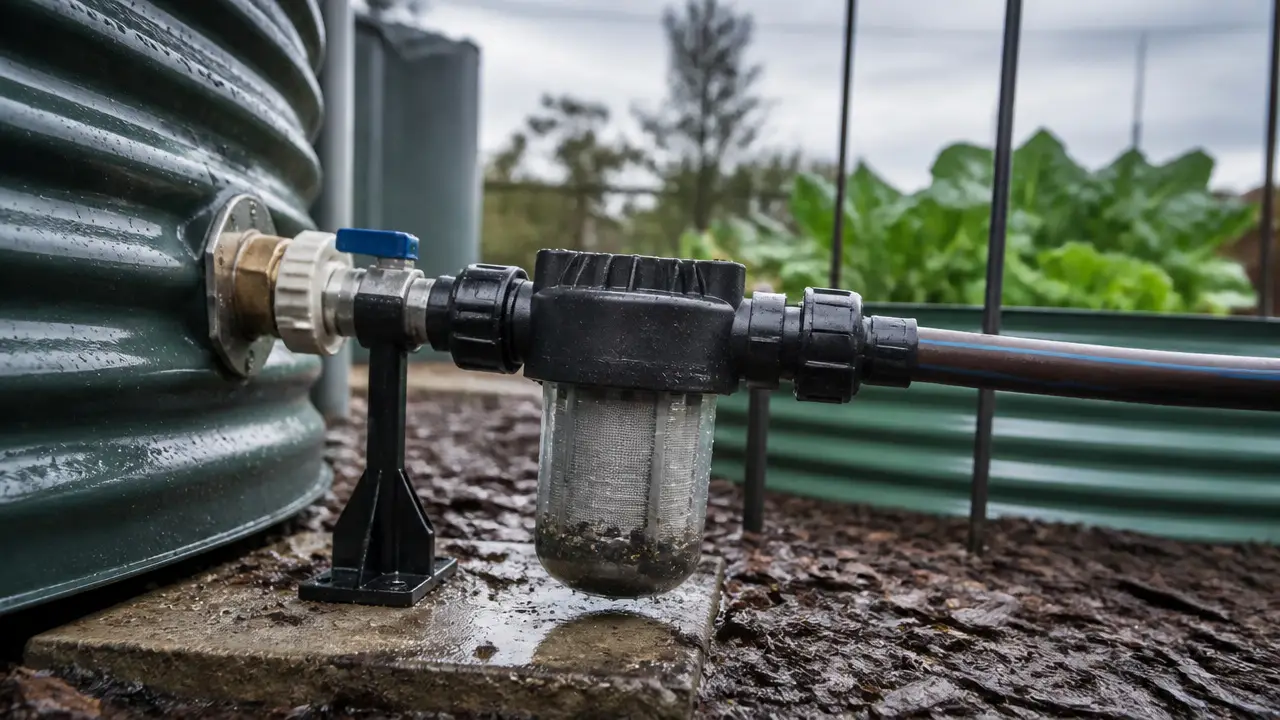
Filters create resistance as water passes through them. As sediment collects, that resistance increases.
A clogged cartridge can cause a noticeable pressure drop throughout the plumbing downstream of the filter.
This can occur with:
- Sediment filters
- Carbon filters
- Fine particulate filters
- Whole-house filtration systems
- Rainwater treatment systems
The micron rating of a filter describes the approximate size of particles it is designed to capture. A finer filter can create more flow resistance, especially when it becomes dirty.
Check the filter according to its maintenance schedule. If pressure improves after servicing the filter, the filter was probably contributing to the restriction.
Do not simply remove treatment stages from water intended for drinking. Rainwater used as potable water requires an appropriate complete treatment system rather than pressure improvement at the expense of water quality.
Mineral Buildup Can Restrict Old Pipes
Older plumbing can gradually become restricted from the inside.
Minerals, corrosion, and sediment may reduce the usable diameter of a pipe. Galvanized steel plumbing is particularly prone to internal corrosion as it ages.
This problem often develops slowly.
You may notice:
- Gradually worsening flow
- Poor flow at several fixtures
- Large pressure drops when multiple fixtures operate
- Rust-colored debris
- Better flow near the water source than at distant fixtures
Replacing a faucet will not solve a restriction deep inside the plumbing.
A plumber can determine whether sections of pipe have become badly restricted.
A Failing Pressure Regulator Can Affect the Whole House
Some homes have a pressure-reducing valve, also called a pressure regulator, where the main water line enters the building.
Its job is to reduce high incoming pressure to a suitable pressure for household plumbing.
When a regulator fails, household pressure may become:
- Too low
- Too high
- Unstable
- Different from one time of day to another
A regulator problem usually affects most or all fixtures rather than a single faucet.
Do not keep increasing the regulator adjustment to compensate for an unknown problem. Excessive plumbing pressure can damage fixtures, valves, water heaters, and appliances.
A pressure gauge can help determine whether the system pressure is actually low, but unusual readings should be investigated before adjustments are made.
Plumbing Leaks Can Reduce Available Pressure
A significant leak can divert water away from the fixtures you are trying to use.
Look for signs such as:
- Unexpected water meter movement
- Wet ground near buried pipes
- Damp walls or floors
- Running toilets
- Unexplained pump cycling
- Falling tank levels
- Increased water use
Small household leaks do not always produce obvious pressure loss, but a large supply-line leak can.
If you suspect a hidden leak, especially beneath a slab or underground, professional leak detection may be worthwhile.
The Incoming Water Supply May Be Weak
Sometimes the plumbing inside the house is working correctly.
Municipal water pressure can change because of:
- Heavy neighborhood demand
- Utility maintenance
- Water-main problems
- Elevation
- Changes to the distribution system
If neighbors are experiencing the same problem, the supply may be responsible.
Pressure that becomes low only during certain times of day can also point toward a supply-side issue.
With low-pressure pump troubleshooting, you can verify flow capacity after accounting for total lift.
Contact the water utility before making major plumbing changes if the problem appears to start before the property's plumbing system.
Private Wells Have Additional Possible Causes
Homes using wells depend on a pump and pressure-control system rather than continuous municipal pressure.
Possible causes of low pressure include:
- Weak or failing pump
- Clogged sediment filter
- Incorrect pressure-switch operation
- Pressure tank problems
- Low well yield
- Restricted piping
- Leaks
A pressure tank stores water under pressure so the pump does not have to start every time a faucet opens.
Rapid pump cycling, large pressure swings, or pressure that repeatedly falls below its normal operating range can indicate a problem with the well system.
Pump wiring, pressure controls, and submerged pumps should generally be serviced by someone familiar with well and electrical systems.
Rainwater Systems Can Have Low Pressure Even When Nothing Is Broken
Gravity-fed rainwater systems naturally produce much less pressure than typical pressurized household plumbing unless there is substantial elevation between the tank and the outlet.
The vertical distance between the water surface and the outlet creates head height.
More head height generally creates more available pressure.
A rain barrel placed slightly above a garden bed may work for a watering can or low-pressure hose, but it may not provide enough pressure for:
- Conventional sprinklers
- Some drip regulators
- Household fixtures
- Fine filters
- Long hose runs
Long pipes, small tubing, elbows, filters, and partially closed valves further reduce usable flow.
If more pressure is required, a properly sized pump may be needed.
Storage Tank Systems Can Be Restricted by Their Connections
Low-pressure complaints around rain barrels, IBC totes, and cisterns are often caused by plumbing restrictions rather than the tank itself.
Common examples include:
- Small outlet fittings
- Small-diameter hoses
- Clogged screens
- Dirty filters
- Narrow valves
- Long hose runs
- Excessive elevation gain
- Pumps that cannot provide the required flow and pressure
A large tank does not automatically provide high pressure.
Tank capacity tells you how much water can be stored. It does not tell you how strongly the water will come out.
Pump Problems Can Cause Low Pressure
A pump must be able to overcome both elevation and plumbing resistance while still delivering the required flow.
A pump may produce poor performance if it is:
- Undersized
- Starved for water
- Drawing through a clogged intake
- Pulling through undersized suction plumbing
- Losing prime
- Worn internally
- Operating outside its intended range
Head height is especially important when sizing pumps. The pump must lift water vertically and overcome resistance from piping, valves, filters, and fittings.
Do not choose a pump based only on its maximum advertised flow. Maximum flow is normally measured under conditions with very little resistance. Actual flow decreases as the required pressure and lift increase.
Check Static and Flowing Pressure
A pressure gauge can help separate a pressure problem from a flow restriction.
Two readings can be useful.
Static Pressure
Static pressure is measured when no water is being used.
If static pressure appears normal but drops sharply when a faucet opens, there may be a restriction or insufficient supply capacity.
Flowing Pressure
Flowing, or dynamic, pressure is measured while water is moving.
A large difference between static and flowing pressure can point toward:
- Undersized pipes
- Partially closed valves
- Dirty filters
- Restricted service lines
- Weak pumps
Pressure readings should be interpreted as part of the whole system rather than treated as a diagnosis by themselves.
What to Check First
For a typical household system, a practical troubleshooting order is:
- Check whether one fixture or the whole building is affected.
- Inspect faucet aerators and showerheads.
- Make sure accessible shutoff valves are fully open.
- Check filters and other known restrictions.
- Compare hot-water and cold-water performance.
- Check system pressure with an appropriate gauge if needed.
- Look for evidence of leaks.
- Consider the pressure regulator, supply line, pump, or pressure tank.
- Contact the water utility or a qualified plumber when the problem is system-wide and the cause is not obvious.
This approach starts with the simple restrictions before moving toward expensive plumbing work.
Frequently Asked Questions
What is the number one cause of low water pressure?
There is no single cause in every plumbing system, but restricted water flow is one of the most common underlying problems. Clogged fixtures, dirty filters, partly closed valves, mineral buildup, and restricted pipes can all reduce available flow.
Why did my water pressure suddenly become low?
Sudden pressure loss can result from a partly closed valve, clogged filter, water-main problem, major leak, failed pressure regulator, or pump problem. Determine whether the problem affects one fixture or the entire property first.
Why is my water pressure low at only one faucet?
A clogged aerator, faucet cartridge, flexible supply line, or local shutoff valve is more likely than a whole-house pressure problem.
Can clogged pipes cause low water pressure?
Yes. Mineral deposits, corrosion, sediment, and debris can reduce the inside diameter of plumbing. This limits how much water can move through the pipes.
Can a water filter cause low pressure?
Yes. Filters normally create some resistance, and a dirty filter can create much more. A sudden pressure drop downstream of a filter is a good reason to check its condition.
Why does my pressure drop when two faucets are running?
The system may not be able to supply enough flow for both fixtures at the same time. Possible causes include restricted pipes, a partly closed valve, clogged filters, an undersized supply line, or inadequate pump performance.
Why does my rainwater tank have weak water pressure?
Gravity systems depend mainly on the height of the water above the outlet. A tank near ground level produces relatively little pressure. Small fittings, long hoses, filters, and elevation changes can reduce flow further.
When should I call a plumber for low water pressure?
Call a qualified plumber when the entire house is affected, you suspect a hidden leak or blocked service line, the pressure regulator may have failed, old plumbing appears badly restricted, or diagnosis would require opening walls or altering the main supply system.