As an affiliate, we may earn a commission from qualifying purchases. We get commissions for purchases made through links on this website from Amazon and other third parties.
A cracked rain barrel can often be repaired if the damage is small, easy to reach, and away from a fitting or badly deformed area. The best repair method depends on what the barrel is made from and where the crack is located.
For most plastic rain barrels, a repair made specifically for that type of plastic is more reliable than ordinary household glue. Some cracks can also be plastic-welded. Large splits, cracks around stressed fittings, and brittle barrels are often better replaced than patched.
First, Check Whether the Barrel Is Worth Repairing
Drain the barrel before inspecting it. Water pressure pushes outward on the walls, so a crack that looks small when the barrel is empty may spread when it is full.
Look closely at:
- The length of the crack
- Whether the crack is growing
- The condition of the plastic around it
- How close it is to a spigot, bulkhead fitting, seam, or support point
- Whether the barrel has become brittle from sun exposure or age
- Whether the barrel changes shape when filled
A short crack in otherwise solid material is usually a better repair candidate than a long split through brittle plastic.
Replacement is usually the safer choice if the barrel has several cracks, badly weakened walls, major deformation, or damage that extends through a structural seam.
Identify the Barrel Material
Many rain barrels are made from polyethylene, including high-density polyethylene, or HDPE. This plastic is strong and commonly used for water containers, but it can be difficult to glue.
Look for a recycling mark or material marking molded into the barrel.
Common materials include:
- HDPE, often marked with recycling code 2
- LDPE, often marked with recycling code 4
- Polypropylene, often marked with recycling code 5
- Fiberglass
- Metal
- Wood
Do not assume that an adhesive labeled for "plastic" will bond properly to every rain barrel. Polyethylene and polypropylene have low-energy surfaces that many common glues do not stick to well.
Choose a repair material whose manufacturer specifically lists your barrel material as compatible.
Drain, Clean, and Dry the Barrel
A repair surface needs to be clean and dry.
Disconnect the barrel from the downspout or collection line if needed. Drain the water to a suitable location. Do not work on a barrel while it is holding a large amount of water.
Wash dirt, algae, and loose material away from the damaged area. A mild detergent and water are normally enough for surface cleaning. Rinse away the soap.
Allow the area to dry fully.
If the barrel contains water used for household purposes, avoid introducing cleaners, solvents, or repair compounds that are not suitable for that intended water use.
Stop a Small Crack From Spreading
Plastic cracks can continue growing because stress is concentrated at the tip of the crack.
For some repair methods, a very small round stop hole at each end of a clean crack can help reduce that concentration of stress. However, drilling adds permanent holes to the barrel and is not appropriate for every type of damage.
Do not drill if:
- The crack is next to a fitting
- The wall is already brittle
- You cannot support the area safely
- The repair-system instructions advise against it
If you are using a commercial repair system, follow its surface-preparation instructions rather than automatically drilling the barrel.
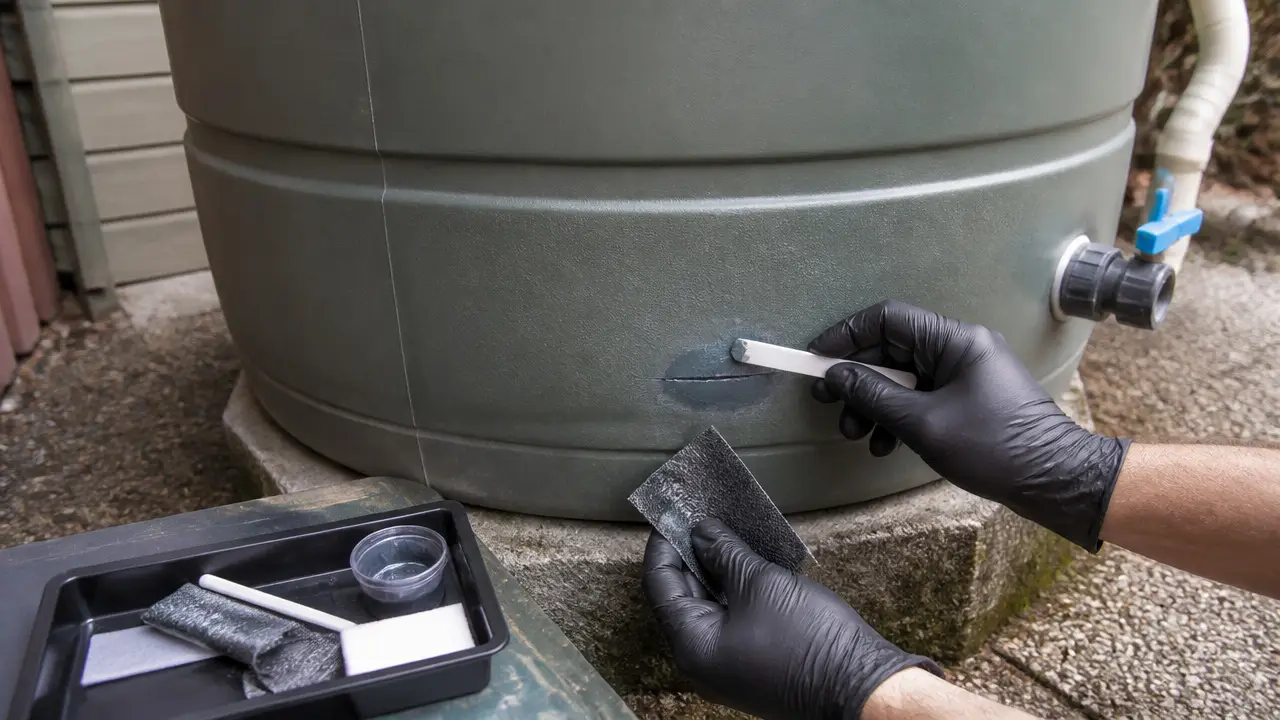
Repairing a Plastic Rain Barrel With a Compatible Patch
A bonded patch can work when both the patch material and adhesive are compatible with the barrel.
The patch should extend beyond the damaged area so water pressure is spread over solid material rather than concentrated directly on the crack.
A typical repair involves:
- Emptying, cleaning, and drying the barrel.
- Preparing the surface according to the repair-material instructions.
- Cutting or selecting a patch that covers well beyond the crack.
- Applying the compatible bonding or sealing material.
- Pressing the patch firmly against the barrel.
- Allowing the repair to cure for the full time specified by the manufacturer.
- Testing the barrel gradually with water.
Avoid relying on a thin bead of general-purpose sealant placed only over the crack. Water pressure and wall movement can cause this type of surface repair to peel or split again.
Plastic Welding a Rain Barrel
Plastic welding joins compatible plastic by softening the parent material and usually adding matching plastic filler.
It can produce a stronger repair than many adhesives on polyethylene barrels, but the plastic types must be compatible and overheating can weaken or distort the barrel.
Plastic welding is most practical when:
- The material is positively identified
- The surrounding plastic is still strong
- Both sides of the damaged area can be reached when required
- The crack is not part of widespread deterioration
Do not experiment with open flames on a plastic barrel. Use tools designed for plastic repair and follow their operating instructions.
If you are not comfortable controlling heat near thin plastic, a compatible patch system or replacement barrel is the simpler option.
Repairing a Crack Around a Spigot
Damage around a spigot needs different attention because the fitting itself may be causing the problem.
A spigot is often installed through a bulkhead fitting. A bulkhead fitting passes through the barrel wall and seals the opening with a gasket.
Check whether the leak is actually coming from:
- A loose fitting
- A displaced gasket
- A damaged gasket
- Incorrect fitting installation
- A crack radiating outward from the hole
Do not keep tightening a fitting in an attempt to stop a crack. Excessive tightening can deform the barrel wall and make the crack larger.
If the barrel material surrounding the opening has split, a simple bead of sealant may not provide enough structural support. The damaged section may need reinforcement, relocation of the fitting, or replacement of the barrel.
Repairing a Crack Near the Bottom
Bottom cracks deserve extra caution because they experience significant water pressure.
Water pressure increases with depth. This means a repair near the bottom of a full barrel normally carries more load than one near the top.
Check the barrel support as well. An uneven base can flex the bottom or side wall and contribute to cracking.
A rain barrel should sit on a stable surface that supports its weight evenly. Remember that water is heavy. A full barrel can place a substantial load on its base and stand.
Do not return a repaired barrel to an unstable, leaning, or damaged stand.
Test the Repair Slowly
Review recommended rain barrel repair kits for leaks and cracks to understand cleaning access for sediment and odor control.
Do not immediately fill the barrel to the top.
After the repair has fully cured:
- Add a small amount of water.
- Inspect the repaired area.
- Add more water in stages.
- Check for moisture around the patch and ends of the crack.
- Watch for bulging or continued crack growth.
Continue until you reach the barrel's normal operating level.
If the repair begins separating, the crack expands, or the barrel wall visibly deforms, drain the barrel and stop using it.
Check Why the Barrel Cracked
Fixing the crack without correcting the cause can lead to another failure.
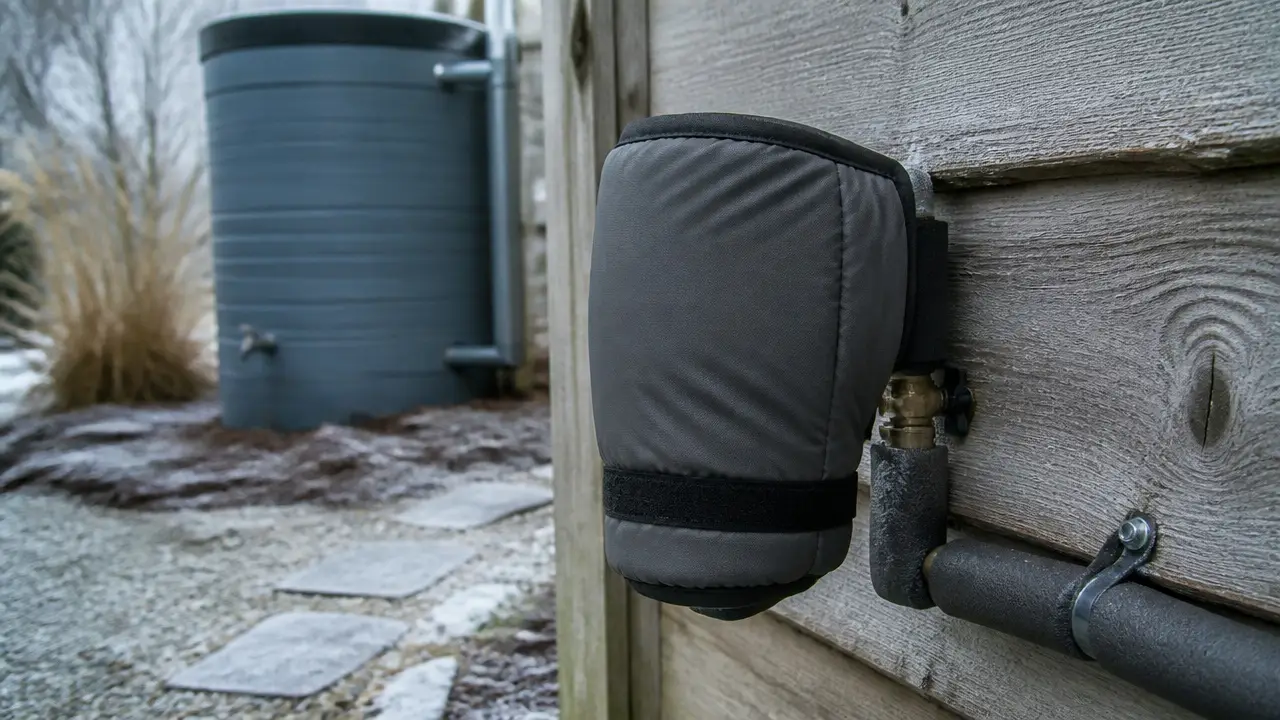
Freezing
Water expands as it freezes. A barrel left full during freezing weather can split or deform.
If your climate freezes, prepare the barrel before sustained cold weather according to the barrel manufacturer's recommendations. Depending on the system, that may mean draining it, disconnecting collection lines, opening valves, or storing parts where trapped water cannot freeze.
Poor Support
A barrel sitting on uneven blocks or a sagging platform can develop stress points.
The base should be level, stable, and capable of safely supporting the filled barrel.
Overtightened Fittings
Spigots and bulkhead fittings can damage thin barrel walls if tightened too aggressively.
The gasket should create the seal. More force is not always better.
Sun and Age
Long-term ultraviolet exposure can weaken some plastics. A barrel that has become faded, chalky, or brittle may develop more cracks even after one area is repaired.
Shade can reduce direct sun exposure, but do not enclose the barrel in a way that prevents inspection or creates an unstable setup.
Impact
Lawn equipment, falling branches, tools, or movement while the barrel contains water can crack the wall.
Whenever possible, empty a barrel before repositioning it.
When a Crack Should Not Be Repaired
Repair is not always the right choice.
Consider replacing the barrel if:
- The wall is brittle across a large area
- Several cracks have appeared
- A long split continues growing
- The bottom has major structural damage
- A molded seam is failing
- The barrel cannot sit normally when filled
- Previous repairs keep failing
- You cannot identify a compatible repair method
A failed barrel can suddenly release a large amount of water. Position barrels so a leak or failure will not send water toward a foundation, electrical equipment, neighboring property, or another area where uncontrolled drainage could cause damage.
What About Rainwater Used for Drinking?
Repairing a leak does not make collected rainwater safe to drink.
Potable means suitable for drinking. Non-potable water is water used for purposes that do not require drinking-water quality, such as many garden applications.
Roof runoff can contain microorganisms, animal waste, metals, chemicals, and other contaminants. Adhesives, sealants, patch materials, and replacement plastics can introduce additional concerns if they are not intended for contact with drinking water.
If collected rainwater is intended for potable use, the entire system needs to be considered. That includes the collection surface, debris control, first-flush management when appropriate, storage, treatment, plumbing materials, ongoing maintenance, current laboratory testing, and applicable local requirements.
A first flush device diverts an initial portion of roof runoff that may contain a higher amount of dirt and contaminants.
Do not assume that a repaired barrel remains suitable for potable-water storage simply because the patch has stopped leaking. Use materials specifically approved for the intended water-contact application and seek qualified guidance where drinking-water safety is involved.
Frequently Asked Questions
Can I use silicone to repair a cracked rain barrel?
Silicone can seal some joints and fittings, but it is not automatically a good structural repair for a cracked plastic barrel. Many rain barrels are polyethylene, which can be difficult for ordinary sealants to bond to. Choose a repair material specifically listed as compatible with the barrel material.
Can I use epoxy on a polyethylene rain barrel?
Many ordinary epoxies do not bond reliably to polyethylene. Some specialized systems are designed for low-surface-energy plastics. Check both the barrel material and the repair-product instructions before using epoxy.
Can a cracked rain barrel be plastic-welded?
Often, yes, if the barrel material can be identified and the surrounding plastic is still in good condition. The filler material must be compatible with the barrel, and excessive heat can damage the wall.
Is a crack near the bottom harder to repair?
Usually. Water pressure is greater near the bottom of the barrel, so the repair experiences more stress. Bottom damage can also be related to an uneven or inadequate support surface.
Why does my rain barrel keep cracking?
Common causes include freezing water, uneven support, overtightened fittings, impact damage, aging plastic, and long-term sun exposure. Correcting the cause is important before returning a repaired barrel to service.
Can I repair a rain barrel without emptying it?
You should normally empty it first. Water pressure can keep the crack open, interfere with bonding, and make the barrel difficult to work on safely.
How do I know whether to repair or replace the barrel?
A small isolated crack in otherwise strong material may be repairable. Replacement is usually more practical when the barrel is brittle, has several cracks, has major seam or bottom damage, or repeatedly leaks after repairs.