As an affiliate, we may earn a commission from qualifying purchases. We get commissions for purchases made through links on this website from Amazon and other third parties.
For most outdoor leak repairs, Gorilla Waterproofing Tape is the better choice when you want a longer-lasting patch. Gorilla describes its waterproofing tape as forming a permanent bond. Flex Tape is better suited to quick or emergency repairs, because Flex Seal specifically describes it as a temporary repair rather than a permanent fix.
Both tapes can seal water leaks. Both can also be applied underwater when the surface is suitable and properly cleaned. The bigger question is not simply which tape is stronger. It is what you are repairing, whether the surface is smooth enough for tape, and whether the repair is under pressure.
Gorilla Waterproof Tape vs. Flex Tape at a Glance
| Feature | Gorilla Waterproofing Tape | Flex Tape |
|---|---|---|
| Waterproof | Yes | Yes |
| Can work underwater | Yes | Yes |
| Outdoor use | Yes | Yes |
| Best on smooth, clean surfaces | Yes | Yes |
| Intended as permanent repair | Manufacturer describes a permanent bond | No; manufacturer calls it a temporary emergency repair |
| Good for pressurized garden hoses | No | No |
| Suitable for drinking-water containers | Not a safe default; Gorilla says it is not food safe | Not tested for potable drinking water |
| Best use | Longer-term patch on a suitable surface | Quick leak or emergency patch |
When Gorilla Waterproofing Tape Is Better
Gorilla Waterproofing Tape makes more sense when you have a clean, smooth, non-porous surface and want the patch to stay in place for a long time.
Gorilla says the tape has a thick adhesive layer, a UV-resistant backing, and a permanent bond. It can be used indoors or outdoors and can seal holes, cracks, gaps, and tears. It can also be applied underwater.
This can make it useful for repairs such as:
- A small hole in a non-potable rain barrel
- A cracked gutter
- A small tear in suitable plastic or vinyl
- A leak in a smooth outdoor container
- A temporary-to-longer-term patch while arranging a proper tank repair
Surface condition matters a lot. Gorilla says the surface needs to be clean, smooth, and non-porous. Water and air also need to be pushed out from beneath the tape.
That last part matters on rainwater systems. A thick waterproof tape cannot compensate for dirt, algae, rough plastic, or a moving crack.
When Flex Tape Is Better
Flex Tape is a good choice when the main goal is stopping a leak quickly, including on a wet surface or underwater.
It has a thick rubberized backing that can bend around curved surfaces. Flex Seal says it can be applied to smooth, clean, non-porous surfaces underwater. The tape must be pressed firmly enough to remove trapped water and air.
Flex Tape can work well for an emergency patch on things such as:
- A leaking rain barrel wall
- A punctured storage container
- A gutter leak
- A small tear in vinyl
- A temporary patch while you drain or repair a tank
The important limitation is that Flex Seal specifically calls Flex Tape a temporary emergency repair. It should not automatically be treated as the final repair for a tank that you expect to last for years.
Which One Is Better for Rain Barrels?
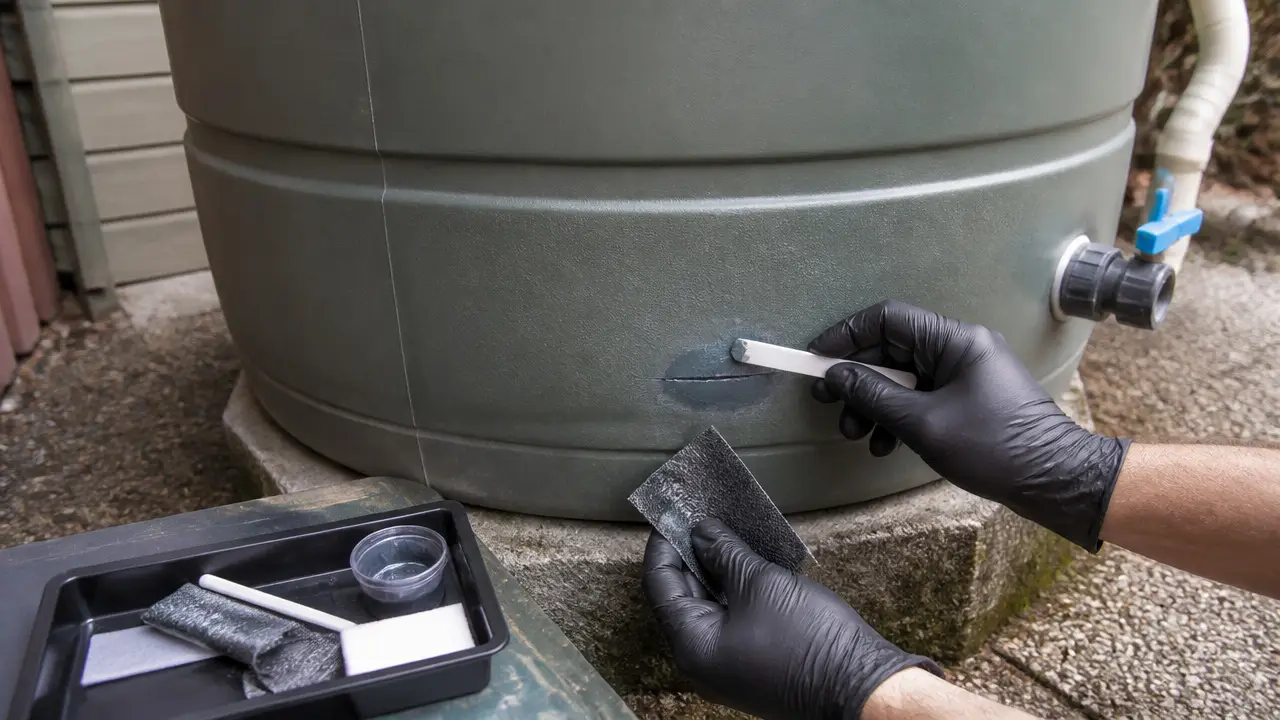
For a small crack or puncture in a non-potable rain barrel, Gorilla Waterproofing Tape usually has the advantage if you want a longer-lasting patch.
However, check where the leak is coming from before reaching for tape.
A leak around a faucet, spigot, overflow fitting, or bulkhead fitting is usually a connection problem rather than a damaged tank wall. A bulkhead fitting is the fitting that passes through the wall of the tank and creates a sealed connection.
If that fitting is loose, damaged, or installed through an uneven hole, covering everything with waterproof tape may hide the problem without fixing it.
It is usually better to repair or replace the fitting.
Which One Is Better for an IBC Tote?
Neither tape should be the first choice for repairing serious damage to an IBC tote.
A small external puncture may be patchable if the surface and intended water use are suitable. But cracks that continue growing, damage near the outlet, or structural damage to the tank need more attention.
IBC totes hold a large amount of water. Water creates significant force against the tank wall. A patch that works when the tote is nearly empty may behave differently when the tote is full.
Do not rely on waterproof tape for structural damage.
For a tote holding water used for drinking or household potable use, neither tape should be assumed suitable for water-contact repairs.
What About Drinking-Water Tanks?
Do not choose either tape simply because it says "waterproof."
Waterproof does not mean approved for contact with drinking water.
Gorilla states that its Waterproofing Tape is not recommended for direct or indirect food contact and should not be considered food safe.
Flex Seal says Flex Tape has not been tested for potable drinking water.
For a tank supplying potable water, use repair materials specifically suitable for the tank material and intended for drinking-water contact.
Potable means water intended to be safe for drinking.
Rainwater intended for drinking also needs to be considered as a complete system. Roof collection, debris control, first-flush diversion, storage, treatment, laboratory testing, maintenance, and local requirements can all matter. A waterproof patch does not make stored rainwater safe to drink.
Neither Tape Is a Good Choice for Pressurized Hoses
Waterproof repair tape may look ideal for a leaking garden hose, but pressure changes the situation.
Gorilla says its waterproofing tape is not intended for applications under pressure, including garden hoses.
Flex Seal also says Flex Tape is not intended for high-pressure applications such as garden hoses.
Study follow-up repair after applying Gorilla Tape to understand routine maintenance needed for dependable operation.
A hose expands and flexes when pressure rises. That repeated movement can work against an adhesive patch.
For a damaged irrigation or garden hose, replacing the damaged section or installing a proper hose repair fitting is usually more dependable.
Surface Preparation Matters More Than the Brand
Even a very strong tape can fail on a poorly prepared surface.
For either tape, remove:
- Dirt
- Mud
- Dust
- Grease
- Oil
- Algae
- Loose material
A dry surface is normally easiest to bond to, even though both products can be used in some wet or underwater situations.
When applying a patch, make it larger than the damaged area. Rounded corners can also reduce the chance of the edges lifting.
Press from the middle toward the outside. Push out water, air pockets, folds, and wrinkles.
Gorilla recommends firm rubbing over the entire patch and extra attention around the edges. Flex Tape gives similar guidance and stresses removing water and air pockets.
Some Plastics Are Hard to Tape
Rain barrels and water tanks are commonly made from plastics that can be difficult for adhesives.
A tape that sticks very well to PVC does not necessarily bond equally well to every polyethylene tank.
Manufacturers also warn that performance can vary on some plastics, rubber, silicone, water-repellent materials, and contaminated surfaces.
Test a small area when possible.
Also remember that a plastic tank can flex as it fills and empties. If the crack itself keeps moving, the tape has a harder job.
When Tape Is Not the Right Repair
Use waterproof tape for the type of repair it can realistically handle.
Do not depend on it when:
- A crack is getting longer.
- The tank wall is badly distorted.
- The damage affects the tank's structure.
- The leak comes from a loose bulkhead fitting.
- The repair is under significant water pressure.
- The surface cannot be cleaned properly.
- The tape will contact drinking water without suitable approval.
- The tank material will not bond reliably to the adhesive.
For a rain barrel or tank with serious damage, draining it and making a repair designed for that tank material is usually better than adding more layers of tape.
Gorilla vs. Flex Tape: Which Should You Choose?
Choose Gorilla Waterproofing Tape when the surface is suitable and you want a patch intended to form a more permanent bond.
Choose Flex Tape when you need a fast waterproof emergency patch, especially when working around a wet surface or a shape that benefits from a thick, flexible backing.
For rainwater storage, neither tape should replace a proper fitting repair, structural tank repair, or drinking-water-approved repair method.
The condition of the tank matters more than the logo on the roll.
Frequently Asked Questions
Is Gorilla Waterproofing Tape stronger than Flex Tape?
There is no useful universal answer because bond strength depends on the surface, preparation, water exposure, movement, and type of damage. Gorilla describes its tape as forming a permanent bond, while Flex Seal describes Flex Tape as a temporary emergency repair.
Can Gorilla Waterproofing Tape be applied underwater?
Yes. Gorilla says its Waterproofing Tape can be used underwater. The surface should still be cleaned, and water needs to be pushed out from beneath the tape so the adhesive can contact the surface.
Can Flex Tape be applied underwater?
Yes. Flex Seal says Flex Tape can be applied underwater on suitable smooth, clean, non-porous surfaces. Firm pressure is needed to remove water and air trapped beneath the patch.
Can I use either tape to repair a leaking garden hose?
Neither manufacturer recommends its waterproof tape for this type of pressurized repair. A proper hose repair fitting or replacement hose section is usually a better solution.
Can I use Flex Tape inside a drinking-water tank?
Flex Seal states that Flex Tape has not been tested on potable drinking water. Do not assume it is suitable for a surface that will remain in contact with drinking water.
Can I use Gorilla Waterproofing Tape inside a drinking-water tank?
Gorilla states that its Waterproofing Tape is not recommended for direct or indirect food contact and is not considered food safe. For potable-water storage, use a repair material specifically suitable for drinking-water contact.
Will waterproof tape permanently fix a cracked rain barrel?
It may stop a small leak when the surface bonds well, but the result depends on the plastic, crack location, movement, and water load. If the crack continues growing or is close to a fitting, seam, or heavily stressed part of the barrel, a proper tank repair or replacement is safer.