As an affiliate, we may earn a commission from qualifying purchases. We get commissions for purchases made through links on this website from Amazon and other third parties.
Rubber pipe insulation is usually the better choice when you need good condensation control, flexibility, or better performance in damp areas. Poly foam insulation is often the better choice when you want a simple, low-cost way to reduce heat loss or slow freezing on basic indoor pipes.
For rainwater systems, the best choice depends on where the pipe runs, whether it gets wet, and whether freezing or condensation is the main problem.
Rubber vs. Poly Foam Pipe Insulation
The two materials are similar in purpose, but they behave differently.
| Feature | Rubber Foam | Poly Foam |
|---|---|---|
| Flexibility | Very flexible | More rigid |
| Condensation control | Usually better | Good when seams are well sealed |
| Damp locations | Usually better suited | Can work, but joints need care |
| Tight bends and fittings | Easier to fit | Harder around complex shapes |
| Basic indoor water lines | Good | Very good |
| Outdoor exposure | Needs suitable UV/weather protection | Needs suitable UV/weather protection |
| Installation | Flexible but sometimes harder to slide on | Often simple and lightweight |
| Freeze protection | Helps slow freezing | Helps slow freezing |
Neither material can guarantee that a water-filled pipe will not freeze.
What Is Rubber Pipe Insulation?
Most insulation called "rubber" is flexible elastomeric foam. Elastomeric means the material can bend and spring back without cracking easily.
It is commonly used on:
- Cold-water pipes
- Refrigeration lines
- Air-conditioning pipes
- Pump plumbing
- Rainwater supply lines
- Pipes that tend to sweat
Rubber foam usually has a closed-cell structure. The tiny cells help slow heat movement and resist water vapor.
That makes it useful when condensation is a concern.
Why rubber works well around rainwater systems
Cold rainwater pipes can sometimes become cooler than the surrounding air. Moisture in humid air may then condense on the pipe.
Rubber insulation can help keep humid air away from the cold pipe surface, especially when the seams and joints are properly sealed.
It is also flexible enough to fit around bends, valves, and uneven plumbing more easily than many stiff foam products.
What Is Poly Foam Pipe Insulation?
"Poly foam" usually means polyethylene foam pipe insulation.
It is lightweight and often sold as pre-slit tubes. You open the slit, place the insulation around the pipe, and close or seal the seam.
Poly foam works well for simple pipe runs such as:
- Indoor rainwater lines
- Garden supply plumbing inside sheds
- Pipes in garages
- Utility-room plumbing
- Exposed pipes in crawl spaces where conditions are suitable
It is especially convenient on long, straight sections of pipe.
Which Is Better for Preventing Frozen Pipes?
Neither one is a complete freeze-protection system.
Both rubber and poly foam slow the movement of heat. This can make a pipe take longer to freeze, but insulation does not create heat.
If a water-filled pipe stays below freezing long enough, it can still freeze inside either type of insulation.
Rubber may be useful where you need insulation to fit tightly around complicated plumbing. Poly foam may be perfectly adequate on straight indoor runs.
More important than choosing between the two is making sure the insulation:
- Fits the pipe closely
- Has no large gaps
- Covers valves and fittings where practical
- Has sealed seams where needed
- Stays dry and intact
- Has enough insulation thickness for the conditions
In very cold climates, insulation alone may not be enough.
Rainwater Pipes Need Special Freeze Planning
Rainwater systems often have sections that are more exposed than normal household plumbing.
For example, you may have:
- Tank outlets
- Above-ground supply pipes
- Pump lines
- Outdoor filters
- Hose connections
- Overflow plumbing
- Irrigation lines
Any section containing trapped water can freeze.
A better winter plan may involve draining exposed lines, placing vulnerable plumbing inside a protected area, or redesigning the system so water does not remain trapped.
Electric heat cable is sometimes used on suitable pipes, but it must be designed for the pipe material and installation conditions. Follow the heat-cable manufacturer's instructions. Outdoor and wet-location electrical work may also require appropriate electrical protection and professional installation.
Do not assume that thick insulation makes an exposed rainwater system freeze-proof.
Rubber Is Usually Better for Condensation
If the main problem is sweating pipes, rubber foam generally has an advantage.
Condensation happens when the pipe surface becomes cold enough for moisture in the air to turn into water droplets.
This can occur on cold rainwater supply lines running through a warm, humid space.
Rubber insulation can work well because it forms a flexible barrier around the pipe. However, gaps matter.
An unsealed joint can allow humid air to reach the pipe underneath. Water may then collect beneath the insulation where you cannot easily see it.
Seal the insulation according to the manufacturer's directions, especially around:
- Joints
- Elbows
- Tees
- Valves
- Pipe supports
- Tank connections
Good installation can matter as much as the insulation material itself.
Poly Foam Is Often Enough for Simple Indoor Pipes
Poly foam is a practical choice when the pipe is indoors and your goal is simply to reduce heat transfer.
For example, you may have a rainwater line running from a tank through a garage before reaching a garden connection.
If the area stays fairly dry and temperatures are not extreme, properly fitted poly foam may be all you need.
Its simple shape also makes damaged sections easy to inspect and replace.
Which Material Handles Bends Better?
Rubber foam usually wins here.
Its flexibility helps it follow bends without opening large gaps. This can be useful around pumps and tank plumbing, where several fittings may be close together.
Poly foam is less flexible. On a sharp bend, you may need separate pieces or molded fitting covers to keep the pipe covered.
Do not stretch or crush either type of insulation so much that its thickness becomes uneven.
What About Outdoor Rainwater Pipes?
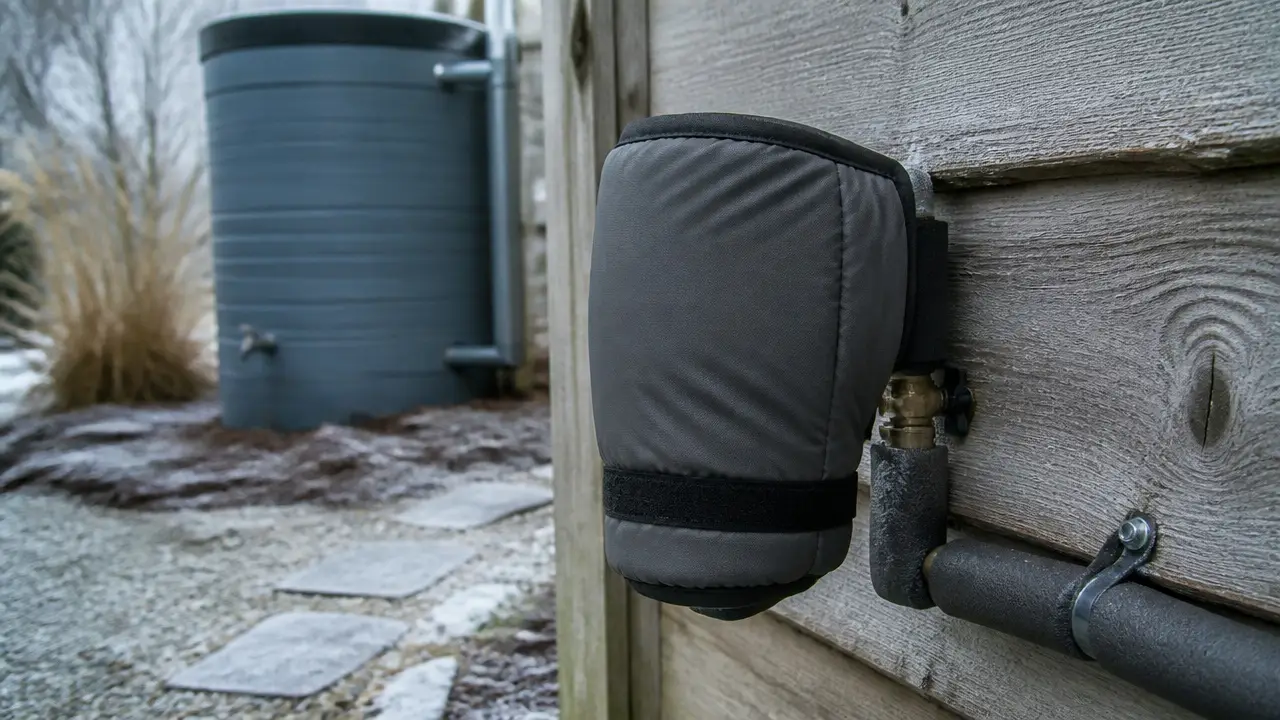
Check the manufacturer's stated outdoor-use limits before using either material outside.
Examine insulating sleeves for outside pipes to evaluate this detail’s place in the collection and delivery chain.
Sunlight can damage many foam insulation materials. Rain, insects, animals, and physical contact can also shorten their life.
Some insulation needs a protective covering or coating when installed outdoors.
Do not assume that black rubber insulation is automatically UV-proof. Likewise, standard polyethylene foam made for indoor plumbing may not last when left exposed to sun and weather.
Outdoor pipe protection should account for both insulation and the outer protective layer.
Match the Insulation to the Pipe Size
Good insulation should fit the outside diameter of the pipe.
Do not select insulation based only on the pipe's labeled size. Plumbing sizes can be confusing because a pipe's nominal size may not equal its actual outside diameter.
Measure the outside diameter or check the pipe manufacturer's dimensions before buying insulation.
This matters especially with rainwater systems using:
- PVC
- CPVC
- PEX
- Copper
- Polyethylene tubing
- Flexible pump hose
A loose insulation tube can leave air gaps. An insulation tube that is too small may split or fail to close properly.
Insulation Thickness Matters Too
Material type is only part of the decision.
A thicker layer generally slows heat transfer more than a thin layer made from the same material.
The right thickness depends on conditions such as:
- Pipe temperature
- Air temperature
- Humidity
- Indoor or outdoor location
- Length of cold exposure
- Pipe diameter
- Whether condensation or freezing is the concern
For condensation control, the insulation also needs to keep the outside surface warm enough that moisture does not form under expected humidity conditions.
For freeze protection, remember that even thick insulation only delays heat loss.
What About Pipes Near a Rainwater Tank?
Tank outlets are easy to overlook.
A large tank may take a long time to cool, while the small pipe connected to the bottom can freeze much sooner.
Pay attention to:
- Bulkhead fittings
- Ball valves
- Pump suction lines
- Filter housings
- Small-diameter pipes
A bulkhead fitting is a fitting that passes through the wall of a tank and creates a sealed connection.
Insulating only the straight pipe while leaving the valve and tank outlet exposed can leave the most vulnerable part of the system unprotected.
Watch for Trapped Moisture
Inspect insulated rainwater plumbing from time to time.
Look for:
- Wet insulation
- Open seams
- Crushed sections
- Mold or staining nearby
- Insect damage
- Sun damage
- Missing insulation around fittings
Water beneath insulation can hide leaks and keep surfaces damp.
If insulation becomes soaked or badly damaged, find the source of the moisture before replacing it.
When Rubber Foam Is the Better Choice
Rubber foam is often the stronger choice when:
- Condensation is a major concern
- The pipe runs through a humid area
- Plumbing has many bends or fittings
- You need flexible insulation
- The insulation must fit closely around complicated equipment
It can be especially useful around pumps, filtration equipment, and cold rainwater supply lines where tight coverage matters.
When Poly Foam Is the Better Choice
Poly foam makes sense when:
- The pipe run is simple and straight
- The location is indoors and fairly dry
- You mainly want to reduce heat transfer
- You want insulation that is easy to remove and replace
- Condensation conditions are not severe
For many basic garage, shed, basement, or utility-room pipes, it can be a practical solution.
Which Should You Use for a Rainwater System?
For a simple indoor rainwater line, poly foam is often enough.
For damp locations, cold pipes that sweat, or plumbing with many bends and fittings, flexible rubber foam is usually easier to seal well.
For outdoor or freezing conditions, do not choose based on material alone. Check the insulation's temperature range and outdoor rating, protect it from weather where required, and plan for drainage or another form of freeze protection.
The most important goal is continuous coverage without gaps.
Frequently Asked Questions
Is rubber insulation warmer than foam pipe insulation?
Not automatically. Thermal performance depends on the specific material and thickness. Compare the manufacturer's insulation value rather than assuming rubber will always provide better freeze protection.
Can rubber pipe insulation stop a pipe from freezing?
It can slow heat loss, but it cannot guarantee that a water-filled pipe will not freeze. Long periods below freezing may require drainage, protected routing, or another suitable freeze-control method.
Is poly foam waterproof?
Polyethylene foam usually resists water well because it is commonly made with closed cells. However, seams and openings can still allow moisture to reach the pipe.
Which insulation is better for sweating pipes?
Flexible rubber foam is commonly a good choice for condensation control because it can form a close vapor-resistant covering when installed and sealed correctly.
Can I use indoor pipe insulation outside?
Only if the manufacturer says the material is suitable for outdoor exposure, or provides an approved method of protecting it. Sunlight and weather can damage many common insulation products.
Should I insulate rainwater tank valves?
In freezing climates, exposed tank valves and outlets deserve attention because water can become trapped inside them. Insulation may help, but the winter plan should also address draining or otherwise protecting vulnerable plumbing.
Should pipe insulation fit tightly?
Yes. It should fit the pipe without large gaps while keeping its intended thickness. Also seal joints and seams where required for condensation or weather protection.