As an affiliate, we may earn a commission from qualifying purchases. We get commissions for purchases made through links on this website from Amazon and other third parties.
Off-grid water storage works best when you plan the whole water path, not just the tank. Start with how much water you need, where the water will come from, how long you may go between refills, and what you plan to use the water for. Then choose storage, plumbing, pumps, and treatment that fit those needs.
A good system also needs a safe overflow path, a way to clean the tank, protection from freezing or heat, and enough backup capacity to handle dry periods or equipment problems.
Start With the Water Use
The first question is not “How big should my tank be?” It is “What will this water be used for?”
Water needs can be divided into two broad groups:
- Non-potable water is water that is not intended for drinking. It may be used for garden irrigation, some cleaning, toilet flushing, or other approved uses.
- Potable water is water that is suitable for drinking, cooking, brushing teeth, and other uses where you may swallow it.
The difference matters because storage and treatment requirements change with the intended use.
A simple rain barrel supplying a garden hose does not need the same treatment system as a cabin using stored rainwater for drinking.
If you want one tank to supply several uses, design the system around the use that requires the highest water quality. You may also choose to keep drinking water separate from a larger supply used for irrigation and washing.
Calculate How Much Water You Need to Store
There are two sides to storage sizing:
- How much water you use.
- How long you may need to rely on stored water.
A useful starting formula is:
Required storage = daily water use × days between dependable refills
Then add some reserve capacity rather than planning to reach zero.
For example, if a household estimates that it needs 40 gallons per day and wants enough storage for 20 days, the basic calculation is:
40 × 20 = 800 gallons
That does not automatically mean an 800-gallon tank is enough. The system also needs room for dry weather, changes in household use, maintenance, and water that may remain below a usable tank outlet.
Measure Your Real Water Use When Possible
Off-grid water use varies widely.
A cabin with a composting toilet and careful water use may need far less water than a home with showers, laundry, flush toilets, and a large garden.
Instead of relying only on a generic gallons-per-person estimate, list the actual uses in your system:
- Drinking and cooking
- Handwashing
- Showers or bathing
- Dishwashing
- Laundry
- Toilets
- Garden irrigation
- Animals
- Cleaning
- Equipment or workshop use
For an existing home, meter readings or measurements from your current system provide much better planning information than an online rule of thumb.
Estimate How Much Water You Can Collect
A large tank does not create water. Your water source has to refill it.
An off-grid property might use:
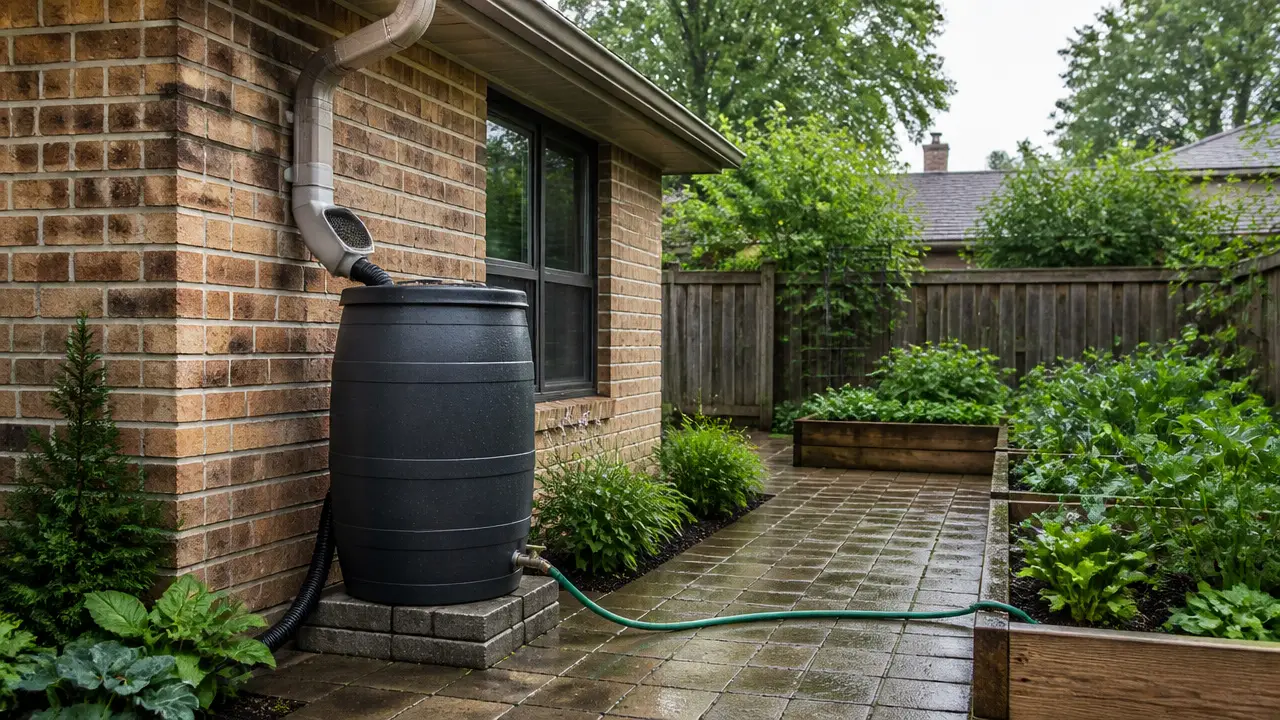
- Roof-collected rainwater
- A private well
- Hauled water
- A developed spring
- Another approved local source
- A combination of sources
Each source has different limits.
Estimating Roof Rainwater Collection
For a roof catchment system, theoretical collection can be estimated with:
Gallons = roof area in square feet × rainfall in inches × 0.623
So 1 inch of rain falling on 1,000 square feet of roof represents about:
1,000 × 1 × 0.623 = 623 gallons
Actual collection will be lower.
Some water is lost to wetting the roof, overflowing gutters, leaks, splash, first-flush diversion, and other parts of the system.
Do not size a system as though every theoretical gallon will reach the tank.
Also look at rainfall timing, not only annual rainfall. A location can receive plenty of rain over a year but still have a long dry season that requires substantial storage.
Do not assume historical rainfall guarantees future supply. Use reliable local rainfall records when planning a permanent system.
Choose a Storage Tank That Fits the System
Tank capacity is only one part of choosing water storage.
Also consider:
- What the tank previously contained
- Whether it is intended for water storage
- Whether it can be used above or below ground
- Sunlight exposure
- Freezing conditions
- Connection sizes
- Access for inspection and cleaning
- Available installation space
- Tank dimensions
- Filled weight
- How water will reach and leave the tank
Above-Ground Tanks
Above-ground tanks are usually easier to inspect, connect, drain, and service.
They also make leaks easier to notice.
Their main disadvantages are exposure to:
- Sun
- Heat
- Freezing temperatures
- Physical damage
Opaque tanks help limit light entering the stored water. Light can encourage biological growth.
Underground Cisterns
An underground cistern can save surface space and provide more stable temperatures.
Installation is much more involved.
Use only tanks designed and rated for burial. Soil and groundwater can place substantial forces on a buried tank.
Excavation, tank anchoring, drainage, soil conditions, and vehicle loads may also require professional design or installation.
Do not bury a standard above-ground tank or IBC tote simply because it fits in the hole.
Never enter a cistern or other tank. Tanks can be confined spaces with dangerous atmospheric and access hazards.
IBC Totes
IBC totes can provide useful water storage in some simple systems, but their history matters.
Do not use a tote of unknown origin for drinking-water storage. Never repurpose a container that previously held toxic chemicals for water intended for people.
For any water use, confirm that the container material, previous contents, fittings, and exposure conditions are suitable for the intended application.
IBC totes also need protection from sunlight and freezing where those conditions are a concern.
Remember How Heavy Stored Water Is
Water is heavy.
One U.S. gallon of water weighs about 8.34 pounds.
That means:
- 100 gallons weighs about 834 pounds.
- 500 gallons weighs about 4,170 pounds.
- 1,000 gallons weighs about 8,340 pounds.
Those figures are just the water. The tank itself adds more weight.
Large tanks need a stable, properly prepared base. Do not place them on a deck, platform, roof, or building floor unless the structure has been confirmed to support the full load.
A leaning or uneven tank can put stress on the tank wall and fittings.
Plan Every Tank Connection Before Installation
A useful storage tank normally needs more than an inlet and a hose connection.
Think through the complete layout before filling the tank.
Typical connections can include:
Inlet
This brings water into the tank.
For rainwater systems, debris should be kept out before water reaches storage. Gutters and collection piping also need regular cleaning.
Screened Vent
As water enters or leaves, air must also move in or out.
A properly designed vent prevents the tank from becoming pressurized or developing excessive vacuum while helping keep insects and debris out.
Overflow
Once the tank is full, incoming water needs somewhere safe to go.
Route overflow away from:
- Building foundations
- Tank foundations
- Septic areas
- Slopes that could erode
- Places where standing water would cause problems
The overflow also needs protection from insects and animals.
Do not depend on water backing up through the inlet as your normal overflow system.
Outlet
The outlet feeds the plumbing, pump, or gravity line.
An outlet positioned slightly above the tank bottom may reduce the amount of settled material entering the water line, although the best arrangement depends on tank design.
Drain or Cleaning Connection
Plan how accumulated sediment and old water can be removed.
A tank that cannot be reasonably drained and maintained may become difficult to manage later.
Bulkhead Fittings
A bulkhead fitting makes a sealed plumbing connection through the wall of a tank.
Choose fittings that are compatible with:
- The tank material
- Wall thickness and shape
- Pipe size
- Intended water use
- Expected pressure
Do not overtighten fittings against plastic tank walls. Follow the tank and fitting manufacturers' installation requirements.
Gravity Feed or Pump?
Water can move from storage by gravity, a pump, or both.
Gravity Systems
Gravity is simple and does not require electricity.
However, gravity pressure depends on the vertical height between the water surface and the outlet where the water is being used.
This height difference is often called head height.
Raising a small tank several feet may provide useful flow for some low-pressure applications, but it does not automatically provide normal household water pressure.
Raising a large tank also creates a serious structural load. Building a tall platform for hundreds or thousands of gallons of water should not be treated as a casual DIY project.
Pumped Systems
A pump can provide more predictable flow and pressure.
Pump selection may depend on:
- Required flow rate
- Required pressure
- Vertical lift
- Pipe length
- Pipe diameter
- Number of fixtures
- Available electrical power
- Pump location
- Whether the pump can run dry
Flow rate is the amount of water delivered over time, usually expressed in gallons per minute.
A pump that produces high pressure but too little flow may perform poorly when several fixtures operate at once.
A pump also needs a reliable water supply. Dry-run protection can help prevent damage if the tank empties.
Pressure tanks, switches, check valves, and other controls may be needed for a household pressure system.
Electrical equipment near water should be installed according to applicable electrical requirements. Have a qualified professional handle work beyond your experience.
Protect Rainwater Before It Reaches Storage
Keeping contamination out is usually easier than trying to remove it later.
Check practical steps for getting water to an off-grid cabin to compare whether the selected components work together before purchase.
A roof collection system may include:
- Suitable collection surface
- Gutters and downspouts
- Leaf or debris screening
- First-flush diversion when appropriate
- Tank inlet screening
- Covered storage
A first-flush diverter sends the first portion of roof runoff away from the storage tank. That early runoff can carry dirt, bird droppings, and other material that accumulated on the roof between storms.
The amount diverted should be based on the catchment system rather than chosen at random.
CDC notes that rainwater can pick up germs and chemicals from the air, roofing, gutters, piping, storage materials, and animal waste. Even water that looks clear is not necessarily safe to drink.
Keep the Tank Dark and Closed
A good storage system should limit the entry of:
- Sunlight
- Leaves
- Dirt
- Insects
- Rodents
- Birds
- Surface runoff
Tank openings should be covered or screened as appropriate.
Do not leave a rainwater tank with an open top.
CDC specifically recommends screening rainwater collection systems to help prevent mosquitoes from entering and laying eggs.
Check screens periodically. A perfect screen that becomes torn, clogged, or loose is no longer doing its job.
Drinking Water Requires a Whole-System Approach
Stored rainwater should not be assumed safe for drinking because it looks clean or passes through one filter.
CDC states that collected rainwater is not necessarily safe to drink without removing harmful germs and chemicals. It recommends regular testing when rainwater is used for drinking, cooking, or bathing and advises consulting local health authorities about appropriate testing and treatment.
A drinking-water system may need several stages, depending on the source and actual water quality. These might include:
- Source protection
- Roof and gutter maintenance
- Debris removal
- First-flush management
- Sediment filtration
- Treatment targeted at identified chemical contaminants
- Microbial treatment or disinfection
- Safe treated-water storage and distribution
- Regular maintenance
- Laboratory testing
A sediment filter alone does not make rainwater potable.
UV treatment does not remove every possible chemical contaminant.
Boiling can kill germs, but CDC notes that boiling or disinfecting water does not make water contaminated with harmful chemicals safe to drink.
The correct treatment train depends on the actual water source and contaminants present.
For a permanent off-grid drinking-water system, work with your health department, an appropriately qualified water-treatment professional, or another competent local specialist. Use current laboratory testing to guide treatment decisions.
Keep Drinking Water Separate From Untreated Water
If an off-grid property has both potable water and untreated rainwater or another non-potable source, keep the systems separated.
Do not make an improvised connection between untreated storage and drinking-water plumbing.
Cross-connections can allow lower-quality water to contaminate a treated supply. CDC specifically advises keeping rainwater from entering pipes carrying safe drinking water.
Backflow protection and plumbing requirements vary by location and application.
For permanent indoor plumbing, check current local requirements before construction.
Plan for Freezing Weather
Freezing can damage more than the tank.
Vulnerable parts can include:
- Exposed pipes
- Pumps
- Filter housings
- Valves
- Hose connections
- Gauges
- Small fittings
- First-flush components
A large tank may take longer to freeze than a small exposed pipe, so protecting only the tank is not enough.
Possible system designs include placing vulnerable components inside conditioned space, burying suitable piping below locally appropriate frost depth, insulating where appropriate, or draining seasonal systems.
Do not assume insulation alone guarantees freeze protection.
If a system must operate throughout a severe winter, its freeze strategy should be designed for the local climate and the specific equipment.
Hot Climates Need Planning Too
Heat and sunlight can also affect storage.
Keep tanks out of unnecessary direct sunlight when practical and follow the manufacturer's temperature and installation limits.
Opaque storage is especially useful for limiting light.
Pay attention to exposed hoses and piping as well. Water sitting in a sun-heated line may become much hotter than water inside the main tank.
Build in Redundancy
One enormous tank is not always better than several tanks.
Multiple tanks can provide flexibility.
For example, two properly connected tanks may allow you to isolate one for maintenance while keeping some water available in the other.
Separate storage can also help keep different water qualities apart.
Possible arrangements include:
- Main household storage plus separate irrigation storage
- Rainwater storage plus hauled-water reserve
- Large raw-water tank plus smaller treated-water storage
- Multiple linked cisterns
More tanks also mean more valves, fittings, plumbing, and possible leak points. Keep the design as simple as practical.
Do Not Forget Overflow Capacity
A tank sized for dry periods can fill quickly during heavy rain.
Imagine a 1,000-gallon tank that already contains 950 gallons. It only has 50 gallons of open capacity, regardless of how large the tank is.
Your system still needs to safely handle all additional incoming water.
Design the overflow route before the first major storm rather than discovering it when water is already spilling around the tank foundation.
Make Maintenance Easy From the Beginning
Off-grid storage is not maintenance-free.
A practical system should allow you to inspect and service important components without dismantling the entire installation.
Regular checks may include:
- Clean gutters and roof collection areas.
- Remove accumulated leaves and debris.
- Inspect first-flush equipment.
- Check inlet and overflow screens.
- Look for leaks around tank fittings.
- Check the tank base for settling or erosion.
- Inspect exposed plumbing for damage.
- Service pumps and pressure equipment according to their instructions.
- Replace or clean filters as required.
- Check that valves operate normally.
- Look for changes in water color, odor, or appearance.
- Test drinking water according to guidance for your system and location.
Maintenance frequency depends on climate, source water, tree cover, tank design, water use, and treatment equipment.
After major storms, flooding, contamination events, system repairs, or long periods without use, additional inspection or testing may be appropriate.
A Simple Off-Grid Storage Layout
A basic rainwater system used for irrigation might look like:
Roof → gutter → debris screen → first-flush device → storage tank → outlet → garden line
A more complex household system could look like:
Collection source → prefiltration → raw-water tank → pump → treatment stages → protected potable-water distribution
The second system requires much more attention to water quality, electrical equipment, pressure, treatment performance, testing, and local plumbing requirements.
Do not assume that adding household filters to a garden rainwater system turns it into a safe drinking-water system.
Common Off-Grid Water Storage Mistakes
Several problems can be avoided during the planning stage.
Buying the Tank Before Calculating Demand
A tank may be too small for the dry period or so large that the available catchment rarely fills it.
Calculate demand and supply first.
Ignoring Filled Weight
Large tanks need proper support. Water weight becomes substantial very quickly.
Using Unknown Containers
Do not store drinking water in tanks or totes with unknown previous contents.
CDC guidance for safe water storage also advises against using containers that previously held toxic chemicals.
Having No Safe Overflow
Every tank that can receive more water than it holds needs a controlled overflow route.
Depending on One Pump
If the only pump fails, the property may effectively have no water even though the tank is full.
Depending on the application, a spare pump, gravity-accessible emergency outlet, or another backup plan may be useful.
Making Maintenance Impossible
Filters hidden behind tanks, buried valves without access, or tanks that cannot be drained turn simple maintenance into major work.
Treating All Water the Same
Garden water, toilet water, and drinking water do not have the same quality requirements.
EPA notes that alternative water sources can vary greatly in quality and should be matched to their intended use and appropriate treatment.
Check Local Rules Before Building
Rules for rainwater collection, indoor reuse, potable systems, cross-connections, plumbing, wells, and wastewater can vary greatly by location.
EPA notes that state and local requirements may govern rainwater harvesting and treatment.
Before installing a permanent system, check with the appropriate local building, plumbing, environmental, or health authority.
This is especially important if the system will supply indoor plumbing or drinking water.
A Practical Planning Order
For most off-grid properties, work through the system in this order:
- Decide what the water will be used for.
- Estimate actual daily demand.
- Determine how long the property must operate between dependable refills.
- Calculate the required storage range.
- Estimate how much the available source can realistically supply.
- Choose tanks suited to the water, installation, and climate.
- Plan the tank foundation and full water weight.
- Design the inlet, vent, overflow, outlet, and drain.
- Determine whether gravity or pumping will move the water.
- Add treatment appropriate to the intended use.
- Plan freeze, heat, and weather protection.
- Make every serviceable component accessible.
- Build in a reasonable backup plan.
- Check local requirements before connecting the system to household plumbing.
A well-planned off-grid water system does not depend on a huge tank alone. It matches storage capacity, available supply, water use, plumbing, treatment, climate, and maintenance so that each part can work with the others.
Frequently Asked Questions
How much water storage do I need for an off-grid home?
Start with your measured or estimated daily water use and multiply it by the number of days you want to operate between dependable refills. Add reserve capacity for dry weather, maintenance, and unexpected use. Also make sure your rain catchment, well, hauled-water schedule, or other source can realistically refill that storage.
Is a 1,000-gallon tank enough for off-grid living?
It can be for some properties and inadequate for others. A 1,000-gallon tank lasts 25 days at 40 gallons per day but only 10 days at 100 gallons per day. The right capacity depends on household demand, rainfall or refill frequency, climate, and intended uses.
Can I drink water from an off-grid rainwater tank?
Do not assume stored rainwater is safe to drink. Roof runoff can contain germs and chemicals. Drinking-water use requires suitable collection materials, contamination control, appropriate treatment, maintenance, current laboratory testing, and compliance with applicable local requirements.
Can I use an IBC tote for water storage?
An IBC tote may work for some water-storage applications if its material, previous contents, condition, and fittings are appropriate. Do not use a tote of unknown history for drinking water, and never use one that previously contained toxic chemicals. Standard IBC totes also should not be buried unless specifically designed and rated for that installation.
Is gravity pressure enough for an off-grid water system?
Gravity may be enough for some low-pressure applications, but pressure depends on the vertical height between the water level and the point of use. Normal household fixtures often require more pressure than a low tank can provide, so many systems use a pump.
Should I use one large tank or several smaller tanks?
Either can work. Several tanks can provide redundancy and make maintenance easier, while one tank can simplify plumbing. Compare available space, connection complexity, freeze protection, cleaning access, and how much water you need to keep available if part of the system is shut down.
How do I keep stored rainwater from going bad?
Keep contamination out by maintaining the roof and gutters, screening tank openings, limiting sunlight, using suitable covered storage, controlling insects, and cleaning and maintaining the system. Water intended for drinking requires additional treatment and regular testing appropriate to the source and local conditions.