As an affiliate, we may earn a commission from qualifying purchases. We get commissions for purchases made through links on this website from Amazon and other third parties.
The best telescopic gutter cleaner is one that lets you remove leaves and roof debris from the ground while giving you enough reach, control, and cleaning power for your gutter setup.
For most homes, a lightweight telescopic pole with an angled gutter-cleaning head is the most practical choice. A simple scoop or brush head works well for dry leaves. A water-fed or air-powered attachment can help with loose debris, but it may create more mess and will not remove packed material as reliably.
The right choice depends on your gutter height, the type of debris you get, and whether you want to clean manually or use water or air.
What Makes a Good Telescopic Gutter Cleaner?
A good gutter cleaner should reach the gutter without becoming difficult to control.
The most important features are:
- Enough pole length for your gutter height
- Low overall weight
- A rigid pole that does not bend excessively
- An angled head that can reach into the gutter
- Secure locking sections
- A head that fits your gutter width
- Replaceable or interchangeable cleaning attachments
Longer is not always better. A very long pole can become heavy and awkward, especially when the cleaning head is several feet above you.
Choose the shortest pole that can comfortably reach your gutters while you remain standing safely on the ground.
Best Type for Most Homes
A telescopic pole with a curved scoop or brush attachment is usually the best starting point.
This style allows you to pull leaves, twigs, seed pods, and other debris toward you without using a ladder for most of the cleaning.
It also gives you more control than a high-pressure water attachment.
Manual cleaners work especially well when the debris is:
- Dry leaves
- Pine needles
- Small twigs
- Roof grit
- Seed pods
- Light organic buildup
They are less effective when the gutter contains thick mud or heavily decomposed material.
Scoop vs Brush vs Water-Powered Cleaners
Different cleaning heads work better for different gutter conditions.
Telescopic Scoop
A scoop or hooked cleaning head is useful for removing larger material.
It works well for:
- Leaves
- Twigs
- Pine needles
- Small clumps of debris
A scoop also lets you remove debris instead of pushing it into the downspout.
That matters because forcing gutter debris into the downspout can create a blockage.
Telescopic Brush
A brush works well for loose material and final cleanup.
It can help remove:
- Small leaves
- Roof granules
- Seeds
- Loose sediment
Brushes are less effective against thick, wet gutter sludge.
Water-Fed Gutter Cleaner
A water-fed telescopic pole connects to a garden hose.
Water can flush loose sediment toward the downspout after larger debris has been removed.
This type can be useful for routine maintenance, but it has drawbacks.
High water flow may:
- Splash dirty water onto siding
- Wash debris over the gutter edge
- Push leaves into downspouts
- Make existing blockages harder to clear
For rainwater harvesting systems, flushing dirty gutters can also send contaminated water toward your storage system unless it is diverted.
Air-Powered Cleaner
Some telescopic gutter systems use a blower or compressed airflow.
These can remove dry leaves quickly.
They work best when the gutter is dry. Wet leaves and mud may remain stuck to the bottom.
Air-powered cleaning also tends to scatter debris around the yard.
How Much Reach Do You Need?
Measure from the ground to the gutter before choosing a pole.
Do not assume the pole needs to be exactly the same length as the gutter height. The cleaner is normally held at an angle, so usable vertical reach will be shorter than the full advertised pole length.
Your own height also adds some reach.
For example, a person holding a telescopic pole above shoulder height can often reach higher than the pole length alone suggests.
At the same time, avoid planning to clean with the pole fully extended unless necessary. Telescopic poles become harder to control near maximum extension.
Pole Weight Matters More Than It Seems
A pole that feels light when collapsed can feel much heavier when extended.
The farther the cleaning head is from your hands, the more leverage works against you.
For routine home use, look for a pole made from materials such as:
- Aluminum
- Fiberglass
- Lightweight composite materials
Carbon-fiber poles can also be very light and rigid, though material alone does not tell you how well a cleaner will perform.
The full weight of the pole, fittings, hose, and cleaning head matters more than the material name.
Look for Strong Telescopic Locks
Telescopic poles normally use twist locks, clamps, or similar mechanisms to hold each section in position.
Poor locks can allow the pole to collapse while you are working.
Look for a design that allows you to:
- Extend the pole easily.
- Lock each section securely.
- Adjust the length without tools.
- Keep the pole from rotating while pulling debris.
Check the locks periodically. Dirt and wear can reduce their ability to hold the pole securely.
Choose a Head That Fits the Gutter
Residential gutters vary in shape and width.
A cleaning head that is too large may not fit beneath roof edges or gutter hangers. One that is too small may require many passes.
A curved or angled head should be able to reach around common gutter supports without getting stuck.
Interchangeable heads can be useful because you can use a scoop for heavy debris and switch to a brush for final cleaning.
Be Careful Around Gutter Guards
Gutter guards change how telescopic cleaning works.
Some guards allow small cleaning heads or brushes to reach beneath them. Others must be lifted or removed before the gutter channel can be cleaned properly.
Do not force a metal cleaning tool under a guard. You can bend the guard, damage the gutter edge, or loosen fasteners.
If debris is building underneath the guard, follow the guard manufacturer's cleaning method.
Telescopic Gutter Cleaners and Rainwater Harvesting
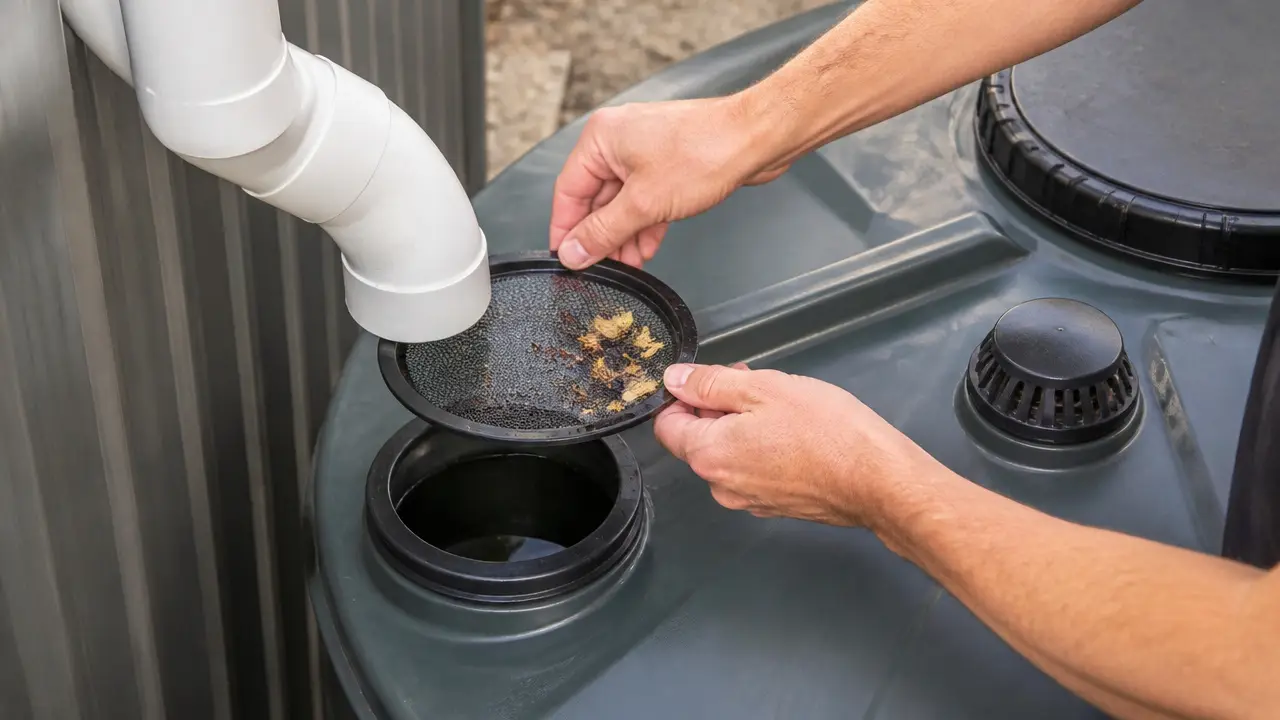
Keeping gutters clean is especially important when the roof supplies a rainwater tank, barrel, IBC tote, or cistern.
Leaves and organic material sitting in the gutter can break down and enter the collection system.
That can increase:
- Sediment
- Color
- Odor
- Organic matter
- Filter maintenance
A gutter cleaner is only one part of keeping collected rainwater cleaner.
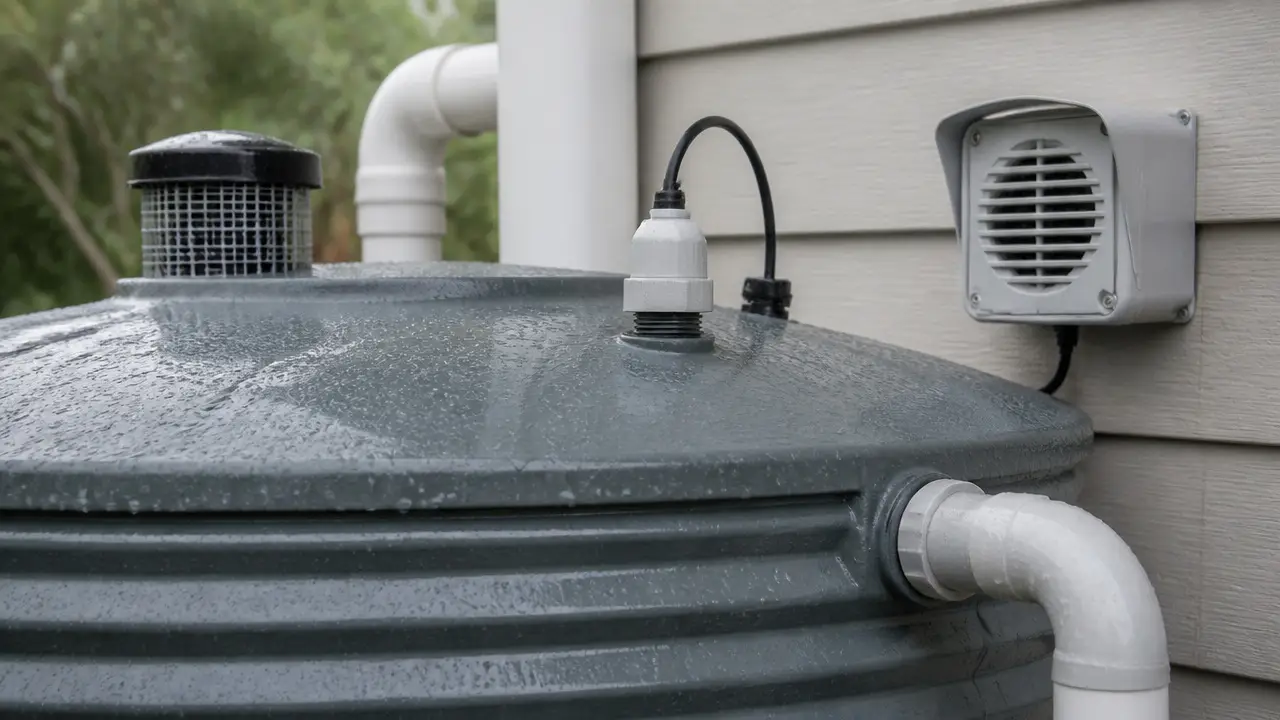
A rainwater harvesting system may also use gutter screens, leaf guards, inlet screens, sediment management, and a first-flush device.
A first flush is a device that diverts some of the initial roof runoff away from the storage tank. This first runoff can carry dust, droppings, pollen, and other material that accumulated on the roof between rains.
A first-flush device does not replace gutter cleaning.
Protect the Tank While Cleaning
Explore a suitable tool to use to clean gutters to compare the conveyance path from the roof surface into the tank.
If your gutters feed a rainwater storage tank, avoid washing gutter debris directly into the tank.
Before wet cleaning, consider diverting the downspout away from storage if your system allows it.
Remove larger material manually first.
Then clean the remaining sediment without sending a large load of dirty water into the tank.
After maintenance, reconnect any diverters or pipes before the next rainfall.
When Water Pressure Is Useful
A hose-fed cleaner can be helpful after most solid debris has already been removed.
The water can move fine sediment toward a safe discharge point.
Avoid using excessive pressure.
High pressure usually does not make gutter cleaning safer or more effective. It can spray debris onto the roof, siding, windows, and surrounding area.
It may also drive water beneath roofing edges or into places where it normally would not flow.
Avoid Using the Pole Near Electrical Lines
Long telescopic poles can reach overhead electrical wiring.
Never use a gutter-cleaning pole where it could contact a power line or electrical service connection.
Remember that some pole materials and wet equipment may conduct electricity.
If electrical lines are close enough that accidental contact is possible, stop and use a qualified professional.
Do You Still Need a Ladder?
A telescopic cleaner can reduce ladder use, but it may not eliminate it.
Some gutter problems cannot be properly inspected from the ground.
Examples include:
- Loose gutter brackets
- Cracked seams
- Standing water
- Incorrect gutter slope
- Downspout blockages
- Roof damage
- Debris trapped beneath gutter guards
Do not stretch from a ladder while holding a long pole.
For high roofs, steep ground, difficult access, or damaged gutters, professional cleaning may be the safer option.
What About Telescopic Gutter Vacuums?
Gutter vacuum systems use long poles connected to a powerful wet-and-dry vacuum.
They can remove leaves and sediment without washing debris into the downspout.
They are useful for large properties or frequent gutter maintenance, but they are more complex than a simple telescopic hand tool.
A vacuum system also needs enough suction to lift debris through a long hose.
For an average homeowner doing occasional cleaning, a manual telescopic scoop or brush is usually simpler.
Signs Your Gutters Need Cleaning
Do not wait for a complete blockage.
Common signs include:
- Water spilling over the gutter edge
- Plants growing in the gutter
- Visible leaves or twigs
- Slow downspout flow
- Standing water after rain
- Increased sediment reaching a rainwater tank
- Water staining the fascia or siding
Overflow can also be caused by undersized gutters, poor slope, or blocked downspouts, so cleaning may not solve every problem.
A Practical Cleaning Method
For most gutters, start by removing the largest material.
Use the telescopic scoop or hook to pull leaves toward an accessible area.
Collect the debris rather than pushing it down the downspout.
Next, use a brush to loosen smaller material.
If needed, use a gentle water rinse after the solid debris has been removed.
Watch the downspout outlet during the rinse.
Water should flow freely. If it backs up or drains very slowly, the downspout may be blocked.
Do not keep forcing water into a blocked downspout. The clog may need to be cleared separately.
How Often Should Gutters Be Cleaned?
There is no single schedule that works for every house.
Check them more often if the roof is surrounded by trees.
Properties with pine trees, seed-producing trees, or heavy leaf fall may need several inspections each year.
Homes with few nearby trees may need cleaning less often.
Rainwater harvesting systems benefit from regular inspections because gutter debris eventually becomes tank debris.
Checking the gutters before major rainy periods is a good habit.
Features Worth Prioritizing
When comparing telescopic gutter cleaners, focus on practical features rather than extra attachments.
A useful cleaner should have:
| Feature | Why It Matters |
|---|---|
| Lightweight pole | Easier to control overhead |
| Good rigidity | Reduces bending at full reach |
| Secure locks | Keeps the pole from collapsing |
| Angled cleaning head | Reaches into the gutter from below |
| Replaceable attachments | Handles different debris |
| Enough reach | Keeps most cleaning at ground level |
| Comfortable grip | Reduces hand fatigue |
| Simple connections | Makes setup and cleanup easier |
For rainwater harvesting, the ability to remove debris instead of simply flushing it toward the tank is especially useful.
What Is the Best Telescopic Gutter Cleaner Overall?
For most homeowners, the best choice is a lightweight, rigid telescopic pole with secure locks and a curved scoop or brush head.
Choose enough reach for your home, but avoid buying a much longer pole than you need.
A manual head is usually the most controlled option for removing leaves and debris. A hose attachment can help with final rinsing, while blower systems work best with dry material.
For rainwater collection systems, remove debris before flushing and keep dirty cleaning water out of the storage tank whenever practical.
The best gutter cleaner is not necessarily the one with the longest pole or strongest spray. It is the one you can safely control while removing debris without damaging the gutter or pushing contamination farther into the drainage system.
Frequently Asked Questions
Are telescopic gutter cleaners safe?
They can reduce the need to climb ladders, which is useful for many homes. However, long poles can still be difficult to control. Keep them away from electrical lines and stop if the gutters cannot be reached safely from stable ground.
Can I clean gutters from the ground?
Many single-story gutters can be cleaned from the ground with a properly sized telescopic cleaner. Higher buildings or gutters hidden behind roof features may require other equipment or professional cleaning.
Is a gutter brush or scoop better?
A scoop is usually better for leaves, twigs, and clumps of debris. A brush is better for loose material and final cleanup. Some systems allow you to use both.
Should I use a hose to clean my gutters?
A hose can help rinse fine sediment after larger debris has been removed. Avoid using water as the first cleaning step when the gutter contains a large amount of leaves because it may push them into the downspout.
Can I flush gutter debris into my rainwater tank?
It is better to keep cleaning debris and dirty rinse water out of the tank. Disconnect or divert the collection line during cleaning when your system is designed to allow it.
How long should my telescopic gutter cleaner be?
It should provide enough reach for your gutter while remaining easy to control. Measure the gutter height and remember that a pole held at an angle provides less vertical reach than its full length.
Do gutter guards eliminate the need for cleaning?
No. Gutter guards can reduce the amount of large debris entering the gutter, but small material can still accumulate on top of or underneath them. Gutters and downspouts still need periodic inspection.